%20(18).webp)
With India’s edible oil market set to hit 28.2 million tons by 2033, the demand for high-quality vegetable oils is skyrocketing. For entrepreneurs, this represents a golden opportunity. However, entering the oil mill business comes with its own set of challenges. From tackling regulatory hurdles to selecting the right technology and ensuring a reliable supply chain, the complexities can be overwhelming.
This blog will guide you through the key steps to start your own oil mill business in India. You will be able to make informed decisions and successfully tap into one of India’s fastest-growing industries, whether you're a first-time entrepreneur or looking to expand. Let’s jump in.
An oil mill is an industrial facility designed to process various oilseeds and nuts to extract oil, leaving behind oilcake as a byproduct.
The process typically involves the use of specialized machinery that presses or expels oil from seeds like peanuts, soybeans, mustard, and others. Depending on the type of oil you wish to produce, choosing the right extraction machinery is critical.
Before setting up an oil mill, you’ll need to decide on the specific oils you want to manufacture. Different oils require different machinery, and understanding the nuances of each type is essential for smooth operations and product quality.
Selecting the right machines and understanding the market demand enables you to build a successful oil mill tailored to your business goals.
Now that you know what an oil mill is, let's look at the different types of oil mill businesses and how they operate.
Before getting started with the oil mill business in India, you need to make several key decisions. Oil mills in India are typically classified into three categories based on production capacity: small-scale, medium-scale, and large-scale. Understanding these categories will help you make the right decision for your business.
In a small-scale oil mill, the daily oil extraction ranges from 5 to 10 metric tons. This scale of operation is ideal for small businesses or MSMEs (Micro, Small, and Medium Enterprises) looking to enter the market with limited capital. It's a good starting point for entrepreneurs aiming to test the waters before expanding further.
A medium-scale oil mill extracts between 10 and 50 metric tons of oil each day. This type of operation suits businesses that have outgrown small-scale production but are not yet ready for the complexities of large-scale operations.
It offers a good balance between capacity and resource requirements, making it an attractive choice for entrepreneurs with moderate resources.
Large-scale oil mills extract more than 50 metric tons of oil per day. These mills require substantial investment in machinery, a larger workforce, and complex management systems.
They cater to high-demand markets, producing large quantities of oil for both domestic and export purposes. Such operations are best suited for established businesses looking to operate on a national or global scale.
Small-scale mills usually function as sole proprietorships or partnerships. Medium and large-scale mills often operate as private limited companies due to the higher volume of production and financial requirements.
With a clearer picture of the business, it’s time to outline the key steps to launch your oil mill in India.

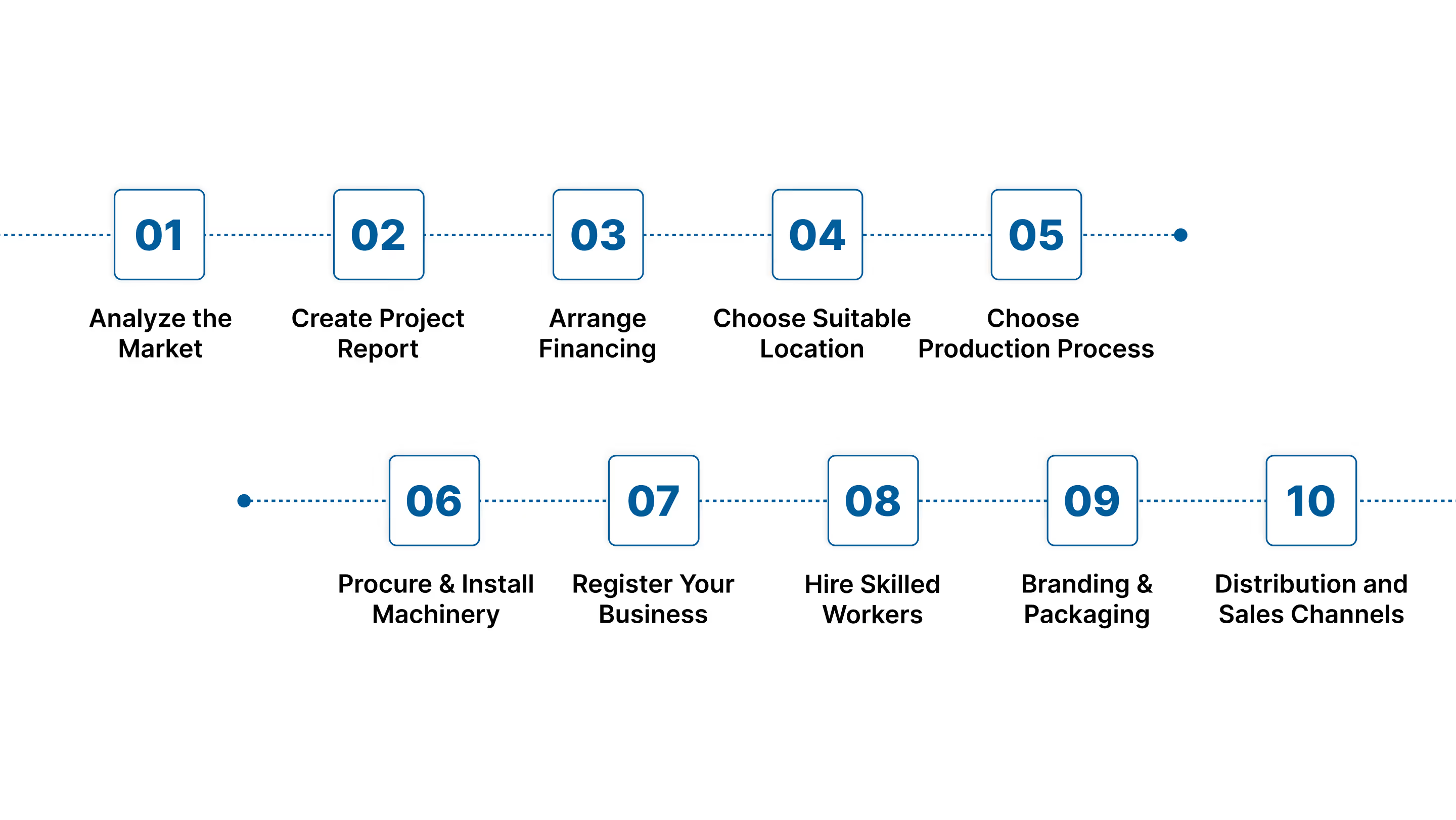
Starting an oil mill business in India is a rewarding venture, but it requires careful planning and execution. Here's a step-by-step guide on how to start your oil mill business:
Begin by conducting market research to assess the demand for edible oils in different regions of India. Look into factors like population density, local preferences, and income levels to identify where your products will be most needed.
Develop a comprehensive business report that includes both technical and financial analyses. This should cover manufacturing technologies, plant capacity, raw material sources, and production processes. Be sure to outline your business objectives, investment cost, and timelines for return on investment.
If your funds are limited, consider seeking financial support from banks, venture capital firms, or government schemes. Financing is critical for purchasing machinery and covering initial operational costs associated with setting up your oil mill.
If you have concerns about the financial planning of your oil mill business, partnering with a trusted accounting firm like VJM Global can be invaluable. With expertise in U.S. accounting and Indian regulations, VJM Global can help secure funding and ensure compliance with both local and international financial standards.
Select a location that is easily accessible, with good infrastructure and proximity to suppliers of raw materials. While oil mills don't require large spaces, being near the source of raw materials like seeds is crucial to maintaining a steady supply.
Determine which oil extraction method is best suited to the seeds you plan to process. For high oil-content seeds, mechanical pressing is effective, while solvent extraction may be necessary for seeds with lower oil yield. This decision will influence your production capacity and efficiency.
Research reliable suppliers and invest in the necessary machinery for oil extraction. Once the machinery is purchased, set up your oil mill with the help of professionals. Make sure to install the equipment in a well-organized layout to facilitate smooth operations.
Register your oil mill with the appropriate authorities to operate legally. Obtain a trade licence, PAN card, and any other permits required by law. Don't forget to open a dedicated business bank account for financial transactions.
Your oil mill will require skilled workers to operate the machinery and ensure smooth production. Additionally, hire staff for distribution, logistics, and administration. Proper training will ensure high-quality production and operational efficiency.
Packaging plays a significant role in your product’s success. Choose from options like glass bottles for premium markets, plastic bottles for mass consumers, or tins for bulk sales. A strong brand identity and attractive packaging will help your product stand out.
To expand your reach, establish a multi-channel distribution strategy. Consider local retail markets, online platforms like Amazon and Flipkart, and direct partnerships with restaurants and food processing units. Additionally, establishing a dealership network for mustard oil can help increase your market presence.
Following these steps ensures that your oil mill business in India is well-positioned for long-term success.
Also Read: Key Steps for Conducting Organizational Assessments: Why US Firms Outsource to India
Before you begin operations, securing the necessary licenses and certifications is crucial to ensure compliance with local regulations.

When starting an oil mill business in India, securing the necessary licenses and certifications is a critical step. Compliance with regulations ensures that your business operates legally and that the products you sell meet industry standards.
The Food Safety and Standards Authority of India (FSSAI) license is mandatory for businesses in the food and beverage sector. For an oil mill, this certification guarantees that the oil and oilseed products adhere to the stringent quality standards set by FSSAI.
This license ensures that your manufacturing processes, raw materials, packaging, and labeling are safe and meet required food safety norms.
Another essential certification is from the Bureau of Indian Standards (BIS). This national body sets quality standards for industrial products in India. As an oil mill, your machinery and equipment must be tested, inspected, and approved by BIS officials.
The BIS certification ensures that your machinery is safe, efficient, and meets industry quality standards.
Note: You will also need to secure local licenses from the respective state government where the oil mill is located. These may cover sections like pollution control, fire safety, and labor regulations, ensuring a fully compliant business.
These licenses provide credibility and help build trust with your customers, ensuring that your oil products meet quality and safety standards before reaching the market.
Tackling the legal requirements and securing these essential licenses can be complex. With VJM Global’s expertise in both Indian regulations and international standards, we can ensure that your oil mill business meets all compliance requirements seamlessly. Talk to our experts today!
Also Read: How to Create an Exit Plan for Your Business: The Complete Guide
With all the steps and requirements in place, VJM Global can guide you through the process to make your oil mill business a success.
Starting an oil mill business can be complex, but with the right guidance, it can be a smooth process. VJM Global offers expert services to ensure your business is set up for success:
With VJM Global by your side, you’ll be equipped to successfully launch and operate your oil mill business while staying compliant and efficient.
Starting an oil mill business in India offers a promising opportunity, especially with the growing demand for edible oils. However, it’s essential to tackle the complexities of licensing, certifications, and regulatory compliance to ensure long-term success.
Securing the right permits, such as FSSAI and BIS certification, and understanding the legal framework sets a solid foundation for your business.
With the right guidance, from setting up your operations to managing compliance, VJM Global can provide the expertise and support you need. Ready to launch your oil mill business? We handle licensing, compliance, and financial management to help you start smoothly. Get expert guidance today!
Oil mills process a variety of oils, including vegetable oil, mustard oil, sesame oil, sunflower oil, and other edible oils, depending on the market demand.
The scale of an oil mill business depends on production capacity, available machinery, investment size, and market reach, ranging from small to large-scale operations.
Conducting thorough market research helps you understand demand trends, competitor pricing, target markets, and regional preferences, ensuring that your product aligns with consumer needs.
A business plan for an oil mill should cover key aspects like production methods, cost estimates, market research, financial projections, regulatory compliance, and risk management strategies.
Choosing high-quality and efficient machinery ensures consistent production, better yield, and compliance with safety and industry standards, which directly impacts business profitability.