Travel Accounting Guide for U.S. Travel Agencies in India

Published on:
December 10, 2025

Table of contents

Talk to Us
Thank you! Your submission has been received!
Oops! Something went wrong while submitting the form.

One Firm,
Global Solutions

We support cross-border business with confidence and clarity.
Book a Call

Expanding your U.S.-based travel agency into India offers immense opportunities, but it also comes with a complex set of accounting, tax, and regulatory obligations. Travel accounting in India can be daunting for U.S. businesses unfamiliar with local laws and regulations. However, understanding the key principles and the Indian regulatory framework is essential for ensuring smooth operations.

This guide will walk U.S. entrepreneurs through the intricacies of travel accounting in India, helping you adhere to local tax rules, filing requirements, and the best practices to optimize your financial systems for growth in this dynamic market.

Key Takeaways

  • Understanding GST regulations in India is important for U.S. travel agencies to avoid penalties and maintain tax efficiency.
  • Managing transactions in different currencies requires accurate exchange rate conversion and compliance with RBI regulations.
  • U.S. agencies need to understand India’s tax laws, including GST, transfer pricing, and FEMA, to ensure compliance and smooth operations.
  • VJM Global offers outsourced accounting services, providing GST compliance and efficient financial management for U.S. travel agencies in India.
  • Managing U.S. and Indian accounting regulations requires attention to tax differences and local regulatory requirements to avoid complications.

What is Travel Accounting?

Travel accounting is a specialized field that manages the financial operations of travel companies, focusing on income tracking, expense management, tax compliance, and multi-currency transactions. For U.S. businesses expanding to India, travel accounting involves adhering to both Indian financial regulations (such as GST) and U.S. tax laws. Effective travel accounting helps travel agencies track ticket sales, hotel bookings, and tour packages and manage payments across borders, maintaining smooth financial operations.

Expanding your U.S.-based travel agency into India requires careful accounting management. VJM Global ensures seamless tax compliance and accurate financial reporting, helping you navigate India’s regulatory setting while optimizing your accounting processes from day one. Our expert team will guide you through the complexities of U.S. and Indian tax laws and accounting standards for a smooth and successful business setup.

Outsource your bookkeeping and save time without compromising accuracy. Let us handle the books.

Now that we understand the basics of travel accounting, let’s look into the key aspects for U.S. companies expanding into India.

Key Aspects of Accounting for U.S. Travel Companies Expanding to India

Key Aspects of Accounting for U.S. Travel Companies Expanding to India

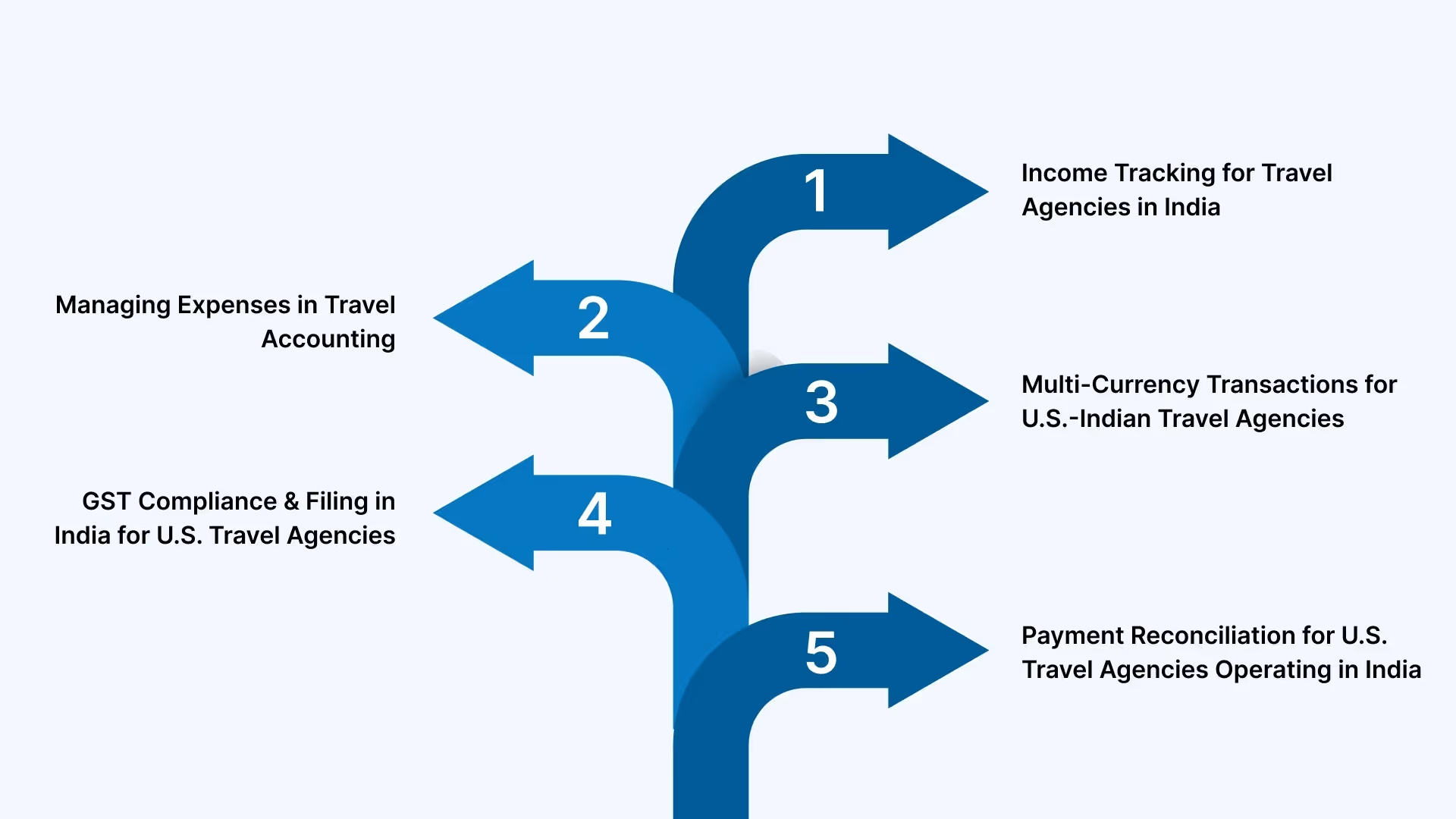
As a U.S.-based entrepreneur, setting up a travel agency in India requires you to understand local accounting practices that impact GST, multi-currency transactions, and expense management. Below are the critical aspects of travel accounting in India for U.S. travel agencies.

1. Income Tracking for Travel Agencies in India

Accurate income tracking is essential for tracking revenue streams such as ticket sales, tour packages, and hotel bookings. In India, this includes considering the GST on these services and ensuring correct income reporting for tax compliance. With precise tracking, U.S.-based travel agencies can identify the most profitable services in India and plan accordingly.

2. Managing Expenses in Travel Accounting

Managing expenses, like transportation costs, hotel fees, and tour guide charges, is necessary for cost control. In India, U.S.-based travel agencies also need to be mindful of GST applied to services purchased, such as accommodation, which can often be reclaimed. 

3. Multi-Currency Transactions for U.S.-Indian Travel Agencies

For U.S. travel agencies entering India, dealing with multiple currencies becomes a key challenge. Travel accounting software helps handle multi-currency transactions by automatically adjusting for exchange rates. This is especially critical in India, where exchange rates fluctuate. 

4. GST Compliance and Filing in India for U.S. Travel Agencies

In India, the Goods and Services Tax (GST) applies to services like tour packages, transportation, and hotel bookings. U.S. travel agencies must track GST paid on purchases (input tax) and charge the correct GST to customers (output tax). Regular GST filing is necessary to avoid penalties, with GST returns being filed monthly or quarterly, depending on your turnover.

5. Payment Reconciliation for U.S. Travel Agencies Operating in India

Payment reconciliation involves matching customer payments with bank records. For U.S. travel agencies in India, managing payments in INR (Indian Rupees) and USD requires meticulous attention to detail to avoid discrepancies. 

Also Read: Top Benefits of Outsourcing Accounting Services to India for U.S. Small Businesses

With these key aspects in mind, let’s explore how proper travel accounting can benefit U.S. travel agencies operating in India.

5 Benefits of Accounting for U.S. Travel Agencies in India

5 Benefits of Accounting for U.S. Travel Agencies in India

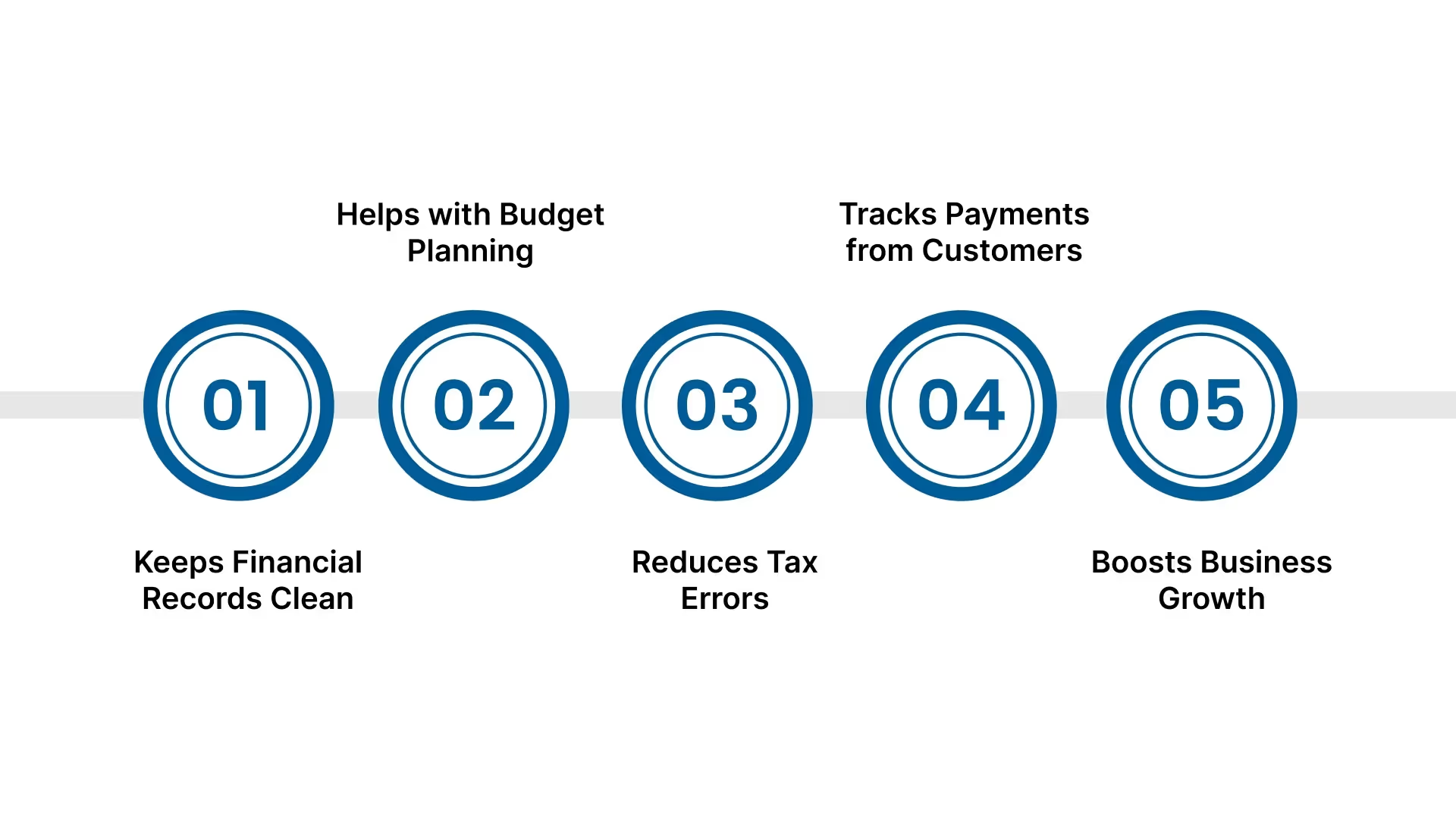
Travel accounting isn’t just about numbers; it directly impacts the sustainability and profitability of your U.S.-based travel agency in India. Here are the key benefits that U.S. travel agencies can utilize by implementing a robust accounting system tailored to India’s unique market:

1. Keeps Financial Records Clean

For U.S. travel agencies in India, clean financial records are vital for compliance with Indian tax authorities like the GST Department. Proper accounting ensures accurate reporting of income and expenses, which is valuable during audits or tax filing.

2. Helps with Budget Planning

A reliable accounting system allows travel agencies to predict operational costs and revenue projections, helping U.S. entrepreneurs make informed decisions when entering the Indian market. Budget planning helps you stay on track without overspending.

3. Reduces Tax Errors

Tax compliance is often a challenge for U.S. travel agencies operating in India due to the complexities of GST and tax filings. Effective accounting software ensures that tax errors are minimized so that you avoid costly penalties or audits.

4. Tracks Payments from Customers

Accurate payment tracking is essential to make sure you’re paid on time for services rendered. For U.S.-based travel agencies, this includes tracking deposits, advance payments, and final balances, all while keeping records compliant with Indian tax regulations.

5. Boosts Business Growth

A solid accounting system ensures financial stability while optimizing costs. For U.S. entrepreneurs expanding to India, it allows better forecasting of cash flow, leading to faster decision-making and sustained growth in a competitive market.

VJM Global offers comprehensive outsourced accounting services, including GST advisory, GST audits, and filing services to ensure your U.S. travel agency in India stays compliant with Indian tax laws. We handle all aspects of accounting, reducing your operational burden and minimizing the risk of costly penalties, allowing your agency to focus on growth. At the same time, we take care of the numbers.

From bookkeeping to audit prep, we handle it all. Discover how outsourcing can work for you.

To maximize these benefits, it’s essential to maintain the right books and financial statements. Let’s look at the key financial records U.S. agencies need to maintain.

8 Books Your U.S. Travel Agency Needs to Maintain for Travel Accounting in India

8 Books Your U.S. Travel Agency Needs to Maintain for Travel Accounting in India

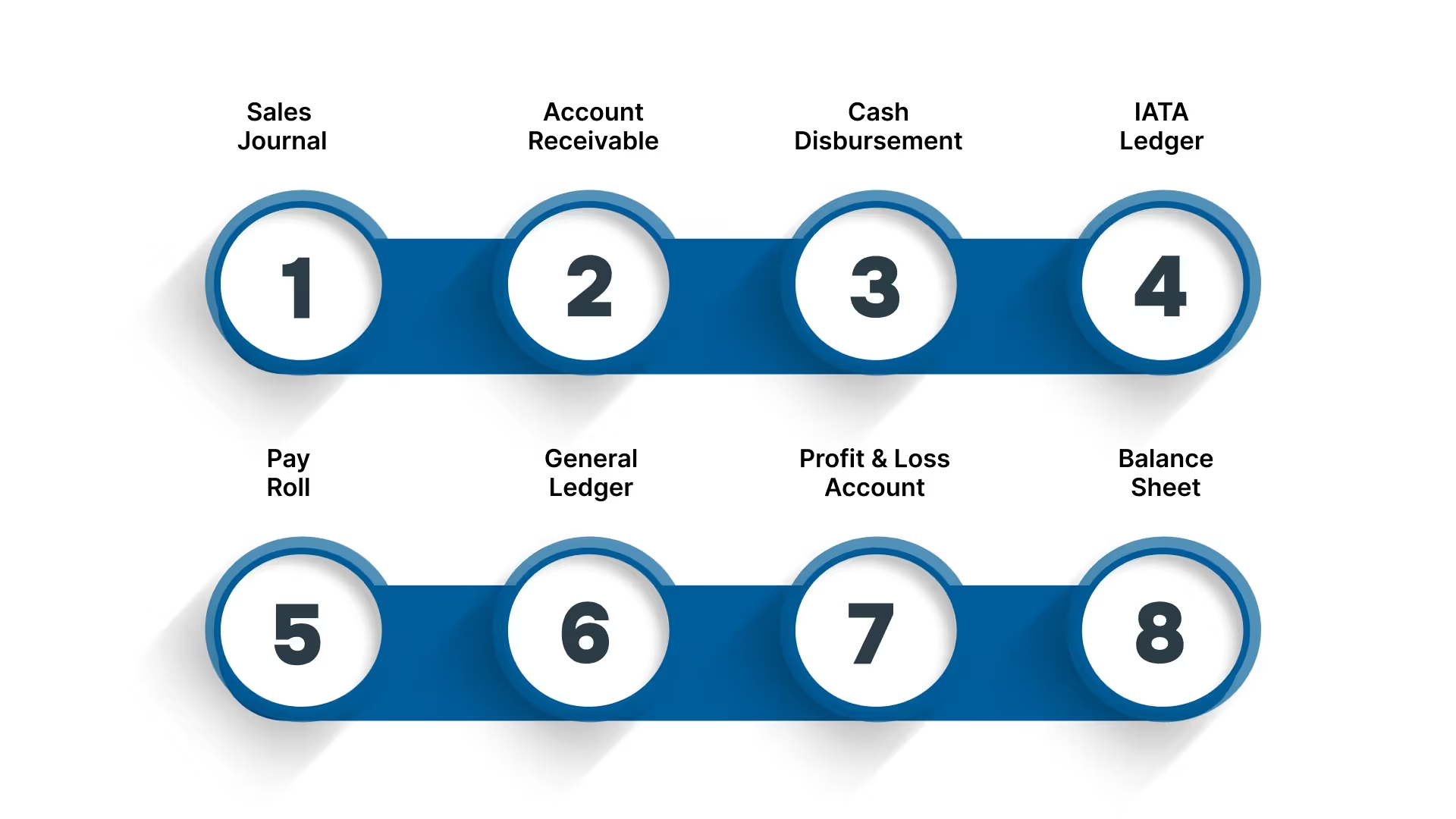
In India, certain books and statements are mandatory for tax compliance. For U.S. travel agencies entering India, it’s important to maintain the following to stay compliant with Indian tax authorities:

1. Sales Journal

Track all sales transactions and services provided. This includes tour packages, flight bookings, and hotel reservations, ensuring your income records are accurate for tax purposes.

2. Account Receivable

This book tracks payments owed by customers. It's important to monitor these for GST compliance so that taxes are correctly accounted for on both domestic and international payments.

3. Cash Disbursement

Record every expense paid out, including transportation, hotel fees, and guides’ charges. This will help keep expense tracking efficient and help with tax calculations.

4. IATA Ledger

The IATA ledger helps track payments made to the International Air Transport Association (IATA) for airline bookings. This ledger is particularly important for agencies handling international flights and must be accurately maintained for GST purposes.

5. Pay Roll

Tracking payroll accurately is important for travel agencies, especially in a new market like India. This includes managing employee wages, bonuses, and statutory deductions like Provident Fund (PF) and Employee State Insurance (ESI). For U.S. entrepreneurs entering India, using automated payroll systems ensures that all Indian tax laws are complied with and employee payments are processed on time.

6. General Ledger

The general ledger is where all accounting entries are recorded. For U.S.-based travel agencies, this includes income from ticket sales, expenses for bookings, and GST payables. Keeping a clear and accurate general ledger allows for smooth reconciliation with bank records and audit compliance with Indian tax authorities.

7. Profit and Loss Account

A profit and loss account (P&L) summarizes all revenues and expenses to determine your U.S.-based travel agency’s net income in India. For U.S. travel agencies, it helps identify profitable services, like tour packages, and areas of overspending, such as transportation costs.

8. Balance Sheet

A balance sheet shows a snapshot of your travel company’s financial position at any given moment. It lists assets, liabilities, and shareholder equity. For U.S. entrepreneurs, understanding the balance sheet is critical for assessing liquidity, debt levels, and the overall financial health of your travel agency in India.

Also Read: What Is a Fractional Controller and Why U.S. Firms Outsource to India

Now, let's explore the specific financial statements that need to be prepared for U.S. travel agencies operating in India.

Financial Statements Required for U.S.-based Travel Agencies in India

When expanding your U.S.-based travel agency to India, preparing the following financial statements is essential for compliance, transparency, and growth:

1. Income Statement

The income statement details all revenue earned and expenses incurred over a specific period, showing your net income or loss. For U.S.-based travel agencies in India, it’s important to assess your service profitability, especially in areas like tour packages and hotel bookings.

2. Position Statement

The position statement (or balance sheet) gives a snapshot of your financial position, showing assets, liabilities, and equity. This helps you assess the financial health of your U.S. travel agency in India and make informed decisions on capital investments and debt management.

Also Read: Understanding GAAP vs. Non-GAAP Gross Margin: Why Companies Outsource from the U.S. to India

Next, let’s look at the key items that should be included in your accounting statements for comprehensive financial clarity and compliance.

5 Items Included in Accounting Statements

5 Items Included in Accounting Statements

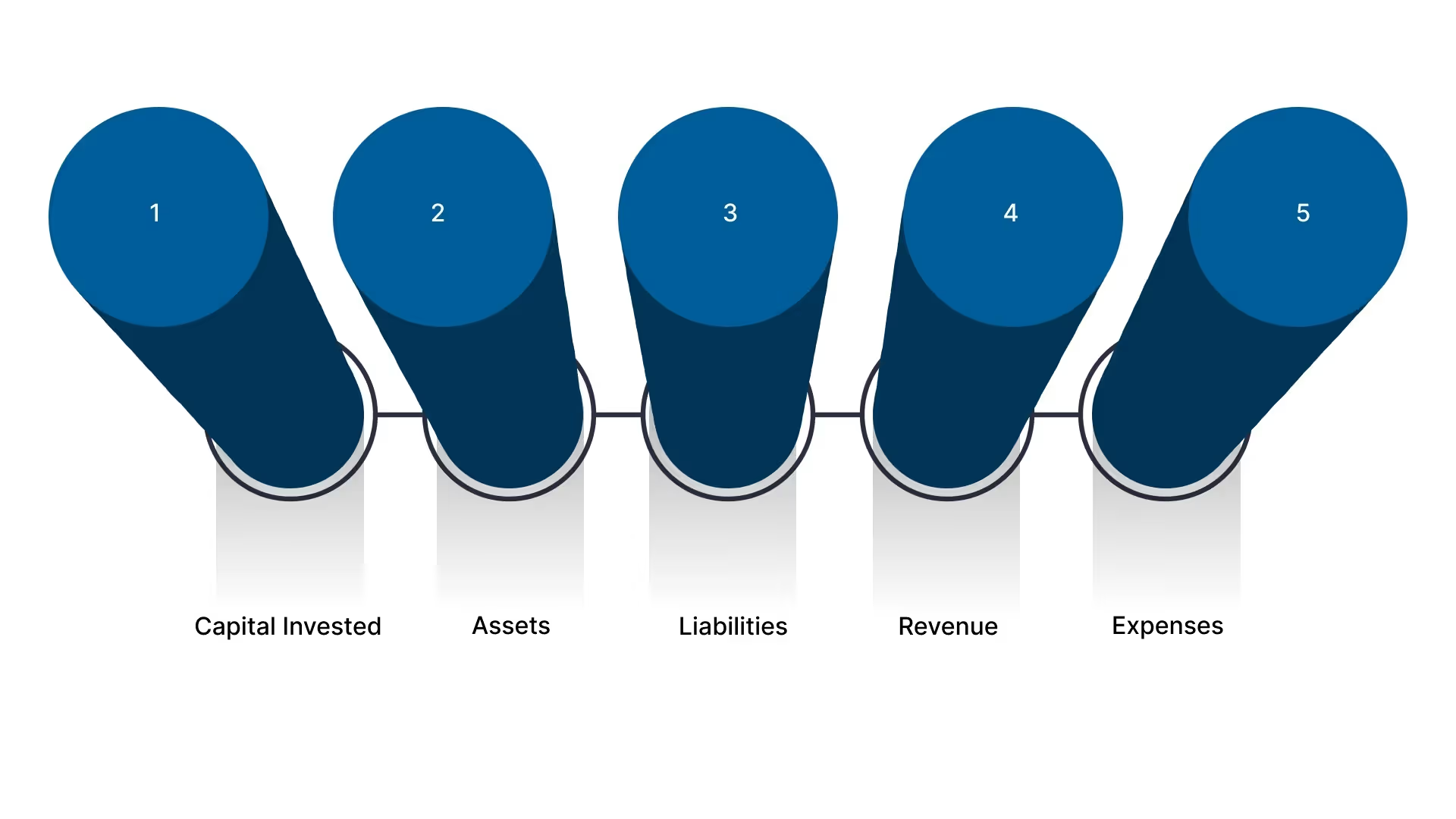
These are the key items that must be included in your U.S.-based travel agency's India accounting statements for financial clarity and tax compliance:

1. Capital Invested

Capital invested represents the money you’ve put into your travel agency to fund its operations, expansion, or new ventures. For U.S. entrepreneurs expanding to India, understanding capital flow is vital for managing funding and working capital.

2. Assets

Assets refer to what your U.S.-based travel agency owns in India, such as property, equipment, and cash. Travel agencies must track their assets to ensure they’re optimally utilized and accounted for in tax filings.

3. Liabilities

Liabilities are what your business owes, such as loans, supplier payments, and tax obligations. In the Indian market, it’s important for U.S. travel agencies to keep track of GST dues and loan repayments for accurate financial statements.

4. Revenue/Gains/Income

This includes income from ticket sales, hotel bookings, and tour packages. For travel agencies, tracking these revenue streams helps ensure accurate GST calculations and profitability analysis.

5. Expenses

Expenses refer to the costs incurred for running the business, including employee wages, transportation fees, and GST payments. Proper expense tracking helps control overspending and improve profit margins.

Also Read: Key Steps for Conducting Organizational Assessments: Why U.S. Firms Outsource to India

Now, let’s explore the best practices for U.S. travel agencies in India.

How Should a U.S.-based Travel Agency Maintain Accounting in India?

For a U.S.-based travel company expanding into India, maintaining accounting effectively requires organized processes, attention to detail, and appropriate tools. Here’s how to manage your travel accounting:

1. Categorize Travel Expenses Efficiently

Ensure all expenses, such as transportation, accommodation, and tour guide charges, are accurately categorized. This simplifies tax filing, especially GST reconciliation.

2. Track Employee Spending Thoroughly

Monitor employee spending on business-related activities, making sure reimbursement claims are accurate and in line with company policies. Use accounting software to automate and track these expenses for better financial oversight.

3. Streamline the Invoicing Processes

Make sure that invoices for tour packages and services are accurate and promptly sent. Use automated invoicing software to prevent missed payments and errors, maintaining cash flow.

4. Utilize Accounting Software

Using accounting software helps streamline financial management and guarantees accuracy. Tools like QuickBooks or Xero can handle multi-currency transactions, GST compliance, and financial reporting for U.S. companies in India.

Managing financial risks and tax regulations in India for U.S.-based travel agencies can be tricky. VJM Global provides risk and assurance advisory services, including due diligence audits, GST reviews, and internal audits, to guarantee your travel agency stays compliant with Indian financial laws. We’ll help you mitigate potential risks, giving you the confidence to scale your travel agency operations in India without worries.

Outsource your bookkeeping and save time without compromising accuracy. Let us handle the books.

Now that we know how to maintain accounting effectively, let’s explore the top accounting software options that can help U.S. travel agencies in India.

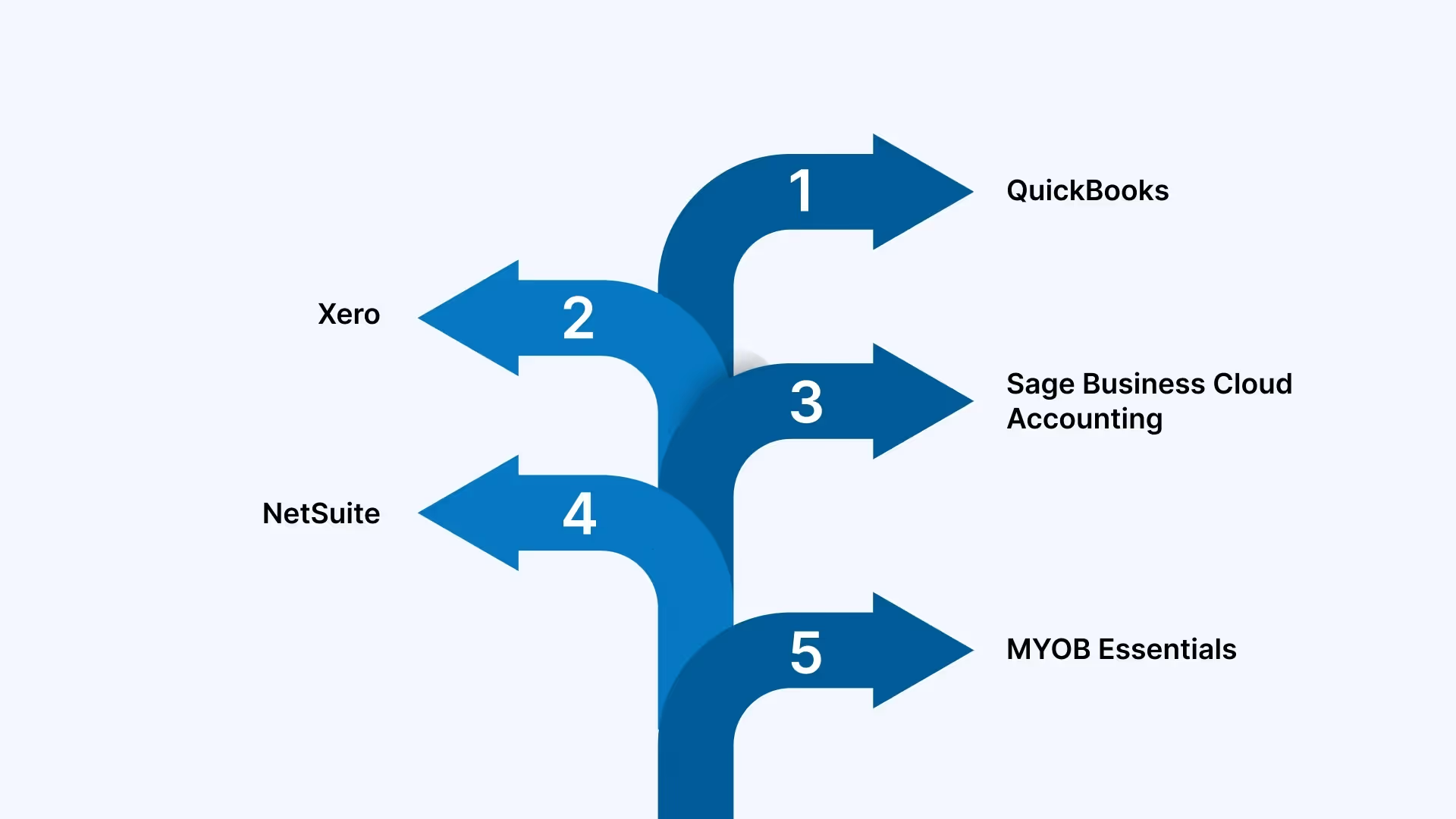
5 Best Accounting Software for U.S.-Based Travel Agencies in India

5 Best Accounting Software for U.S.-Based Travel Agencies in India

Choosing the right accounting software for your travel agency is key to ensuring compliance and financial efficiency. Here are five recommended options:

1. QuickBooks

QuickBooks offers comprehensive accounting features, including GST compliance and easy multi-currency handling, making it ideal for U.S. travel agencies expanding to India.

2. Xero

Xero’s cloud-based system helps manage your finances with real-time access, perfect for travel agencies that operate in both India and the U.S.

3. Sage Business Cloud Accounting

Sage is perfect for larger travel agencies, offering features like multi-currency support and automated GST calculations, ensuring smooth operations across multiple regions.

4. NetSuite

NetSuite provides end-to-end ERP solutions, making it suitable for global travel agencies looking to handle complex financial management, multi-currency transactions, and cross-border operations.

5. MYOB Essentials

MYOB Essentials is an affordable and easy-to-use accounting solution that simplifies GST compliance and multi-currency accounting, making it an excellent choice for smaller U.S. travel agencies entering India.

Also Read: How to Calculate Operating Working Capital

Now that we know the best tools to use, let’s look at how VJM Global can assist U.S. travel agencies with their accounting needs in India.

Make Travel Accounting Easy for Your U.S.-Based Travel Agency in India With VJM Global

Expanding your U.S.-based travel agency into India requires dealing with the complexities of local accounting, taxation, and regulatory compliance. VJM Global is your partner in ensuring that your Indian operations align with both Indian laws and U.S. tax requirements, providing seamless accounting outsourcing services to facilitate growth and profitability in this dynamic market.

1. Smooth U.S. Travel Agency Business Setup in India

When expanding your U.S. travel agency to India, VJM Global offers a smooth business setup process. Be it establishing a subsidiary, branch office, or liaison office, we guide you through Indian regulatory requirements and structure your operations in a way that aligns with Indian tax laws and financial regulations. This allows you to establish your presence with confidence.

2. GST Compliance & Advisory for U.S. Travel Agencies in India

For U.S. travel agencies operating in India, GST compliance is critical. VJM Global provides GST advisory services and GST audits to guarantee that your business meets all tax obligations in India. Our team helps U.S. businesses comply with India’s GST system, minimizing risks of penalties and ensuring smooth financial operations for travel agencies offering tour packages, hotel bookings, and transport services.

3. Accounting Outsourcing Services for U.S. Travel Agencies Expanding to India

VJM Global offers comprehensive accounting outsourcing services for U.S. travel agencies setting up in India. We handle financial reporting, expense management, income tracking, and payment reconciliation, freeing up your time to focus on growing your business. Our services make certain that your Indian operations stay compliant with Indian tax laws, helping you maintain a strong financial foundation.

4. Risk and Assurance Advisory for U.S. Travel Agencies in India

When expanding into India, U.S. travel agencies face unique financial and legal challenges. VJM Global’s risk and assurance advisory services, including due diligence audits and GST reviews, help you identify and mitigate potential risks. We assure that your Indian operations are compliant with local regulations, giving you the confidence to grow your travel agency in a new market.

5. Statutory and Internal Audits for U.S. Travel Agencies in India

U.S. travel agencies operating in India need to comply with local financial regulations. VJM Global’s statutory audits and internal audits assure that your financial statements adhere to Indian Accounting Standards (Ind AS) and other relevant Indian tax laws. We help streamline your accounting operations so that your travel agency remains audit-ready and in full compliance with Indian regulations.

VJM Global provides specialized accounting solutions to keep your U.S. travel agency operating smoothly in India. If you need GST compliance, accounting outsourcing, or risk management services, we ensure that your business stays compliant and financially efficient so you can focus on growth and expansion.

Conclusion

Travel accounting plays a critical role in helping your business operations run smoothly in a new market like India. From GST compliance to expense management, getting the accounting system right from the start will help your travel agencies grow quickly and sustainably. U.S. entrepreneurs expanding into India need to stay compliant with local tax laws, track multi-currency transactions, and manage expenses efficiently. 

VJM Global handles it all with tailored accounting outsourcing services for U.S. travel agencies entering India, so your Indian operations are efficient and compliant with local tax laws. With our outsourced services, you can focus on business growth while we handle the numbers.

Contact VJM Global today for expert guidance on accounting for U.S. travel agencies in India.

FAQs

1. How can U.S. travel agencies manage GST compliance in India?

U.S. travel agencies must adhere to Indian GST laws, including proper invoicing, timely filing, and input tax credits to avoid penalties and maintain tax efficiency.

2. What are the implications of multi-currency transactions for U.S. travel businesses in India?

Handling multi-currency transactions requires accurate conversion and real-time updates, maintaining compliance with RBI and minimizing errors in cross-border payments or invoicing.

3. How does India’s tax system impact U.S. travel agencies setting up operations?

U.S. travel agencies must align with Indian tax laws, including GST, transfer pricing, and FEMA, to ensure smooth operations and tax efficiency in India.

4. How does VJM Global assist with setting up accounting systems for U.S. travel agencies in India?

VJM Global helps implement automated accounting solutions, ensuring GST compliance, accurate multi-currency transactions, and streamlined expense management to facilitate seamless operations in India.

5. What are the challenges of managing U.S. and Indian accounting regulations?

Understanding different tax regulations, including GST, and understanding the impact of transfer pricing and local compliance can be challenging for U.S. agencies operating in India.

Recent Blogs

Contact Us

We'd love to hear from you! Please fill out the form and we'll get back to you as soon as possible.