Introduction
US ecommerce hit $326.7 billion in Q1 2026, up 9.8% year-over-year, according to the Census Bureau's Q1 2026 retail trade report. That growth means real opportunity, but most first-time founders still struggle with the legal, tax, and compliance steps that come before the first sale.
Starting an online business has never been more accessible. Startup costs are lower, remote tools are cheaper, and you can test an idea before walking away from a paycheck. A laptop and an internet connection are often enough to reach customers well beyond your zip code.
This path isn't reserved for one type of person. Side-hustlers, laid-off professionals, remote workers, stay-at-home parents, and immigrants building US-based ventures are all launching online businesses right now, often for very different reasons.
This guide walks through what starting an online business in the US actually requires in 2026, from legal setup to going live, without skipping the parts that trip founders up later.
Key Takeaways
- Online business formation is faster than ever in 2026
- Still, complete your LLC/EIN registration, sales tax nexus review, and licensing before you launch
- Success hinges on validating demand and pricing correctly, not just having a good idea
- Getting your business structure and bookkeeping right early avoids expensive fixes down the road
- Scale only after your operations and cash flow have stabilized
What Is an Online Business?
An online business sells products or services primarily through digital channels instead of a physical storefront—that's the whole definition.
What matters is the value you deliver, not your branding or your "vision." A clean logo doesn't replace a product people actually want to buy.
Most online businesses fall into a handful of common formats:
- Ecommerce/dropshipping – selling physical products through your own store or a supplier network
- Service-based/freelance – consulting, design, writing, or other expertise delivered remotely
- Digital products/SaaS – software, courses, templates, or other non-physical goods
- Subscription/membership – recurring access to content, products, or community
- Marketplace-based – selling through Amazon, Etsy, or similar platforms
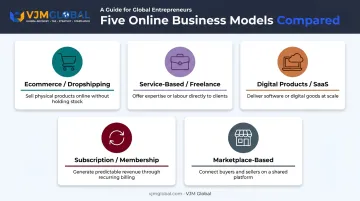
Because each model has different tax treatment, cash flow patterns, and compliance obligations, know which one you're building before you pick tools or a legal structure.
What to Know Before You Start an Online Business
Many beginners underestimate the day-to-day grind of running an online business. Before you commit time and money, get realistic about what the work actually demands day to day.
Here's what to understand upfront:
- Time investment (first 3-6 months): Marketing, fulfillment, and customer service eat more hours than most people budget for, often 20-30+ hours a week even for a "side" business
- What you can handle solo: Basic bookkeeping, customer emails, and content creation are manageable alone; complex tax filings, large-scale fulfillment, and legal document drafting usually aren't
- Realistic income timeline: Steady, predictable revenue typically takes 6-12 months, not weeks
- Skill demands: Some models lean on creative or technical skill (SaaS, design services); others lean on operations and organization (ecommerce fulfillment, service scheduling)
- Quick income vs. sustainable business: Chasing a fast payday looks different from building something you can hand off, sell, or scale later
Get clear on these before you register anything. It changes how you validate, price, and structure the business.
Why Start an Online Business Now – Opportunities and What to Watch For
Favorable market conditions make this a smart time to launch an online business, but that doesn't guarantee your venture will succeed. Here's what's driving the opportunity, and what deserves a closer look before you commit.
Opportunities Worth Acting On
Online sales made up 16.9% of total US retail sales in Q1 2026, per the Census Bureau's retail sales data, and that share keeps climbing as consumers grow more comfortable buying digitally and hiring services remotely.
Other tailwinds:
- Lower overhead than a physical business, no lease, smaller team, cloud-based tools instead of office infrastructure
- Pricing flexibility to test offers quickly without renegotiating a storefront lease
- Geographic reach beyond your local market from day one
Pitfalls Often Overlooked
The same low barriers that make starting easy also hide real costs. Watch for:
- Underestimated true costs, as platform fees, ad spend, shipping, and software subscriptions add up fast
- Unrealistic break-even timelines in competitive niches where customer acquisition costs are climbing
- Sales tax and compliance obligations that vary by state and grow as revenue increases
- Over-reliance on the founder for every task, which caps growth and burns you out
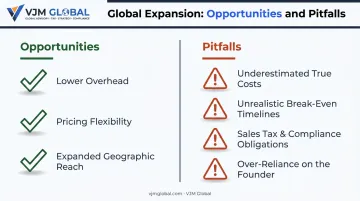
None of this replaces the fundamentals: a validated offer, disciplined pricing, and unit economics that work before you scale.
How to Start an Online Business – Step by Step (US, 2026)
This section breaks the process into execution stages you can actually follow. The most common mistakes at this stage: rushing to launch before validating demand, ignoring state tax obligations, underpricing to "win" customers, and scaling ad spend before the numbers work.
Step 1 – Validate Your Idea, Customer, and Demand
Before building anything, define the specific problem you're solving and who is willing to pay for it. "Interested" and "willing to pay" are not the same thing, and confusing the two sinks a lot of early launches.
Low-cost validation methods:
- Build a simple landing page and measure sign-ups or waitlist interest
- Take pre-orders before you've built the full product
- Run small paid ad tests ($50-$200) to gauge click and conversion rates
- Talk directly to potential customers, not just friends and family
Skip this step and you risk building something nobody actually buys.
Step 2 – Choose a Business Structure and Register It
Your structure affects liability, taxes, and credibility with payment processors and suppliers.
| Structure | Liability | Tax Treatment | Trade-Off |
|---|---|---|---|
| Sole proprietorship | Personal and business liability not separated | Income flows to personal return; self-employment tax applies | Fast to start, but exposes personal assets |
| LLC | Generally protects personal assets | Flexible; single-member LLCs are typically disregarded for tax purposes | Added protection, plus state filing and ongoing duties |
| C Corporation | Strongest liability separation | Corporation pays tax; distributions can be taxed again | Better for outside investment, more paperwork |
To register:
- Get an EIN from the IRS – it's free, and the IRS issues it directly online once state formation is complete
- Register with your state's Secretary of State – fees and requirements vary widely by state
- Reserve your business name or DBA if operating under a name different from your legal entity
Common miss: staying a sole proprietorship too long and exposing personal assets as revenue climbs.
Step 3 – Handle Taxes, Licenses, and Compliance
Business licenses and permits depend on your state, city, and product type. Digital and service businesses often need fewer permits than physical product sellers, but "fewer" doesn't mean "none."
Sales tax nexus is the piece most founders miss. You can owe sales tax in a state even without a physical presence there, once you cross that state's revenue or transaction threshold.
Example: Virginia requires registration once a remote seller exceeds $100,000 in annual gross retail sales or 200 transactions, according to the Virginia Department of Taxation. Other states set different thresholds and count sales differently.
Practical steps:
- Open a dedicated business bank account separate from personal finances
- Track sales by destination state as your revenue grows
- Get guidance from a tax professional early instead of untangling multi-state issues after the fact
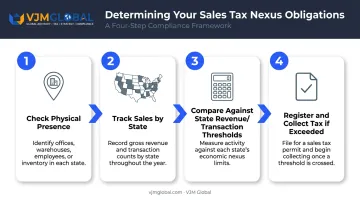
Where founders slip: ignoring nexus obligations until several states flag non-compliance at once.
Step 4 – Build Your Online Store or Service Platform
Match your platform to your business model:
- Ecommerce: Shopify or WooCommerce
- Services: Squarespace or a custom-built site
- Payments: Stripe, PayPal, or Square, compared on transaction fees at your expected order volume
Before launch, make sure these pages exist and match your actual policies:
- Terms of service
- Privacy policy
- Returns/refund policy
A frequent trap: checkout flows that don't match the return or refund policy customers were shown. That mismatch creates disputes and chargebacks fast.
Step 5 – Set Up Accounting, Bookkeeping, and Back-Office Support
Set up cloud accounting software — QuickBooks and Xero are the standard picks — from day one. Track income, expenses, and tax obligations as you go, not in a scramble every April.
As order volume grows, many US founders outsource bookkeeping, compliance filings, and back-office tasks rather than hiring in-house. This keeps overhead down while reducing the errors that come from doing it all yourself between customer emails and product decisions.
Firms like VJM Global support growing online businesses with accounting outsourcing and back-office work, integrating with platforms like QuickBooks and Xero to keep multi-state financials and tax filings accurate as operations scale. That kind of support lets founders spend more time on growth and less on reconciling spreadsheets at midnight.
Common pitfall: DIY bookkeeping all year that turns into a stressful, expensive scramble at tax season.
Step 6 – Launch, Market, and Scale Sustainably
Diversify how you acquire customers — email, organic search, paid ads, and marketplaces — instead of depending on one channel that could shift its algorithm or fees overnight.
Track the basics from day one:
- Conversion rate
- Customer acquisition cost (CAC)
- Repeat purchase rate
For context, Shopify reports an average ecommerce CAC of $41.83 as of April 2026, though this varies significantly by industry and product. Use it as a reference point, not a target.
Stabilize operations and cash flow before increasing ad spend or hiring. One frequent misstep: scaling marketing budget before pricing and fulfillment systems are actually proven to work.
Conclusion
Starting an online business in the US in 2026 comes down to getting the legal, financial, and operational basics right, consistently, not just at launch. Validation and realistic expectations matter more than how fast you get to "live."
That same discipline carries past launch day: long-term success depends on revisiting pricing, compliance, and systems regularly as revenue grows. What worked at $10,000 in monthly revenue won't necessarily hold at $100,000.
Frequently Asked Questions
Do I need an LLC to start an online business in the US?
No, an LLC isn't legally required to start. Many founders begin as sole proprietors, then form an LLC once revenue grows and liability protection or added credibility with processors becomes worth the cost.
How much does it cost to start an online business in the US in 2026?
Basic setup (domain, platform fees, and state registration) typically costs $100 to $500. Inventory-based or heavily marketed businesses often need $2,000 or more for stock and advertising.
Do I need a business license to sell products online in the US?
Requirements vary by state, city, and product type. Digital and service businesses often need fewer permits than physical product sellers, but you should still check your state and local licensing portal.
What is sales tax nexus and does it apply to my online business?
Nexus means a state can require you to collect its sales tax, either through physical presence or by exceeding its economic threshold for revenue or transactions. Rules vary by state, so check each state where you have meaningful sales.
Can I legally run an online business from home in the US?
In most cases, yes. Check local zoning rules and any home-occupation permit requirements in your city, since these vary and are separate from IRS home-office deduction rules.
How long does it typically take to start and launch an online business?
Setting up the basics (registration, storefront, and payment processing) can take a few days to a few weeks. Validating demand and reaching steady income usually takes several months longer.