%20(22).webp)
As the global gaming market surpasses $200 billion in revenue, financial clarity has become as vital as innovation. Studios that track every rupee or dollar spent on development, marketing, and post-launch support have a significantly better chance of achieving long-term stability.
For US game development companies working with teams or subsidiaries in India, accounting is not just about tracking numbers; it’s about maintaining financial clarity across borders. Proper bookkeeping helps studios comply with both US GAAP and Indian tax regulations, secure investor trust, and plan sustainably for future growth.
In this guide, we’ll explore how proper bookkeeping and accounting practices help US gaming companies stay profitable and compliant, while focusing on what they do best: creating exceptional games. You’ll learn about financial tracking methods, revenue recognition rules, and outsourcing options that simplify accounting for studios of all sizes.

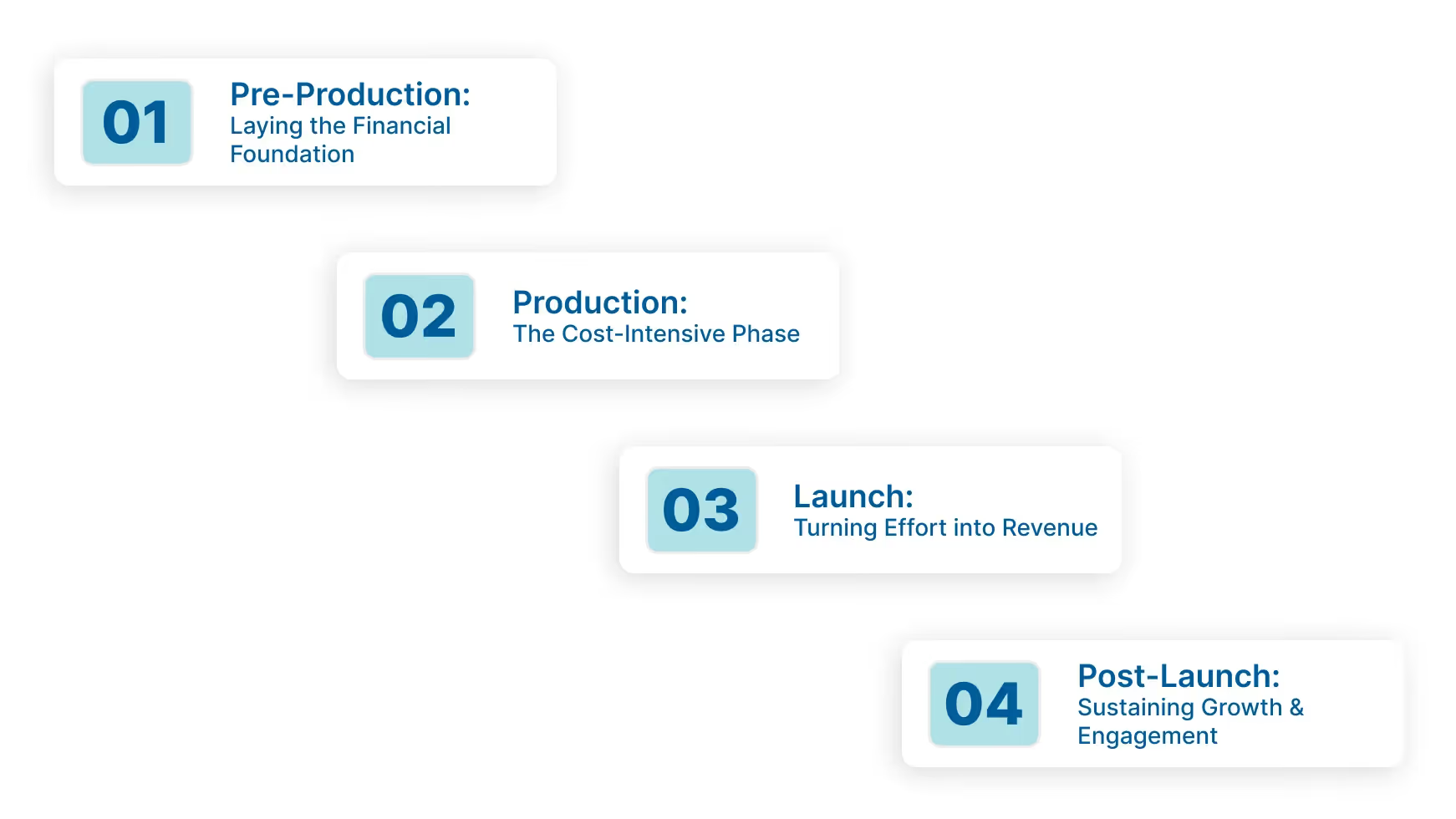
From concept to post-launch updates, each stage of game development carries its own financial rhythm. Understanding this lifecycle helps studios plan budgets, track spending, and manage profitability with greater control.
This is where creative ideas begin to take shape and early costs appear.
Key financial elements:
Accounting Tip: Track R&D costs separately; some can be capitalized for tax benefits if future economic value is expected.
Production consumes the largest share of a game’s budget.
Typical expenses include:
Why accounting matters:
Milestone-based funding from publishers often ties payments to specific progress milestones. Accurate bookkeeping ensures revenue and costs are recognized in sync, avoiding distorted financial reports.
The release phase finally brings in income, but at a cost. Studios must manage:
Accounting Tip: Use automated reconciliation tools to match platform statements with internal sales data.
Modern games often continue generating revenue through live services and DLCs. Ongoing financial activities include:
Why it matters: Under IFRS 15 or ASC 606, revenue from ongoing services must be recognized over time rather than all at once.
Once studios understand the financial journey of a game, the next step is establishing robust systems to track every cost and income stream effectively.
Effective tracking begins with understanding how every rupee or dollar flows through the project. This involves categorizing expenses accurately, using reliable tools, and maintaining up-to-date records from the project's inception through completion.
This includes everything that contributes directly to building the game, like:
These often get overlooked but can quietly erode margins:
A successful game launch often requires heavy promotion.
With your financial categories established, the next step is to choose the right accounting method one that aligns with your studio’s size, structure, and international presence.
The accounting method a studio adopts determines how income, expenses, and profitability appear on its books. Choosing the right one ensures transparency, consistency, and compliance with both domestic and international standards.
Below are the primary accounting methods employed by game development companies, along with the circumstances under which each approach is most effective.
.webp)
The simplest method is to record income and expenses when cash changes hands.
Example: A mobile game studio records app store payments only when funds are deposited into their account, not when sales occur.
Under this method, income and expenses are recorded when earned or incurred, not when cash is received or paid.
Example: If a developer completes a milestone and invoices a publisher in March but receives payment in April, accrual accounting records the income in March when it was earned.
Commonly used in industries with long development cycles, this method tracks costs and revenues by individual project rather than by department or fiscal year.
Example: A game service company maintains separate ledgers for “Racing Legends 3” and “Puzzle Planet,” ensuring the financial health of each project is transparent.
This focuses on identifying and managing costs associated with game production, from design hours to server hosting.
Tip: Cost accounting helps studios evaluate whether outsourcing certain assets or keeping production in-house is more economical.
Some game studios employ a hybrid approach, combining cash accounting for simpler transactions with accrual accounting for larger or deferred items, such as royalties or subscription revenue.
Once you understand how each accounting method works, the next step is to determine which approach best fits your studio, especially if you operate between India and the US, where compliance standards differ.
Accurate bookkeeping is the foundation of financial stability for any game studio. In an industry where revenue depends on release cycles, publisher payments, and digital sales, proper accounting ensures transparency, compliance, and smarter decision-making, especially for studios operating across the US and India.
VJM Global assists game companies and firms in the US in maintaining accurate books, managing cross-border transactions, and aligning operations with both Indian and U.S. standards, ensuring that creativity never comes at the expense of financial control.
Also read: Understanding the Differences Between GAAP and GAAS
Understanding these benefits is only the start. To unlock their full potential, game studios must select an accounting method that matches their structure and goals.
Selecting the appropriate accounting method isn’t just about compliance; it’s about clarity.
As studios scale, managing complex revenue streams and compliance demands becomes increasingly challenging. That’s where outsourced accounting provides efficiency, accuracy, and peace of mind.
Between royalties, multi-currency transactions, and complex compliance requirements across the US, studios often struggle to balance creativity with accurate financial management. Below are the key reasons why outsourcing accounting to India is a smart move for US game development companies.
Outsourced firms employ professionals who understand both gaming industry accounting and international regulations. They know how to handle areas such as deferred revenue, R&D capitalization, and royalty tracking that often confuse internal teams.
Maintaining an in-house accounting department can be expensive, especially as you scale. Outsourcing reduces overhead costs, such as salaries, benefits, and software subscriptions, thereby freeing up funds for development, design, and marketing.
As gaming becomes increasingly international, studios must comply with tax and reporting standards across multiple jurisdictions. Outsourced accountants ensure timely filings and compliance with IFRS, GAAP, or Indian Accounting Standards (Ind AS), thereby reducing compliance risk.
Also read: Understanding US GAAP Consolidation Accounting Rules
Reputable accounting partners utilize secure cloud systems and automated tools for reconciliation, thereby reducing human error and safeguarding sensitive financial data.
Outsourcing enables studios to scale their financial operations without hiring new staff. Whether handling a single project or multiple simultaneous releases, accounting partners can adjust resources as needed.
Also read: Different Methods for US GAAP Depreciation: Why Outsourcing to India from the US Makes Sense
Outsourcing delivers value only when you partner with professionals who understand both gaming and international accounting. That’s where VJM Global stands out.
Outsourcing bookkeeping and payroll services can offer numerous advantages for managing your finances and ensuring accurate payroll. Here's how VJM Global can help your business thrive:
Partnering with VJM Global gives you access to a team of skilled professionals who efficiently manage your outsourced tasks, allowing you to focus on growing your business with peace of mind.
Accurate accounting enables studios to control costs, manage publisher relationships effectively, and maintain compliance across various regions. Whether you’re an indie developer or a global studio, the right accounting strategy ensures your projects remain sustainable and investor-ready.
By partnering with experts like VJM Global, game studios can streamline bookkeeping, tax filings, and cross-border compliance, freeing up time to focus on what truly matters: building great games.
Ready to strengthen your studio’s financial foundation?
Contact VJM Global today to discuss tailored accounting and outsourcing solutions for your gaming business.
Gaming studios handle unique elements like royalties, multi-platform revenues, and deferred income from DLCs, requiring specialized accounting beyond standard tech bookkeeping.
Yes. Costs tied to creating a commercially viable game, like coding, testing, and design, can be capitalized under accounting standards if future revenue is expected.
Cross-border operations bring tax compliance issues, currency fluctuations, and transfer pricing complexities. Partnering with experts like VJM Global helps manage these efficiently.
Accurate accounting data shows how budgets impact engagement and ROI, helping studios make smarter choices in design, marketing, and production.
Strong accounting builds credibility by proving financial control, accurate forecasting, and transparency key factors investors look for in a studio.