When a US company establishes a business presence in India under a Private Limited Company structure, the company name becomes an essential part of its identity, brand positioning, compliance status, and regulatory credibility. However, as business strategies change, with new markets, acquisitions, pivots, or reputational repositioning, the company name may no longer accurately reflect the business’s direction or market perception.
This is where a company name change becomes a strategic decision rather than a simple rebranding effort. For US companies operating in India, renaming requires managing Indian corporate law, Ministry of Corporate Affairs (MCA) protocols, shareholder approvals, updated charter documents, and extensive post-approval compliance.
This guide explains the process in a highly practical and accessible way, specifically for US companies building or scaling operations in India.

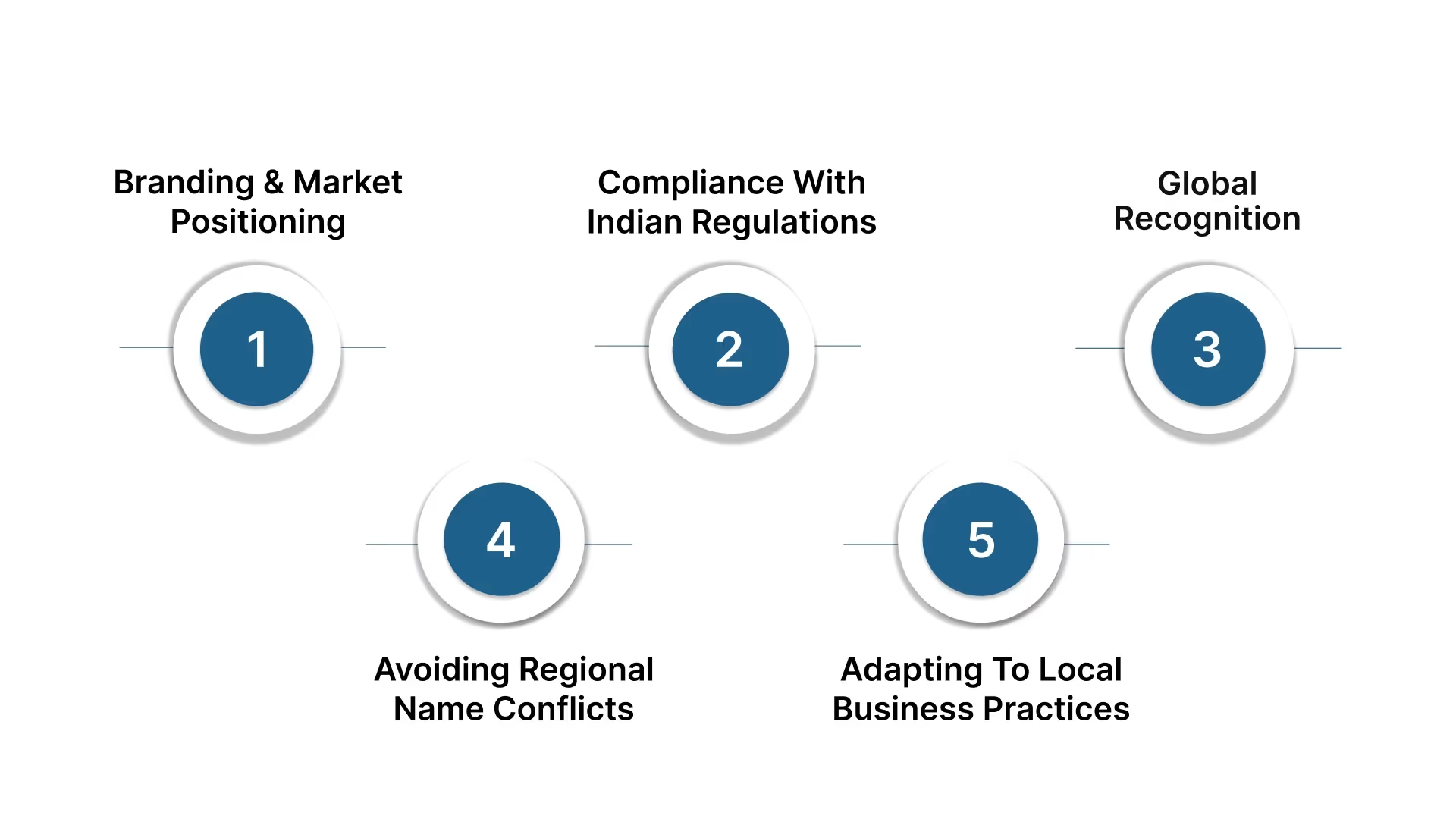
Renaming your US-based private limited company can have multiple advantages, particularly when you’re expanding or establishing a presence in India. For U.S. companies entering the Indian market, here are some key benefits:
Expand your US brand identity seamlessly in India with VJM Global. From Private Limited Company re-registration and subsidiary setup to FEMA and cross-border compliance, our experts ensure your rebranding aligns perfectly with Indian corporate, legal, and tax frameworks, setting the stage for smooth market integration.
Also Read: How to Register a Trademark in India: Step-By-Step Guide
Once you understand the advantages, it's important to meet the essential criteria for renaming your company in compliance with both U.S. and Indian regulations.

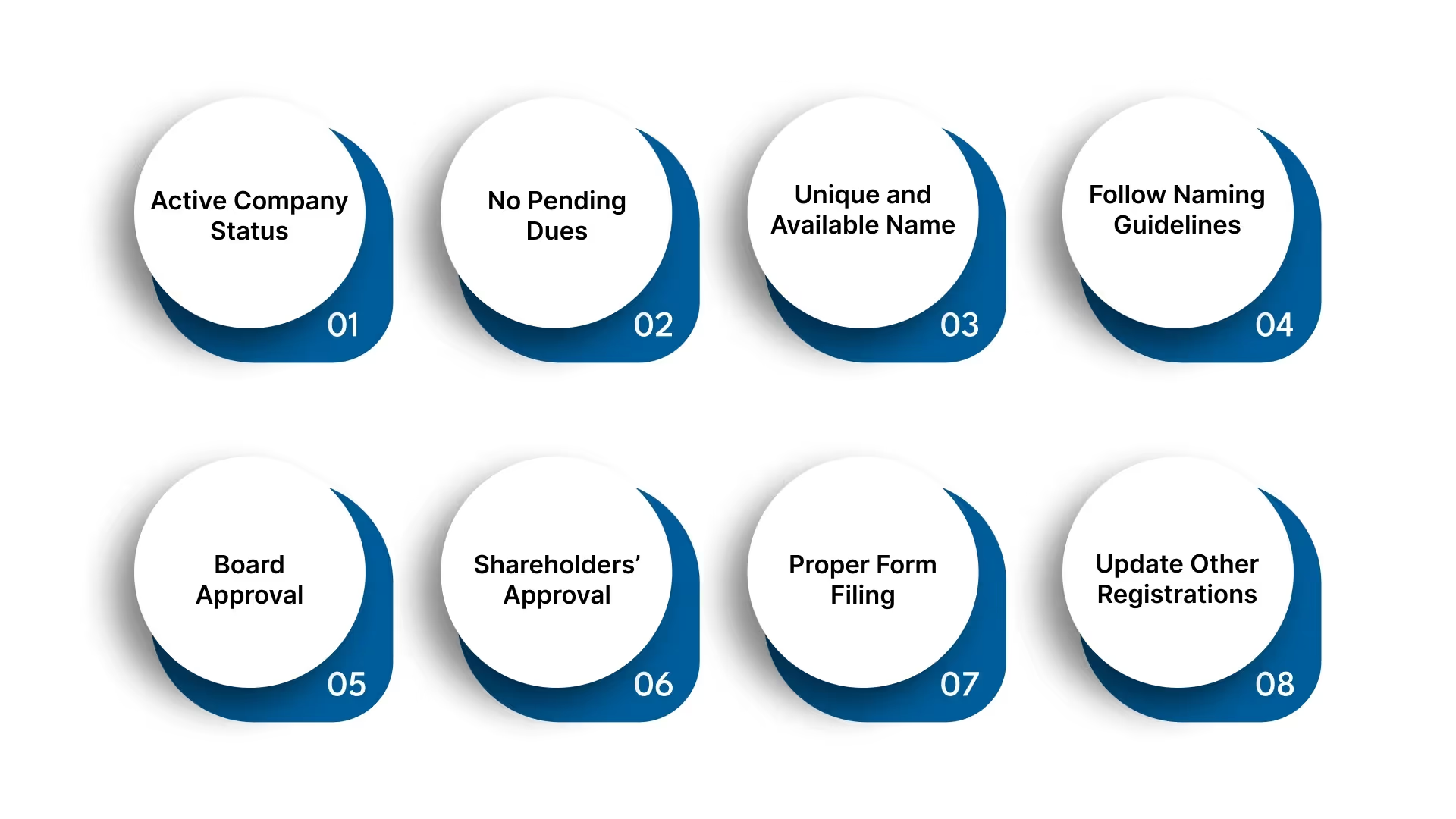
Before embarking on the journey to revamp your private limited company name, U.S. companies expanding into India must meet several essential criteria to ensure compliance with the Indian Companies Act:
1. Active Company Status
A U.S. company must ensure its Indian subsidiary is operational and not struck off by the Registrar of Companies (RoC), as inactive status would halt the name change process.
2. No Pending Dues
If there are unresolved financial obligations like unpaid taxes or penalties in India, the U.S. company cannot proceed with the name change until they are cleared to avoid compliance issues.
3. Unique and Available Name
The company must ensure that the desired name is available and unique; for example, if an Indian firm has already trademarked a U.S. company’s desired name, it must select an alternative name.
4. Follow Naming Guidelines
The name must align with Indian regulations; for instance, a U.S. company cannot use a name like "Global Enterprises" if it doesn’t reflect its actual business activities in India.
5. Board Approval
The Board of Directors must unanimously approve the name change; if the U.S. company faces internal disagreements, this could delay the process significantly.
6. Shareholders’ Approval
U.S. companies may encounter challenges if shareholders, especially Indian investors, oppose the name change; an extraordinary general meeting (EGM) will be needed to resolve this.
7. Proper Form Filing
The company must file forms like RUN, MGT-14, and INC-24 accurately and promptly; missing deadlines or incomplete paperwork could result in penalties or delays.
8. Update Other Registrations
Post-name change, a U.S. company must update key registrations like GST, PAN, and bank accounts to reflect the new name or risk operational and legal disruptions in India.
Also Read: Company Registration Cost in India Explained
Having met these criteria, it’s crucial to consider other key aspects before initiating the name change process to ensure smooth transitions between the U.S. and Indian markets.
As a US business in India or planning to expand, it’s critical to carefully evaluate the benefits against potential risks and costs associated with changing your company’s name. There are several key considerations before initiating the process:
Once these considerations are evaluated, understanding the documents required will make the process smoother for U.S. businesses expanding into India.
For U.S. companies expanding into India, the following documents are required to comply with Indian regulations when changing a private limited company name:
Also Read: Benefits of LLP Registration in India
After gathering the necessary documents, understanding the step-by-step process for renaming your company will ensure the smooth execution of your US business strategy in India.

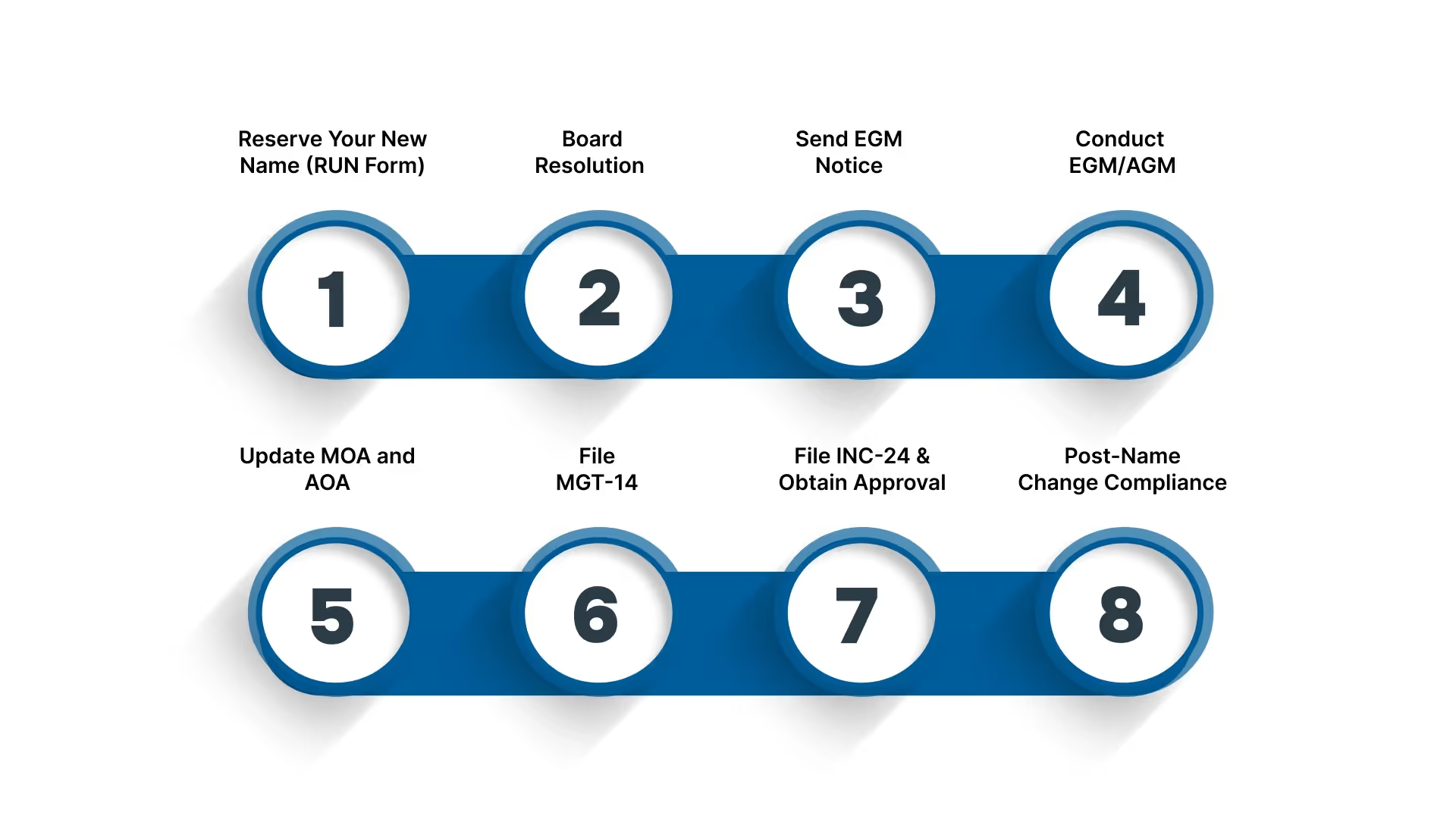
Renaming your company requires a series of well-defined steps to ensure everything is completed according to the Companies Act, 2013 and other relevant regulations:
For a U.S. company planning to expand into India, the RUN form ensures the new name is unique and aligns with Indian naming guidelines. For example, a U.S. tech company may submit a RUN form only to discover that a similarly named Indian startup has already claimed it, causing delays in the process.
After reserving the new name, a Board Resolution must be passed to approve the name change and authorize further action. U.S. companies with directors in both countries may face logistical challenges scheduling the meeting, especially when coordinating across time zones.
Once the Board approves the name change, an EGM notice must be sent to all shareholders at least 21 days prior to the meeting. A U.S. company with Indian shareholders may face challenges ensuring the timely delivery of the notice, especially if some shareholders are based abroad.
The EGM/AGM is where the shareholders formally approve the name change through a special resolution. A U.S. company expanding into India might face delays if shareholders are unable to attend due to time zone differences or travel restrictions, affecting the approval timeline.
Once the name change is approved, the MOA (Memorandum of Association) and AOA (Articles of Association) must be updated. A U.S. company with a large capital base may face difficulties in ensuring these documents accurately reflect the new name, especially when dealing with complex shareholder structures.
The company must file MGT-14 with the Registrar of Companies (RoC) within 30 days of passing the special resolution. This step is crucial to legalize the name change. A U.S. company may face challenges in coordinating the filing process if the necessary documentation is delayed due to time zone differences or incomplete paperwork.
INC-24 must be filed for final approval from the RoC, including certified copies of the special resolution and meeting minutes. A U.S. company may experience delays in obtaining these approvals if local documents are not properly notarized or if translations are required for official submissions.
After receiving approval, the company must update its records, contracts, and other legal documents to reflect the new name. This includes making changes to bank accounts, GST registrations, and other statutory filings. For a U.S. company, this can be a complex process involving multiple departments and coordination with Indian regulatory authorities.
Rebrand your US Private Limited presence in India the right way. VJM Global’s financial restructuring, GST and corporate tax planning, and direct taxation services simplify your transition while maintaining full compliance with Indian regulations, so your company name and operations reflect the strength of your global vision.
After following the name change process, updating platforms and records will be essential to ensure consistency across both U.S. and Indian operations.
Once the company’s name change is approved, U.S. companies expanding into India must update various documents and platforms:
Also Read: Understanding the Three Financial Statements and Their Connections
With updated platforms, you need to understand the legal provisions in India that guide the company name change process for both U.S. and Indian legal compliance.

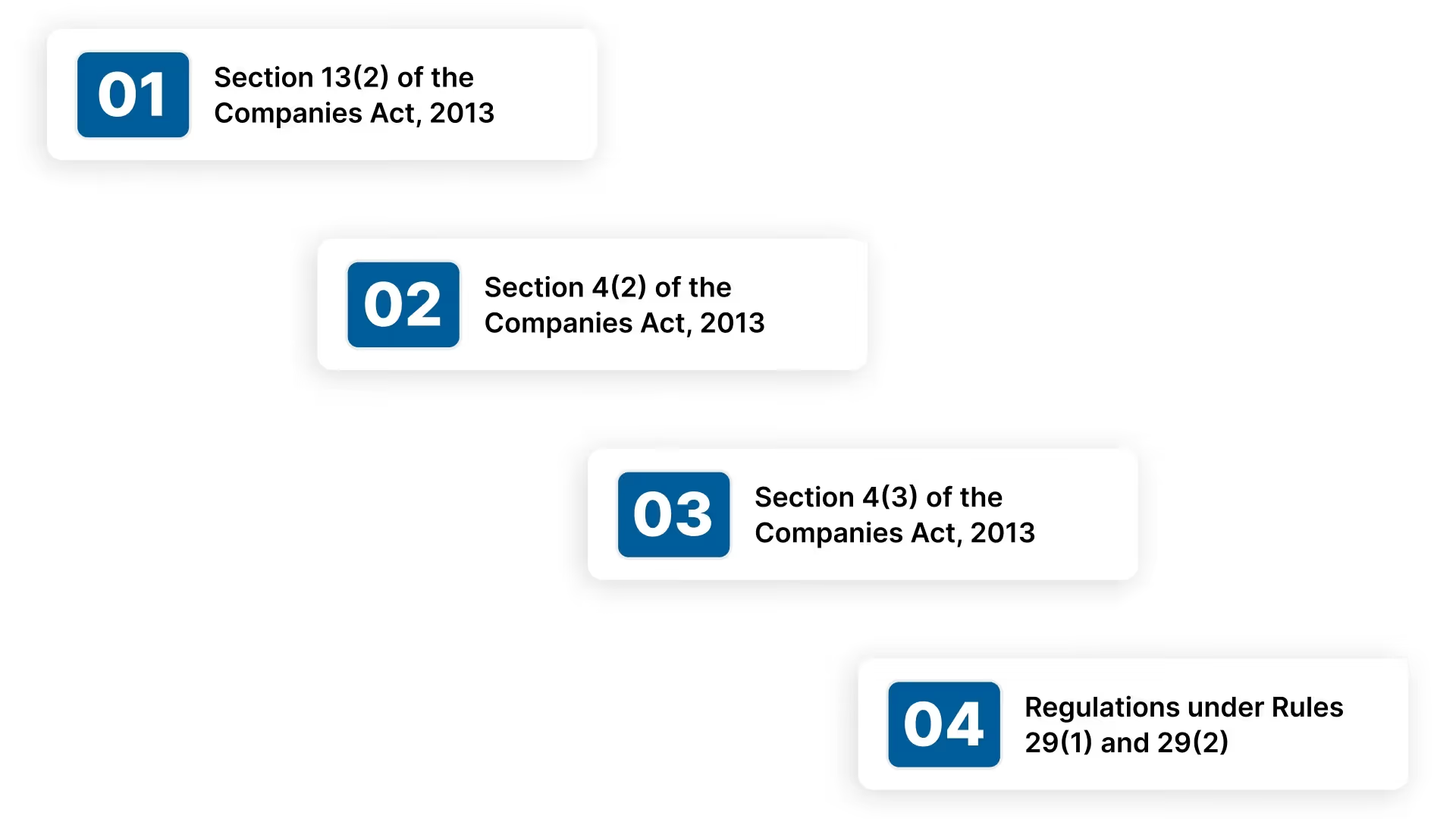
U.S. companies planning to expand into India must adhere to Indian legal provisions when changing their private limited company name. These provisions ensure compliance with the Companies Act, 2013, and other regulatory frameworks:
These legal requirements help guide your US firm’s name change process, but understanding the ways your company can change its name in India after incorporation is also crucial.
A US-based private company can change its name for a number of important reasons that help it comply with legal requirements and the objectives of the Indian market.
With different name change methods available, understanding the costs involved will help your U.S. business budget effectively for a smooth transition in India.
Changing your US-based private company name in India involves both government fees and consultant charges, which vary depending on the complexity of the process. Below is a breakdown of the costs:
Government Fees:
Total Government Fees Range: ₹2,300 – ₹3,600 (approx. USD 28 – 43). These are the fees U.S. companies must pay to the Indian government for name reservation and final approval.
Private Limited Company Name Change Consultant Charges:
Consultants assist U.S. companies with tasks such as checking name availability, drafting necessary resolutions, and filing forms. These services typically cost between ₹10,000 – ₹25,000 (approx. USD 120 – 300) depending on the complexity.
Total Estimated Cost:
For a U.S. company, the total cost of changing the company name, including both government fees and consultant charges, ranges from ₹12,000 – ₹30,000 (approx. USD 140 – 360).
Now that you understand the costs, aligning your U.S. business identity for success in India will require strategic planning and the right legal framework.

Changing your company name involves complying with India’s legal framework and aligning it with business goals. Be it rebranding or expanding, understanding the process is crucial for U.S. companies entering India. VJM Global assists with offering regulatory, tax, and structural support for seamless expansion.
VJM Global provides all the support you need for a successful company name revamp and expansion into India.
Renaming a private limited company is an important step for US companies planning to establish or expand their business in India. Be it for branding, compliance, or operational reasons, the process of private limited company name revamp requires careful planning and adherence to Indian regulations.
By following the step-by-step process and considering the necessary legal, administrative, and financial requirements, US companies can successfully deal with the complexities of changing their company name and position themselves for success in the Indian market.
If you’re setting up a US subsidiary in India, complying with FEMA and DTAA norms and restructuring through mergers and acquisitions is inevitable. VJM Global offers complete strategic, tax, and legal guidance to help your revamped company name succeed in India’s growing market.
Contact VJM Global today and transform your US-based company’s Indian identity with confidence.
U.S. companies must comply with the Indian Companies Act, 2013 provisions, including obtaining board approval, shareholder consent, and updating RoC registration.
Renaming a U.S. company in India requires updating contracts, agreements, and legal documents to reflect the new name, ensuring seamless contract execution.
U.S. companies must update their GST registration, PAN, and other tax filings, ensuring compliance with Indian tax laws and avoiding potential penalties.
Costs include government fees, legal charges, RoC filing fees, and potential consulting fees for documentation and compliance, varying based on complexity and region.
The process typically takes 1-2 months, depending on RoC approval, shareholder meetings, and updating regulatory filings, with delays possible due to compliance issues.