As a U.S.-based business planning to expand into India, managing payroll and wage garnishments can become more complicated due to the additional layer of international operations. One tool that can help streamline this process is QuickBooks Wage Garnishment, which simplifies the process of deducting and remitting garnishments in a compliant manner.
In this blog, we'll explore the process of setting up QuickBooks Wage Garnishment for U.S. companies looking to expand into India.
Key Takeaways
U.S. companies must account for GST when setting up garnishments in India using QuickBooks.
Adhere to FEMA regulations when remitting garnished wages to Indian authorities through QuickBooks.
Configure QuickBooks to follow local Indian state laws on wage garnishment limits.
Align QuickBooks wage garnishment with DTAA provisions between the U.S. and India for proper deductions.
U.S. companies can manage multiple garnishments in India with QuickBooks, ensuring compliance with various legal requirements.
How Does Wage Garnishment Work?
Wage garnishment is a legal process that allows creditors or government agencies to collect unpaid debts directly from an employee’s wages. When a business receives a garnishment order, it must comply by withholding a portion of the employee’s paycheck and sending it to the appropriate agency or creditor.
For U.S. companies planning to expand into India, it’s essential to understand how garnishments work and how to set them up efficiently, especially when dealing with both U.S. and Indian payroll systems.
As you expand your U.S.-based company into India, setting up QuickBooks wage garnishment requires adherence to both U.S. and Indian regulations. GST advisory and statutory audit services offered by VJM Global can help ensure that your payroll system complies with local tax laws and garnishment rules.
Avoid costly legal mistakes, let our chartered accountants guide your India expansion.
Now that we understand how wage garnishment works, let’s look at the various types of wage garnishments that U.S. companies expanding into India may encounter.
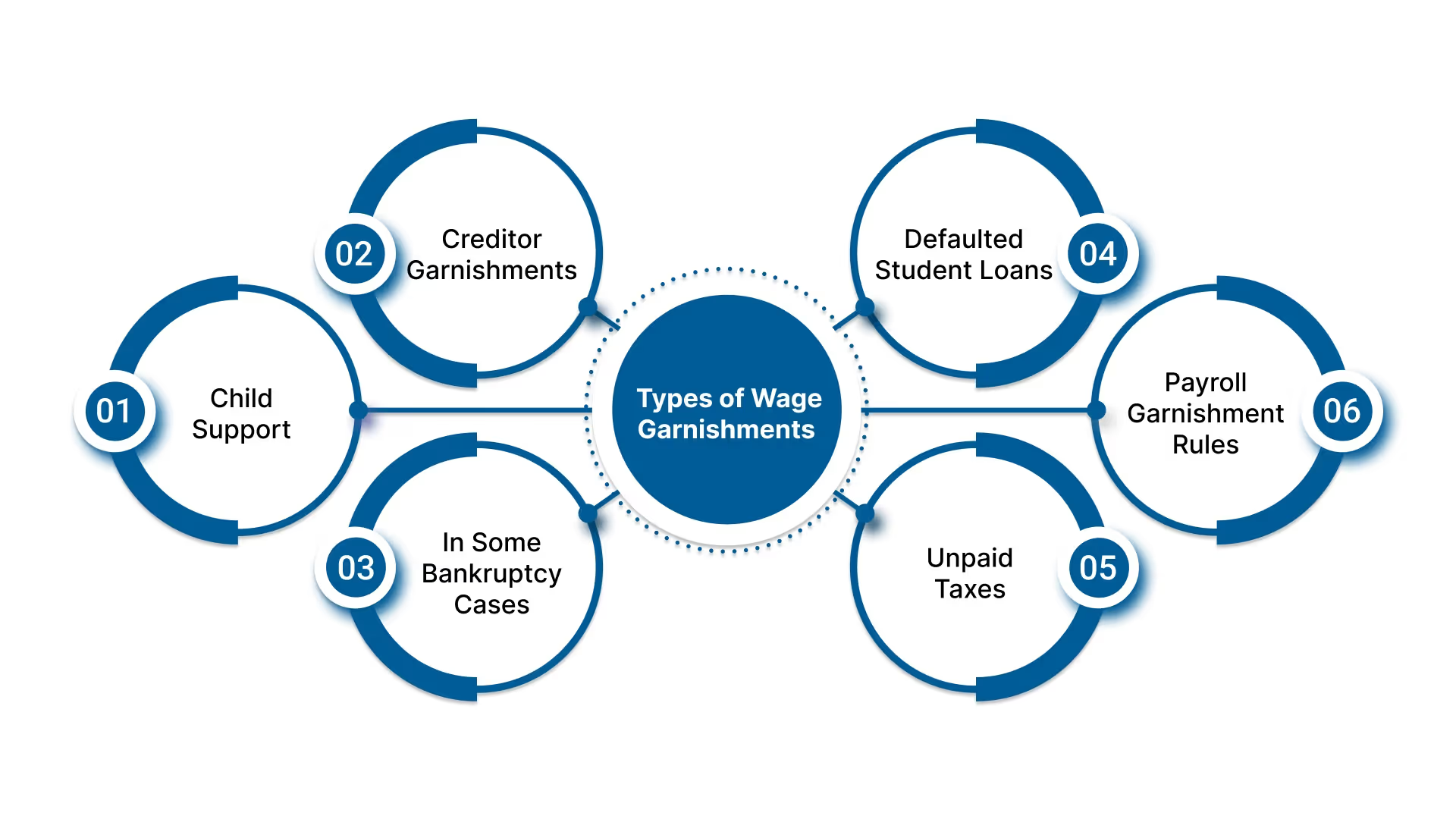
6 Types of Wage Garnishments
Understanding the different types of wage garnishments is crucial for managing them effectively, especially for U.S. companies with employees in multiple regions. Here are the most common types of garnishments and how they work:
1. Child Support
Child support garnishments are issued by courts to enforce payment of child support obligations. For U.S. businesses expanding into India, child support garnishments must be handled according to the employee’s court order, with the proper withholding amount deducted from the employee’s paycheck.
2. Creditor Garnishments
If an employee has defaulted on a debt or loan, creditors can request wage garnishment to recover the owed amount. U.S. companies expanding into India must ensure the garnishment is processed promptly and correctly by verifying the creditor’s garnishment order and remitting payments accordingly.
3. In Some Bankruptcy Cases
In certain bankruptcy situations, employees may have a portion of their wages garnished to pay off their debts. Understanding bankruptcy-specific garnishment orders is important for ensuring compliance with the bankruptcy court’s instructions.
4. Defaulted Student Loans
If an employee has defaulted on federal or private student loans, the government or lender can issue a garnishment order to collect the debt directly from the employee’s wages. For U.S. companies operating internationally, they must track and manage these garnishments accurately in QuickBooks Wage Garnishment.
5. Unpaid Taxes
Federal or state tax authorities can garnish wages to collect unpaid income taxes or other taxes owed. U.S. companies with employees in India need to manage these garnishments according to U.S. IRS regulations while ensuring compliance with Indian tax laws for their foreign operations.
6. Payroll Garnishment Rules by State Law
Different states in the U.S. have varying rules for how much can be garnished from an employee’s wages. When expanding to India, U.S. companies must ensure that garnishments comply with the specific laws of the employee’s state of residence while managing the deductions in QuickBooks.
Once you understand the types of garnishments, the next step is setting up an efficient system like QuickBooks to handle these deductions correctly.
7 Steps to Set Up QuickBooks Wage Garnishment for U.S.-Based Companies Expanding into India
Wage garnishment can seem like a complicated process, especially for U.S. companies expanding into India. Here’s a step-by-step breakdown of how employers should handle wage garnishments for their employees:
1. Receive a Garnishment Order
The process starts when an employer receives a formal garnishment order from a court, government agency, or creditor. This order outlines how much should be withheld from the employee's wages.
2. Verify the Order
Before deducting wages, the employer must verify the garnishment order to ensure it is valid and meets legal requirements. This may involve confirming the employee's debt or obligations with the issuing agency.
3. Notify the Employee of the Order
It is required by law to inform the employee of the garnishment order and the amount to be withheld. This step is crucial for compliance with Indian and U.S. labor laws.
4. Set up the Withholding Amount
Once verified, the withholding amount should be set up in QuickBooks Wage Garnishment according to the garnishment order. Ensure that the correct amount is deducted each pay period.
5. Deduct the Garnishment from Wages
Each pay period, the employer deducts the garnishment amount from the employee’s wages. This deduction should be accurate and timely, following both federal and state laws.
6. Remit Payments to the Proper Authority
After withholding the garnishment amount, the employer must remit the payment to the appropriate agency (child support agency, IRS, or creditor). QuickBooks tracks these payments to ensure compliance.
7. Terminate the Garnishment
Once the garnishment amount has been fully paid off, the employer can terminate the garnishment in QuickBooks, ensuring that no further deductions are made from the employee’s wages.
Handling the complexities of wage garnishments in India alongside U.S. operations can be challenging, but VJM Global and its expertise in FEMA consultancy and transfer pricing services can help align your payroll processes with both countries' regulations, ensuring smooth QuickBooks wage garnishment integration.
Ensure error-free financial reporting with our seasoned accounting experts.
Next, let’s explore an example of how wage garnishment would be applied in a real-world scenario.
Example of a Wage Garnishment
Consider a U.S.-based firm expanding into India. One of their employees in the U.S. is facing a child support garnishment. The company receives a garnishment order, verifying that 15% of the employee’s disposable earnings must be withheld and remitted to the child support agency.
The company sets up the garnishment in QuickBooks Wage Garnishment, ensuring that the correct amount is deducted each pay period. Payments are tracked and sent to the appropriate agency, keeping the company compliant with both U.S. and Indian regulations.
Now, let’s look at some essential tips for managing wage garnishments effectively in your business operations.
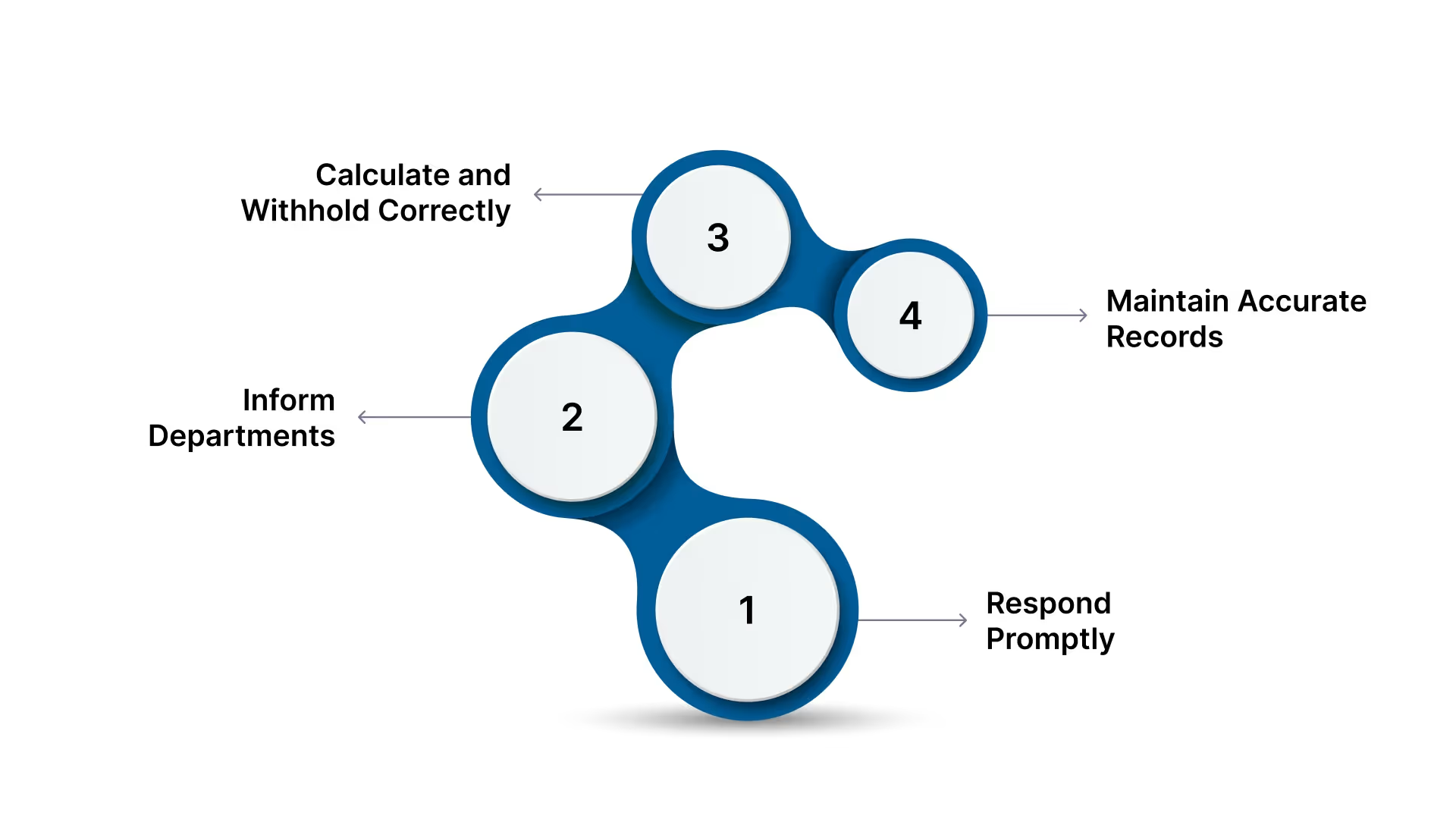
4 Tips for Managing Wage Garnishments for U.S. -Based Companies Expanding into India
Managing wage garnishments efficiently is key to maintaining compliance and avoiding financial penalties. Here are a few tips to ensure smooth operation:
1. Respond Promptly
Always respond quickly to garnishment orders to avoid penalties. U.S. companies expanding to India should prioritize timely responses to legal requests for garnishments.
2. Keep Your Departments Informed
Ensure that payroll and HR departments are in sync to handle garnishments smoothly. This ensures that the correct amounts are withheld and remitted each pay period.
3. Calculate and Withhold Correctly
It’s important to follow the garnishment order precisely to avoid over- or under-withholding. QuickBooks simplifies this by calculating and tracking deductions automatically.
4. Maintain Accurate Records
Keep detailed records of all garnishment orders, payments, and communications. This documentation will be crucial if any issues arise regarding the garnishment.
With efficient accounting in place, utilizing VJM Global’s services can help you manage payroll compliance as you expand into India.
How Can VJM Global Help Optimize QuickBooks Wage Garnishment for Your U.S. Business's Expansion into India?
As a U.S.-based company looking to expand into India, setting up efficient QuickBooks wage garnishment systems is just one part of the puzzle. To succeed in India’s complex business environment, you need the right financial and regulatory guidance. Here’s how VJM Global can help streamline your wage garnishment processes and ensure your business is set up for success in India:
U.S. Business Setup in India: If you’re establishing a Liaison Office or opening a Branch Office in India, VJM Global can guide you through the regulatory conditions. We ensure you have the right presence in India while managing payroll systems like QuickBooks wage garnishment for compliance.
Private Limited Company Registration & GST Compliance: Setting up a Private Limited Company in India involves managing both business registration and tax laws, including GST compliance. VJM Global supports U.S. firms with GST advisory and audit services, ensuring your company’s wage garnishment process remains compliant.
International Taxation and FEMA Consultancy: As U.S. businesses expand into India, handling cross-border taxation can become complex. VJM Global’s FEMA consultancy and transfer pricing services provide you with the knowledge to ensure tax efficiency, especially when managing garnishments under Indian regulations.
Audit & Assurance Services: Effective payroll systems need thorough oversight to ensure everything is accurate, including garnishments. Our statutory audits and internal audits provide transparency in your accounting processes, giving you peace of mind that your garnishments and financials comply with both U.S. and Indian laws.
Restructuring Services & Business Process Optimization: When expanding your U.S. business into India, restructuring may be necessary to adapt to local market dynamics. VJM Global’s business process re-engineering services help optimize your payroll and garnishment systems, ensuring they integrate seamlessly into your overall operational strategy.
With VJM Global by your side, you can set up QuickBooks wage garnishment efficiently and ensure your U.S. firm meets all compliance requirements as you expand into India.
Wrapping Up
Setting up QuickBooks Wage Garnishment for your U.S.-based business, especially if you're planning to expand into India, can streamline the process of managing garnishments and ensure compliance with U.S. laws.
When dealing with child support, tax obligations, or creditor garnishments, QuickBooks Wage Garnishment offers a straightforward and effective way to manage deductions, track payments, and maintain proper records. By knowing the nuances of wage garnishments and utilizing QuickBooks to manage them efficiently, your company can avoid costly mistakes and focus on what matters most: growing your business internationally.
Expanding your U.S. company into India involves managing payroll across diverse legal environments. VJM Global provides business process re-engineering and internal audit services that help optimize your QuickBooks wage garnishment setup, ensuring accurate deductions and timely payments while staying compliant with both U.S. and Indian laws.
Contact VJM Global today, and let us help you deal with the challenges of payroll and U.S. business setup to make your India expansion a success!
FAQs
1. How can U.S. companies ensure QuickBooks wage garnishment compliance in India?
U.S. companies expanding into India should align QuickBooks wage garnishment setups with GST rules and FEMA regulations, ensuring both tax and garnishment compliance.
2. What is the role of state-specific laws in QuickBooks wage garnishment for U.S. companies in India?
State laws in India can affect garnishment limits and payment deadlines, requiring U.S. companies to configure QuickBooks wage garnishment to meet local rules.
3. How does QuickBooks wage garnishment handle cross-border deductions for U.S. employees in India?
QuickBooks wage garnishment requires synchronization with both the U.S. and Indian tax systems to ensure compliance with the Double Taxation Avoidance Agreement (DTAA) and garnishment laws.
4. Can U.S. companies use QuickBooks wage garnishment for multiple types of garnishments in India?
Yes, QuickBooks can be set up for various garnishments, including child support and tax debts, but it must follow Indian garnishment law limits and payment deadlines.
5. How should U.S. companies remit garnished wages in India through QuickBooks?
U.S. companies must ensure QuickBooks wage garnishment payments are remitted timely to the correct Indian authorities, following FEMA rules for cross-border transactions.