
According to the World Bank’s Global Economic Prospects report, India is expected to remain the fastest-growing large economy over the next two fiscal years. For U.S. companies, this presents a prime opportunity for market expansion and business growth. Yet entering a new market can be daunting, especially when navigating regulatory complexities and operational risks.
Many businesses hesitate to make significant commitments in a foreign market without understanding the lay of the land. A Liaison Office offers the perfect solution, providing a low-risk entry point while building critical relationships and conducting market research. It’s a strategic move that minimizes exposure while providing valuable insights.
In this blog, we’ll explore the essentials of setting up a Liaison Office in India, the key regulatory requirements, the advantages and limitations of this structure, and practical tips for making the most of it.
A Liaison Office (LO) is a non-commercial entity that allows foreign companies to establish a presence in India. It facilitates market research, partner coordination, and communication, but cannot generate income or perform commercial activities.
A Liaison Office focuses on non-commercial activities that help foreign businesses assess the Indian market and build relationships.
Here are the main functions of a Liaison Office:
While LOs provide a presence in India, they have strict limitations on revenue generation and commercial activities.
Here are the main limitations of a Liaison Office:
Choosing the proper structure depends on the scope of activities you plan to conduct in India. Businesses typically evaluate whether a liaison office, branch office, or subsidiary best fits their operational goals, level of control required, and revenue plans in the country.
Here’s how a Liaison Office compares to other business structures:
Also Read: Understanding Business Setup Costs in India
With a clear understanding of different structures, you can now evaluate whether a Liaison Office aligns with your business goals.
A Liaison Office can be a strategic choice for U.S. companies seeking a low-risk way to explore the Indian market. However, it’s essential to assess whether this structure aligns with your business goals, timeline, and operational needs. While it offers a legal presence in India, it comes with restrictions on income generation and commercial activities.
To help you decide, let’s look at the advantages and limitations of setting up a Liaison Office in India.
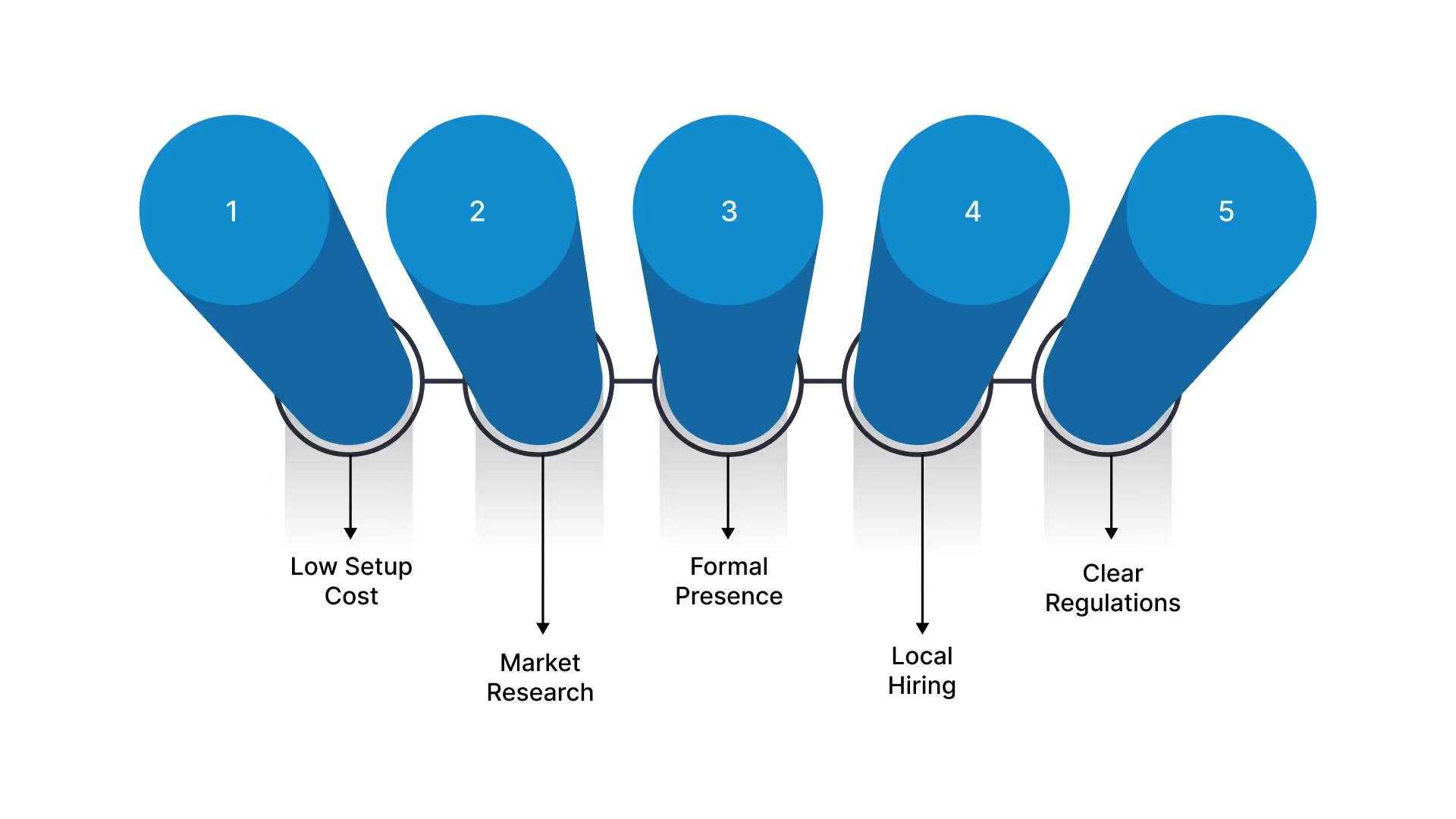
A Liaison Office offers several benefits, especially for businesses that are testing the market or building early relationships in India. These advantages make it a low-risk, cost-effective option for foreign companies.
Here are the key advantages:
While a Liaison Office provides a low-risk entry into India, it comes with several limitations that businesses need to consider before opting for this structure.
Here are the key limitations:
With the limitations in mind, it's time to review the specific regulatory steps for U.S. companies setting up a Liaison Office in India.
Also Read: Why India is Ideal for International Business Expansion
Setting up a Liaison Office in India requires meeting both Indian regulatory standards and specific U.S. documentation requirements. It is essential to understand the eligibility criteria for your U.S. parent company and the activities the Liaison Office is permitted to undertake.
Let’s break down the key regulatory requirements for a Liaison Office and how they align with U.S. documentation.
To establish a Liaison Office in India, your U.S. company must meet specific financial and operational eligibility criteria set by Indian authorities. These criteria ensure that your company is financially stable and able to support a Liaison Office in India.
Here are the main eligibility requirements:
A Liaison Office can engage in specific research and communication activities but cannot engage in commercial operations. The permitted activities are intended to support the parent company’s market exploration and relationship-building efforts in India.
Here are the permitted activities:
While a Liaison Office has several benefits, it is restricted in the types of activities it can engage in, primarily because it is not set up for income generation.
Here are the activities a Liaison Office cannot perform:
When setting up a Liaison Office, U.S. companies must submit specific documents to comply with Indian regulations. Since the U.S. is a member of the Hague Convention, all necessary U.S. documents must be apostilled for authenticity.
Here are the documents needed:
Also Read: Post-Incorporation Procedure For US Companies In India
The type of U.S. entity (LLC, C-Corp, S-Corp) determines the documentation required to set up the Liaison Office. Understanding the differences helps ensure the correct paperwork is submitted for Indian regulatory approval.
Here’s how entity types affect filings:
Once you understand the regulatory framework, let’s walk through the application process for establishing a Liaison Office.
Also Read: How To Register An IT Consulting Company In India From The U.S.
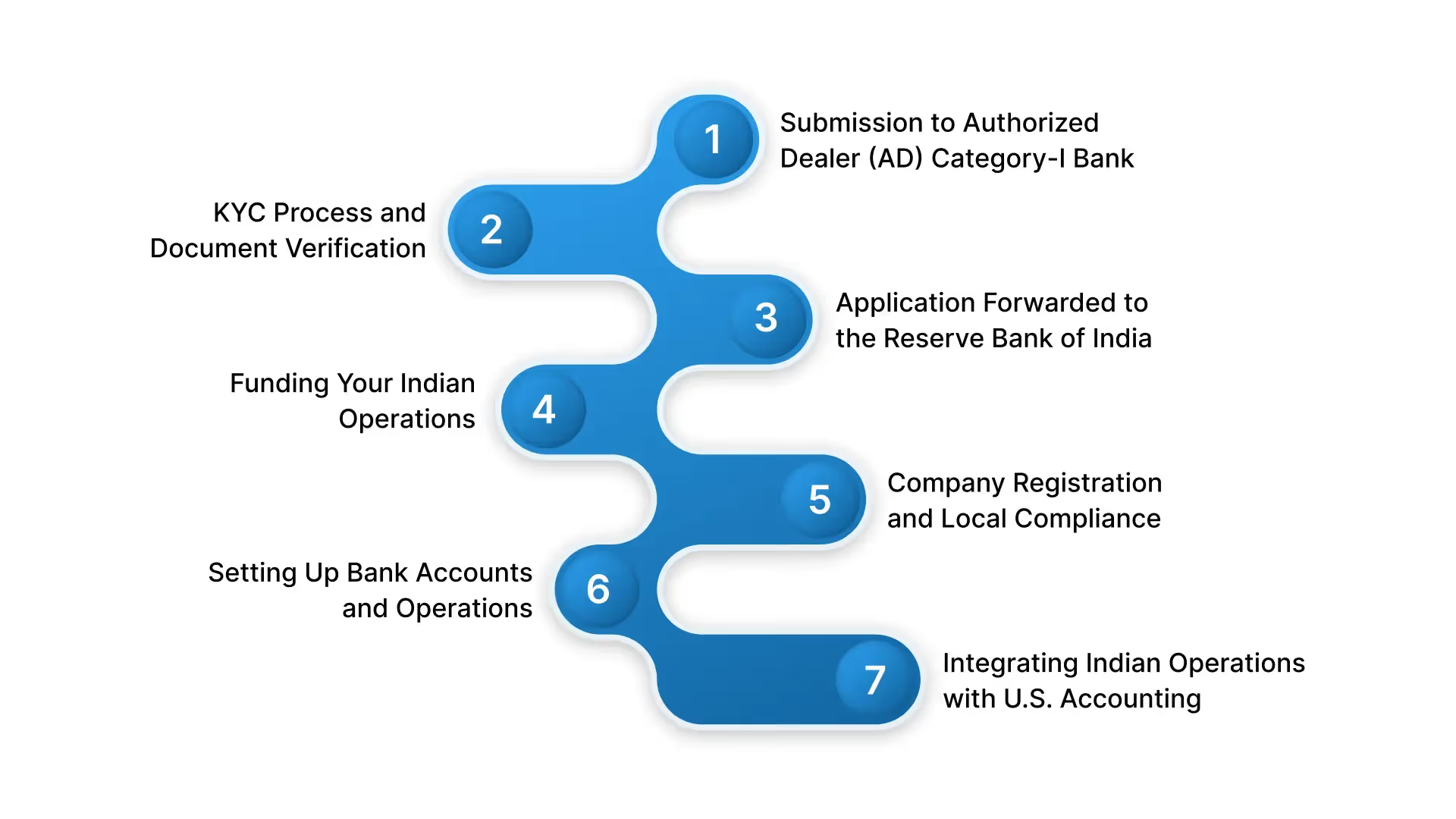
Setting up a Liaison Office (LO) in India requires a structured process, beginning with the submission of your application to an Authorized Dealer (AD) Category-I bank. The bank plays a crucial role in reviewing, verifying, and forwarding the application to the Reserve Bank of India (RBI) for approval.
Let’s walk through each step of the application process.
The first step is submitting the required documentation to an AD Category-I bank. These documents serve as proof of your U.S. company’s legitimacy and financial stability. Since the U.S. is a member of the Hague Convention, all documents must be apostilled.
Here’s what needs to be submitted:
Once the documents are submitted, the AD Category-I bank conducts a KYC process to ensure compliance with anti-money laundering regulations. The bank will verify the authenticity of the documents and confirm the identity of the parent company and its authorized representatives.
Key actions during this step:
After the documents are verified, the AD bank forwards the application to the RBI. The RBI ensures that the foreign company meets India’s financial and regulatory guidelines.
What happens at this stage:
Since a Liaison Office cannot generate revenue, all operational expenses must be funded by the U.S. parent company. These funds are transferred through the SWIFT system to the Liaison Office’s bank account in India.
Key points to note:
After receiving the UIN, the next step is to officially register the Liaison Office with the Registrar of Companies (ROC) in India. This step ensures the Liaison Office is legally recognized in India.
Actions required at this stage:
After completing the registration process, the Liaison Office can set up a bank account in India and begin transferring funds for operational expenses. The bank account will be used to handle all financial transactions for the Liaison Office.
Key steps in this process:
The U.S. accounting team needs to integrate the Indian operations into the company’s financial system. A dedicated cost center should be created to track expenses, and monthly reconciliations should be conducted to maintain accurate records.
What needs to be done:
As you move through the application process, it’s helpful to know how VJM Global can support you along the way.
Also Read: How To Register An LLC In India From the U.S.
Expanding your business to India through a Liaison Office (LO) is a strategic move, but the process can be complex. VJM Global offers expert support to help you navigate the regulatory, legal, and financial hurdles, ensuring that your setup is efficient and compliant. Here’s how we assist with your expansion:
By partnering with VJM Global, you gain a trusted advisor to manage the complexities of setting up and maintaining a Liaison Office in India, allowing you to focus on strategic market expansion.
Image CTA 8
Setting up a Liaison Office in India is a cost-effective and low-risk strategy for U.S. businesses looking to explore the market. By understanding the regulatory framework and taking the proper steps, you can establish a strong presence in India with minimal financial commitment.
VJM Global can guide you through every aspect of the process, from application submission to ensuring compliance with local laws. Our expert team provides the cost-effective offshore support you need to succeed in India’s complex market.
Ready to set up your Liaison Office in India? Reach out to us today for expert assistance and a smooth market entry.
While the setup costs for a Liaison Office are relatively low compared to other business structures, the main expenses include registration fees, document legalization, and operational costs funded by the parent company. The process is simpler and requires fewer resources than establishing a branch or subsidiary.
Yes, a Liaison Office can hire local staff for administrative and support functions, such as managing market research or coordinating with partners. However, these employees cannot engage in direct business activities that generate revenue.
A Liaison Office itself is not subject to income tax because it cannot generate revenue. However, it must comply with other tax requirements, such as Goods and Services Tax (GST) on certain expenses and other applicable Indian tax regulations.
The process typically takes several months, depending on the efficiency of document submission, verification, and approvals from the Reserve Bank of India (RBI) and other authorities. The timeline can vary based on the completeness of your documents and the responsiveness of your bank and regulatory bodies.
No, a Liaison Office is restricted from engaging in sales, providing services, or entering into revenue-generating contracts. Its activities are limited to market research, communication, and coordination with partners and stakeholders.