India’s growing global presence means more residents are investing abroad, sending children overseas for education, and supporting families across borders. To simplify these international transactions, the Reserve Bank of India introduced the Liberalized Remittance Scheme (LRS), a framework that allows individuals to legally and safely remit money outside India.
According to the RBI, outward remittances under LRS reached USD 30 billion in FY 2023–24, with education, travel, and investments being the top contributors. With demand rising every year, understanding the LRS is no longer optional; it’s essential.
This guide explains everything you need to know about the Liberalied Remittance Scheme, including eligibility, permissible uses, prohibited transactions, taxation, and the step-by-step remittance process.
At a Glance
Money can be used for education, travel, medical needs, investments, gifts, or family support.
Prohibited transactions include lottery purchases, forex margin trading, and dealings with FATF blacklisted countries.
From Budget 2025, no TCS up to ₹10 lakh; above this, 5% TCS applies (except education loans).
Remittances require PAN, Form A2, and KYC compliance, and must be routed through an RBI-authorised dealer bank.
LRS provides flexibility to diversify investments abroad while ensuring compliance with FEMA and RBI guidelines.
What is the Liberalized Remittance Scheme (LRS)?
The Liberalized Remittance Scheme (LRS) is a facility introduced by the Reserve Bank of India (RBI) under the Foreign Exchange Management Act (FEMA), 1999. It allows resident individuals to remit money abroad for specific permitted purposes without prior RBI approval. With a yearly limit of USD 250,000 per individual, LRS provides Indian residents with the flexibility to meet personal, educational, medical, and investment needs globally.
Key Features of LRS
Remittance Limit: Up to USD 250,000 per financial year for each resident individual.
Eligible Individuals: Available to resident individuals, including minors (through guardians).
Permissible Uses: Education, travel, medical treatment, investment in foreign assets, gifts, donations, and maintenance of close relatives abroad.
Prohibited Transactions: Cannot be used for lottery tickets, forex margin trading, or dealings with FATF non-compliant countries.
No RBI Approval Needed: Remittances under LRS for permitted purposes do not require prior RBI approval.
Regulated by FEMA: Ensures compliance with India’s foreign exchange laws.
Tax Implications: Subject to Tax Collected at Source (TCS) based on transaction type and amount.
Now that we’ve understood what the Liberalized Remittance Scheme (LRS) is and its key features, let’s look at some of the most common ways Indian residents can use it.
Permissible Uses of Liberalized Remittance Scheme
The Liberalized Remittance Scheme gives Indian residents the freedom to use remittances for a wide range of legitimate personal and financial purposes. By allowing individuals to invest, study, or support family abroad, LRS opens access to global opportunities while maintaining regulatory safeguards. Here are some common used of lrs:
Education Abroad: Payment of tuition fees, living expenses, and other related costs for studying overseas.
Travel Expenses: Covering personal, business, or leisure travel costs, including boarding and lodging.
Medical Treatment: Payments for hospitalization, medical bills, or healthcare-related expenses abroad.
Investments: Buying shares, debt instruments, real estate, or other permissible foreign assets.
Gifts & Donations: Transferring funds to relatives or charitable organizations abroad.
Maintenance of Relatives: Supporting close family members living overseas.
Transfers to Own Account: Moving funds to personal accounts maintained in foreign banks.
While LRS offers broad flexibility in how funds can be used, it’s equally important to understand who can actually access the scheme and how to apply for it.
Eligibility and Application for Liberalized Remittance Scheme
The Liberalized Remittance Scheme is designed for individuals, not institutions. To ensure compliance, RBI has clearly defined who can apply and what is required before making a remittance. Meeting these eligibility conditions is the first step toward accessing the benefits of LRS.
Who is Eligible?
Resident Individuals: Any resident individual in India, including minors.
Guardians for Minors: A guardian can make remittances on behalf of a minor.
Not Eligible: Corporations, partnership firms, HUFs, trusts, and other entities are excluded.
Application Requirements
Bank Account: Applicant must hold an Indian bank account with an authorized dealer (AD) bank.
Permanent Account Number (PAN): A valid PAN card is mandatory for identification and tax compliance.
Declaration Form: Individuals must submit a declaration confirming the purpose of remittance and compliance with LRS rules.
Supporting Documents: Depending on the purpose (education, medical, travel, etc.), relevant documents such as admission letters, invoices, or medical certificates may be required.
Once you know the eligibility, the next step is understanding how the actual remittance process works. Following the correct procedure ensures smooth transfers and compliance with RBI regulations.
Process of Remittance Under Liberalized Remittance Scheme
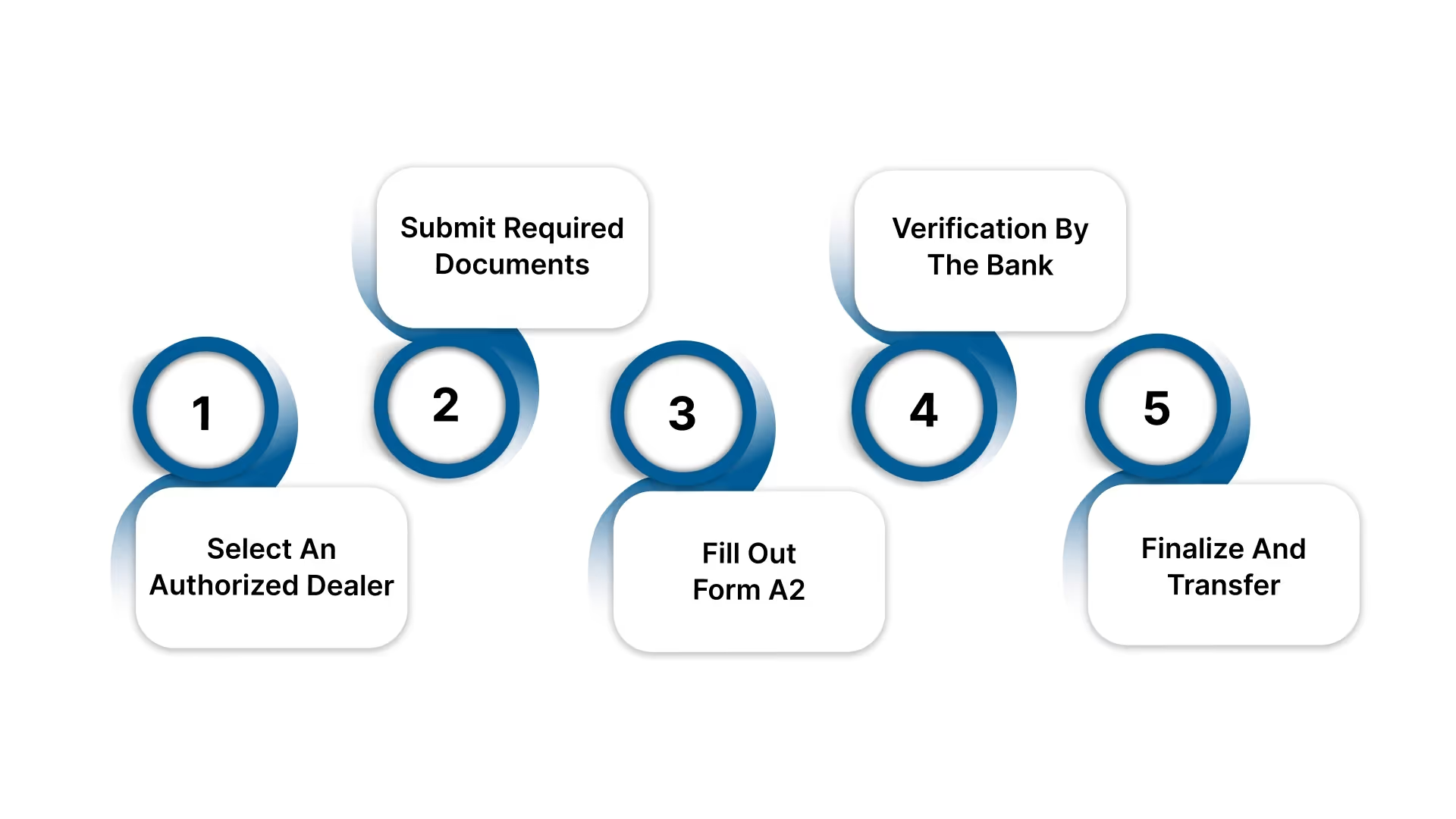
Remitting money abroad under the Liberalized Remittance Scheme involves a few structured steps, all of which are handled through authorized dealers (banks).
Select an Authorized Dealer: Choose an RBI-approved bank or financial institution authorized to process foreign remittances.
Submit Required Documents: Provide KYC documents such as PAN card, passport, and bank details, along with declarations as required.
Fill Out Form A2: Complete and sign Form A2, which specifies the purpose and amount of remittance.
Verification by the Bank: The bank will verify details to ensure the remittance falls under permitted categories and is within the USD 250,000 limit.
Finalize and Transfer: Once verified, the funds are converted to the desired foreign currency and remitted abroad.
This streamlined process makes it easier for individuals to send funds abroad while ensuring compliance with FEMA and RBI guidelines.
While the LRS provides flexibility for legitimate remittances, it also has strict boundaries to prevent misuse. Knowing what’s prohibited is just as important as knowing what’s allowed.
Prohibited Transactions Under Liberalized Remittance Scheme
Under the Liberalized Remittance Scheme, residents are not permitted to use funds for the following:
Lottery or Gambling: Buying lottery tickets, sweepstakes, or participating in gambling/betting activities abroad.
Margin Trading & Speculation: Engaging in foreign exchange trading, margin trading, or leveraged investments.
Prohibited Countries: Sending money to entities or individuals located in countries identified by the Financial Action Task Force (FATF) as non-cooperative jurisdictions.
Banned or Illegal Activities: Any transactions that violate Indian law, FEMA, or international regulations.
By clearly outlining these restrictions, the RBI ensures that LRS is used only for genuine personal, educational, medical, and investment purposes.
Outsource your bookkeeping and save time without compromising accuracy. Let us handle the books. Talk to an expert today.
Understanding what you cannot do under LRS is only half the picture. The next crucial aspect is knowing the tax implications and conversion fees that apply to every remittance.
Tax Implications and Conversion Fees
Every outward remittance under LRS carries certain tax and fee considerations that individuals must plan for. Recent updates in the Union Budget 2025 have further refined these rules:
Revised TCS Threshold (Budget 2025): The threshold for Tax Collected at Source (TCS) on foreign remittances under LRS has been raised from ₹7 lakh to ₹10 lakh per financial year. No TCS will apply for LRS transactions up to ₹10 lakh annually.
Educational Remittances: If the remittance is for education and funded through a loan from a recognised financial institution, no TCS will apply, even if the amount exceeds the ₹10 lakh threshold.
Standard TCS Rate: For all other remittances beyond the ₹10 lakh annual limit, a 5% TCS will be levied.
Conversion and Transaction Charges: Alongside taxes, banks apply conversion charges and service fees, which vary by institution and are counted within the USD 250,000 LRS limit.
Refund and Adjustments: Any TCS deducted can be adjusted against your income tax liability or claimed as a refund when filing your ITR. These deductions can be tracked through Form 26AS.
By staying updated with these changes, individuals can better plan their overseas remittances and avoid unnecessary costs.
RBI Guidelines for Outward Remittance under LRS
When transferring funds abroad under the Liberalized Remittance Scheme (LRS), individuals must comply with the guidelines set by the Reserve Bank of India (RBI). These rules ensure that remittances are transparent, legal, and compliant with foreign exchange laws.
Here’s what you need to know:
Mode of Payment: Outward remittances can be made through a demand draft in the name of the individual or the overseas beneficiary.
Foreign Account Option: Individuals can also open and maintain a foreign bank account to manage remitted funds.
Authorised Dealers: Remittances must be routed through a bank branch designated as an authorised dealer by RBI.
Mandatory PAN Requirement: A valid PAN card is required for all outward remittances.
AML & KYC Compliance: Individuals must adhere to Anti-Money Laundering (AML) and Know Your Customer (KYC) guidelines.
Form A2 Submission: Before purchasing foreign currency, individuals must fill out Form A2, declaring the purpose of the remittance.
Credit Facilities Prohibited: Banks are not allowed to extend any credit facilities to residents under the LRS.
Following these RBI-prescribed steps ensures that your outward remittances are smooth, compliant, and risk-free.
Tras explorar las normas, los procesos y las restricciones del LRS, es igualmente importante destacar las ventajas y la flexibilidad que este esquema ofrece a los residentes indios.
Beneficios y flexibilidad del Esquema de Remesas Liberalizado (LRS)
Una de las mayores ventajas del marco LRS es la libertad que ofrece a los residentes indios para utilizar su dinero en el extranjero sin necesidad de obtener la aprobación previa del RBI para la mayoría de las transacciones. Esto no solo respalda las necesidades personales, sino que también brinda margen para las inversiones globales y la diversificación.
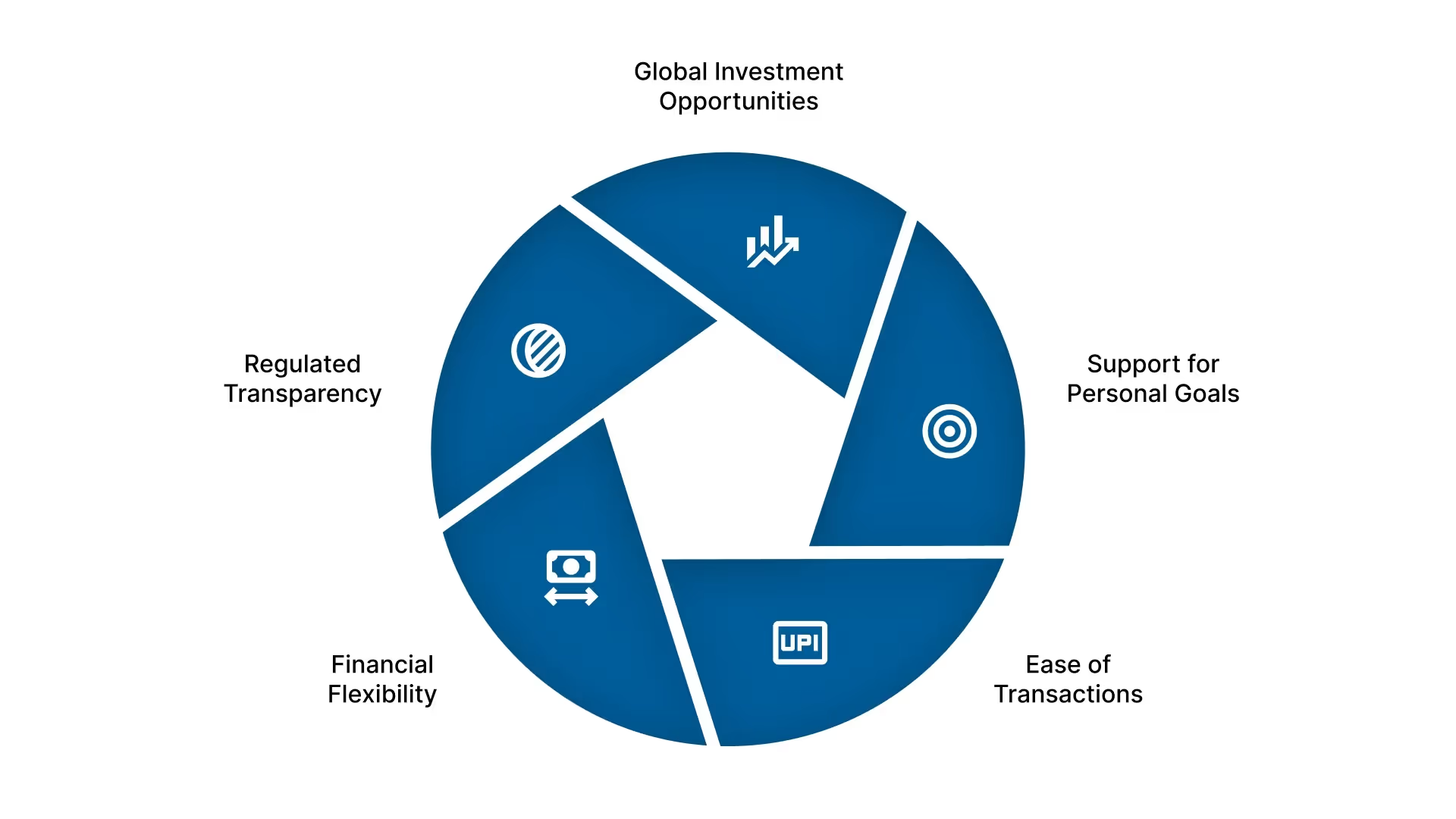
Beneficios clave:
Oportunidades de inversión global: Las personas pueden diversificar sus carteras invirtiendo en acciones internacionales, bonos, bienes raíces u otros activos permitidos.
Apoyo a objetivos personales: Ya sea para financiar estudios en el extranjero, tratamientos médicos o manutención familiar, el LRS facilita enormemente la planificación financiera transfronteriza.
Facilidad de transacciones: No se requiere la aprobación previa del RBI para las transacciones permitidas, lo que reduce la burocracia y ahorra tiempo.
Flexibilidad financiera: Los residentes pueden abrir y mantener cuentas en moneda extranjera, lo que les otorga mayor libertad para gestionar su dinero a nivel internacional.
Transparencia regulada: Dado que todas las transacciones se realizan a través de agentes autorizados, el cumplimiento de la FEMA, 1999 garantiza tanto la seguridad como la responsabilidad.
En esencia, el Esquema de Remesas Liberalizado actúa como un puente para que los indios participen con confianza en la economía global sin dejar de cumplir con los límites normativos.
Desafíos que enfrentan las personas con el Esquema de Remesas Liberalizado (LRS) (y sus soluciones)
Si bien el Esquema de Remesas Liberalizado brinda flexibilidad para las transacciones globales, las personas a menudo encuentran obstáculos prácticos al utilizarlo. Comprender estos desafíos y sus soluciones puede hacer que el proceso sea más fluido:
Requisitos de documentación complejos
Desafío: Muchos residentes consideran que el proceso de documentación, el PAN, el Formulario A2 y la verificación bancaria son abrumadores.
Solución: Trabajar con un funcionario bancario o asesor financiero experimentado garantiza que todos los formularios se completen con precisión y se eviten retrasos.
Altas comisiones y cargos por conversión
Desafío: Los tipos de cambio y las comisiones bancarias pueden reducir significativamente el valor de las remesas.
Solución: Compare las tasas entre los agentes autorizados antes de iniciar las transferencias y utilice bancos que ofrezcan servicios de cambio de divisas competitivos.
Confusión sobre las normas de TCS
Desafío: Los cambios frecuentes en los umbrales del Impuesto Recaudado en la Fuente (TCS) dejan a muchas personas inseguras sobre sus obligaciones fiscales.
Solución: Manténgase actualizado sobre los últimos anuncios presupuestarios y consulte a asesores fiscales para solicitar reembolsos o compensar el TCS con el ITR correctamente.
Restricciones en ciertas transacciones
Desafío: Muchos residentes desconocen las actividades prohibidas bajo el LRS, como el comercio de margen o la compra de lotería, lo que genera riesgos de cumplimiento.
Solución: Confirme siempre con su banco si la remesa que desea realizar está permitida según las directrices del RBI antes de iniciar la transferencia.
Retrasos en el procesamiento
Desafío: Las solicitudes de remesas a veces pueden tardar más debido a controles de cumplimiento o documentación incompleta.
Solución: Presentar información precisa desde el principio y mantener una comunicación clara con su banco reduce el riesgo de retrasos.
Cómo le ayuda VJM Global con el cumplimiento del LRS
Gestionar el Esquema de Remesas Liberalizado (LRS) puede ser complejo, debido a la evolución de las directrices del RBI, las normas fiscales y los requisitos de documentación. Los errores pueden retrasar sus transferencias, generar costos fiscales innecesarios o incluso crear problemas de cumplimiento.
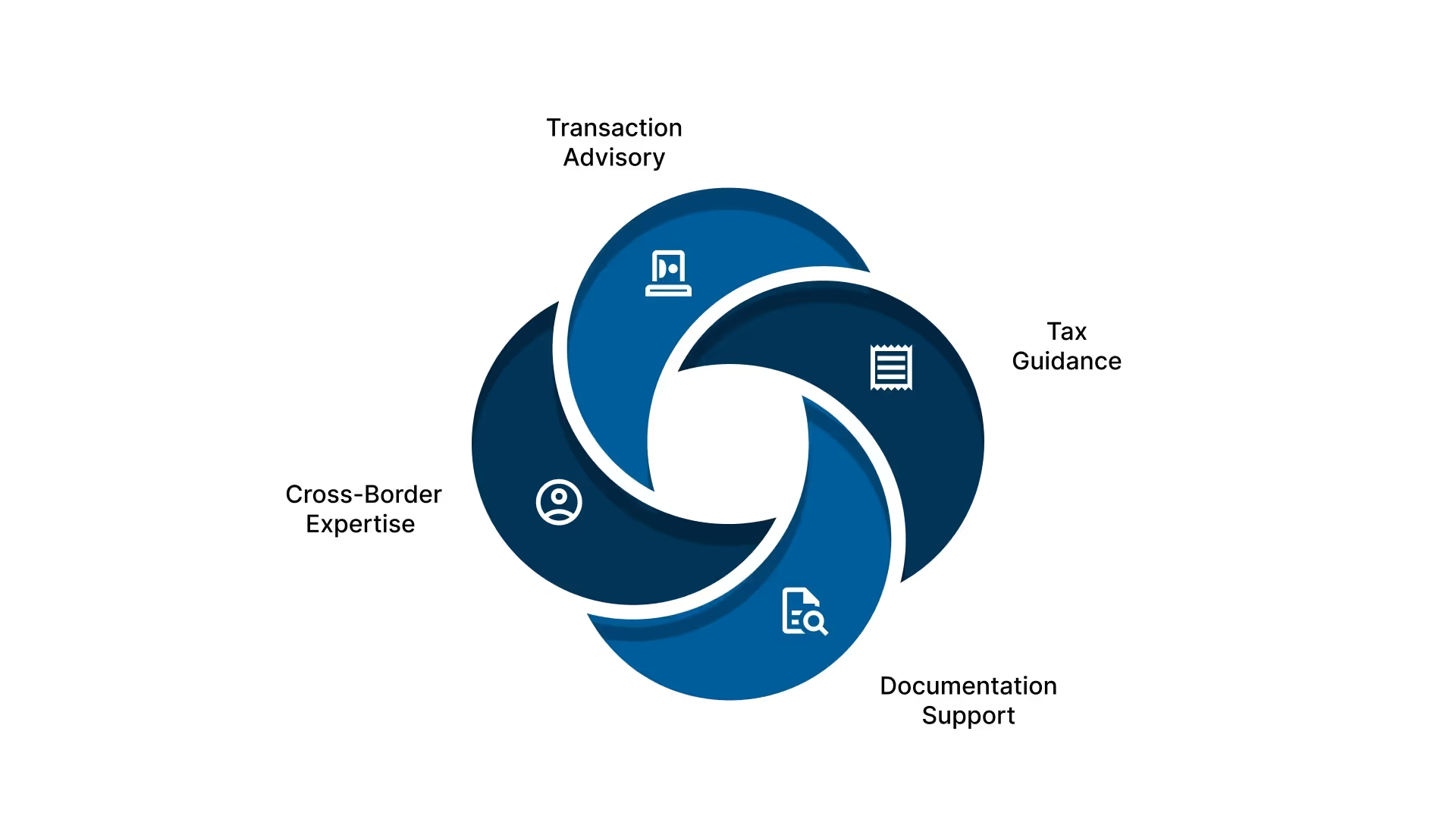
VJM Global simplifica este proceso para particulares y empresas ofreciendo un soporte integral:
Asesoramiento en transacciones: Aclarar los usos permitidos frente a los prohibidos para garantizar que cada remesa se ajuste a las directrices del RBI.
Orientación fiscal: Ayudarle a gestionar el TCS, solicitar reembolsos y planificar remesas para obtener la máxima eficiencia fiscal.
Soporte de documentación: Preparar y presentar el Formulario A2, KYC y la documentación relacionada sin problemas ante su banco.
Experiencia transfronteriza: Agilizar las remesas para educación, atención médica, inversiones o apoyo familiar en todas las jurisdicciones.
Con nuestra orientación, usted puede concentrarse en sus objetivos mientras nosotros nos ocupamos de los detalles normativos y de cumplimiento.
Free up your team's time, outsource accounting to VJM Global and focus on growth.
Preguntas frecuentes
1. ¿Quién es elegible para utilizar el Esquema de Remesas Liberalizado (LRS)?
El LRS está disponible para personas residentes en la India, incluidos los menores de edad. Sin embargo, no es aplicable a empresas, sociedades colectivas, fideicomisos o HUF.
2. ¿Cuál es el límite máximo permitido bajo el LRS?
Según las normas actuales del RBI, las personas residentes pueden enviar hasta 250.000 USD por año financiero para transacciones permitidas como educación, atención médica, viajes o inversiones.
3. Do I need RBI approval for outward remittances under LRS?
No prior RBI approval is required for remittances within the prescribed limit for permitted purposes. However, the transaction must comply with FEMA regulations and bank documentation requirements.
4. How is Tax Collected at Source (TCS) applied to LRS transactions?
As per Budget 2025, no TCS applies on LRS transactions up to ₹10 lakh annually. Beyond this limit, a 5% TCS is applicable, except when funds are remitted for education through approved loans.
5. Can I remit money abroad for investments under LRS?
Yes, LRS allows investment in foreign assets such as stocks, debt instruments, mutual funds, and even property, provided the total does not exceed the USD 250,000 annual limit.
CA Kapil Mittal
Socio con más de 20 años de experiencia asesorando a empresas en expansión global, creación de entidades, estructuración transfronteriza, fiscalidad internacional y cumplimiento normativo en más de 60 jurisdicciones.