%20(3).avif)

La India es el séptimo socio comercial más importante de Singapur, y Singapur se mantiene constantemente entre los principales países de origen de la IED en la India. Esta relación está respaldada por un impulso político real: ahora se permite el 100% de propiedad extranjera en muchos sectores a través de la vía automática de IED, eliminando una de las mayores barreras a las que se enfrentaban los fundadores con sede en Singapur.
La creciente base de consumidores de la India, con más de 1400 millones de personas, combinada con la rápida adopción de infraestructura digital, está generando una demanda cuantificable en sectores que van desde la tecnología financiera hasta la manufactura. El Acuerdo Integral de Cooperación Económica (CECA) entre la India y Singapur y el Acuerdo para Evitar la Doble Imposición reducen aún más la fricción y los costes para la entrada de empresas transfronterizas.
Esta guía abarca los mejores sectores empresariales para los inversores con sede en Singapur en la India en 2026, junto con factores prácticos a tener en cuenta antes de entrar en el mercado.
Singapur ocupa una posición ventajosa en el panorama de la IED en la India. La India es el séptimo socio comercial de Singapur, mientras que Singapur se sitúa constantemente entre los tres principales países de origen de la IED en la India.
Esta relación se basa en sólidos marcos institucionales: el CECA entre la India y Singapur proporciona un acceso preferencial al mercado, y el Acuerdo para Evitar la Doble Imposición (DTAA) reduce la carga fiscal sobre los ingresos transfronterizos.
El papel de Singapur como puerta de entrada financiera y empresarial del sudeste asiático a la India crea sinergias naturales. Los inversores con sede en Singapur se benefician de:
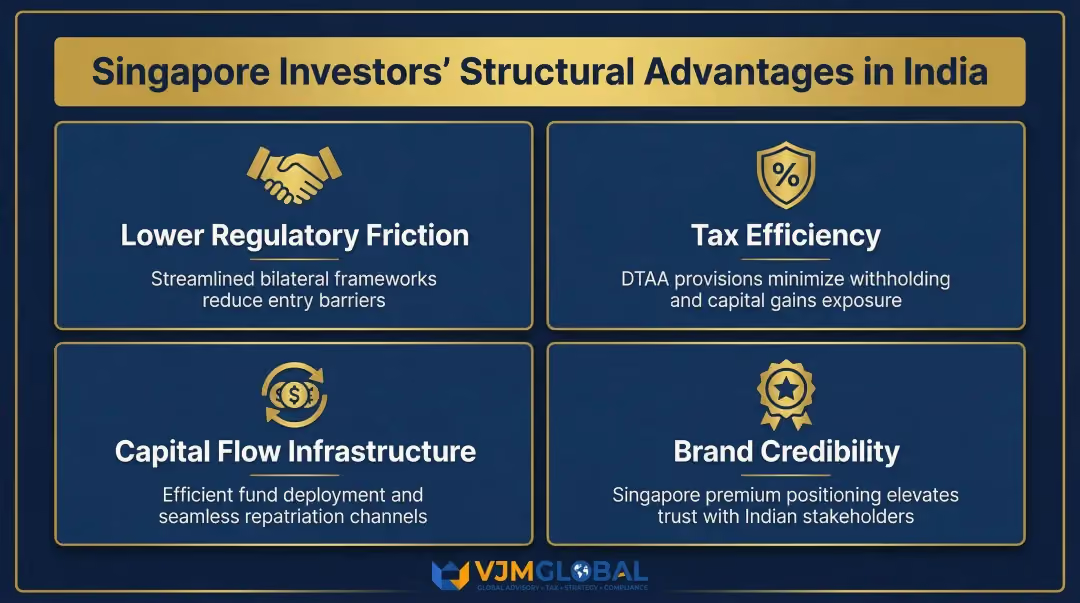
Los siguientes sectores son aquellos donde estas ventajas estructurales se traducen de forma más directa en oportunidades de negocio.
Cada negocio a continuación fue evaluado según el tamaño del mercado, la accesibilidad a la IED, la demanda específica de la India y las ventajas estructurales que poseen los inversores de Singapur, para que pueda ajustar las oportunidades a su posición de capital y tolerancia al riesgo.
La posición de la India como centro global de externalización de TI sigue siendo inigualable. Se proyecta que el sector tecnológico del país alcance los 350.000 millones de dólares para 2026, impulsado por una enorme reserva de profesionales tecnológicos de habla inglesa y costes laborales significativamente más bajos que en Singapur. La India produce más de 1,5 millones de graduados en ingeniería al año, lo que permite un acceso profundo a talento cualificado.
Las empresas tecnológicas con sede en Singapur pueden establecer filiales indias de propiedad absoluta para acceder a talento en I+D, aprovechar los planes de incentivos vinculados a la producción (PLI) para la fabricación de productos electrónicos y aprovechar la demanda interna de la India.
El arbitraje de costes, combinado con la compatibilidad de zonas horarias en toda la región de Asia-Pacífico, convierte a la India en una base práctica para que las empresas tecnológicas de Singapur desarrollen capacidad de desarrollo escalable para clientes globales.
Se proyecta que el mercado de comercio electrónico de la India alcance los 200.000 millones de dólares para 2027, impulsado por el creciente poder adquisitivo de la clase media, una penetración de teléfonos inteligentes que supera los 750 millones de usuarios y la adopción de pagos digitales a través de UPI. La demanda de los consumidores abarca moda, belleza, bienestar, artículos para el hogar y productos especializados.
Los inversores de Singapur están bien posicionados en este sector debido a:
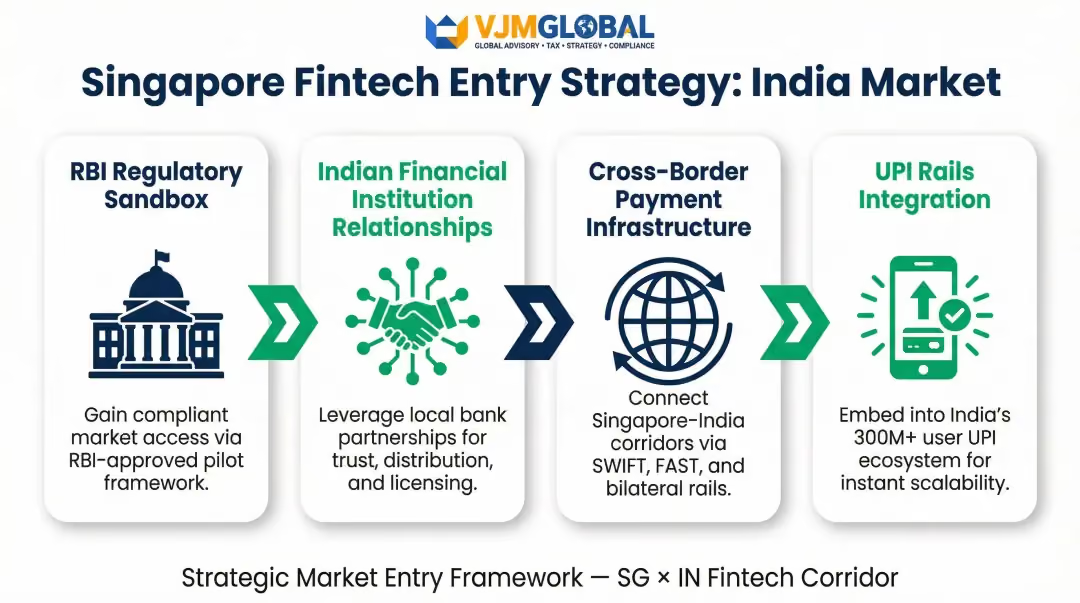
La India alberga uno de los ecosistemas fintech más grandes del mundo, con una proyección de alcanzar los 420.000 millones de dólares para 2029. El mercado está impulsado por la escala de UPI (21.700 millones de transacciones mensuales a enero de 2026), una gran población no bancarizada y el rápido crecimiento en préstamos digitales, distribución de seguros e infraestructura de pagos.
Las empresas fintech con sede en Singapur entran en este mercado con una ventaja estructural: experiencia regulatoria, relaciones institucionales e infraestructura de pagos transfronterizos que se integra directamente con la pila financiera digital de la India. Los puntos de entrada clave incluyen:
La India tiene la segunda población estudiantil más grande del mundo: más de 250 millones de niños en edad escolar, además de millones más que buscan desarrollo de habilidades, preparación para exámenes, educación en programación y capacitación profesional. Se proyecta que el mercado de edtech supere los 10.000 millones de dólares para 2026, impulsado por el aprendizaje digital asequible y las crecientes aspiraciones de obtener credenciales de calidad.
La reputación del sistema educativo de Singapur otorga a los fundadores una ventaja de credibilidad en el segmento premium de la India. Las áreas de oportunidad incluyen:
El plan de incentivos vinculados a la producción (PLI) de la India abarca 14 sectores, incluidos la electrónica, los productos farmacéuticos, los textiles, los componentes automotrices y el procesamiento de alimentos, con una inversión total que supera los 1,97 billones de rupias. El plan ofrece incentivos que oscilan entre el 4% y el 6% de las ventas incrementales para los fabricantes que cumplen con los umbrales de producción e inversión.
Las empresas con sede en Singapur dedicadas a la electrónica, los productos químicos especializados, los dispositivos médicos o el procesamiento de alimentos pueden aprovechar el ecosistema de manufactura de bajo costo de la India mientras obtienen incentivos del PLI. El corredor India-Singapur también permite la reexportación de bienes manufacturados al sudeste asiático, utilizando a la India como base de producción para las cadenas de suministro regionales.
Ventajas clave para los inversores de Singapur: