

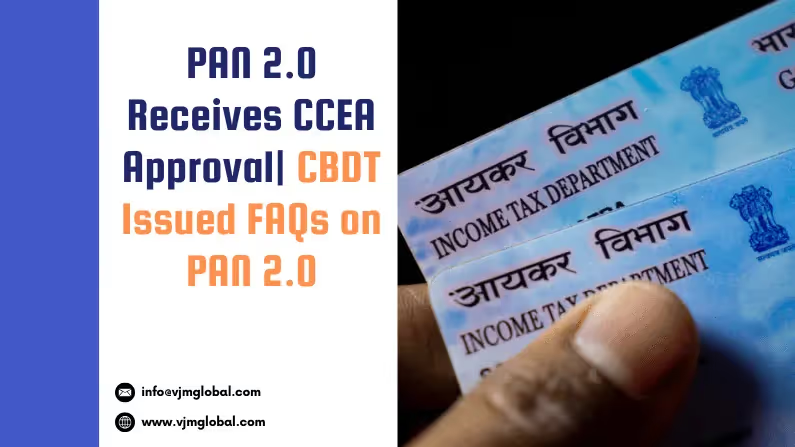
Permanent Account Number (PAN) is an identity card of an Indian Resident and it represents that the holder is an Indian Citizen. As a key enabler of the digital economy, PAN has transformed into a gateway for essential services, making it indispensable in daily life. A person is required to quote PAN at every single place.
The Cabinet Committee on Economic Affairs (CCEA) has approved the Income Tax Department’s PAN 2.0 Project. Presently, India has 78 Crores PAN and 73.28 Lakhs TAN. The PAN 2.0 project aims to streamline and modernize the process of issuing and managing PAN and TAN, making it more user-friendly and efficient. This project addresses the requirements of taxpayers, focusing on the consolidation of multiple portals and providing efficient services to PAN TAN holders.
Currently, PAN-related services are spread across the following three different platforms:
With PAN 2.0, all such services shall be provided through one unified portal. This one-stop platform will handle comprehensive issues/matters related to PAN and TAN, including application, updates, corrections, Aadhaar-PAN linking, re-issuance requests, and even online PAN validation.
CBDT has issued FAQs related to PAN 2.0 addressing the following issues:
Read Also: Form 10F filing by non-resident without obtaining PAN
The PAN 2.0 Project is a significant step toward aligning with the Digital India initiative. It focuses on eco-friendly, paperless processes while establishing PAN as a common identifier for all digital systems of specified Government agencies. Key features of PAN 2.0:
No. The existing PAN card holders are not required to apply for a new PAN under the upgraded system (PAN 2.0). They can continue with existing PAN cards.
CBDT has clarified that no new PAN card will be delivered unless the PAN holder requests for it due to updation or correction in their existing PAN. The PAN holders who want to update their old address can do so free of cost using the Aadhaar-based online facility.
El código QR ayudará a validar el PAN y los datos asociados al mismo. Actualmente, existe una aplicación de lectura de códigos QR específica para verificar la información. Al escanearlo con dicha aplicación, se mostrarán los detalles completos, es decir, fotografía, firma, nombre, nombre del padre o de la madre y fecha de nacimiento.
Asimismo, el código QR no es una función nueva, ya que se ha incorporado en las tarjetas PAN desde el periodo 2017-18. Dichas tarjetas PAN seguirán siendo válidas bajo el proyecto PAN 2.0. Los titulares de una tarjeta PAN antigua sin código QR tendrán la opción de solicitar una nueva tarjeta que sí lo incluya.
En el Presupuesto de la Unión de 2023, se anunció que, para los establecimientos comerciales que deban poseer un PAN, este se utilizará como identificador común en todos los sistemas digitales de las agencias gubernamentales especificadas.
Según las disposiciones de la Ley del Impuesto sobre la Renta de 1961, ninguna persona puede poseer más de un PAN. En caso de tener más de uno, el titular está obligado a notificarlo al funcionario evaluador jurisdiccional correspondiente para que el PAN adicional sea eliminado o desactivado.
En el proyecto PAN 2.0, la lógica del sistema mejorado para identificar posibles solicitudes duplicadas, junto con un mecanismo centralizado y optimizado para resolver dichas duplicidades, minimizará los casos en los que una persona posea más de un PAN.




