


India’s economic ecosystem is evolving fast, and international businesses are paying close attention. As global supply chains shift and capital moves across borders, many multinational firms are choosing India as the nerve center for their regional operations. But why India? It’s not just about tapping into a large consumer base or cutting costs. It’s about establishing control, mitigating risk, and ensuring long-term scalability, primarily through structured vehicles like holding companies.
As of January 31, 2025, over 5,200 foreign companies were registered in India, with 63% of them actively operating, according to data from the Ministry of Corporate Affairs. Between November 2024 and January 2025 alone, 16 new foreign entities were registered, with many opting for holding company structures to consolidate their regional operations. This signals growing confidence in India's regulatory maturity and investor-friendly framework.
Suppose you’re planning a strategic entry into India or seeking to streamline existing operations under a unified structure. In that case, this guide explains how to register a holding company in India, covering key benefits, the step-by-step registration process, and potential risks to be aware of, so you can proceed with clarity and confidence.
A holding company is a legal entity that owns and controls assets or equity in other businesses but does not engage in the production of goods or the delivery of services. Instead of handling daily operations, it manages ownership stakes and oversees strategic direction. It earns income from dividends, interest, royalties, or capital gains from its subsidiaries and investments.
In India, a holding company operates similarly to its global counterparts. It serves as the parent company in a corporate group. Holding companies are often set up to streamline operations, limit liability, and manage diverse business interests.
As per Section 2(46) of the Companies Act, 2013, a holding company is defined as one that:
This definition forms the legal basis for group structures in India, where holding companies are often used to consolidate ownership, control risk, and enhance operational flexibility across subsidiaries.
With India becoming an attractive destination for foreign investment, many U.S.-based multinational corporations have begun establishing Indian subsidiaries. In many of these cases, the U.S. parent company operates as a holding company, maintaining control through equity ownership and board appointments. The Indian entity manages local operations, compliance, and customer engagement. This structure helps foreign firms enter the Indian market efficiently while retaining centralized oversight.
For example, a U.S. tech company may form an Indian subsidiary to handle software development or customer support functions. The U.S. entity, acting as the holding company, owns the majority of shares and provides strategic direction. The Indian arm focuses on executing daily operations and meeting local business requirements.
A holding company is a business entity that owns controlling stakes in other companies, known as subsidiaries, but does not produce goods or services itself. In India, setting up a holding company can offer several strategic, financial, and operational advantages:
Lea también: Cómo registrar una marca comercial en la India: guía paso a paso
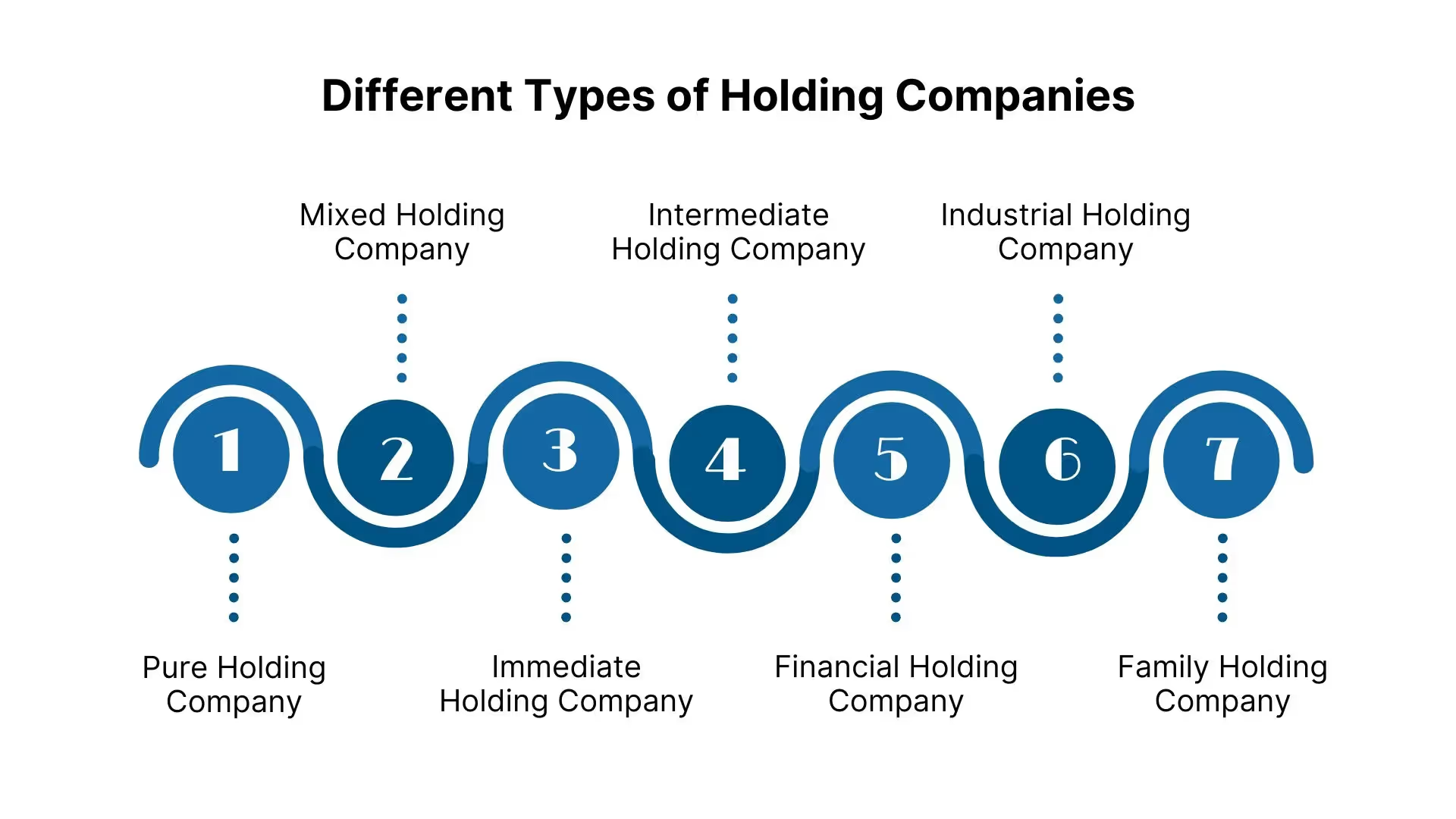
When you want to know how to register a holding company in India, you must know that holding companies come in various forms. It depends on their structure, purpose, and the extent of control they exert over subsidiaries. Some hold full ownership and actively influence management decisions, while others maintain minority stakes and serve more as investment vehicles.
When you are looking at how to register a holding company in India, understanding these types helps clarify their strategic roles in business and investment:
1. Pure Holding Company: A pure holding company exists solely to own shares of other companies. It does not engage in any other business activities or operations. Its primary purpose is to control subsidiary companies by holding a majority stake in their stock, influencing key decisions, and overseeing overall corporate strategy.
Example: Berkshire Hathaway is often cited as a pure holding company since it primarily owns stakes in diverse businesses without directly producing goods.
2. Mixed Holding Company (or Operating Holding Company): A mixed holding company not only owns shares in other companies but also conducts its own business operations. It combines investment in subsidiaries with direct production, sales, or service activities.
Ejemplo: Un conglomerado con una empresa matriz que posee filiales en diversos sectores y que, además, opera su propia planta de fabricación, se consideraría una sociedad holding mixta.
3. Sociedad holding inmediata: Una sociedad holding inmediata posee una participación de control directa en otra empresa, a la que a menudo se denomina su filial inmediata. Por lo general, posee una participación mayoritaria y tiene poder de decisión, pero ella misma puede ser una filial de una sociedad holding más grande.
Ejemplo: Si la Empresa A posee el 70% de la Empresa B, la Empresa A es la sociedad holding inmediata de la Empresa B.
4. Sociedad holding intermedia: Una sociedad holding intermedia se sitúa entre la empresa matriz última y las filiales operativas. Posee una o más filiales, pero a su vez es propiedad de otra sociedad holding situada por encima en la jerarquía corporativa.
Ejemplo: En una estructura corporativa de varios niveles, la Empresa B podría ser la sociedad holding intermedia propiedad de la Empresa A (la matriz última) y, a su vez, controlar la Empresa C (una filial).
5. Sociedad holding financiera: Las sociedades holding financieras se centran en poseer y controlar empresas del sector financiero, como bancos, aseguradoras o sociedades de inversión. Pueden estar sujetas a normativas específicas según la jurisdicción.
Ejemplo: Una sociedad holding bancaria que posee varios bancos regionales y filiales de servicios financieros.
6. Sociedad holding industrial: Las sociedades holding industriales controlan un grupo de empresas dedicadas a sectores industriales como la fabricación, la minería o la construcción. A menudo coordinan estrategias entre sus filiales para maximizar la eficiencia y el alcance en el mercado.
Ejemplo: Una corporación que posee varias plantas de fabricación que producen acero, piezas de automoción y maquinaria.
7. Sociedad holding familiar: Una sociedad holding familiar se establece para gestionar el patrimonio y los intereses empresariales de la familia a través de generaciones. Permiten un control centralizado sobre múltiples empresas e inversiones de propiedad familiar.
Ejemplo: Una familia crea una sociedad holding para poseer y gestionar sus negocios inmobiliarios, minoristas y de hostelería.
Suggested Read: Guide to Registering a Sole Proprietorship in India
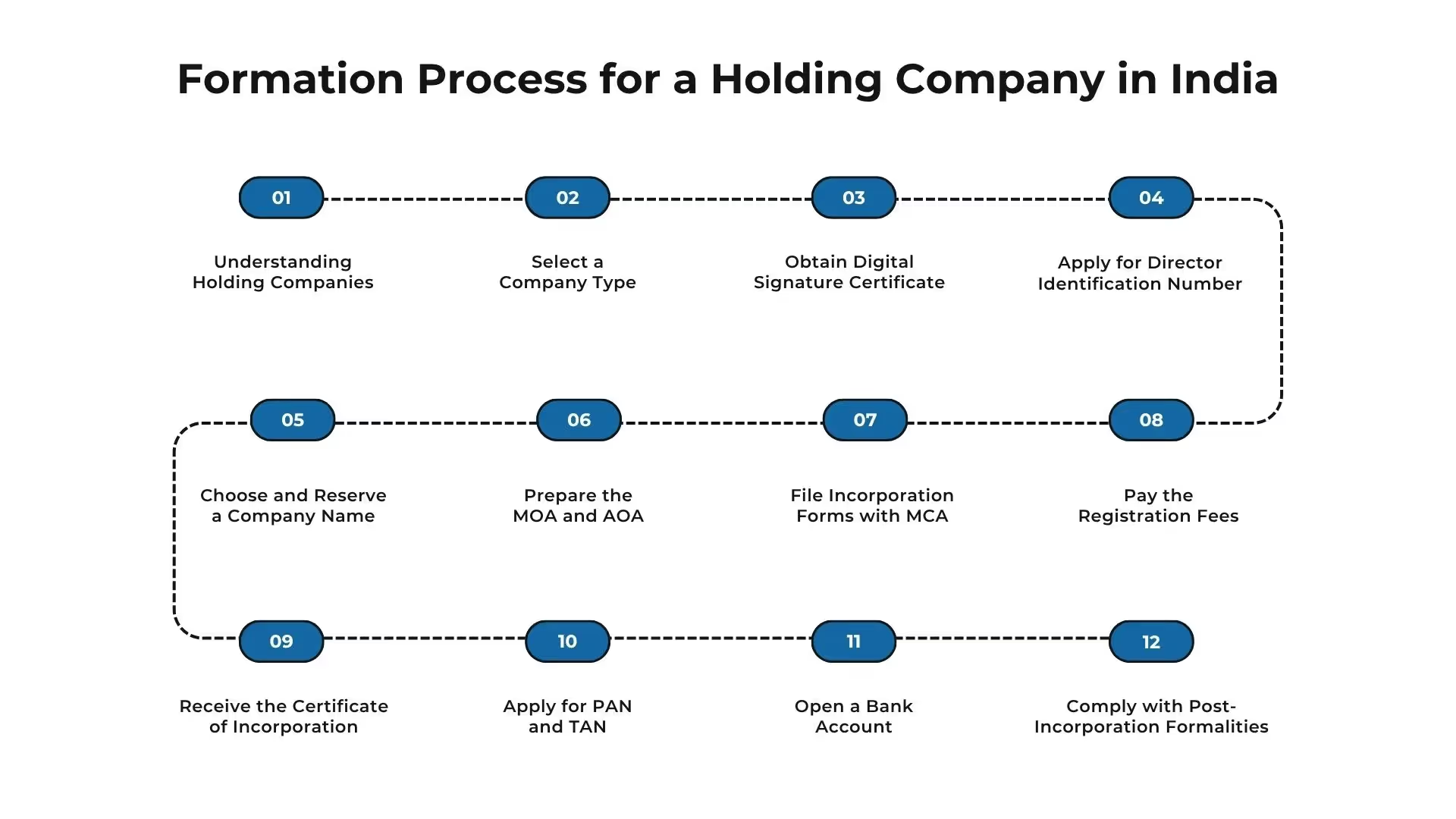
Una sociedad holding en la India posee participaciones mayoritarias en una o más filiales, lo que le otorga control sobre sus políticas y gestión. Muchas empresas multinacionales establecen sociedades holding en la India para gestionar sus filiales, optimizar las estrategias fiscales y agilizar las operaciones regionales.
Si usted es un inversor o empresario extranjero que planea establecer una sociedad holding en la India, ya sea para expandir o consolidar intereses comerciales, conocer el proceso de registro es fundamental.
Aquí tiene una guía paso a paso para registrar una sociedad holding en la India:
Antes de registrarse, aclare que su empresa tiene la intención de actuar como sociedad holding. Esto significa que se dedicará principalmente a poseer acciones de otras empresas en lugar de realizar operaciones comerciales activas. Las sociedades holding suelen gestionar filiales o empresas asociadas bajo su control.
En la India, una sociedad holding puede registrarse como:
Most holding companies opt for a Private Limited Company due to simpler compliance and ownership structure.
The first step for all proposed directors is to obtain their Digital Signature Certificates (DSC). DSC enables the secure and authentic online submission of documents to the Ministry of Corporate Affairs (MCA).
Each director of the proposed holding company must have a Director Identification Number (DIN). You can apply for DIN through the MCA portal by submitting your identity and address proof.
Select a unique and relevant name for your holding company. Use the RUN (Reserve Unique Name) service on the MCA portal to check name availability and reserve the name. The name should comply with the guidelines of the Companies Act and not be similar to that of any existing company.
Draft the MOA and AOA, which define the company’s objectives and internal rules, respectively. For a holding company, the MOA should clearly mention the principal business as holding shares or controlling other companies.
File the SPICe+ (Simplified Proforma for Incorporating Company Electronically Plus) form online with the MCA. This single integrated form covers:
Attach all necessary documents like identity proofs, address proofs, MOA, AOA, and proof of registered office.
Pay the prescribed government fees and stamp duty based on your authorized capital and company type. The MCA portal will calculate these charges automatically.
Upon approval, MCA issues the Certificate of Incorporation. This certificate includes the company’s Corporate Identification Number (CIN), which is unique to each registered company in India.
Although the SPICe+ form includes PAN and TAN applications, ensure you receive these documents, as they are mandatory for tax purposes and opening bank accounts.
Open a current bank account in the company’s name to handle all financial transactions. You can choose from leading banks such as HDFC Bank, ICICI Bank, Axis Bank, or State Bank of India, depending on your preferred services and branch accessibility.
After incorporation, hold the first board meeting within 30 days to appoint key officials, auditors, and approve statutory registers. Also, file the necessary returns with the Registrar of Companies (ROC).
También podría interesarle: Entender las auditorías de empresas: procesos y tipos clave
While holding companies provide advantages such as centralized oversight, asset protection, and operational flexibility, they also pose certain challenges. Businesses and investors must weigh these carefully, including tax complexities, regulatory scrutiny, and added compliance responsibilities:

For U.S.-based CPA firms, multinational corporations, and businesses seeking to expand into India, setting up a holding company offers strategic benefits like better control, tax efficiency, and streamlined asset management. However, navigating India’s complex corporate regulations requires expert assistance.
VJM Global specializes in supporting U.S. companies, CPA firms, and multinational enterprises with smooth holding company registration in India. Here’s why top firms rely on us:
Many U.S. CPA firms and companies are turning to India for strategic expansion. VJM Global’s expert guidance ensures your holding company registration process is smooth, compliant, and efficient.
Ready to establish your holding company in India with expert offshore support? Contact VJM Global today!
A. Yes. Foreign nationals can own a holding company in India under the Foreign Direct Investment (FDI) policy. Ownership is permitted either through the automatic route or the government approval route, depending on the business sector involved.
A. With accurate and complete documentation, registering a holding company in India typically takes around 10 to 15 working days. Timelines may vary slightly based on regulatory approvals and application processing times.
A. No. The Companies Act, 2013, does not specify a minimum capital requirement to incorporate a holding company. However, it is advisable to allocate sufficient capital to cover basic operational needs and meet ongoing legal compliance obligations.
A. Only if the proposed name follows the Ministry of Corporate Affairs (MCA) naming guidelines. It must not be identical or too similar to any existing registered entity in India to avoid rejection or legal conflicts.
A. Yes. Indian company law requires at least one director to be a resident of India. As per Section 149 of the Companies Act, 2013, a resident is defined as someone who has stayed in India for a minimum of 182 days in the previous calendar year.




