


Are you planning to seek funding for business growth, and your investors have requested your GAAP-compliant financial statements and GAAS audit reports? Many small business owners freeze when hearing these terms.
GAAP and GAAS are essentially two different accounting frameworks that serve distinct purposes. One is a set of accounting principles, while the other is a set of auditing guidelines.
Together, these two frameworks act as the cornerstone of financial reporting and auditing in the United States. Most accounting professionals consider both GAAP and GAAS essential for maintaining financial integrity and preventing fraud.
In this article, we will clear up the confusion around US GAAP vs US GAAS to help you make informed decisions for your business.
While both frameworks contribute to financial integrity, they serve distinct purposes and apply to different stages of financial reporting. This comprehensive comparison highlights their fundamental differences:
For those who wish to dig deeper and learn what each term entails, here's a detailed illustration:
Generally Accepted Accounting Principles (GAAP) are the standardized guidelines that govern how U.S. companies record and report their financial information. GAAP provides a common language for businesses to communicate their financial position to investors, creditors, regulators, and other stakeholders.
The official definition of GAAP includes all the conventions, rules, and procedures necessary to define accepted accounting practice at a particular time. These principles are established to ensure financial statements are consistent, comparable, reliable, and clear.
Many state laws require GAAP compliance for certain entities. For example, Louisiana law (Louisiana Revised Statute 24:514) requires local government entities to prepare their financial reports according to GAAP.
The law provides an exception for local entities that are prohibited from issuing bonded debt under state law, giving them more flexibility in their reporting.
GAAP is built on a foundation of core principles that guide financial reporting:
Companies apply these principles across their balance sheets, income statements, cash flow statements, and notes to provide a complete picture of their financial health.
GAAP impacts virtually every aspect of financial management in U.S. businesses. These principles provide structure and consistency that benefit companies in multiple ways:
For growing businesses, early adoption of GAAP practices prepares you for future expansion, investment rounds, and potential acquisition opportunities.
Companies that delay GAAP implementation risk facing costly accounting overhauls when they need reliable financial statements for major business decisions.
Next, let’s learn in detail about GAAS.
Generally Accepted Auditing Standards (GAAS) are the systematic guidelines that auditors use when examining and verifying a company's financial statements.
GAAS provides a framework for conducting high-quality audits that users can rely on for accurate assessments of financial information.
GAAS defines the professional qualities and judgment auditors must possess, procedures they must follow, and reporting requirements they must meet when performing an audit. These standards ensure audits are thorough, objective, and consistent.
GAAS is organized into three key categories that guide the audit process. These categories ensure that audits are performed in a consistent, unbiased, and thorough manner.
Here’s a breakdown of each category:
These standards provide a systematic approach to testing financial information, evaluating internal controls, and forming professional judgments about financial statements.
Now that we've explored both frameworks individually, let's examine how they differ in purpose and application.
GAAS serves as the foundation for quality financial audits that stakeholders can trust. When auditors follow these standards, they provide reasonable assurance that financial statements are free from material misstatements and fraud.
For businesses undergoing audits, GAAS compliance brings several benefits:
Up next, it’s time to understand how GAAP fundamentally differs from GAAP..
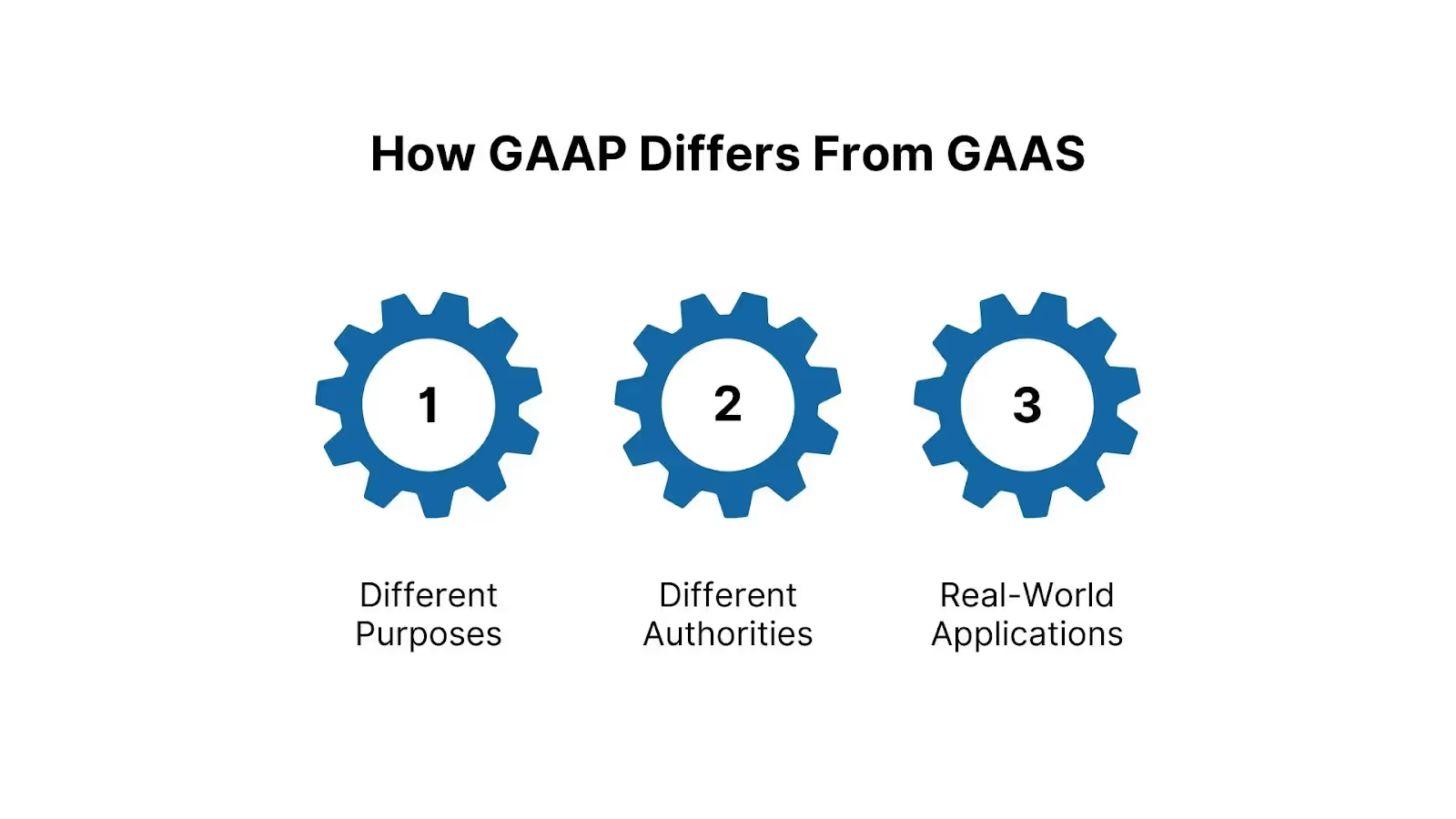
Although we highlighted the key differences between US GAAP and US GAAS earlier, we now deep-dive into the topic for those who wish to understand these frameworks in greater detail.
Exploring their development, purpose, and relationship will help you gain a clearer understanding of how they shape financial reporting and auditing in the U.S.
El desarrollo de los GAAP y las GAAS refleja el compromiso de Estados Unidos con una información financiera transparente y fiable. Los GAAP surgieron como respuesta al crac bursátil de 1929, cuando los inversores perdieron la confianza en la información financiera.
La Comisión de Bolsa y Valores (SEC) obtuvo la autoridad para establecer normas contables, pero delegó esta responsabilidad en el sector privado.
Las GAAS se desarrollaron por separado a través del Instituto Americano de Contadores Públicos Certificados (AICPA). Tras grandes escándalos contables como el de Enron a principios de la década de 2000, el Congreso aprobó la Ley Sarbanes-Oxley, creando la Junta de Supervisión Contable de Empresas Públicas (PCAOB), que actualmente supervisa las normas de auditoría para las empresas públicas.
La diferencia fundamental entre estos marcos es la siguiente: los GAAP son un conjunto de principios contables que rigen cómo las empresas preparan sus estados financieros, mientras que las GAAS consisten en normas de auditoría que dictan cómo los auditores verifican dichos estados.
El Instituto Americano de Contadores Públicos Certificados (AICPA) y el Consejo de Normas de Contabilidad Financiera (FASB) son dos organizaciones distintas que definen las normas contables y de auditoría en Estados Unidos.
El AICPA es la organización profesional nacional de los Contadores Públicos Certificados (CPA). Fundada en 1887, representa a la profesión contable con más de 400.000 miembros en diversos sectores.
El FASB es una organización independiente del sector privado, establecida en 1973, que fija las normas contables para empresas públicas, privadas y organizaciones sin ánimo de lucro que siguen los GAAP.
Comprender cómo funcionan los GAAP y las GAAS en la práctica ayuda a aclarar su importancia para las operaciones de su empresa. A continuación, se presentan situaciones comunes en las que estas normas afectan a la información financiera y a la auditoría:
Al preparar los estados financieros anuales, su equipo contable aplica los principios GAAP mediante:
During an audit of your financial statements, independent CPAs follow GAAS by:
Tanto los GAAP como las GAAS influyen en actividades empresariales importantes:
Dicho esto, estos marcos también comparten algunas similitudes. Aprovechando el tema, vamos a conocerlas también.
Aunque los GAAP y los GAAS cumplen propósitos distintos en el proceso de información financiera, comparten elementos fundamentales importantes. Ambos marcos se desarrollaron para proteger a las partes interesadas y garantizar información financiera fiable en el mercado.
Ahora que hemos terminado de comparar en detalle los GAAP y los GAAS de EE. UU., es momento de abordar algunos de los conceptos erróneos más comunes.
Muchos propietarios de empresas malinterpretan estos marcos financieros. Vamos a aclararlo:
En la siguiente sección, cubriremos la importancia de seguir las directrices de los GAAP y los GAAS para su negocio.
En la siguiente sección, repasaremos la importancia de seguir las directrices de los GAAP y los GAAS para su negocio.
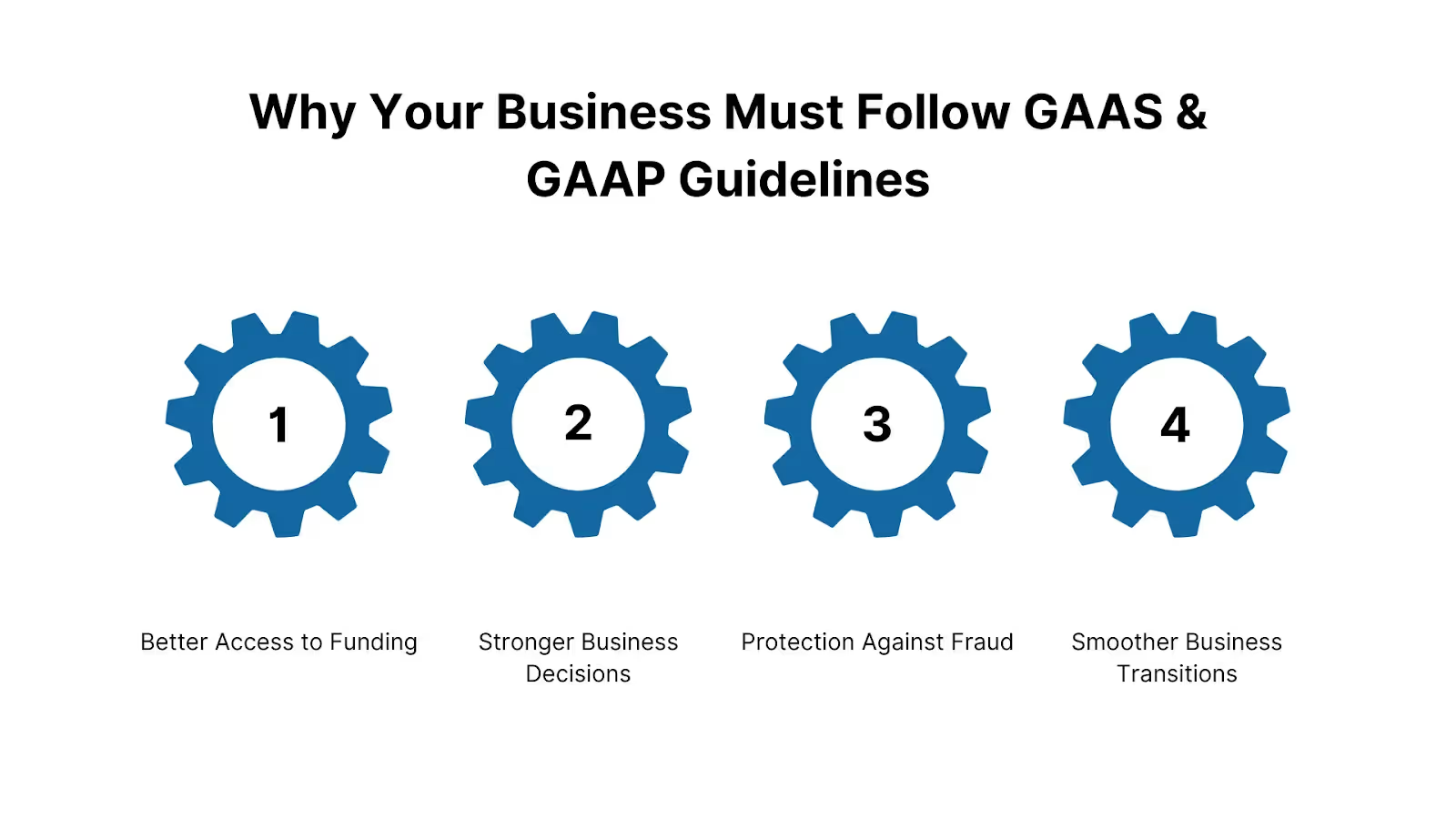
Veamos cuatro razones clave por las que estos estándares son importantes para su negocio:
A los bancos y a los inversores les encantan las empresas que siguen los estándares contables adecuados.
Cuando necesita un préstamo o una inversión, tener estados financieros que cumplan con los GAAP (especialmente aquellos verificados mediante auditorías GAAS) le sitúa por delante de la competencia. Los prestamistas ofrecen mejores condiciones a las empresas con registros financieros impecables porque representan un menor riesgo.
No puede tomar decisiones inteligentes sin buena información. Los estados financieros basados en los GAAP le proporcionan datos fiables para guiar su estrategia empresarial.
Unos estándares contables y de auditoría sólidos ayudan a proteger su negocio contra el fraude financiero. El enfoque sistemático que requieren estos estándares a menudo revela problemas que, de otro modo, podrían pasar desapercibidos hasta convertirse en problemas graves.
¿Planea vender su negocio algún día? ¿O incorporar socios? Los GAAP y los GAAS harán que estas transiciones sean mucho más sencillas.
When it's time for ownership changes, GAAP-compliant financial statements that have been audited according to GAAS provide a solid foundation for business valuation. They reduce disputes about the company's worth and speed up due diligence processes.
Understanding the differences between US GAAP and US GAAS empowers you to build stronger financial foundations for your business.
While these standards may seem technical, they ultimately serve practical purposes: creating reliable financial information and verifying its accuracy. By following these frameworks, you protect your company from errors, fraud, and missed opportunities.
If you want to outsource your accounting needs to a GAAP-compliant CPA firm, think VJM Global. Trusted by 500+ business owners in the US across 15+ industries, we have earned a reputation for excellence and reliability in financial reporting.
Our team includes experienced CPAs, Chartered Accountants, and finance professionals with advanced degrees who understand US accounting standards and tax legislation inside and out.
We deliver accurate financial statements, comprehensive debtor reports, and thorough bank reconciliation analysis with quick turnaround times, ensuring your business remains fully compliant while you focus on growth.
Get in touch with us today to simplify your accounting process.




