La mayoría de las empresas de Singapur que entran en el mercado indio descubren, solo después de los hechos, que sus conocimientos sobre las SFRS(I) son sorprendentemente insuficientes en este contexto. India opera un sistema de doble estándar que abarca los PCGA indios (Indian GAAP), las Ind AS, el cumplimiento del GST y la supervisión del Instituto de Contadores Públicos de la India (ICAI), el Ministerio de Asuntos Corporativos (MCA) y la Autoridad Nacional de Información Financiera (NFRA). Subestimar esta complejidad conduce a brechas de cumplimiento, reexpresiones y sanciones que podrían haberse evitado.
Esta guía analiza los principios contables fundamentales de la India, los compara con el marco SFRS de Singapur y detalla qué normas se aplican a su entidad según su patrimonio neto y su estatus de cotización, desde los requisitos de auditoría legal hasta la documentación de precios de transferencia y las obligaciones de doble presentación de informes.
Resumen:
India opera un sistema contable de dos niveles diseñado para equilibrar la convergencia global con las necesidades regulatorias locales. Las empresas más pequeñas y no cotizadas siguen los PCGA indios tradicionales (Normas Contables AS 1-32), mientras que las empresas más grandes y todas las entidades cotizadas adoptan las Ind AS (Normas Contables Indias), que son convergentes con las NIIF, aunque no idénticas.
Para las empresas de Singapur que establecen filiales en la India, esta distinción es fundamental. El patrimonio neto y la estructura de propiedad de su entidad determinan qué marco se aplica, y la decisión es irreversible una vez tomada.
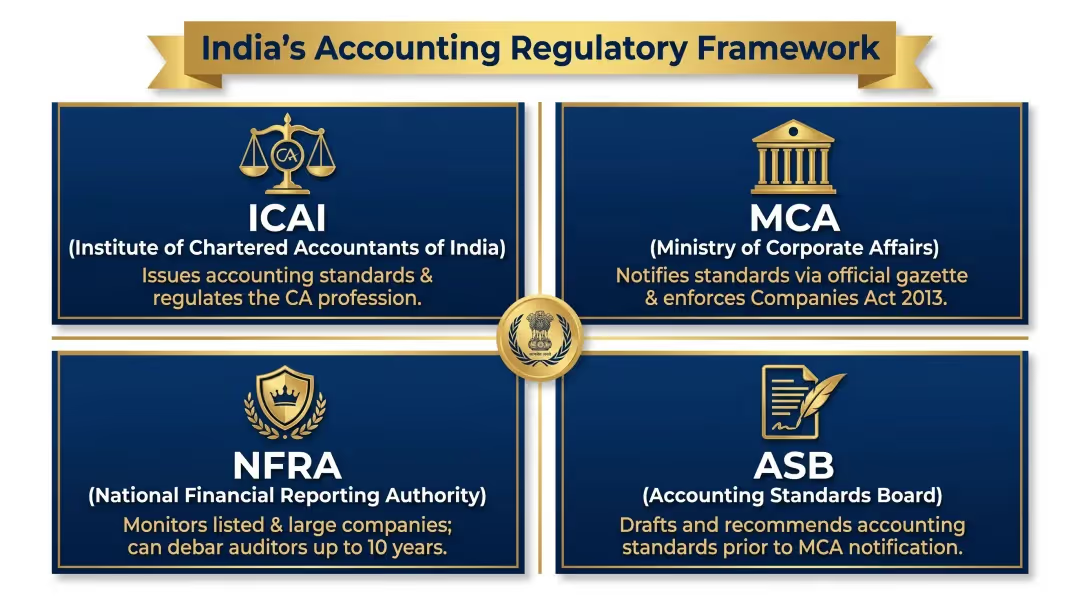
Cuatro instituciones principales conforman el panorama contable de la India:
Si está estableciendo una filial india cotizada o una gran entidad no cotizada, espere la supervisión de los cuatro organismos, no solo del ICAI.
Los PCGA indios se refieren a las 27 Normas Contables operativas (AS 1-32) emitidas por el ICAI y notificadas por el MCA bajo las Reglas de Sociedades (Normas Contables) de 2021. Estas se aplican a las empresas que se encuentran por debajo de los umbrales de las Ind AS.
Cinco normas no están operativas:
NormaEstadoMotivoAS 6, AS 8RetiradasFusionadas en AS 10 y AS 26AS 30, 31, 32Nunca notificadasReemplazadas por Ind AS 109, 32 y 107
Los PCGA indios se basan en reglas, están arraigados en las prácticas comerciales nacionales y enfatizan la contabilidad al costo histórico. Son más simples que las Ind AS, pero carecen de las mediciones de valor razonable y la granularidad de divulgación que exigen los marcos convergentes con las NIIF.
Las Ind AS se introdujeron para alinear la contabilidad de la India con las normas globales, facilitando la consolidación de los estados financieros de las filiales indias a nivel de la matriz en Singapur. Aunque están en gran medida alineadas con las NIIF, las Ind AS incluyen más de 10 excepciones específicas de la India que crean diferencias prácticas para las empresas matrices de Singapur al consolidar los resultados de sus filiales indias.
Principales excepciones de las Ind AS respecto a las NIIF:
Umbrales de aplicabilidad obligatoria:
FaseCriteriosFecha de entrada en vigorFase IEmpresas cotizadas O no cotizadas con un patrimonio neto ≥ 500 millones de rupias1 de abril de 2016Fase IIEmpresas no cotizadas con un patrimonio neto ≥ 250 millones de rupias1 de abril de 2017
Estos umbrales no cuentan toda la historia. Si su filial india es una sociedad holding, filial, empresa conjunta o asociada de una entidad ya cubierta por las Ind AS, debe adoptar también las Ind AS, independientemente de su propio patrimonio neto. Una vez adoptadas, la reversión a los PCGA indios está prohibida según la Regla 4 de las Normas de Sociedades (Normas de Contabilidad Indias) de 2015.
Cometer un error en esta clasificación durante la constitución puede forzar costosas reexpresiones más adelante. VJM Global ayuda a las empresas de Singapur a identificar el marco correcto para su estructura de entidad específica antes de que se registren, no después.
Las normas contables de la India —tanto los PCGA indios como las Ind AS— se basan en principios que afectan directamente a cómo su filial india registra las transacciones y cumple con sus obligaciones de cumplimiento. Varios de estos interactúan con el sistema fiscal de la India de formas que toman desprevenidas a las empresas de Singapur.
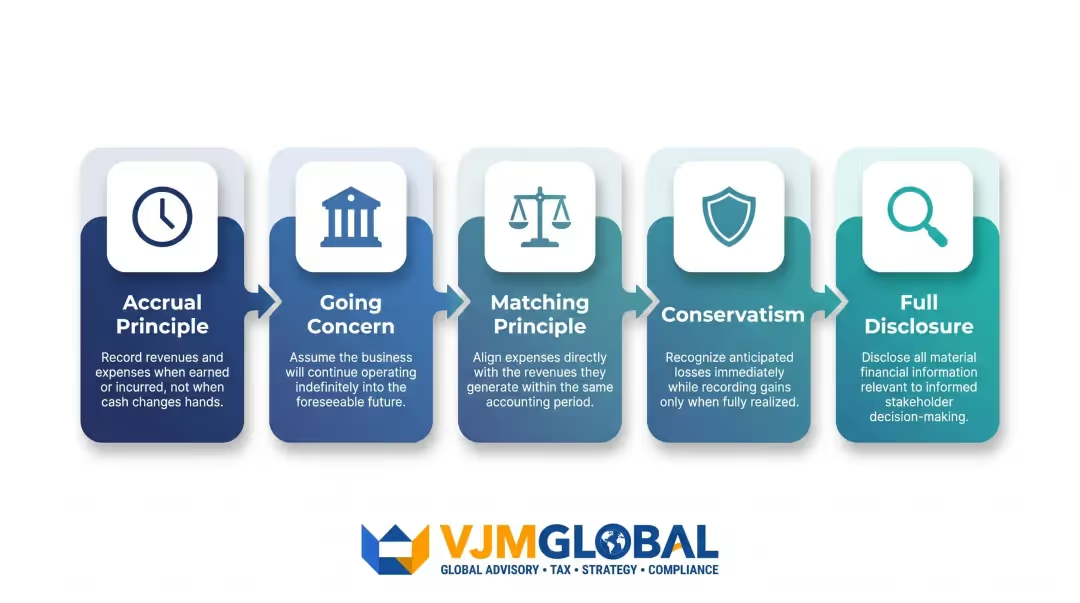
Los ingresos y gastos se registran cuando se devengan o se incurren, no cuando se intercambia efectivo. La Sección 128(1) de la Ley de Sociedades de 2013 exige que todas las empresas indias lleven sus libros bajo el principio de devengo utilizando la contabilidad por partida doble.
Por qué esto es importante en la India:
Los estados financieros asumen que la empresa continuará operando indefinidamente, lo que afecta a la valoración de activos y pasivos. La AS 1 codifica esto como una suposición fundamental bajo los PCGA indios; cualquier desviación requiere una divulgación explícita.
Para las empresas de Singapur que evalúan estrategias de salida o la reestructuración de operaciones en la India, esto es importante en la práctica: cualquier indicador de discontinuidad debe ser revelado y puede desencadenar bases de medición de activos completamente diferentes.
Los gastos deben reconocerse en el mismo periodo que los ingresos que ayudaron a generar. Una asociación precisa también influye directamente en el calendario de pago de impuestos anticipados de la India, donde los errores de estimación conllevan sanciones por intereses:
Fecha de vencimiento% acumulado del impuesto anual estimado15 de junio15%15 de septiembre45%15 de diciembre75%15 de marzo100%
Un reconocimiento de gastos desajustado puede llevar a errores en la estimación de impuestos anticipados y a sanciones por intereses.
Los contables reconocen las pérdidas probables de inmediato, pero solo registran las ganancias cuando se realizan. Esto evita la sobreestimación de la posición financiera.
Diferencia clave entre los marcos:
Toda información material que afecte la comprensión de las partes interesadas debe ser revelada. Esto es particularmente crítico para:
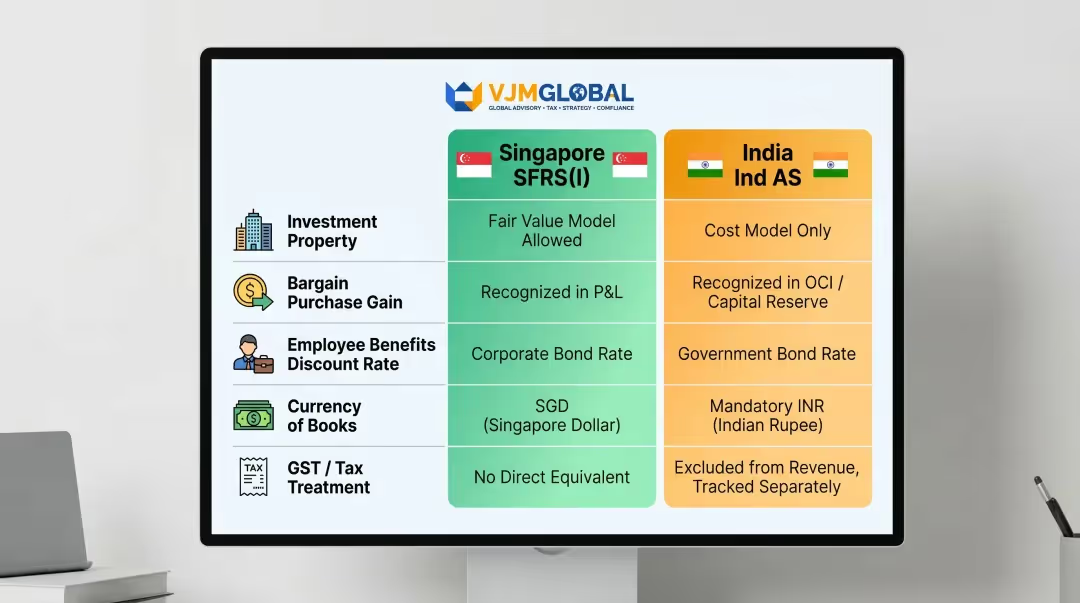
La norma SFRS(I) de Singapur es idéntica a la NIIF a partir del 1 de enero de 2018. La norma Ind AS de la India está convergida con la NIIF pero incluye exclusiones y requisitos locales que generan diferencias prácticas en la presentación de informes.
Ambos marcos siguen la misma base conceptual: contabilidad de devengo, presentación fiel, empresa en funcionamiento y materialidad. El reconocimiento de ingresos (SFRS(I) 15 / Ind AS 115), la contabilidad de arrendamientos (SFRS(I) 16 / Ind AS 116) y los instrumentos financieros (SFRS(I) 9 / Ind AS 109) están alineados a nivel de norma.
Pero: las exclusiones de la India significan que transacciones idénticas pueden producir cifras diferentes.
Ambos prohíben el método LIFO (últimas entradas, primeras salidas) y exigen FIFO o el costo promedio ponderado. Ambos miden el inventario al menor valor entre el costo y el valor neto realizable (VNR), con la reversión obligatoria de las rebajas cuando el VNR aumenta posteriormente.
Matiz específico de la India: la norma Ind AS 2 exige una revelación detallada de las reversiones de rebajas de inventario, y el ICAI ha emitido guías específicas por sector (por ejemplo, construcción y farmacéutica) que los contadores de Singapur podrían no encontrar bajo las normas SFRS(I).
Ambos siguen el modelo de cinco pasos bajo la NIIF 15. Sin embargo:
Más allá de las áreas de convergencia, existen tres requisitos de cumplimiento que se aplican exclusivamente en la India; ninguno tiene equivalentes directos en el marco de presentación de informes de Singapur.
Bajo las secciones 194 y 195 de la Ley del Impuesto sobre la Renta de 1961, los pagadores deben deducir el impuesto en la fuente sobre pagos específicos, incluyendo todos los pagos a no residentes si están sujetos a impuestos en la India. Esto genera:
Cada factura debe realizar un seguimiento del estado de deducción del TDS, un requisito sin equivalente en el sistema de GST de Singapur. Para las empresas de Singapur con filiales en la India, el seguimiento del cumplimiento del TDS debe integrarse tanto en los procesos de cuentas por pagar como de cuentas por cobrar desde el primer día.
El GSTR-2B es una declaración generada automáticamente cada mes (disponible el día 14 de cada mes) que muestra el ITC disponible según las declaraciones de los proveedores. No está permitido reclamar el ITC por facturas que no se reflejen en el GSTR-2B, lo que crea una obligación de información financiera única en la India.
En la práctica, esto significa que sus libros deben conciliarse mensualmente con las declaraciones GSTR-3B, identificando las transacciones no elegibles y calculando los intereses sobre cualquier reclamación en exceso. El servicio de conciliación de GST de VJM Global gestiona este proceso para sus clientes, reduciendo el riesgo de brechas de cumplimiento.
La Sección 128(1) de la Ley de Sociedades de 2013 exige que toda empresa mantenga sus libros contables en la India, bajo el principio de devengo y utilizando la contabilidad por partida doble. Los libros deben llevarse en rupias indias, sin excepciones.
Las empresas matrices de Singapur acostumbradas a mantener registros consolidados en SGD deben asegurarse de que su filial india mantenga libros separados y conformes denominados en INR.
La aplicabilidad depende del tipo de entidad, el patrimonio neto y la estructura de propiedad, y equivocarse en esto durante la constitución crea brechas de cumplimiento que resultan costosas de corregir más adelante. Las empresas de Singapur suelen establecer uno de estos tres tipos de entidades en la India, cada una con una obligación contable diferente:
Tipo de entidadLegislación aplicableMarco contableObligaciones clave de presentaciónFilial de propiedad absolutaLey de Sociedades de 2013, MCAInd AS o PCGA indios (según patrimonio neto)Auditoría legal por un CA registrado en el ICAI; AOC-4 (estados financieros) y MGT-7 (declaración anual) ante el MCAOficina de enlaceRBI/FEMANo hay mandato de PCGA indios/Ind AS (no es una sociedad)Certificado de Actividad Anual (AAC) de un CA al RBI y al banco AD antes del 30 de septiembre; no puede generar ingresos en la IndiaSucursalRBI/FEMADebe mantener libros y presentar cuentasAAC de un CA + Balance auditado al RBI antes del 30 de septiembre; presentar cuentas anuales ante el RBI y el MCA
Si está estableciendo una filial de propiedad absoluta constituida en la India, se aplican los siguientes umbrales:
Crítico: Una vez adoptadas las Ind AS (ya sea de forma obligatoria o voluntaria), no se puede volver a los PCGA indios, incluso si el patrimonio neto cae posteriormente por debajo del umbral.
VJM Global trabaja con empresas extranjeras que entran en la India para identificar el marco contable correcto en el momento de la constitución y gestionar las transiciones cuando las filiales superan los umbrales de las Ind AS, antes de que aparezca una brecha de cumplimiento en el informe de un auditor.
La Sección 128(1) exige que las empresas indias mantengan registros específicos:
Las empresas de Singapur, acostumbradas a prácticas contables flexibles para PYMES, a menudo subestiman la rigidez de los requisitos legales de contabilidad en la India. El incumplimiento puede derivar en sanciones y responsabilidad directa para los directores de la empresa.
Las obligaciones que se pasan por alto con mayor frecuencia incluyen:
Según la Sección 139(1) de la Ley de Sociedades de 2013, toda empresa debe nombrar un auditor, independientemente de sus ingresos, activos o número de empleados. Las empresas de Singapur suelen sorprenderse por esto, ya que en la India no existe una exención equivalente para pequeñas empresas.
Exención de auditoría en Singapur (a modo de comparación):
Según la Sección 205C, una empresa privada de Singapur califica para la exención de auditoría si cumple con 2 de los 3 criterios durante dos años consecutivos:
CriterioUmbralIngresos anuales totales≤ 10 millones de S$Activos totales≤ 10 millones de S$Número de empleados≤ 50
La India no tiene una exención equivalente. Toda empresa india, incluidas las pequeñas filiales con ingresos mínimos, debe someterse a una auditoría legal realizada por un contador público certificado registrado en el ICAI.
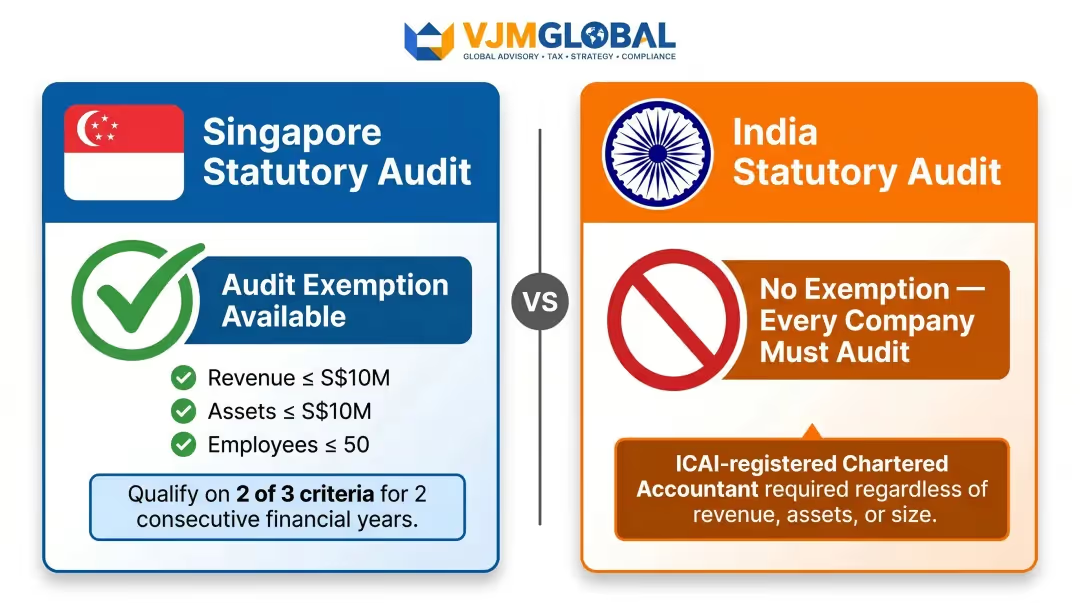
VJM Global coordina auditorías legales para empresas indias de propiedad extranjera, asegurando que se cumplan los requisitos de registro de los contadores públicos y que los cronogramas de auditoría se alineen tanto con los plazos legales de la India como con los plazos de presentación de informes de la matriz en Singapur.
Las transacciones entre una matriz en Singapur y su filial india son transacciones internacionales entre partes relacionadas reguladas por las Secciones 92–92F de la Ley del Impuesto sobre la Renta de 1961.
Requisitos de documentación (Regla 10D):
Sanciones según la Sección 271AA:
InfracciónSanciónFalta de mantenimiento/presentación de documentación de precios de transferencia2% del valor de la transacciónFalta de presentación del Archivo Maestro (ingresos consolidados > 500 millones de rupias)500.000 rupias (fija)Falta de presentación del Formulario 3CEB (Informe de auditoría de precios de transferencia)100.000 rupias (fija)
La norma Ind AS 24 también exige la divulgación de todas las transacciones entre partes relacionadas en los estados financieros, incluidos los importes, los saldos pendientes y los términos.
VJM Global apoya a las empresas matrices de Singapur con documentación contemporánea de precios de transferencia, estudios de evaluación comparativa y divulgaciones bajo la norma Ind AS 24, ayudando a los clientes a demostrar que los precios entre empresas reflejan lo que acordarían partes no relacionadas y a evitar la sanción del 2% sobre el valor de la transacción.
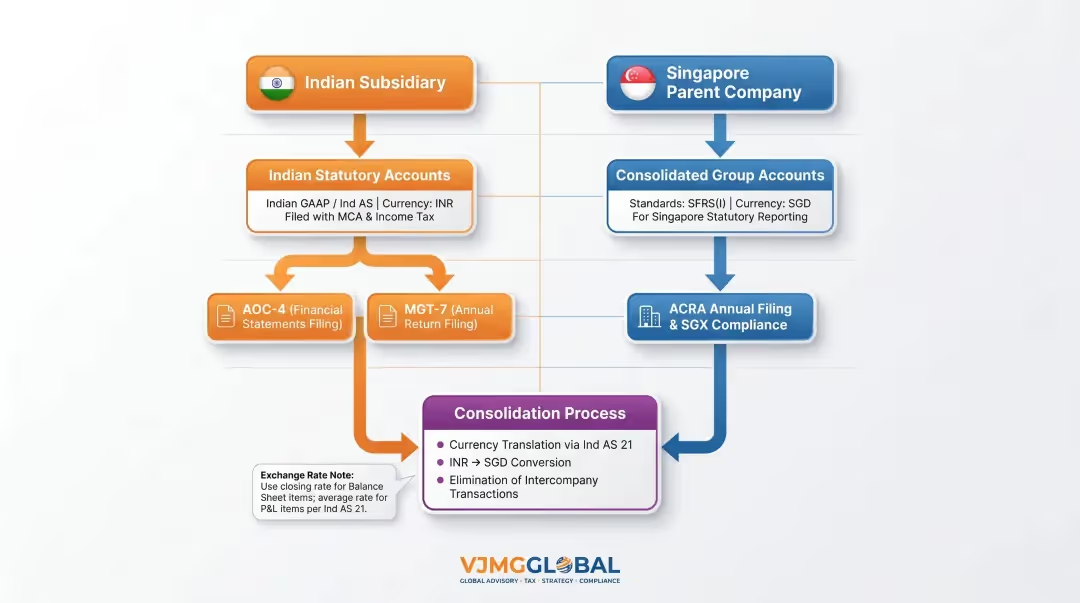
Las empresas matrices en Singapur suelen necesitar dos conjuntos de estados financieros:
La norma Ind AS 21 establece cómo convertir las transacciones y operaciones en moneda extranjera. Para las filiales en la India:
Contexto del tipo de cambio: A mayo de 2026, el tipo de cambio interbancario SGD/INR es de aproximadamente ₹74.27 por SGD, con un promedio de 6 meses cercano a los ₹71.25. El tipo de cambio osciló entre ₹67.75 (noviembre de 2025) y ₹74.60 (mayo de 2026). Esa diferencia representa una volatilidad significativa; planifique los ajustes de conversión de consolidación en consecuencia.
Utilice un software contable que admita:
Establezca cronogramas claros para el cierre de mes:
Plazos legales en la India:
FormularioPropósitoPlazoAOC-4Estados financierosDentro de los 30 días posteriores a la AGM (Junta General Anual)MGT-7Informe anualDentro de los 60 días posteriores a la AGM (Junta General Anual)AGMJunta General AnualDentro de los 6 meses posteriores al cierre del ejercicio (antes del 30 de septiembre para ejercicios que cierran el 31 de marzo)
Los plazos de consolidación de la matriz en Singapur varían según la empresa, pero generalmente se alinean con los ciclos de informes trimestrales.
Gestionar ambos libros contables en dos jurisdicciones es donde muchos equipos financieros en Singapur enfrentan retrasos. VJM Global se encarga de los libros de la filial india (Ind AS/GAAP indio en INR), mientras que su equipo en Singapur se enfoca en la consolidación del grupo bajo SFRS(I), manteniendo ambos conjuntos de cuentas listos para auditoría y cumpliendo con los plazos.
La India utiliza dos conjuntos de normas: GAAP indio (27 normas contables operativas AS 1–32) para empresas más pequeñas y no cotizadas, y Ind AS (normas contables indias convergentes con las NIIF) para empresas cotizadas y entidades no cotizadas con un patrimonio neto ≥ ₹250 millones de rupias. Ambas están reguladas por el ICAI y el MCA, y la NFRA proporciona supervisión independiente para las entidades cotizadas.
Los US GAAP se basan en reglas y fueron desarrollados por el FASB para el mercado estadounidense; los GAAP indios se basan en principios y están moldeados por el entorno regulatorio de la India. Las diferencias clave incluyen los métodos de inventario (LIFO está permitido bajo US GAAP, pero prohibido en la India), los modelos de contabilidad de arrendamientos y los enfoques de deterioro de instrumentos financieros. La norma Ind AS 109 utiliza un modelo de pérdidas crediticias esperadas (ECL) de tres etapas, mientras que los US GAAP aplican las pérdidas esperadas de por vida de forma inmediata.
Los cinco principios más citados son devengo (registrar cuando se gana/incurre), empresa en funcionamiento (el negocio continúa indefinidamente), asociación de ingresos y gastos (los gastos se reconocen con los ingresos relacionados), prudencia (reconocer las pérdidas de inmediato y las ganancias cuando se realizan), y revelación suficiente (se divulga toda la información importante). Las normas emitidas por el ICAI de la India incorporan los cinco como conceptos fundamentales.
Los siete principios básicos son entidad económica, unidad monetaria, periodo contable, costo histórico, revelación plena, empresa en marcha y asociación. Las normas indias reconocen los siete; las Ind AS introducen excepciones de valor razonable al costo histórico para clases de activos específicas, como instrumentos financieros e inversiones inmobiliarias.
Los 12 principios de los PCGA son regularidad, consistencia, sinceridad, permanencia de métodos, no compensación, prudencia, continuidad, periodicidad, materialidad, buena fe, reconocimiento y revelación. Las Ind AS de la India incorporan todos estos principios y los alinean con las NIIF, lo cual es fundamental para las empresas de Singapur que gestionan obligaciones de doble informe para sus filiales en la India.
¿Listo para que la contabilidad de su filial en la India sea impecable desde el principio? Los contadores públicos registrados en el ICAI y los especialistas transfronterizos de VJM Global apoyan a las empresas de Singapur en cada etapa, desde evaluaciones de aplicabilidad de las Ind AS hasta la coordinación de auditorías legales y reportes de gestión. Con más de 30 años de experiencia ayudando a empresas extranjeras a navegar el panorama contable de la India, aportamos experiencia práctica a cada proyecto. Contáctenos en [email protected] o al +91-9213397070 para hablar sobre sus necesidades de expansión en la India.