%20(3).avif)
Las medianas empresas del Reino Unido suelen enfrentarse a un punto de inflexión crítico: sus herramientas contables actuales ya no pueden gestionar el creciente volumen de transacciones, la complejidad de los distintos departamentos o los requisitos de cumplimiento cada vez más estrictos de la HMRC. Elegir el software equivocado supone una pérdida de tiempo, precisión y visibilidad estratégica. Según las estimaciones de población empresarial de 2025 del Departamento de Empresa y Comercio, 38 435 medianas empresas del Reino Unido emplean a 3,7 millones de personas y generan 948 600 millones de libras esterlinas en volumen de negocio; un segmento demasiado complejo para las herramientas de pequeñas empresas, pero que no siempre está preparado para sistemas ERP a gran escala.
Esta guía analiza las mejores opciones de software de contabilidad diseñadas específicamente para medianas empresas del Reino Unido, las funciones clave que deben evaluarse y los factores de cumplimiento específicos del Reino Unido —incluidos Making Tax Digital (MTD), el IVA y las declaraciones ante el Companies House— que deberían determinar su decisión final.
Según la sección 465 de la Ley de Sociedades de 2006, una empresa se considera mediana si cumple al menos dos de estos tres criterios: un volumen de negocios que no supere los 54 millones de libras, un balance total que no supere los 27 millones de libras o una plantilla media que no supere los 250 empleados. Estos umbrales se elevaron en abril de 2025, lo que significa que ahora más empresas cumplen los requisitos para las exenciones de presentación de informes para medianas empresas.
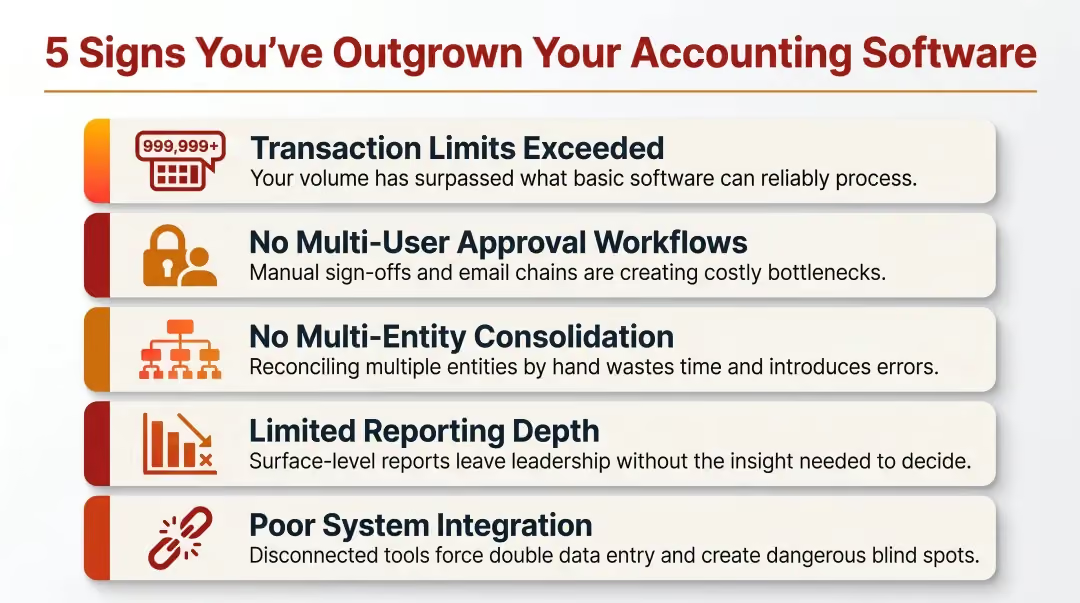
Las medianas empresas se enfrentan a un reto claro: han superado las herramientas para pequeñas empresas, pero aún no están preparadas para los sistemas ERP empresariales. Los puntos de ruptura más comunes incluyen:
Los requisitos de cumplimiento en el Reino Unido se están endureciendo en varios frentes. El sistema MTD para el IVA es obligatorio; todas las empresas registradas a efectos del IVA deben utilizar ahora un software compatible con MTD. El MTD para la autoliquidación del impuesto sobre la renta (ITSA) amplía aún más esta medida, exigiendo informes digitales trimestrales a los trabajadores autónomos y propietarios que superen los siguientes umbrales de ingresos:
Los requisitos de Companies House añaden más presión. El servicio de presentación en línea cerró el 31 de marzo de 2026, por lo que las empresas deben presentar sus cuentas anuales a través de un software comercial.
Estas plataformas se evaluaron en función de su escalabilidad, preparación para el cumplimiento de la normativa británica, capacidad de elaboración de informes, ecosistema de integración y coste total de propiedad para las empresas del mercado intermedio.
Sage 200 es una solución consolidada desarrollada en el Reino Unido, diseñada para cubrir el vacío entre Sage 50 (para pequeñas empresas) y Sage Intacct (nivel empresarial), abarcando finanzas, control de existencias e inteligencia empresarial.
Lo que lo hace destacar para el mercado intermedio británico:
Sus características principales incluyen:
QuickBooks Online Advanced es el nivel de Intuit para el mercado medio, que aumenta el límite a 25 usuarios con acceso completo y añade flujos de trabajo automatizados, informes avanzados con IA financiera y procesamiento de transacciones por lotes.
Factores diferenciales para empresas medianas en el Reino Unido:
Las características clave incluyen:
Xero es una plataforma nativa en la nube con usuarios ilimitados en todos sus planes, un mercado con más de 1000 aplicaciones y una interfaz intuitiva; es muy popular entre las pymes del Reino Unido que están creciendo hacia el mercado medio, especialmente en los sectores de servicios y comercio minorista.
Consideración clave para empresas medianas: La guía de rendimiento de Xero recomienda reducir las partidas a entre 5 y 10 por transacción y utilizar aplicaciones de terceros para facturas resumidas en entornos de alto volumen.
Tampoco cuenta con consolidación nativa de múltiples entidades: cada entidad requiere un archivo de organización independiente y la exportación/importación manual para la elaboración de informes de grupo. Esto hace que Xero sea más adecuado para el segmento inferior de las empresas medianas.
Las características principales incluyen:
Microsoft Dynamics 365 Business Central es una plataforma ERP integral diseñada para empresas del segmento medio-alto, que integra finanzas, cadena de suministro, ventas y operaciones; es especialmente potente para empresas integradas en el ecosistema de Microsoft 365.
Cuándo considerar Business Central: Ofrece capacidades potentes: previsiones asistidas por IA, paneles de Power BI y consolidación de múltiples empresas. Dicho esto, la implementación suele durar entre 3 y 6 meses y las licencias por usuario pueden aumentar rápidamente.
Business Central es más adecuado para empresas que necesitan una profundidad ERP completa en todas sus operaciones —no solo contabilidad avanzada— y que cuentan con recursos de TI internos para gestionar la configuración.
Las características principales incluyen:
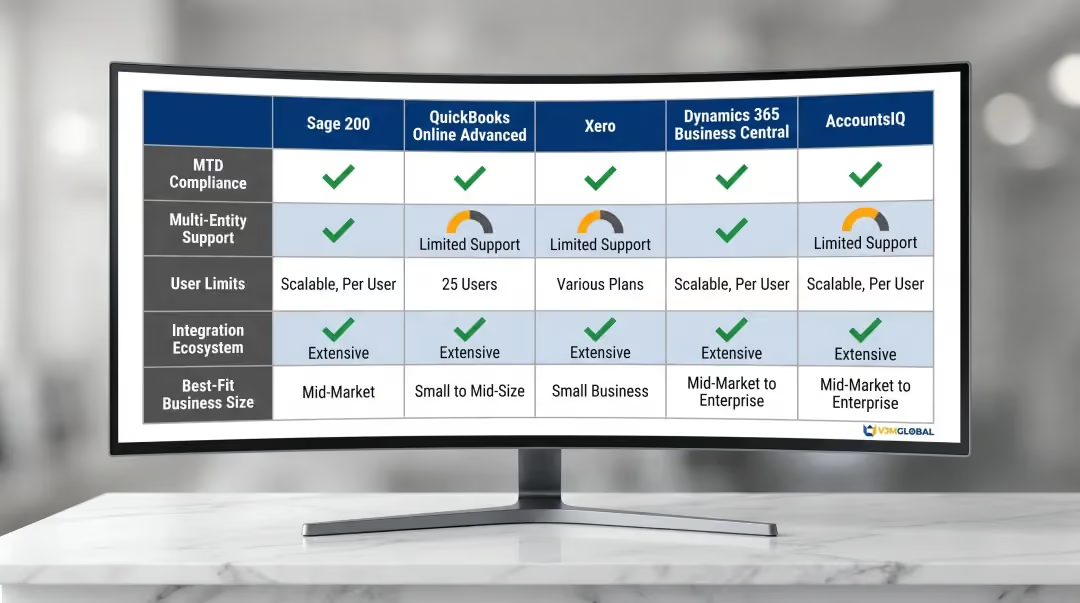
AccountsIQ es una plataforma en la nube diseñada específicamente para organizaciones del mercado medio y entidades múltiples. Gestiona la consolidación y los informes de grupo a una fracción del coste de NetSuite o Sage Intacct, lo que la convierte en una opción práctica para empresas que han superado las herramientas para pymes pero no necesitan un ERP completo.
Diferenciadores para el mercado medio:
Las características clave incluyen:
Cualquier software preseleccionado debe estar reconocido por la HMRC y cumplir con la normativa MTD para el IVA. Consulte la lista oficial de software compatible con MTD de la HMRC. A partir de abril de 2026, el MTD para la autoliquidación del impuesto sobre la renta exigirá la presentación de informes digitales trimestrales para las empresas con ingresos cualificados superiores a 50.000 libras esterlinas, por lo que es esencial contar con una preparación para el MTD que vaya más allá de los requisitos actuales. Confirme que el software permite la preparación de cuentas anuales para el Companies House y el PAYE si tiene empleados.
Compruebe los límites estrictos en:
Herramientas como Xero estándar o QuickBooks Online (versión no avanzada) tienen umbrales publicados que las empresas en crecimiento superan habitualmente. Pregunte directamente a los proveedores cómo gestiona la plataforma el crecimiento sin necesidad de una migración completa.
Las empresas medianas del Reino Unido con filiales, divisiones u operaciones transfronterizas necesitan:
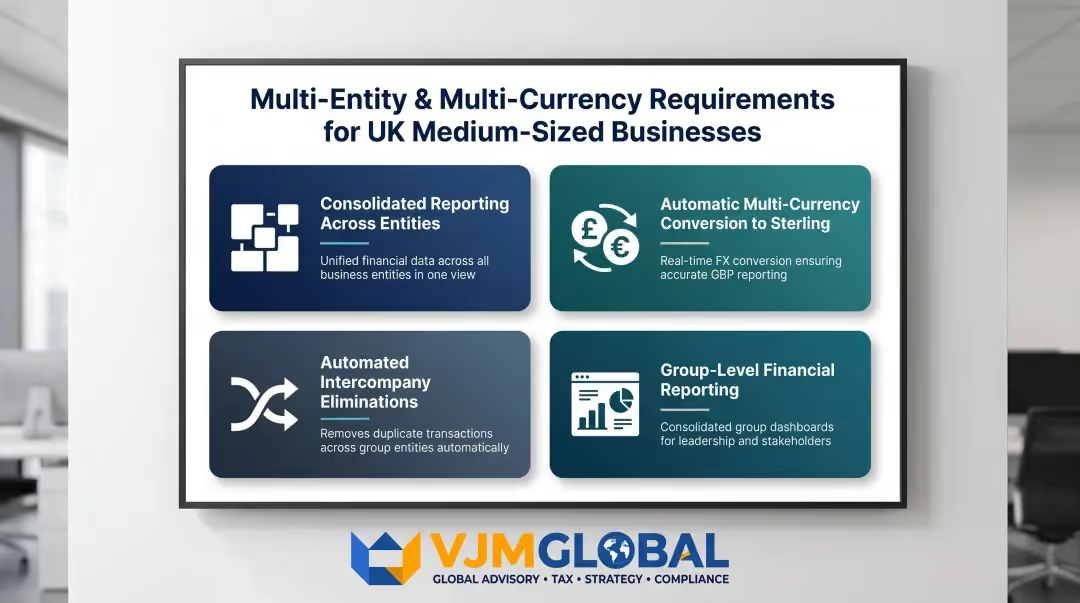
Aquí es donde plataformas como AccountsIQ y Dynamics 365 Business Central toman ventaja, ya que Xero y QuickBooks Advanced requieren complementos de terceros o soluciones manuales.
Más allá de las necesidades de múltiples entidades, la capacidad de integración determina qué tan bien encaja un software de contabilidad en su ecosistema actual. Los sistemas desconectados provocan retrasos en los informes, reingreso manual de datos y errores acumulativos. Busque:
Para empresas del Reino Unido con operaciones en la India u otros mercados internacionales, el software por sí solo a menudo no puede cubrir todos los niveles de cumplimiento. Combinar la plataforma adecuada con una externalización especializada cierra esa brecha.
VJM Global ha apoyado a más de 250 empresas del Reino Unido en la gestión de filiales, empresas conjuntas u operaciones en la India. Los servicios incluyen:
Evaluamos soluciones específicamente para medianas empresas del Reino Unido; las herramientas para pequeñas empresas fueron excluidas, incluso si aparecen en listas de comparación generales. Los criterios clave incluyeron:
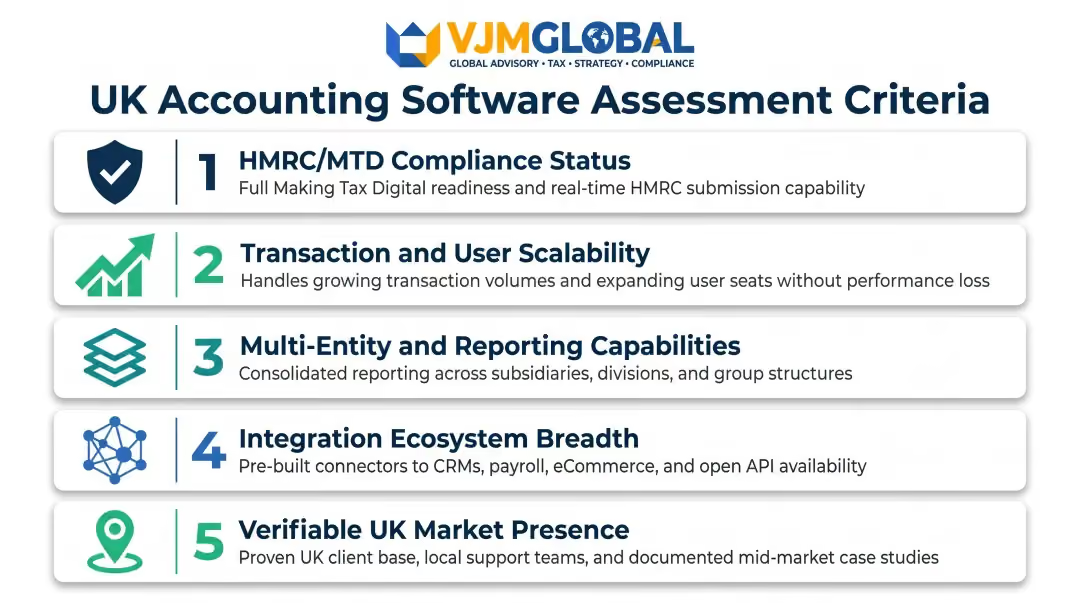
Coste total de propiedad (TCO) se tuvo en cuenta, no solo el precio de la suscripción mensual. Los factores del TCO incluyeron:
Un error de selección causa problemas constantemente: elegir una herramienta familiar para pequeñas empresas asumiendo que podrá crecer con ella. Elija una plataforma diseñada para su tamaño actual y para los próximos dos o tres años, no la que parezca más barata hoy.
El software de contabilidad adecuado para una mediana empresa en el Reino Unido se ajusta a su complejidad operativa actual, gestiona los requisitos de cumplimiento del Reino Unido desde el primer momento y escala sin forzar una migración disruptiva en los próximos años. Sage 200, QuickBooks Advanced, Xero, Dynamics 365 BC y AccountsIQ tienen puntos fuertes distintos según el tamaño, la estructura y el sector de la empresa.
Antes de decidir, evalúe tres factores más allá de la lista de funciones:
Las empresas que gestionan operaciones internacionales, cumplimiento en múltiples jurisdicciones o un crecimiento rápido a menudo descubren que el software por sí solo no es suficiente. Los contadores públicos y asesores de negocios de VJM Global han apoyado a más de 250 empresas del Reino Unido con contabilidad, cumplimiento y operaciones transfronterizas, especialmente aquellas con exposición al mercado indio. Contacte al equipo para analizar cómo el apoyo de asesoría puede complementar su inversión en software.
No existe una plataforma única que se adapte a todas las empresas. Las opciones más sólidas incluyen Sage 200, QuickBooks Online Advanced, Xero, Microsoft Dynamics 365 Business Central y AccountsIQ. La elección correcta depende de su complejidad, necesidades multientidad, requisitos de cumplimiento en el Reino Unido y presupuesto.
Xero lidera la visibilidad digital en el Reino Unido con un 45,11 % de la cuota de búsqueda de nómina y contabilidad frente al 17,78 % de QuickBooks (datos de PPC de febrero de 2026). Los productos de Sage, particularmente Sage 50 y Sage 200, han dominado históricamente la base instalada del mercado medio, con Sage reportando un crecimiento de ingresos del 10 % en el Reino Unido e Irlanda en 2025.
Las características críticas incluyen el cumplimiento de MTD y HMRC, acceso multiusuario con flujos de trabajo de aprobación, soporte multientidad o multidivisa, informes y paneles avanzados, y capacidad de integración con sistemas de nómina, CRM y adquisiciones.
Xero se adapta al segmento inferior de las empresas medianas; tiene límites de transacciones publicados y requiere complementos de pago para la consolidación multientidad. Las empresas más grandes o complejas suelen necesitar una plataforma diseñada específicamente para el mercado medio.
MTD es la iniciativa de HMRC que exige a las empresas mantener registros digitales financieros y presentar declaraciones de impuestos a través de software reconocido por HMRC. Las empresas registradas a efectos del IVA ya deben cumplir con esto, y el MTD para la autoliquidación del impuesto sobre la renta (ITSA) se implementará gradualmente a partir de abril de 2026. Cualquier software que preseleccione debe estar reconocido por HMRC y ser compatible con MTD.