

Making the right financial decisions is crucial for the success of your business, and one of the most significant choices you’ll face is whether to handle your bookkeeping in-house or outsource it. This decision can affect your company’s efficiency, cost management, and overall growth trajectory.
As more small to mid-sized U.S. businesses embrace cloud software, the debate between outsource bookkeeping vs in-house becomes even more pressing. In fact, the global business process outsourcing market is projected to reach USD 525.23 billion by 2030, growing at a 9.8% CAGR from 2025 to 2030, according to a Grand View Research report. Additionally, smaller organizations are more likely to outsource payroll services than larger ones, with 15% of companies with fewer than 2,500 employees outsourcing their payroll, as noted by Statista.
In this article, we'll dive into the pros and cons of both in-house and outsourced accounting, helping you understand which approach aligns best with your unique business needs. Whether you're considering keeping your accounting in-house or outsourcing it, we'll provide actionable tips and insights to guide you in making the right decision for your company's future.
In-house accounting refers to the practice of managing financial tasks such as bookkeeping, tax filings, and financial reporting with an internal team. This approach ensures your business retains full control over financial operations and allows for a more tailored accounting strategy that aligns directly with your company's goals and needs.
Having defined in-house accounting, let's explore its key advantages, especially for small and mid-sized businesses like yours.
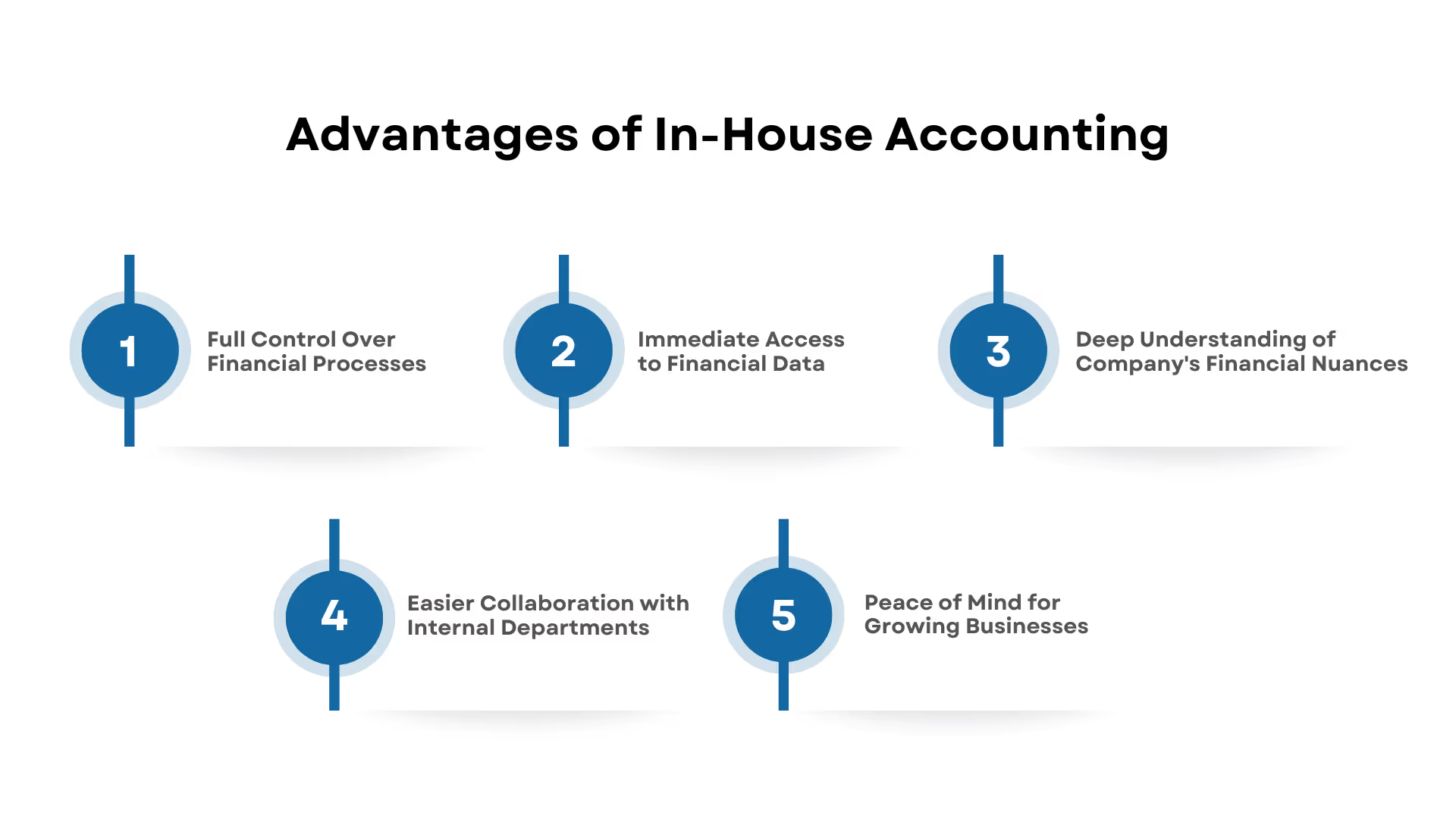
In-house accounting can provide significant benefits to businesses, particularly regarding control, accessibility, and alignment with business strategy. Here are the main advantages:
1. Full Control Over Financial Processes
Managing accounting internally gives you complete oversight of all financial activities. This control allows for a more agile approach to decision-making and helps you ensure that accounting practices remain in line with your business objectives.
2. Immediate Access to Financial Data and Reporting
One of the key benefits of in-house accounting is real-time access to financial reports. Your internal team can provide timely updates, allowing you to make faster, informed decisions without waiting on external accountants.
3. Deep Understanding of Your Company's Financial Nuances
Your in-house team becomes deeply familiar with your business's specific financial structure. This knowledge allows them to tailor financial strategies and identify opportunities or challenges more quickly, ensuring that your financial management evolves with your company.
4. Easier Collaboration with Internal Departments
In-house accountants work directly with other departments, facilitating smoother communication and collaboration. For example, your accounting team can more easily coordinate with HR on payroll or with marketing on budget tracking, improving overall efficiency across teams.
5. Customization and Alignment with Business Strategy
In-house accounting teams are able to adjust financial strategies to directly support your business goals. Whether budgeting, tax planning, or forecasting, having an internal team allows you to modify strategies as your business evolves.
With these clear advantages, it's also important to consider the potential drawbacks of in-house accounting.
While the benefits of in-house accounting are evident, there are several challenges to keep in mind. These can impact your business as it grows and evolves:
1. Higher Costs (Salaries, Benefits, and Overhead)
Running an in-house accounting department can be costly. Besides salaries, businesses incur additional costs such as benefits, training, office space, and equipment. These expenses can add up, especially for small businesses with limited budgets.
2. Limited Expertise and Knowledge Gaps
Your in-house team may have a strong grasp of your company's financial operations but might lack the specialized expertise that external accountants bring. Outside professionals can offer higher knowledge for complex financial tasks like tax optimization or regulatory compliance.
3. Time Spent on Recruitment, Training, and Retention
Hiring and retaining qualified accountants takes time and resources. Recruitment, training, and maintaining a stable in-house team can be a drain on business resources, particularly in a competitive job market.
4. Limited Scalability as Your Business Grows
As your business expands, so will its financial management needs. Scaling an in-house accounting team to handle increased complexity requires additional investment, which can be challenging for small to mid-sized businesses with limited resources.
5. Potential for Inefficiencies Due to Internal Constraints
In-house teams may face internal constraints that limit their ability to perform efficiently. These limitations could be due to staffing issues, lack of specialized tools, or competing priorities within the company, leading to slower response times or errors in financial reporting.
While in-house accounting provides control and direct integration with your business, it also comes with increased costs and challenges in scalability. Now, let's look at how outsourcing accounting tasks might compare and whether it could be a more efficient solution for your business.
Outsourced accounting refers to hiring an external firm to handle your business’s financial responsibilities, such as bookkeeping, payroll, and tax filings. This method provides businesses with access to expertise without the need for a full-time, in-house team. It's especially popular among small to mid-sized companies using cloud software like QuickBooks, Xero, or Gusto, offering a flexible and cost-effective way to manage finances. As you weigh your options, understanding the pros and cons of outsourced accounting is crucial for deciding which method suits your business.
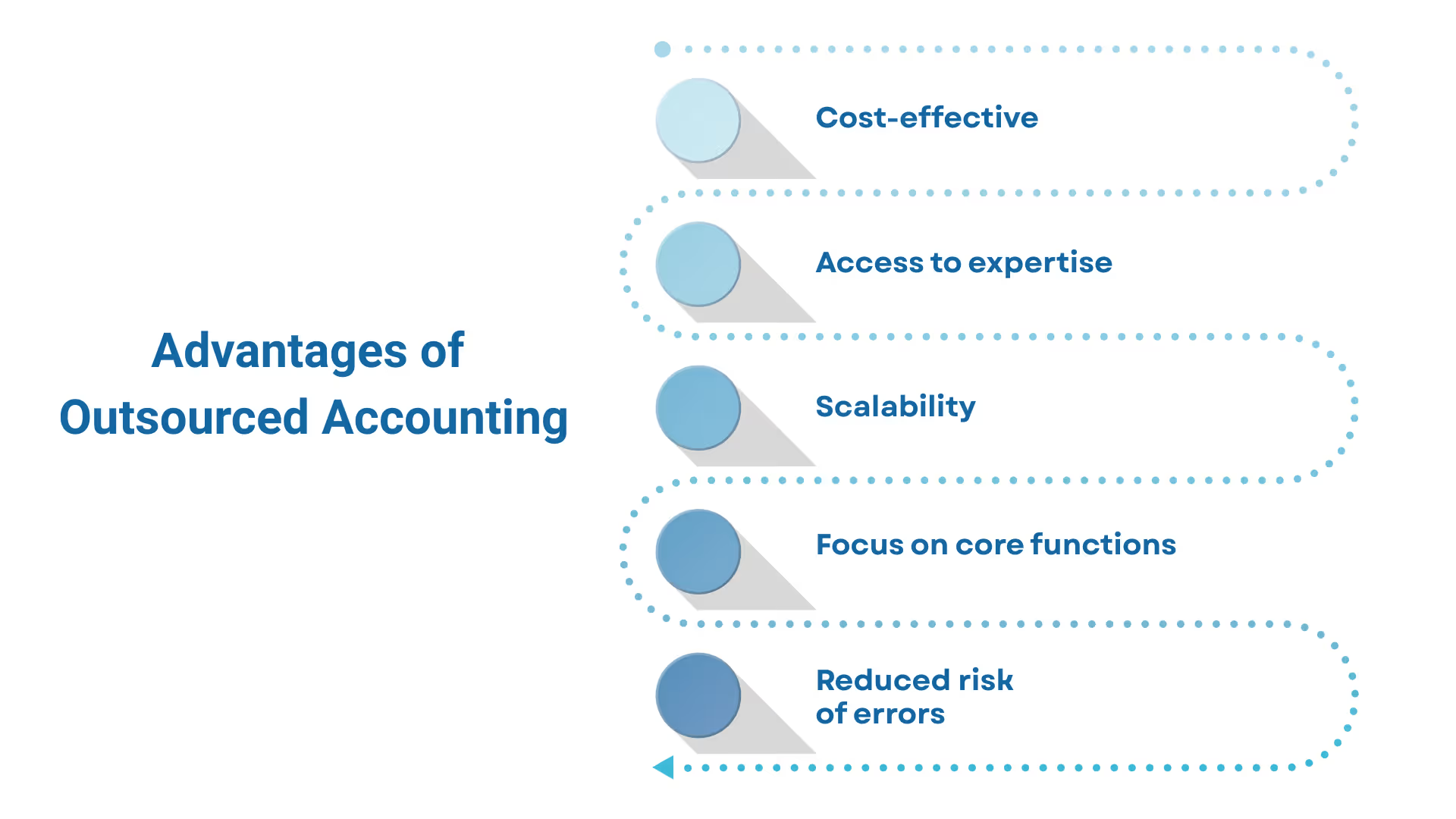
Outsourcing accounting can bring several strategic benefits that streamline financial operations and reduce overhead costs.
1. Cost-effective
Outsourcing often proves cheaper than maintaining an in-house team. You avoid expenses like salaries, benefits, and office space, which can add up quickly in a full-time setup.
2. Access to expertise
Outsourcing gives you access to a team of accounting professionals who bring specialized knowledge in areas such as tax laws and financial reporting. This expertise is invaluable for complex tasks.
3. Scalability
As your business grows, outsourcing allows you to scale your accounting services to match the increasing demands without the need for additional hires or resources.
4. Focus on core functions
With accounting tasks managed externally, you can focus on growing your business, improving customer service, and driving innovation, leaving financial management to the experts.
5. Reduced risk of errors
Professional accountants rely on proven systems and best practices, minimizing the risk of mistakes that can occur with less experienced staff.
With these advantages, outsourcing accounting offers a compelling alternative to managing financial tasks in-house. However, it's also important to consider the potential challenges associated with outsourced accounting.
While outsourcing provides notable advantages, there are some potential drawbacks that affect your business operations.
1. Less control
Outsourcing means giving up some control over your accounting processes. You might find it harder to make quick adjustments or address issues as they arise without immediate oversight.
2. Communication barriers
Working with a third-party provider can sometimes lead to miscommunication, especially if the team is in a different time zone or culture, which could affect efficiency or clarity in financial reporting.
3. Data security risks
Sharing sensitive financial data with an external provider increases the risk of data breaches or unauthorized access, which can compromise your business's privacy and security.
4. Limited understanding of your business
An external provider might not be as familiar with the specific nuances of your company, which could lead to misalignment between the accounting work and your business's evolving needs.
5. Hidden costs
While outsourcing is typically cost-effective, you may encounter unexpected charges for services that fall outside the initial scope of work, which can catch businesses off guard.
While outsourced accounting offers clear benefits such as cost savings and access to specialized expertise, it's essential to weigh these against the potential risks of losing control and facing communication barriers. Deciding between outsourced bookkeeping vs in-house accounting ultimately depends on what aligns best with your company's goals, size, and growth trajectory.
Lectura recomendada: Los mejores servicios de externalización contable en la India para empresas de EE. UU.
Al decidir entre la contabilidad interna y la externalizada, es fundamental evaluar el coste, el control y la escalabilidad. La elección depende de las necesidades, los recursos y los planes de crecimiento de su empresa.
La comparación entre la contabilidad interna y la externalizada implica considerar factores como la rentabilidad, la flexibilidad y la experiencia. Mientras que los equipos internos ofrecen un mayor control, la externalización le permite acceder a habilidades especializadas sin los costes operativos.
Lea también: Externalización de servicios contables: la clave para el crecimiento empresarial en 2025
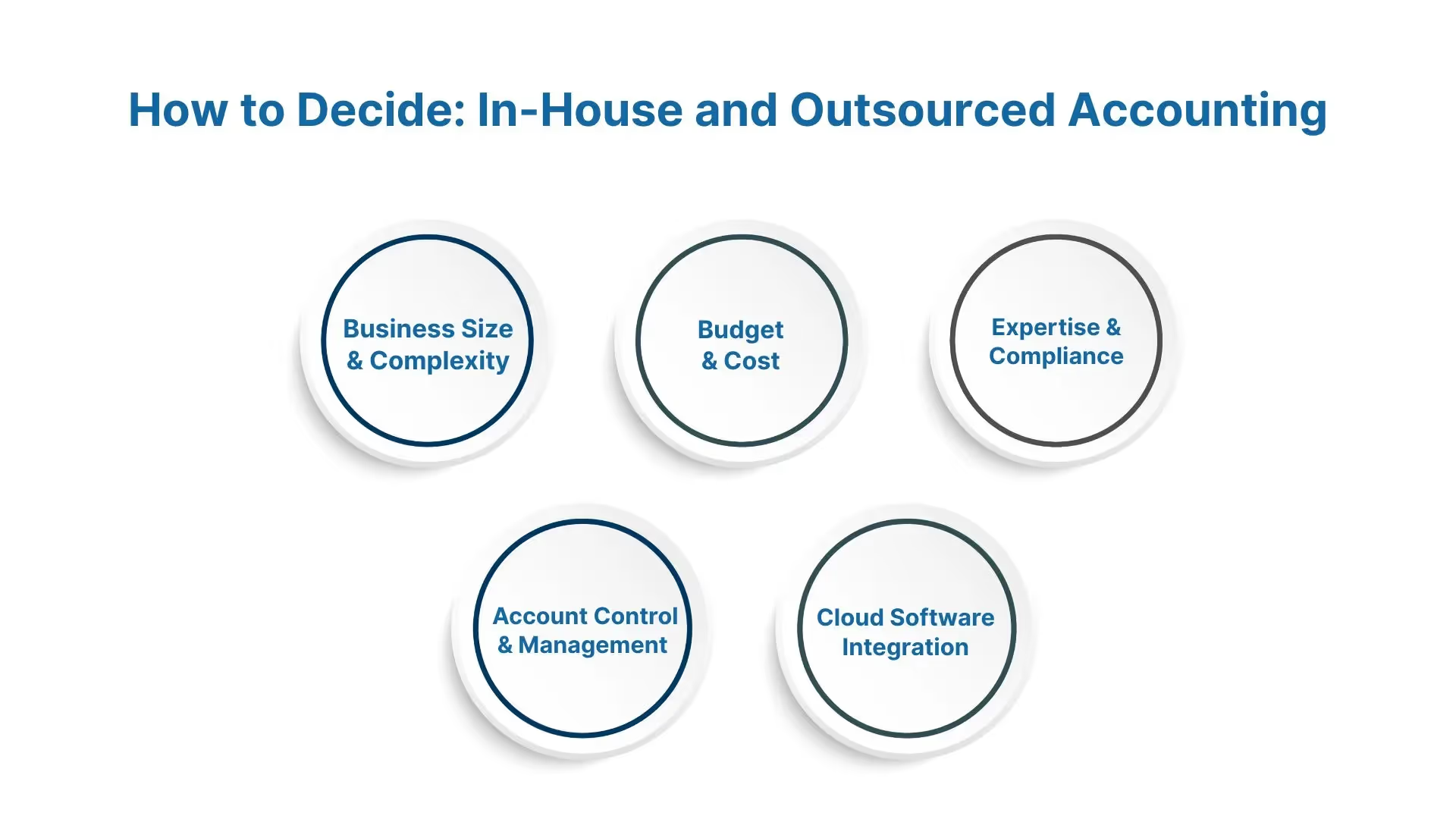
Al decidir entre la contabilidad interna y la externalizada, hay varios factores clave que debe tener en cuenta. Comprender cómo se alinea cada opción con sus objetivos comerciales le ayudará a tomar una decisión bien fundamentada.
El tamaño y la complejidad de su empresa desempeñan un papel fundamental en esta elección.
La contabilidad interna suele ser la preferida por las empresas más grandes o aquellas con necesidades financieras complejas, ya que permite contar con recursos dedicados y una gestión estrecha de las operaciones.
La externalización puede ser una solución más eficiente para empresas más pequeñas o en crecimiento, especialmente cuando las necesidades contables son menos complejas o fluctuantes.
El coste es un factor decisivo importante, especialmente para las pequeñas y medianas empresas.
La contabilidad interna requiere un presupuesto continuo para salarios, beneficios, formación y espacio de oficina.
La externalización puede ser más rentable, ya que elimina los costes operativos y le permite pagar solo por los servicios que necesita, ayudándole a evitar los gastos de mantener un equipo contable a tiempo completo.
El nivel de experiencia y cumplimiento requerido es otra consideración importante.
La externalización proporciona acceso a una gama más amplia de experiencia en áreas como el cumplimiento fiscal, la presentación de informes financieros y las normativas específicas del sector. Esta flexibilidad puede ser especialmente beneficiosa si su empresa necesita adaptarse a requisitos cambiantes o crecer rápidamente.
La contabilidad interna proporciona familiaridad con sus operaciones, pero puede no tener el mismo nivel de experiencia, especialmente al tratar con áreas especializadas de cumplimiento.
El control es un factor importante para algunas empresas.
La contabilidad interna le permite mantener un control directo sobre los procesos financieros y facilita la gestión de los recursos internos. Puede supervisar las operaciones de cerca y realizar ajustes según sea necesario.
La externalización requiere confiar sus operaciones financieras a un proveedor externo, pero permite que su equipo interno se centre en otras áreas críticas del negocio, ayudando a optimizar la gestión de recursos.
Sus sistemas actuales desempeñan un papel clave en la integración de los servicios contables.
La externalización puede integrarse fácilmente con software en la nube como QuickBooks, Xero o Gusto, que utilizan muchas pequeñas y medianas empresas. Los proveedores externos suelen conocer bien estas herramientas, lo que garantiza que sus procesos contables estén optimizados y sean compatibles con sus sistemas actuales.
La contabilidad interna puede requerir más tiempo y recursos para garantizar que su equipo sea competente en la integración y el uso de estas plataformas.
Al considerar cuidadosamente estos factores, podrá elegir la solución contable que mejor se adapte a las necesidades de su empresa.
Lea también: Externalización de servicios contables para EE. UU.: por qué es la mejor decisión que puede tomar
VJM Global ofrece servicios integrales de contabilidad externalizada adaptados a empresas internacionales, con experiencia en los marcos normativos de EE. UU., Australia, Emiratos Árabes Unidos, Singapur, Reino Unido e India. Sus servicios ayudan a reducir los costes operativos al tiempo que garantizan informes financieros precisos y puntuales.
Elegir entre la teneduría de libros externalizada y la contabilidad interna es una decisión clave para cualquier empresa. La externalización ofrece varias ventajas, como menos errores manuales, informes financieros más puntuales y menos estrés durante la temporada de impuestos. Con los servicios de contabilidad externalizada de VJM Global, usted obtiene acceso a un soporte contable integral sin los costes generales de un equipo interno. Esto es especialmente valioso para las empresas que utilizan software en la nube como QuickBooks, Xero o Gusto, lo que garantiza una integración perfecta y operaciones fluidas.
La experiencia de VJM Global en contabilidad internacional, desde la teneduría de libros conforme a las normas de EE. UU. hasta la gestión financiera transfronteriza, garantiza que su empresa se mantenga organizada y cumpla con la normativa a medida que crece. Tanto si opera en varios países como si se expande a nuevos mercados, los equipos offshore adaptables de VJM Global trabajan en su zona horaria para apoyar su crecimiento.
Al asociarse con VJM Global, puede centrarse en expandir su negocio mientras deja las complejidades de la contabilidad en manos de expertos. Contacte con nosotros hoy mismo para explorar cómo la contabilidad externalizada puede optimizar sus procesos financieros.




