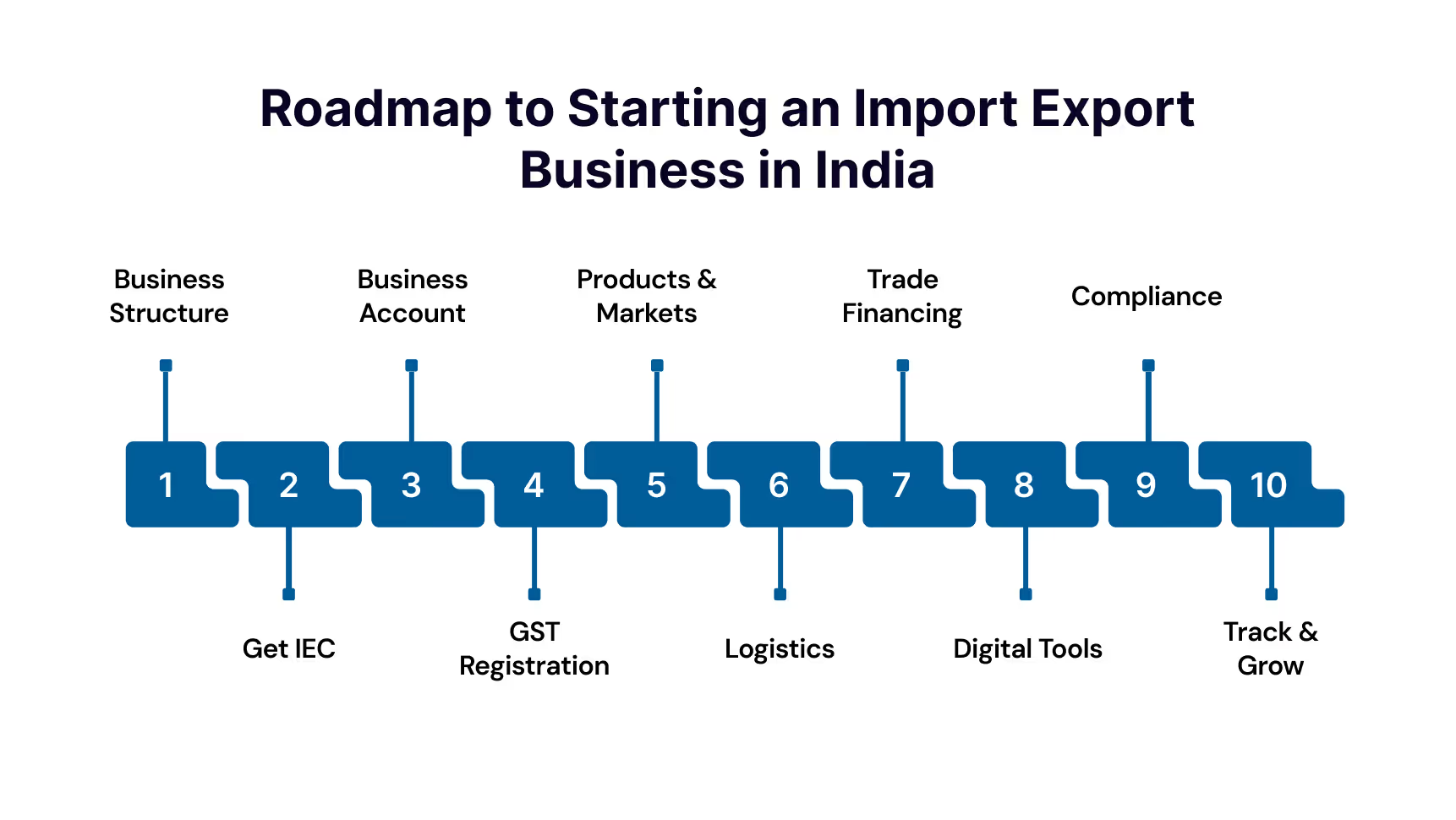
To start an import export business in India, knowing how to setup import export business in India properly helps you get IEC, a current account, GST registration, and DGFT compliance.
As India’s exports crossed USD 825 billion in FY 2024–25, digital transformation is reshaping global trade. Tools like eBRC tracking, automated customs clearance, and cloud-based logistics platforms are helping businesses reduce delays and errors.
This guide explains every step on how to setup import export business in India, from legal documentation to selecting the right export business service.
You’ll also learn how to integrate DGFT portal services, manage shipping invoices digitally, and secure customs compliance using real-time government filing systems.
Puntos clave
An import-export business facilitates international trade by allowing companies to sell domestic goods abroad or source foreign products for local markets, supporting global access, revenue diversification, and foreign exchange growth.
Setting up in India begins with registering your business entity and ensuring it's legally structured for international transactions.
You must obtain an Importer Exporter Code (IEC) from the DGFT, which acts as your trade license for cross-border operations.
A current account with international transfer capability is required to handle overseas payments and currency exchange.
Smooth operations depend on customs compliance, GST registration, logistics coordination, and understanding trade regulations for each target market..
What Is an Import-Export Business & Why It Matters
An import-export business involves buying and selling goods or services across international borders. Importers bring in foreign products, while exporters sell domestic goods overseas.
It enables access to unavailable goods and allows local businesses to expand globally. Whether it's exporting textiles from India to Europe or importing electronics from China, the model supports businesses of all sizes.
Understanding the difference between import and export operations is key to setting up a successful international trade business. The table below outlines how each model functions and what both have in common:
Next, let’s look at why the import-export business matters on a larger scale.
Why Is Import-Export Business Important?
International trade remains a key driver of economic strength and business expansion. For countries like India, engaging in import-export activities not only strengthens the economy but also opens doors for businesses of all sizes.
Here’s how the import-export business plays a crucial role across multiple levels:
Drives Economic Growth: Increases national income through foreign currency, generates jobs in manufacturing, logistics, and trade, and contributes to GDP and tax revenues.
Expands Global Market Access: Helps businesses scale beyond domestic demand, build international brand visibility, and reduce dependency on local market cycles.
Improves Product Availability and Quality: Gives access to goods not produced locally, offers more consumer choices and affordability, and encourages quality through global competition.
Strengthens Trade Relations: Applies FTAs for lower tariffs, builds diplomatic and economic cooperation, and opens entry to high-value international markets.
Supports MSMEs and Startups: Government schemes and digital platforms ease market entry, export incentives improve margins, and global access enables small players to compete.
Increases National Competitiveness: Promotes infrastructure, regulatory, and technology upgrades, drives innovation and compliance, and makes industries more export-ready.
Unsure how to handle India’s import-export regulations? VJM Global helps US companies like yours start and grow their business in India with ease. Get in touch today to simplify your global trade journey!
Now that we’ve seen why the import-export business plays a vital role in global trade, let’s walk through the step-by-step process of setting one up in India.
How to Setup Import Export Business in India: Step-by-Step Setup Guide
An import-export business buys goods from one country and sells them in another, enabling global trade. India’s manufacturing strength, cost efficiency, and digital growth make it a strategic trade partner. With supportive policies and strong global ties, it offers solid opportunities for sourcing and selling.
Step 1: Choose and Register Your Business Structure
Why it matters: Your legal structure determines tax obligations, liability, and eligibility for government schemes.
Paso 6: Configure la logística y la cadena de suministro
Por qué es importante: Una logística fluida es clave para cumplir con los plazos de entrega y mantener la confianza del comprador.
How to do it:
Asóciese con agentes de carga y agentes de aduanas (CHA) confiables
Elija transporte aéreo, marítimo o multimodal
Finalice los Incoterms (FOB, CIF, etc.) con los compradores
Documentación requerida:
Conocimiento de embarque / Guía aérea
Factura comercial
Lista de empaque
Certificado de origen
Comprobante de pago anticipado / Carta de crédito
Consejo de embalaje: Siga las pautas de etiquetado y embalaje específicas de cada país para evitar el rechazo del envío.
Set up your Indian entity faster with VJM Global’s end-to-end business registration services.
Paso 7: Asegure el cumplimiento legal y aduanero
Por qué es importante: El incumplimiento puede dar lugar a sanciones, retrasos o incluso la suspensión del negocio.
Qué hacer:
Presente las declaraciones de exportación (Shipping Bills) o declaraciones de importación (Bills of Entry) correctas
Declare los códigos SA, los valores de factura y otra información aduanera
Pague los aranceles aplicables como IGST y BCD
Solicite reembolsos de GST en exportaciones a través del portal de GST
Coordine con:
DGFT – Política e IEC
CBIC – Aduanas e impuestos
Organismos reguladores – FSSAI, CDSCO, BIS (según el producto)
Paso 8: Asegure la financiación comercial y gestione el mercado de divisas
Por qué es importante: Los ciclos de exportación largos pueden afectar el capital de trabajo. Las fluctuaciones cambiarias también afectan los márgenes.
How to do it:
Solicite:
Crédito de empaque, financiación pre-embarque, financiación post-embarque
Crédito del comprador, carta de crédito o factoring de facturas
Cobertura de riesgo cambiario mediante contratos a plazo
Documentación requerida:
Certificado IEC y GST
Pedidos/facturas de exportación
Comprobante de facturación
Documentos KYC
Consejo: Las cartas de crédito pueden mejorar su historial crediticio y su elegibilidad para préstamos bancarios.
Paso 9: Utilice tecnología comercial para la eficiencia operativa
Por qué es importante: Los procesos manuales aumentan los errores y reducen la escalabilidad.
Paso 10: Cumpla con los estándares globales y los acuerdos comerciales
Por qué es importante: Los productos rechazados en puertos extranjeros debido al incumplimiento pueden generar pérdidas masivas.
How to do it:
Utilice la base de datos arancelaria de la OMC y las notificaciones de la DGFT
Consulte los TLC, como el CEPA India-EAU o el TLC India-ASEAN
Obtenga las certificaciones necesarias:
Certificado de origen, certificado OEA, certificaciones de seguridad
Trabaje con: Consejos de promoción de exportaciones como FIEO, APEDA y EEPC para documentación y acceso a mercados.
Paso 11: Supervise los KPI y escale estratégicamente
Por qué es importante: El crecimiento sostenible requiere seguimiento del rendimiento y adaptabilidad.
KPI clave:
Tiempo de respuesta de envío
Tasa de cumplimiento de pedidos
Porcentaje de compradores recurrentes
Margen por envío
Índice de satisfacción del cliente
Estrategias de crecimiento:
Growth Area
Strategy
Resources
Market Expansion
Use EPCs and ITC Map for trend analysis
EPC, ITC Trade Map, FIEO
Product Diversification
Align with capacity & compliance
DGFT, MEIS
Financial Growth
Apply for RoDTEP, EPCG schemes
DGFT, Exim Bank
Paso 12: Mitigue los riesgos comerciales de forma proactiva
Por qué es importante: El comercio global es vulnerable a riesgos regulatorios, financieros y de la cadena de suministro.
Consejos de gestión de riesgos:
Utilice seguros marítimos, de carga y de crédito comercial
Supervise las actualizaciones en los portales de la DGFT, CBIC y el Ministerio de Comercio
Establezca planes de respaldo para proveedores, logística y compradores
Realice inspecciones de productos por terceros
Utilice protocolos de ciberseguridad para transacciones y datos
Even with all the right steps in place, your import-export business is still influenced by several external forces. Understanding these variables is crucial for building resilience and staying competitive in global markets.
Avoid costly legal mistakes, let our chartered accountants guide your India expansion.
To effectively measure and scale your export business, partnering with experts like VJM Global can provide the essential support you need for smooth operations in India.
How VJM Global Supports Your Import Export Business Setup in India?
Starting an import-export business in India requires expert guidance to manage legal, financial, and operational complexities. VJM Global offers specialized services that directly support these needs for U.S. companies expanding into India.
Key ways VJM Global helps include:
Company Registration: Simplifies setting up your business with full compliance to Indian laws like FEMA, RBI, GST, and MCA.
Accounting Outsourcing: Handles bookkeeping, financial reporting, tax prep, and reconciliations, reducing your operational costs and eliminating the need for in-house teams.
Audit Support for CPA Firms: Provides offshore audit assistance aligned with U.S. accounting standards, helping firms manage peak workloads cost-effectively and securely.
By partnering with VJM Global, you get reliable offshore support that optimizes your import-export business setup, make sure regulatory compliance, and optimizes financial management, allowing you to focus on growth and expansion in the Indian market.
1. What licenses are required to start an import-export business in India?
A: You need to obtain an Importer Exporter Code (IEC) from the DGFT, which is mandatory for cross-border trade. Depending on the product, additional licenses like FSSAI, APEDA, or BIS may also be required.
2. How do I choose the right product for export or import?
A: Analyze international demand trends, competition, and profitability using tools like ITC Trade Map or India Trade Portal. Consider ease of sourcing, perishability, and compliance requirements when finalizing the product.
3. What are the main compliance requirements for exporters in India?
A: Exporters must comply with GST regulations, file shipping bills, maintain e-invoicing where applicable, and adhere to destination country requirements. Timely documentation and audit readiness are key to avoiding penalties and delays.
4. How can I find international buyers for my products?
A: Use B2B platforms like IndiaMART, Alibaba, and Export Genius, or participate in global trade fairs and EPC-led buyer-seller meets. Building credibility through certifications and consistent product quality is crucial for long-term buyer relationships.
5. What are some KPIs to track export business performance?
A: Key metrics include shipment cycle time, order fulfillment rate, profit margin per product, and repeat order rate. Monitoring these KPIs make sures you identify bottlenecks and make informed scaling decisions.
VJM Global
Descubre opiniones de expertos, consejos y novedades de VJM Global


.avif)
.avif)