


According to the Association of Americans Resident Overseas (AARO) report from October 2024, over 5.5 million USA citizens live abroad. As an expatriate, you are required to file USA taxes regardless of your location. Not meeting this requirement can result in severe penalties and legal challenges.
When conducting business in foreign markets or managing international investments, the risk of tax inefficiencies is elevated. Tax planning is not merely about staying compliant; it’s about making informed decisions that safeguard your financial interests.
Key decisions, such as identifying double taxation, using tax treaties, and selecting the appropriate structure for international operations, are critical. Getting them right can significantly enhance your financial success; getting them wrong can lead to substantial costs.
This guide outlines the essential strategies for effective tax planning, providing the insights needed to structure your global finances with efficiency while avoiding costly errors.
Yes, under U.S. tax law, expatriates must file taxes on worldwide income even if they live overseas. The United States is one of the few countries that follows citizenship-based taxation, meaning U.S. citizens and green card holders are always required to report income to the IRS.
That said, Expat Tax Planning strategies can help reduce or eliminate the actual tax owed. Key tools include the Foreign Earned Income Exclusion (FEIE), which allows expats to exclude up to $120,000 of foreign-earned income, and the Foreign Tax Credit (FTC), which offsets taxes already paid in the host country. Tax treaties between the U.S. and countries like India also help prevent double taxation.
The bottom line: U.S. expats must file annually, but with smart expat tax planning, many can significantly minimize their U.S. tax burden.
An expatriate (or expat) refers to a citizen or permanent resident who resides in a foreign country for an extended period, often for work, investment, or personal reasons. Expats may move abroad for various reasons, including employment opportunities, entrepreneurial ventures, retirement, or to be closer to family. While living abroad offers many advantages, such as exposure to new cultures and markets, it also comes with specific tax obligations and complexities.
For USA expatriates, tax planning is crucial for several reasons:
Understanding the unique tax challenges expatriates face is the first step toward effective planning. Now, let’s explore how you can manage your tax responsibilities when investing abroad.
Investing abroad as a USA expatriate introduces unique tax complexities. Beyond managing the financial performance of your investments, you must also ensure you're compliant with both USA and foreign tax regulations. Here's a closer look at the critical tax considerations and strategies to effectively manage your investments abroad.
As a USA expatriate, all your global income, including dividends, capital gains, and interest from foreign investments, must be reported to the IRS. This global taxation system means you may face double taxation unless strategic planning is in place.
While the Foreign Tax Credit (FTC) can help offset taxes paid to foreign governments, not all foreign income qualifies for this credit. For example, passive income like rental income or interest may be subject to tax in both the USA and the host country, unless covered by a tax treaty.
To stay compliant, you must meet USA tax reporting requirements for foreign investments:
Effective investment tax planning for expatriates requires careful attention to both local and the USA tax obligations. Next, we’ll break down key tax considerations and strategies for expatriates starting a business abroad.
Also read: Financial Optimization Strategies for Business Success
.avif)
Expanding your business abroad brings key tax challenges. It's not just about following the host country's tax laws but also about how they align with the USA tax regulations. Smart tax planning can help you reduce liabilities, avoid double taxation, and keep your business running smoothly across borders.
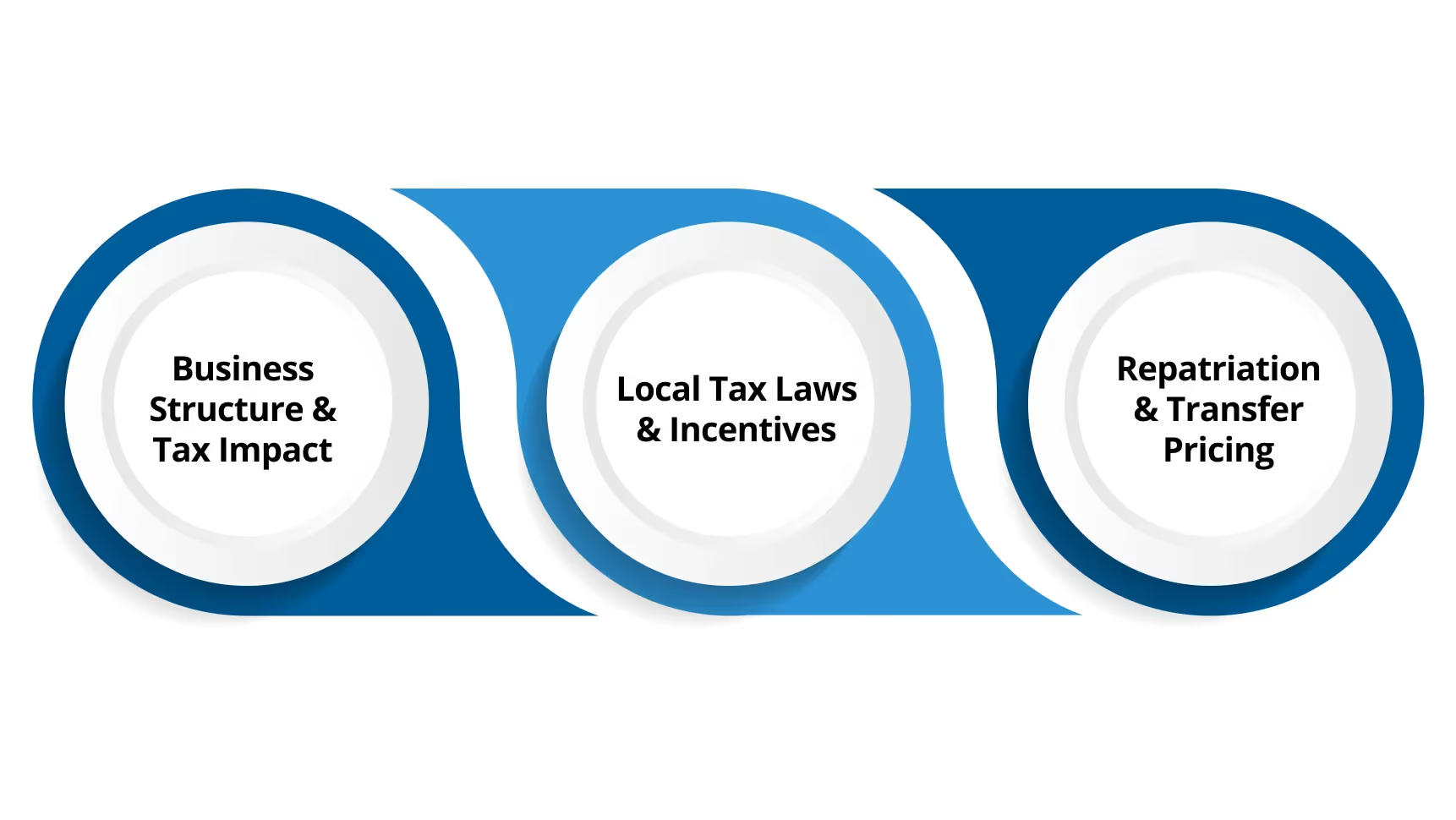
When you establish a business in a foreign country, the first key decision is choosing the business structure. This decision impacts how income is taxed, how profits are repatriated, and how tax-efficient the business will be.
Each country has its own tax framework for foreign businesses, including corporate tax rates, exemptions, and incentives. Some countries offer attractive tax incentives for new businesses, while others may impose high corporate tax rates.
Repatriating profits back to the USA can incur significant taxes, as the USA taxes global income. However, the Tax Cuts and Jobs Act (TCJA) of 2017 reduced the USA corporate tax rate to 21%, which helps make repatriation more manageable. Additionally, using tax treaties can help reduce withholding taxes on repatriated dividends, royalties, and interest.
Some countries, like Ireland or Singapore, have corporate tax rates as low as 12.5% and 17%, respectively, making them favorable destinations for repatriating profits with lower tax exposure. Proper tax planning allows expatriates to take advantage of these favorable tax rates while complying with both local and USA tax laws.
India offers significant opportunities for USA expatriates looking to invest or establish businesses, with its growing economy and favorable tax policies. However, understanding the local tax landscape and regulatory requirements is crucial for success.
India ofrece muchas oportunidades para los expatriados estadounidenses, pero comprender los planes fiscales es fundamental. Veamos ahora las estrategias clave para gestionar los impuestos sobre inversiones extranjeras.
Sin una estrategia clara, corre el riesgo de pagar de más o perder oportunidades clave para reducir su carga fiscal. Comprender el enfoque correcto es crucial para proteger sus rendimientos y mantener el cumplimiento normativo a través de las fronteras.
Los tratados fiscales entre EE. UU. y países como Canadá o el Reino Unido pueden ayudar a mitigar el riesgo de doble imposición. Por ejemplo, el tratado fiscal entre EE. UU. y el Reino Unido permite a los expatriados estadounidenses pagar impuestos a la tasa más baja de ambos países sobre dividendos e intereses, reduciendo la carga fiscal general.
Algunos expatriados utilizan vehículos de inversión con impuestos diferidos, como cuentas de jubilación o planes de pensiones en el extranjero, para minimizar sus obligaciones fiscales en EE. UU. Estos vehículos suelen conllevar regulaciones específicas de declaración y cumplimiento, por lo que es esencial trabajar con un asesor fiscal experto para estructurar las inversiones adecuadamente.
Países como Singapur y Suiza ofrecen un tratamiento fiscal favorable para las ganancias de capital y los dividendos. Al invertir en estas regiones, puede beneficiarse de tasas impositivas más bajas sobre las ganancias de capital, especialmente si mantiene los activos a largo plazo. Las obligaciones fiscales de EE. UU. seguirán aplicándose, pero las tasas impositivas pueden ser más favorables.
Las cuentas en el extranjero pueden ser beneficiosas, ya que ofrecen opciones de inversión más flexibles. Sin embargo, el IRS exige una declaración exhaustiva bajo la ley FATCA. Consultar con un asesor fiscal para garantizar el cumplimiento mientras se maximizan los beneficios fiscales es fundamental.
Dadas las complejidades de las normas fiscales tanto de EE. UU. como locales, es crucial contar con el apoyo adecuado para evitar errores y aprovechar al máximo sus inversiones. Veamos cómo VJM Global puede ayudarle a afrontar estos desafíos y mantener su estrategia fiscal por el buen camino.
Leer más: Documentos necesarios para el registro de empresas en India desde EE. UU.
Con sede en India, VJM Global ofrece servicios expertos de planificación fiscal para expatriados, con un enfoque en ciudadanos estadounidenses y NRI que trabajan o hacen negocios en India. Ayudamos a los expatriados a gestionar las complejidades de la fiscalidad transfronteriza, minimizando las obligaciones y garantizando el cumplimiento normativo.
Our Key Services
Successfully managing expatriate taxes requires more than just meeting basic compliance requirements; it’s about strategic planning that aligns with both your financial goals and the intricacies of international tax laws. By understanding the full scope of tax implications, from double taxation to filing obligations, you can unlock opportunities to minimize their liabilities and optimize their investments. The right guidance can turn complex tax challenges into a clear path for financial success.
At VJM Global, we specialize in helping expatriates identify these complexities with fruitful tax strategies and expert advice. If you’re ready to take control of your tax planning and secure a smarter financial future, get in touch with our team today for a personalized consultation.
Schedule a demo now to get started with expert expatriate tax planning.
Yes, USA citizens must report and pay taxes on their worldwide income, regardless of their residence abroad. Tax credits and exclusions, such as the Foreign Tax Credit (FTC) and Foreign Earned Income Exclusion (FEIE), can help minimize the impact of double taxation.
The FEIE allows expatriates to exclude up to $120,000 of foreign-earned income from USA taxes, provided they meet certain residency or physical presence tests. This helps reduce the taxable income that needs to be reported to the IRS.
You can prevent double taxation by utilizing tax treaties between the USA and your host country, using the Foreign Tax Credit, and qualifying for the Foreign Earned Income Exclusion. These options help offset taxes paid in the foreign country.
Owning property abroad can lead to both rental income taxes in the host country and potential USA tax obligations. You'll need to report rental income, but tax treaties and credits may help offset the burden. Long-term capital gains from property sales may also be subject to taxes.
Yes, expatriates generally need to file taxes in both the USA and the host country. However, tax treaties and credits can reduce the amount of taxes owed to each country, ensuring you don’t pay taxes twice on the same income.




