

When analyzing a company's financial health, one question often stands at the forefront: What are the three financial statements that comprehensively convey the complete narrative? While many focus on just one or two, understanding the connections between the Income Statement, Balance Sheet, and Cash Flow Statement is essential for a complete picture of a business's financial performance. These three key documents don't operate in isolation; instead, they are intricately linked, each feeding into and informing the others.
By grasping how they work together, you unlock the ability to read between the lines of financial data, revealing insights that go beyond what meets the eye. Whether you’re an analyst or looking to understand a company's true financial position and performance, this integrated approach is for you. Let’s explore how these three financial statements are interwoven and why their connections matter more than the statements themselves.
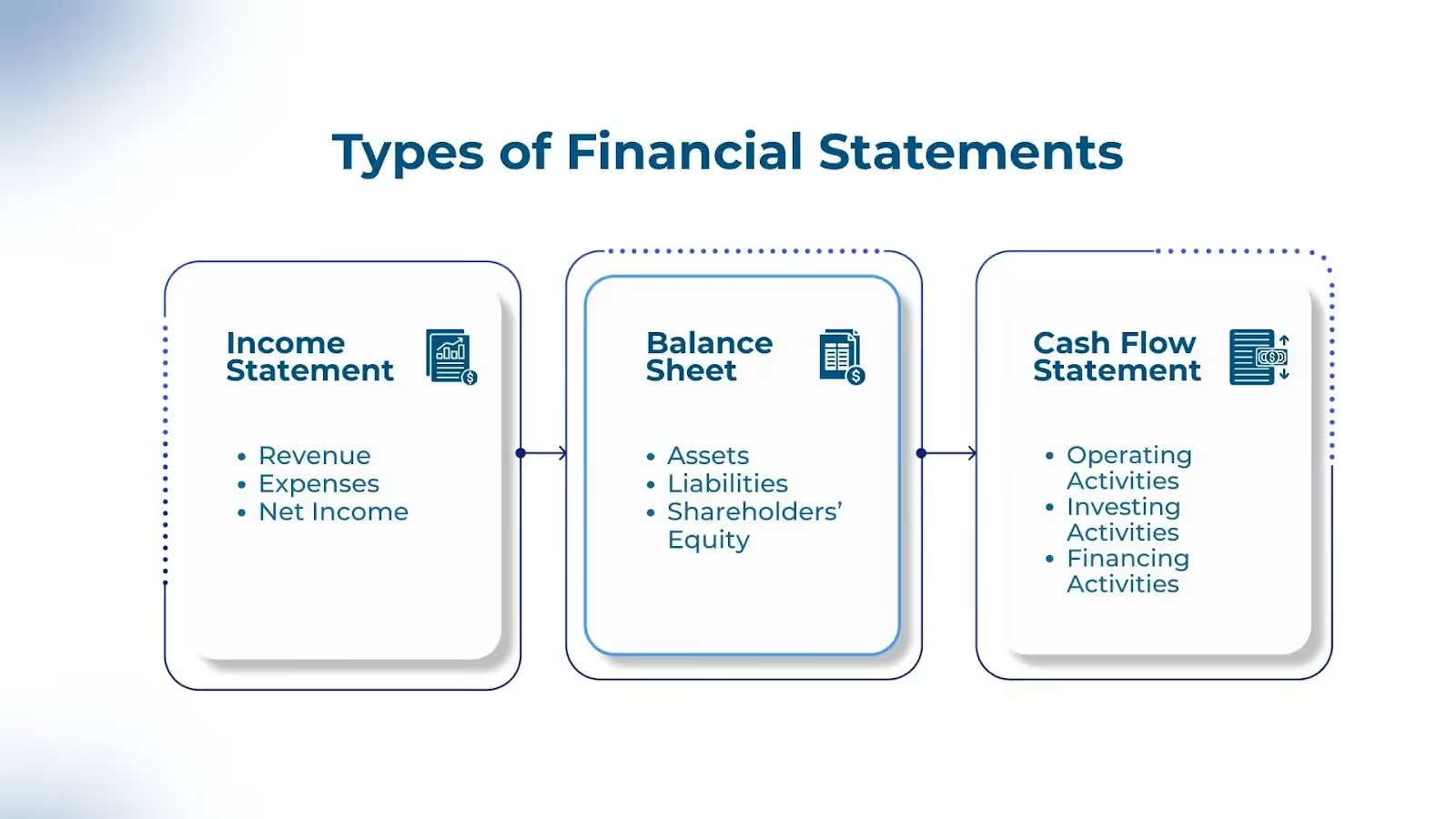
The three key financial statements are (1) the Income Statement, (2) the Balance Sheet, and (3) the Cash Flow Statement. These statements are essential for evaluating a company's financial performance and position. They provide a comprehensive snapshot of a business's financial health and are used by internal management and external stakeholders, such as investors, analysts, and creditors.
To better understand how each of these statements contributes to a company’s financial overview, let’s begin by taking a closer look at the Income Statement.
The Income Statement is like the report card for a company’s performance over a specific period. It shows whether a company is profitable by comparing its revenues to expenses. The statement outlines revenue, cost of goods sold, gross profit, operating expenses, and net income. These components tell a clear story of how much money came in and how much was spent, leading to either a profit or a loss.
For example, imagine a business selling products. The revenue comes from sales, but the company incurs costs (e.g., raw materials and labor) to make these products. These costs are subtracted to find the gross profit. After that, the company subtracts its operating expenses (like rent and salaries), and what’s left is the net income, which shows the final profit or loss.
The Income Statement follows accrual accounting rules. This means it doesn’t wait for cash to change hands; it records revenue when earned and expenses when incurred, making it different from the cash flow statement. The net income from this statement connects directly to both the Balance Sheet and the Cash Flow Statement. It affects retained earnings in the Balance Sheet and is the starting point in the Cash Flow Statement.
Now that we’ve looked at how a company earns and spends, let’s take a step back and see the bigger picture through the Balance Sheet.
The Balance Sheet is a snapshot of a company’s financial health at a specific time. It’s divided into three key sections: assets, liabilities, and shareholders' equity. These components offer a clear picture of what a company owns, what it owes, and the value left for its shareholders.
At the core of the Balance Sheet is the accounting equation: Assets = Liabilities + Equity. This simple but powerful formula ensures that the balance sheet "balances." On one side, you have everything the company owns (assets), and on the other, you have how it financed those assets through debt (liabilities) or the owners' contributions (equity).
The purpose of the Balance Sheet is to provide an overview of the company’s financial position. This includes its ability to meet short-term obligations, invest in growth, and generate profits. For example, if a company’s assets outweigh its liabilities, it’s in a healthy position. But if liabilities are high, it could signal financial strain.
Changes in assets and liabilities directly affect other financial statements, particularly the Income Statement and Cash Flow Statement. For instance, when a company takes on more debt, it may affect its net income and cash flow due to interest payments. Similarly, asset changes, like increasing inventory, could affect cash flow.
It’s time to explore how cash actually moves in and out of the business with the Cash Flow Statement.
The Cash Flow Statement is crucial for assessing a company's liquidity and financial flexibility. Unlike the Income Statement, which includes non-cash items, the Cash Flow Statement focuses solely on actual cash inflows and outflows during a period. It categorizes these cash flows into three main sections: operating activities, investing activities, and financing activities.
Starting with net income from the Income Statement, the Cash Flow Statement adjusts for non-cash items, such as depreciation, and changes in working capital, which are reflected in the Balance Sheet. This approach ensures the statement accurately portrays the company’s actual cash movements, giving an accurate picture of its liquidity.
Having explored the Cash Flow Statement, it's time to compare all three financial statements to see how they work together to provide a complete picture of a company’s financial health.
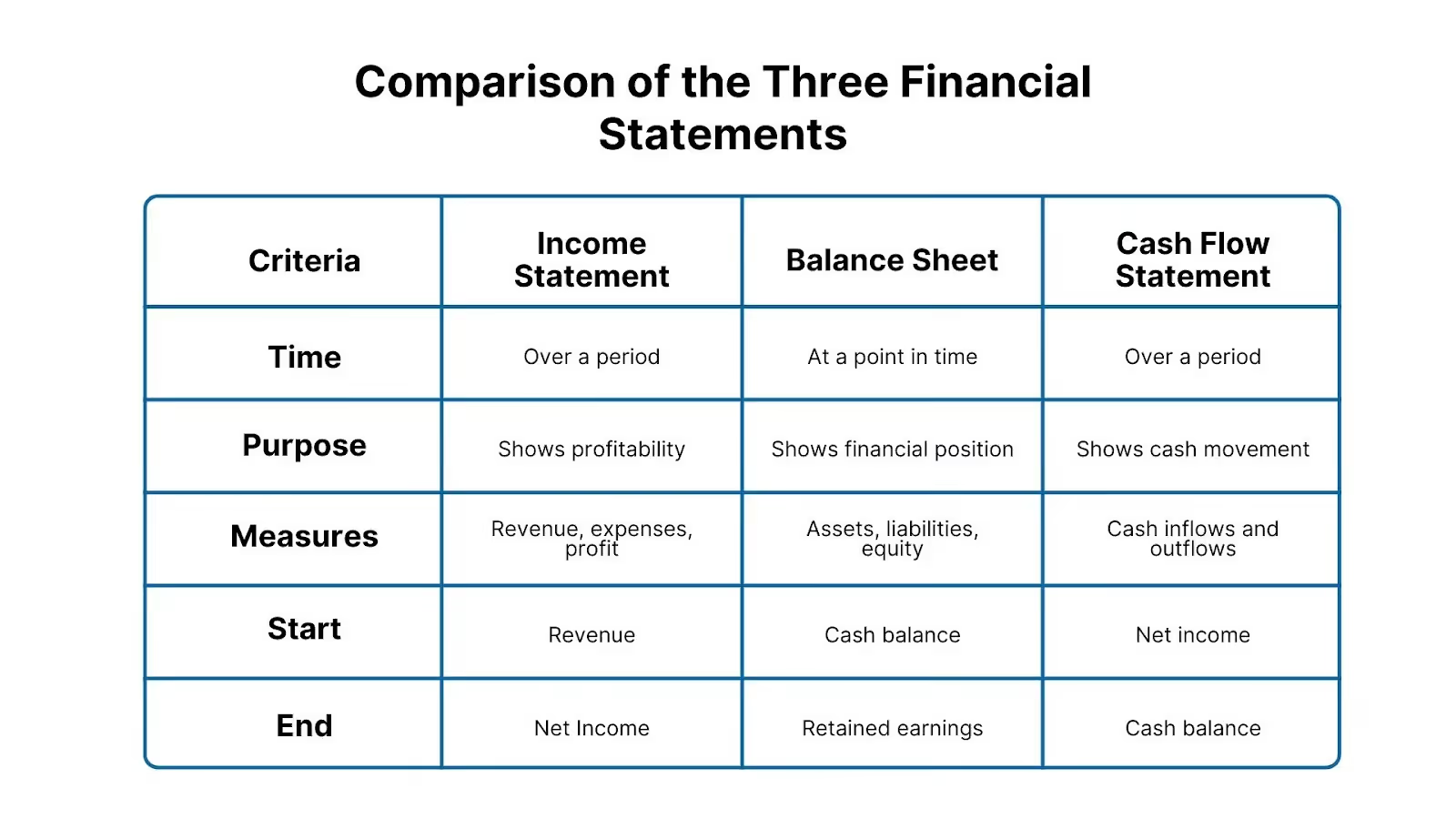
After comparing the three financial statements, let's examine how they relate to one another and function as a whole to present a comprehensive financial picture.
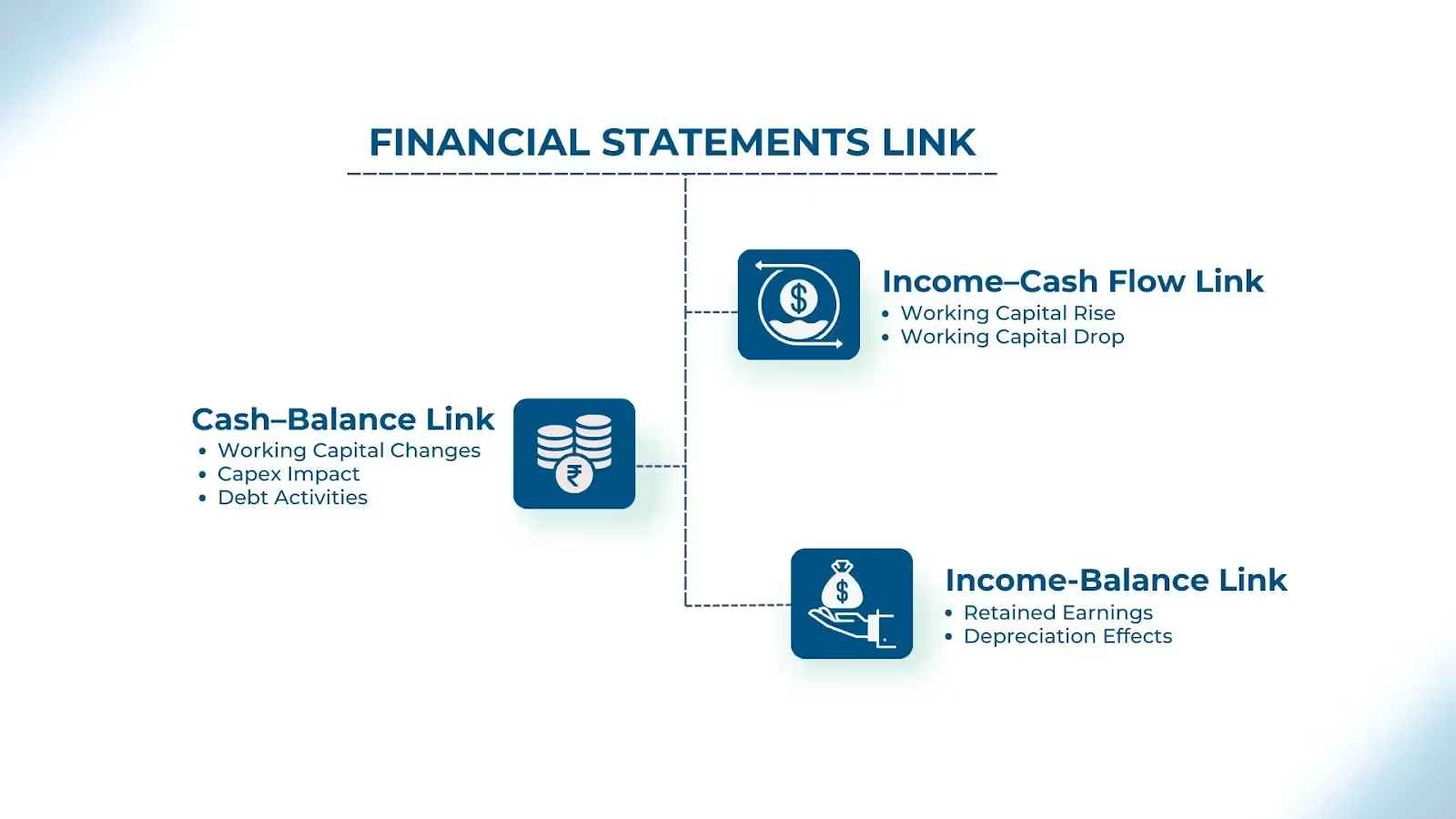
El estado de resultados, el balance general y el estado de flujo de efectivo se basan en los principios de la contabilidad de devengo, lo que crea un vínculo sólido entre ellos. Cada estado proporciona información valiosa, pero la interacción entre ellos ofrece una visión integral del desempeño y la posición de una empresa. Así es como se conecta cada uno:
El estado de resultados y el estado de flujo de efectivo están vinculados directamente a través de la utilidad neta. La utilidad neta que aparece al final del estado de resultados es el punto de partida para el estado de flujo de efectivo.
A partir de este punto, el estado de flujo de efectivo realiza ajustes por partidas que no representan efectivo, como la depreciación y amortización (D&A), que son gastos que reducen la utilidad neta pero no afectan el efectivo. Además, contabiliza los cambios en el capital de trabajo, como los aumentos en las cuentas por cobrar o el inventario, que representan salidas o entradas de efectivo.
Por ejemplo:
Al ajustar estas partidas, el estado de flujo de efectivo proporciona una imagen precisa del efectivo que una empresa generó o utilizó realmente durante un período, a pesar de la contabilidad de devengo utilizada en el estado de resultados.
El estado de flujo de efectivo y el balance general están estrechamente conectados a través de los cambios en el capital de trabajo, los gastos de capital (Capex) y las actividades de financiamiento. Así es como se vinculan:
El estado de resultados y el balance general están vinculados principalmente a través de las utilidades retenidas. Así es como funciona esta conexión:
La fórmula para las utilidades retenidas es:
Utilidades retenidas = Saldo inicial + Utilidad neta – Dividendos
Si la empresa obtiene una ganancia, esta se suma a las utilidades retenidas, aumentando el capital contable; si hay una pérdida, las utilidades retenidas disminuyen.
Una vez comprendido cómo están vinculados los tres estados financieros, examinemos cómo se utilizan estos estados fundamentales en el modelado financiero.
El modelado financiero consiste en predecir el desempeño futuro de una empresa. Debe integrar el estado de resultados, el balance general y el estado de flujo de efectivo para crear un modelo preciso. Estos tres estados financieros trabajan juntos, proporcionando una estructura completa para cualquier modelo monetario.
El primer paso en el modelado financiero es crear partidas para cada uno de los tres estados financieros. Estas partidas sirven como los bloques de construcción del modelo. Tras establecer la estructura, conciliará los datos en todos los estados para garantizar la coherencia.
Por ejemplo, la utilidad neta del Estado de Resultados debe coincidir con el punto de partida del Estado de Flujos de Efectivo, y el saldo final de efectivo del Estado de Flujos de Efectivo debe coincidir con el efectivo en el Balance General.
Una vez alineados los estados, se preparan las suposiciones basadas en datos históricos. Estas suposiciones ayudan a pronosticar el desempeño futuro.
La elaboración de pronósticos es fundamental para el modelado financiero. Puede predecir resultados económicos futuros analizando las tendencias históricas de los tres estados financieros. Por ejemplo, si las ventas han crecido de manera constante un 10% anual, puede proyectar los ingresos por ventas futuros utilizando la misma tasa. De igual forma, los gastos operativos estables pueden proyectarse utilizando tendencias pasadas.
El Estado de Flujos de Efectivo desempeña un papel clave, especialmente para comprender cómo los cambios en el capital de trabajo y los gastos de capital afectarán el flujo de caja. Esto es importante para evaluar si la empresa tendrá suficiente efectivo para cubrir sus obligaciones e impulsar el crecimiento futuro.
La creación de un modelo detallado a menudo requiere anexos de apoyo para los elementos más complejos. Por ejemplo:
Comprender los tres estados financieros puede parecer complejo, pero no tiene por qué ser abrumador. Con una comprensión sólida de sus interconexiones, las empresas pueden tomar mejores decisiones financieras y asegurar un camino más claro hacia el crecimiento futuro. Cada estado proporciona información única y, al combinarlos, ofrecen una imagen completa del desempeño y la salud financiera de una empresa.
Mantener registros financieros precisos y revisarlos periódicamente permite a las empresas prevenir errores y anticipar desafíos. Si su empresa necesita orientación experta para estructurar o interpretar estos estados financieros, VJM Global está aquí para ayudarle.
Nuestro equipo ofrece apoyo especializado en modelado financiero, garantizando la alineación con los estándares de la industria y proporcionando la información necesaria para tomar decisiones informadas. Contáctenos para recibir asistencia personalizada. Estamos aquí para guiarle a través de las complejidades del análisis financiero, permitiéndole concentrarse en lo que realmente importa.




