Many manufacturers assume R&D tax credits only apply to advanced laboratories or large corporations. In reality, day-to-day improvements in your production floor can also qualify. Even incremental changes that refine your products or processes can be eligible.
Here are the most common qualifying R&D activities for manufacturing:
After exploring examples, it’s essential to look at the expenses that typically count toward these credits.
Key Expenses That Count Toward R&D Tax Credits for Manufacturing
When claiming R&D tax credits for manufacturing, you need to focus on expenses directly tied to qualified research activities. These costs often occur during everyday operations and can be tracked if you maintain detailed records. Documenting them correctly ensures your credits are calculated accurately.
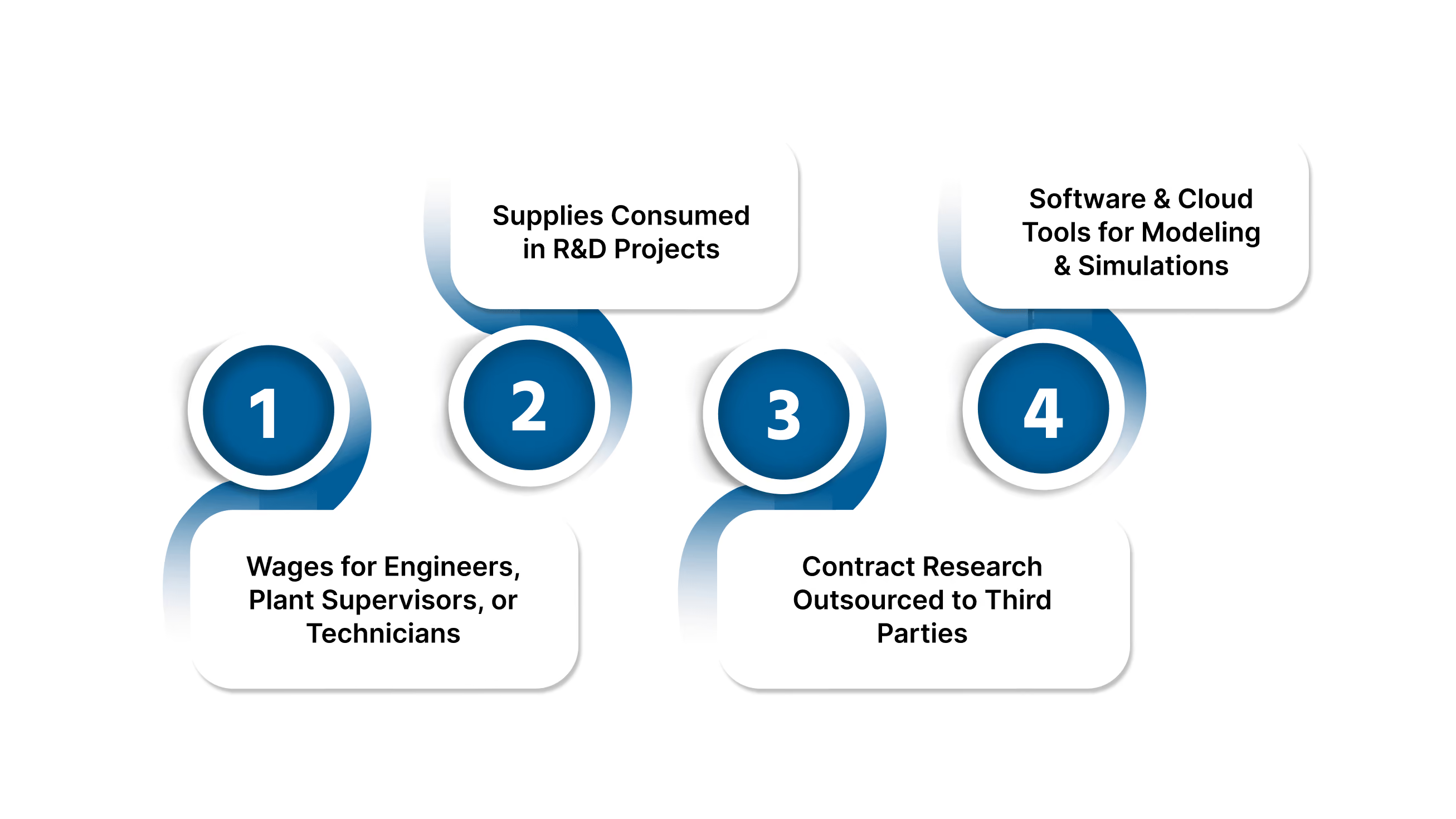
Here are the main categories of qualifying expenses you should evaluate:
Along with these categories, many R&D-related roles across your organization may qualify. Below is a list of job titles often included in eligible wage expenses:
研究開発マネージャー
プロセスエンジニア
品質保証テスター
機械加工監督者
製品開発エンジニア
プロトタイプ技術者
Achieve more with less overhead through our global solutions.
Beyond costs, the bigger question is whether these credits truly encourage further research investment.
Does the R&D Tax Credit Incentivize Manufacturing Research Investment?
The R&D tax credit is structured to push manufacturers like you to keep investing in new ideas, technologies, and processes. Instead of viewing R&D as a cost center, these credits help you recover part of the expenses, making research more sustainable and attractive. By lowering tax liability, you have more working capital available to improve products, optimize processes, and expand operations.
Here are some of the ways manufacturers typically reinvest tax credit savings:
追加のテストやプロトタイプ製作に資金を投じ、製品開発を拡大する。
エンジニア、技術者、品質保証スペシャリストなどの技術スタッフを増員する。
生産能力を向上させるために、高度な設備や自動化技術に投資する。
排出量の削減や、よりクリーンな素材への切り替えなど、持続可能な取り組みを支援する。
The challenge many firms face is proper compliance and documentation when claiming these credits. If your records are incomplete or expenses misclassified, you risk losing eligible credits.
Outsourcing compliance and documentation to India through experts such as VJM Global ensures that every qualifying dollar is captured. This not only maximizes the credit you receive but also allows you to reinvest more confidently into innovation and workforce growth.
With investment benefits clear, you should also distinguish between deductions and credits to maximize savings.
Are R&D Expenses Tax Deductible or Just Eligible for Credits?
When you consider R&D expenses, it is important to understand the difference between deductions and credits. A deduction lowers your taxable income, which reduces the amount of income tax you owe. A credit directly reduces your tax liability, often dollar for dollar, making it more impactful.
For manufacturing businesses, both options can work together. You can deduct qualified R&D expenses as business costs and also claim R&D tax credits on top of that, provided you follow the IRS rules carefully. This combination can significantly increase your savings if planned correctly.
Here is a simple example to illustrate the difference:
Suppose you spend $100,000 on qualified R&D activities.
If you take it as a deduction and your tax rate is 21%, your taxable income drops by $100,000, reducing your taxes by $21,000.
If you claim it as a credit instead, you could reduce your tax liability by $100,000 in direct credits (depending on eligibility).
In many cases, you can apply both approaches, using deductions for part of the cost and credits for the rest.
This shows that credits are often more valuable, but the ability to claim both gives you maximum benefit. By keeping your expense records clear and accurate, you can take full advantage of both deductions and credits. Knowing the difference prepares you to follow a clear process for claiming your R&D tax credits.
Step-by-Step Process to Claim R&D Tax Credits for Manufacturing
Claiming R&D tax credits for manufacturing involves a defined process set by the IRS. If you approach it systematically, you reduce the risk of mistakes and increase the chances of receiving the full credit you qualify for.
Here are the five key steps you should follow:
Identify Qualifying Activities
Review your projects to see which activities meet the IRS four-part test.
Examples include improving production lines, testing prototypes, or designing new product formulas.
Collect and Document Expenses
Track wages, supplies, software, and contractor costs tied to R&D projects.
Maintain detailed time records for staff and receipts for materials.
Calculate the Credit Using IRS Form 6765
Use IRS Form 6765: Credit for Increasing Research Activities to determine the credit amount.
This involves applying either the regular credit method or the alternative simplified method.
File with Federal Tax Returns
Attach Form 6765 to your annual corporate tax return (Form 1120 for corporations).
Ensure that supporting documentation is available in case the IRS requests more information.
Prepare for Potential IRS Review
Be ready to provide project notes, payroll data, and expense documentation.
A clear audit trail will support your claim and reduce delays.
Tips to Avoid Errors
Track wages by project: Record how much time each employee spends on qualifying R&D work to prevent misclassification.
Separate eligible and non-eligible expenses: For example, distinguish between supplies consumed during testing and those used in standard production.
Consider outsourcing compliance: Engaging offshore experts in India through firms like VJM Global helps ensure every step is managed accurately at lower costs.
Even with a process in place, mistakes are common and can reduce the value of your claims.
Common Mistakes US Manufacturers Make When Claiming R&D Credits
Many manufacturers miss out on valuable tax credits because of errors in record-keeping or misunderstanding what qualifies. These mistakes often lead to denied claims, lost opportunities, or additional IRS scrutiny. Recognizing the most common issues helps you avoid costly setbacks.
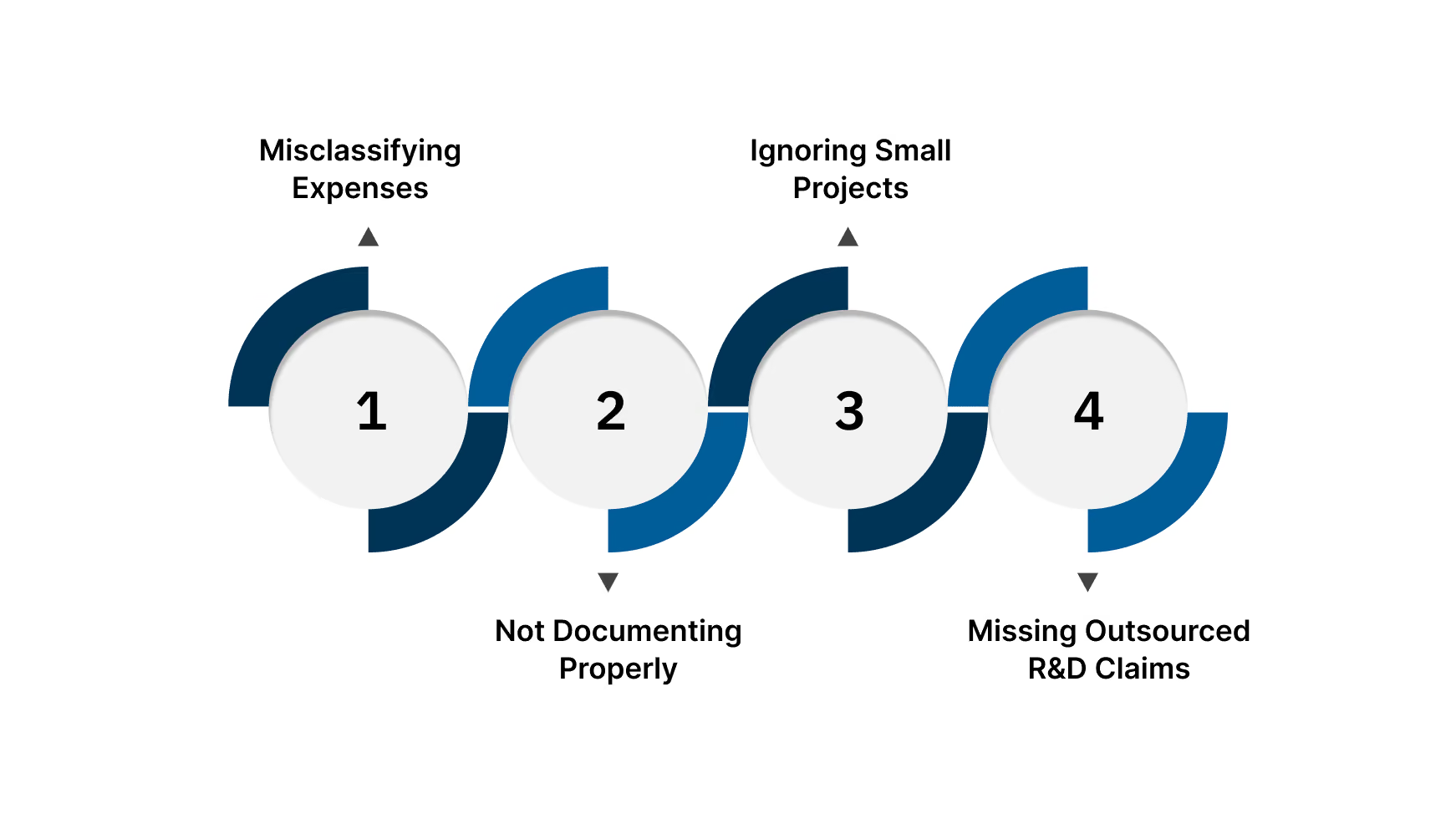
Here are the mistakes you need to watch for:
Misclassifying Expenses
Wages or supplies not tied directly to R&D projects are often included by mistake.
This leads to IRS rejections and potential penalties if non-eligible costs inflate your claim.
Not Documenting Properly
Failing to maintain payroll records, project notes, or receipts weakens your case.
Without supporting evidence, even legitimate R&D work may be disallowed.
Ignoring Small Projects
Smaller-scale experiments or incremental process improvements are often overlooked.
These activities may still qualify and, when combined, represent significant credits.
Missing Outsourced R&D Claims
Work contracted to third parties, such as testing labs or engineering consultants, is frequently left unclaimed.
This results in leaving eligible credits uncollected, especially when outsourcing costs are substantial.
Consequences of These Errors
Mistake
Impact on Your Business
Misclassifying expenses
Claim denial and risk of penalties
Poor documentation
IRS challenges and delayed credit approval
Overlooking small projects
Lost opportunities for additional credits
Missing outsourced R&D claims
Reduced credit value and higher tax liability
To avoid these pitfalls, many manufacturers turn to outsourcing their R&D credit processes to India.
Why US Firms Outsource R&D Tax Credit Processes to India
Managing R&D tax credit claims requires time, accurate records, and knowledge of IRS requirements. Many US manufacturers choose to outsource these tasks to India to lower costs and ensure precision. With the right offshore support, you reduce administrative pressure while capturing the full value of available credits.
Here are the main reasons outsourcing makes sense for manufacturers:
Cost Efficiency
Hiring offshore teams in India costs significantly less than maintaining in-house specialists.
You gain access to skilled professionals without the overhead of salaries, benefits, or infrastructure.
Access to Skilled Staff Familiar with US Standards
Indian outsourcing firms work extensively with US companies and follow IRS and US GAAP compliance rules.
This expertise ensures your R&D credit claims are aligned with federal requirements and ready for review.
Scalability
As your research activities expand, offshore teams can quickly scale support without disrupting your operations.
Whether you run one project or multiple parallel initiatives, additional staff can be assigned as needed.
Reduced Administrative Burden
Outsourcing eliminates the need to track every receipt, payroll entry, or project note internally.
Offshore teams handle documentation, calculations, and audit preparation so your staff can focus on core operations.
Added Benefits of Outsourcing
Benefit
Impact on R&D Credit Claims
Accurate documentation
Minimizes errors and reduces risk of IRS rejection
Faster claim preparation
Speeds up filing and access to tax savings
Ongoing audit support
Ensures you are prepared if the IRS requests additional proof
Cut costs and streamline operations with trusted offshore expertise.
This naturally leads to how VJM Global supports U.S. firms as a trusted outsourcing partner for R&D tax credits.
VJM Global: Outsourcing Partner for R&D Tax Credits in Manufacturing
Handling R&D tax credit claims requires precise expense tracking, reliable audit preparation, and compliance with both U.S. and Indian standards. By outsourcing to India with VJM Global, you reduce administrative pressure while ensuring every qualifying dollar is captured correctly.
Here’s how VJM Global supports manufacturers and CPA firms with R&D tax credit needs:
Accounting Outsourcing Services
Tracks wages, supplies, contractor fees, and technology costs linked to qualified research activities.
Ensures accurate documentation so your claims are maximized.
Audit Support for CPA Firms
Provides offshore capacity during busy tax seasons and audit cycles.
Helps validate R&D-related financials with complete, compliant documentation.
Compliance Expertise Across Borders
Dual knowledge of U.S. GAAP and Indian regulatory frameworks.
Minimizes risks of IRS challenges, errors, or disallowed claims.
Offers a scalable outsourcing model that adapts to seasonal or growth demands.
When you outsource to India through VJM Global, you gain lower costs, scalable teams, and audit-ready compliance support. This approach lets you focus on innovation while knowing your R&D tax credits are managed with accuracy and care.
Conclusion: How to Maximize R&D Tax Credits Through Outsourcing
R&D tax credits for manufacturing are more than just a tax break. They give you the financial flexibility to invest in innovation, upgrade equipment, and create jobs while reducing overall tax liability. For manufacturers, these credits are often the difference between delaying improvements and pushing forward with growth.
Are you claiming the full benefit of R&D tax credits, or leaving money behind? By outsourcing compliance and documentation to India, you can capture every eligible dollar while reducing administrative strain. This sets the stage for a smoother process and greater reinvestment in your business.
VJM Globalspecializes in helping US manufacturers outsource R&D tax credit work to India with confidence. From accurate expense tracking to audit-ready documentation, the firm combines US GAAP expertise with cost-effective offshore delivery. This approach ensures your claims are prepared correctly, saving you time and resources.
Q: Can small manufacturing firms benefit from R&D tax credits?
A: Yes, even small manufacturers qualify if they document eligible projects. Incremental process improvements, testing prototypes, and material experiments often generate substantial tax credit opportunities.
Q: How can payroll tracking affect R&D tax credit claims?
A: Accurate payroll tracking ensures wages for eligible staff are included correctly. Misclassification often leads to reduced credits or rejected claims.
Q: What role do outsourced research labs play in credit eligibility?


%20(17).avif)
.avif)

.avif)


