


インドの物品サービス税(GST)法は、納税者にとって簡素で利用しやすい間接税制度の実現を目指しています。GST法により、これまで多層的だった中央税および州税の多くが統合されました。また、GSTの導入により、物品やサービスの価格に対する税の累積的な影響が軽減されています。
GST法は、報告、行政、ガバナンスにおける透明性を高める道を開きました。GSTの基盤となっているのは、GSTN(物品サービス税ネットワーク)と呼ばれる広範な情報技術ネットワークインフラストラクチャです。
GSTNは、納税者から随時提出される膨大なデータを収集、保存、分析、検索し、税務インテリジェンスに貢献する機能を備えています。GSTのメリットを具体的かつ効果的に広く享受するためには、納税者が煩雑な手続きなしにコンプライアンスや報告を行える環境が不可欠です。
政府はこれを認識し、納税者に配慮した施策を随時導入してきました。正しい方向へ向けてプロセスは始まっていますが、制度が完全に定着するまでには、もう少し時間が必要かもしれません。
GST法では、納税者は事業取引を報告するために定期的な申告を行う必要があります。月次または四半期の申告に加え、GST法に基づき年次申告を行う義務があります。
本記事では、GST年次申告の概要、申告義務者、各種年次申告フォーム、申告期限、GST法に基づく監査コンプライアンス、および関連する法的規定について解説します。
また、GSTR 9についても詳しく見ていき、その各項目について理解を深めていきます。
GST法における年次申告とは、登録納税者が年に1回提出する要約申告のことです。
年次申告には、会計年度中に行われた供給および受領に関する詳細が含まれ、中央物品サービス税(CGST)、州物品サービス税(SGST)、統合物品サービス税(IGST)のすべての税目が対象となります。
年次申告に記載される情報は、主に月次および四半期の申告で提出された詳細情報の要約です。
年次申告は、納税者が年間を通じて行った月次および四半期の申告内容を検証する役割を果たします。
2017年中央物品サービス税法(以下「CGST法」)第44条(1)に基づき、「特定の納税者は毎年、年次申告を行う義務がある」と定められています。
2017年中央物品サービス税規則(以下「CGST規則」)第80条の規定に従い、政府はGST法に基づく年次申告用フォームを告示しています。
GST法に基づく年次申告は、GSTに登録されているすべての納税者が行う必要があります。ただし、以下の者は除外されます。
他の法律と同様に、特定のカテゴリーの納税者はGSTに基づく年次監査を受ける必要があります。CGST法第35条(5)およびCGST規則第80条(3)に基づき、「会計年度の売上高が2,000万ルピーを超えるすべての登録納税者は、公認会計士による会計監査を受け、監査済みの年次決算書および調整表(フォームGSTR 9C)を提出しなければならない」とされています。
Accordingly, every taxpayer having turnover exceeding INR 2 crores is required to submit GSTR 9C duly certified by a practicing Chartered Accountant or a Cost Accountant along with GSTR 9. This certification is required once for every financial year.
In addition to the above, the GST law also has provisions for a department audit/ special audit by a practicing Chartered Accountant or Cost Accountant on a need basis.
The annual returns under GST law for the financial year are due for filing on or before 31st December every year.
There are no specific provisions in the GST law to revise annual returns. Accordingly, based upon the current version of the law, it appears that the annual return once filed the cannot be revised.
There is no specific penalty prescribed for non-filing/ belated filing of Annual return under the GST law. However, late fees for delay in filing annual returns have been prescribed.
The late fees for not filing annual return within the due date is INR 100 per day for CGST and INR 100 per day SGST. Hence, any delay results in late fees of INR 200 per day of default. There is no late fee on IGST. The late fees is subject to a maximum cap of 0.25% of the turnover.
All regular taxpayers filing monthly/ quarterly GST returns should file the Annual return in GSTR 9. The GSTR 9 has 6 parts for reporting various details.
This part contains the basic details of the taxpayer like GSTIN, Legal and trade names. These details are auto populated.
This part contains the basic details of the taxpayer like GSTIN, Legal and trade names. These details are auto populated.
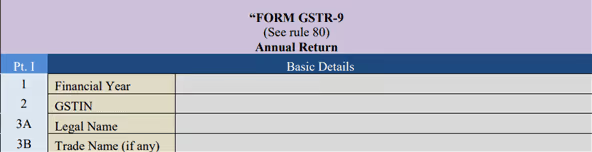
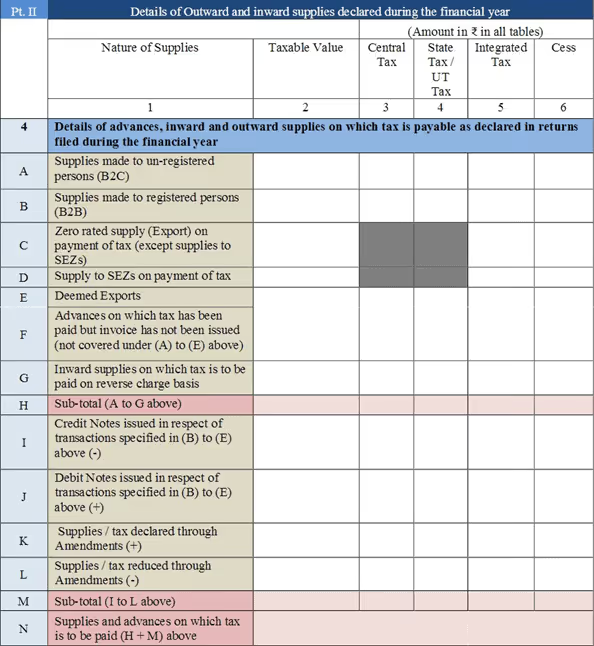
The details of all outward and inward supplies made during the year are reported in this part. These details should be collated by consolidating the data of the monthly/ quarterly returns filed thus far during the financial year.
8.2.1 Point 4 requires disclosure of aggregate supplies to B2C, B2B, exports/ SEZ sales on payment of taxes, deemed exports, advances liable to tax, inward supplies subject to reverse charge adjusted with the aggregate of debit/ credit notes and amendments, if any.
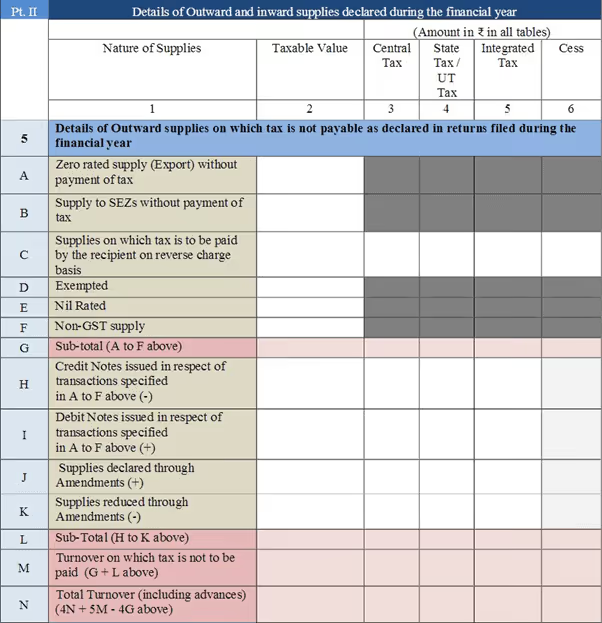
8.2.2 Point 5 requires disclosure of details pertaining to exports/ SEZ sales without payment of tax and Exempted/ nil rated/ non-GST supplies. The data needs to be adjusted with the aggregate of debit/ credit notes and amendments, if any.
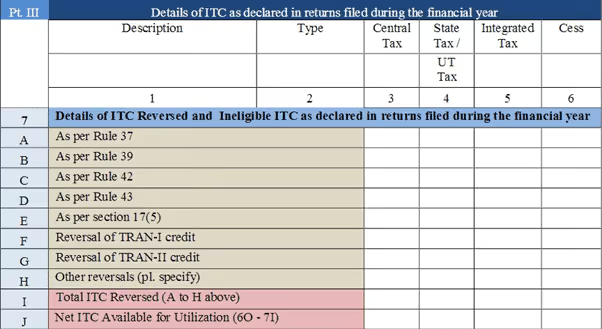
This part contains details pertaining to Input Tax Credit (‘ITC’) and under two points.
8.3.1 Point 6 contains details of ITC received from various sources segregated under Inputs, Capital Goods and Input Services. Any transitional credit from the pre-GST regime in Forms TRAN I and TRAN II also needs to be reported.
8.3.2 Point 7 contains details of Input Tax credit reversed and otherwise ineligible, adjusted with reversals in the transitional credit from the pre-GST regime in Forms TRAN I and TRAN II.
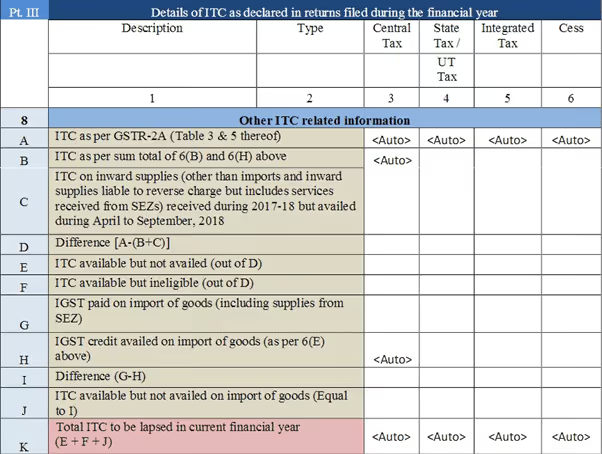
8.3.3 Point 8 predominantly contains details of reconciliation and differences between ITC auto populated from GSTR 2A with ITC disclosed in Point 6 above and attempts to compute the ITC to be lapsed during the year.
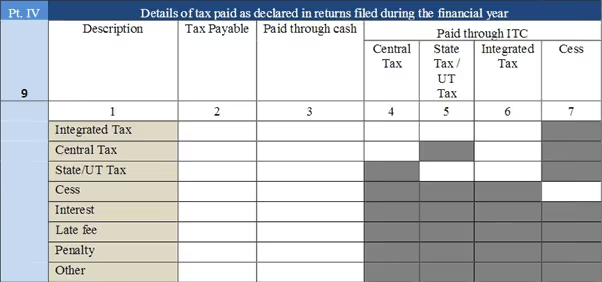
This part contains details of taxes paid under IGST, CGST, SGST and Cess along with Interest, late fees and penalties.
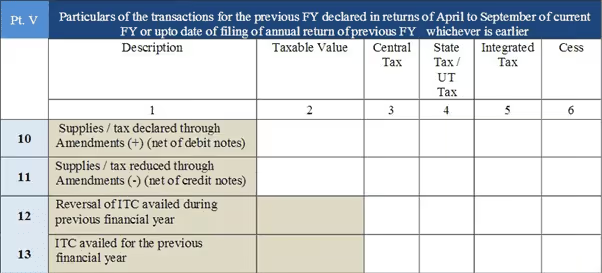
This part contains the summary of all amendments/ omissions pertaining to the previous FY but reported in the subsequent FY. Any reconciliation to the details reported in the returns filed thus far in points 10 to 13 needs to be provided.
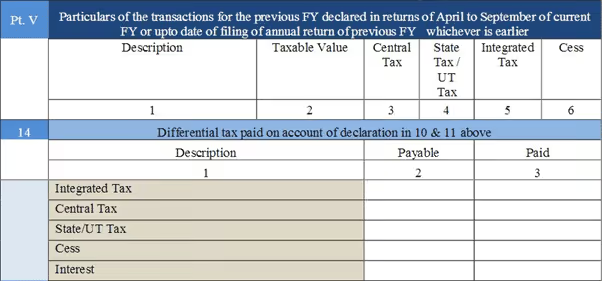
Any differential tax is payable/ paid on account of the reconciliation above needs to be disclosed under point 14.
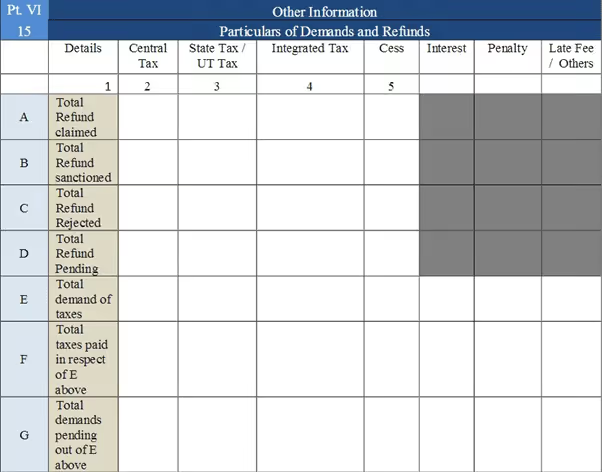
8.6.1 Point 15 contains particulars of refunds claimed, sanctioned, rejected and pending along with any demands paid/ outstanding in relation to the refunds claimed. The data needs to be disclosed separately for CGST, SGST, IGST and Cess.
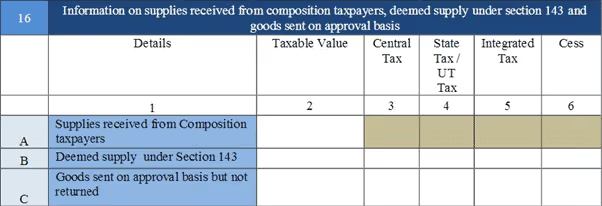
8.6.2 Point 16 contains details of other supplies received from composition dealers, deemed supplies and goods sent on approval basis
8.6.3 Points 17 and 18 contain details of HSN wise summary of outward and inward supplies.
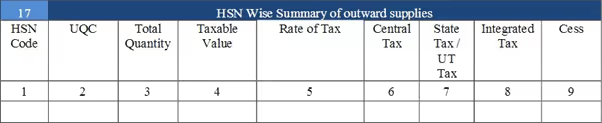
8.6.3 Points 17 and 18 contain details of HSN wise summary of outward and inward supplies.
The GST annual return forms have had their own share of controversies since being notified. The annual returns forms still require disclosure of several data points. While the disclosure is just a summary, these require significant data backup for each clause separately. These details may not have been captured by all taxpayers at the time of recording transactions in the books of accounts.
例:
These requirements are being viewed as increased compliance burden on taxpayers. This adds to the significant delay in releasing the annual return filing utilities as on date. In doing so, the government would really be taking the representations of the taxpayers, consultants and industry at large into consideration. That is definitely one step in the direction to making GST a hassle-free and compliance-friendly regime for the taxpayers.
Read our other articles onFormats for filing Annual Returns revised GSTR-9 and GSTR-9C
Read our other articles on Missing information in Tax invoice leads to Penalties u/s 125 and 122

.avif)


