India’s growing global presence means more residents are investing abroad, sending children overseas for education, and supporting families across borders. To simplify these international transactions, the Reserve Bank of India introduced the Liberalized Remittance Scheme (LRS), a framework that allows individuals to legally and safely remit money outside India.
According to the RBI, outward remittances under LRS reached USD 30 billion in FY 2023–24, with education, travel, and investments being the top contributors. With demand rising every year, understanding the LRS is no longer optional; it’s essential.
This guide explains everything you need to know about the Liberalied Remittance Scheme, including eligibility, permissible uses, prohibited transactions, taxation, and the step-by-step remittance process.
At a Glance
Money can be used for education, travel, medical needs, investments, gifts, or family support.
Prohibited transactions include lottery purchases, forex margin trading, and dealings with FATF blacklisted countries.
From Budget 2025, no TCS up to ₹10 lakh; above this, 5% TCS applies (except education loans).
Remittances require PAN, Form A2, and KYC compliance, and must be routed through an RBI-authorised dealer bank.
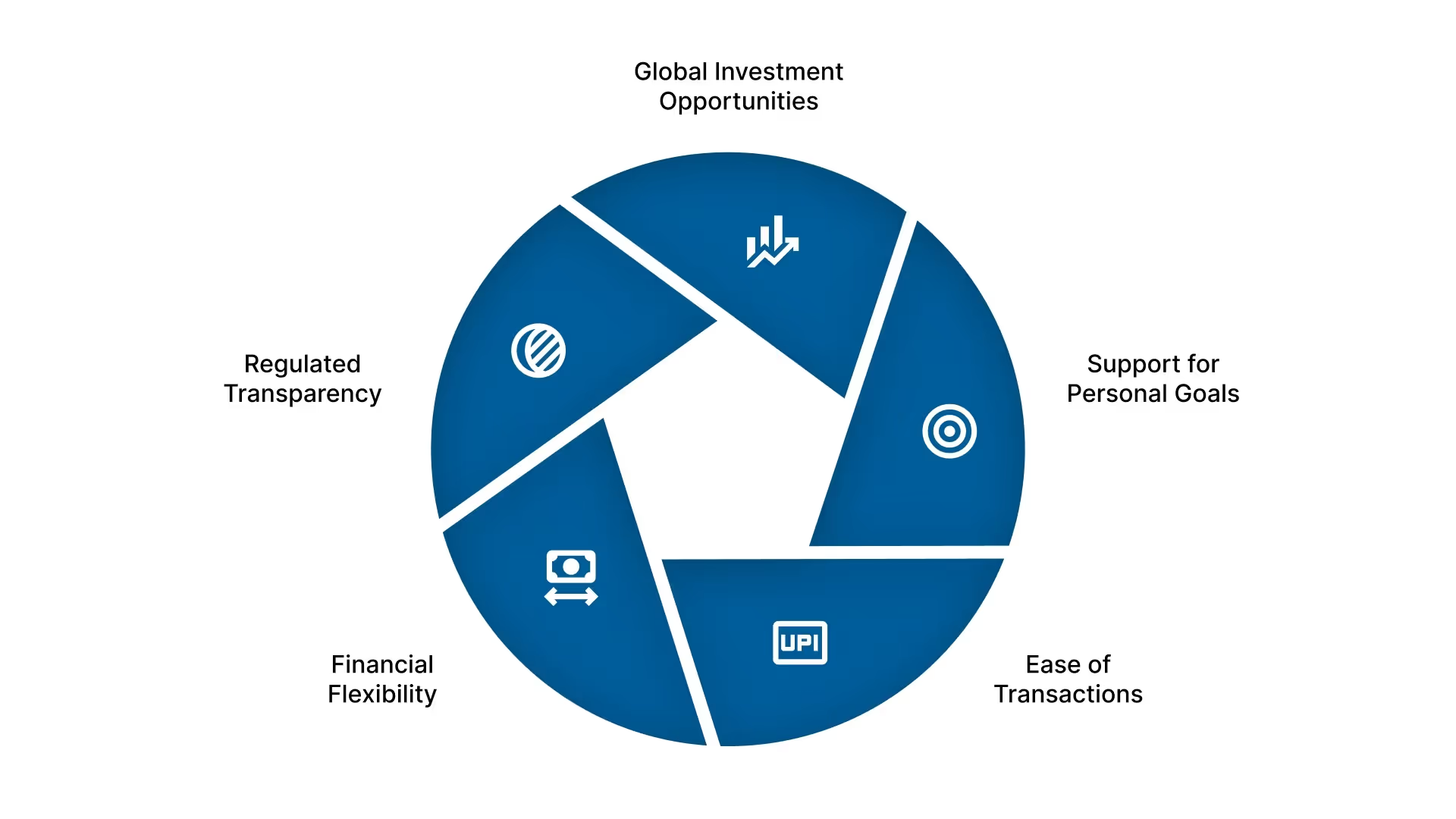
LRS provides flexibility to diversify investments abroad while ensuring compliance with FEMA and RBI guidelines.
What is the Liberalized Remittance Scheme (LRS)?
The Liberalized Remittance Scheme (LRS) is a facility introduced by the Reserve Bank of India (RBI) under the Foreign Exchange Management Act (FEMA), 1999. It allows resident individuals to remit money abroad for specific permitted purposes without prior RBI approval. With a yearly limit of USD 250,000 per individual, LRS provides Indian residents with the flexibility to meet personal, educational, medical, and investment needs globally.
Key Features of LRS
Remittance Limit: Up to USD 250,000 per financial year for each resident individual.
Eligible Individuals: Available to resident individuals, including minors (through guardians).
Permissible Uses: Education, travel, medical treatment, investment in foreign assets, gifts, donations, and maintenance of close relatives abroad.
Prohibited Transactions: Cannot be used for lottery tickets, forex margin trading, or dealings with FATF non-compliant countries.
No RBI Approval Needed: Remittances under LRS for permitted purposes do not require prior RBI approval.
Regulated by FEMA: Ensures compliance with India’s foreign exchange laws.
Tax Implications: Subject to Tax Collected at Source (TCS) based on transaction type and amount.
Now that we’ve understood what the Liberalized Remittance Scheme (LRS) is and its key features, let’s look at some of the most common ways Indian residents can use it.
Permissible Uses of Liberalized Remittance Scheme
The Liberalized Remittance Scheme gives Indian residents the freedom to use remittances for a wide range of legitimate personal and financial purposes. By allowing individuals to invest, study, or support family abroad, LRS opens access to global opportunities while maintaining regulatory safeguards. Here are some common used of lrs:
Education Abroad: Payment of tuition fees, living expenses, and other related costs for studying overseas.
Travel Expenses: Covering personal, business, or leisure travel costs, including boarding and lodging.
Medical Treatment: Payments for hospitalization, medical bills, or healthcare-related expenses abroad.
Investments: Buying shares, debt instruments, real estate, or other permissible foreign assets.
Gifts & Donations: Transferring funds to relatives or charitable organizations abroad.
Maintenance of Relatives: Supporting close family members living overseas.
Transfers to Own Account: Moving funds to personal accounts maintained in foreign banks.
While LRS offers broad flexibility in how funds can be used, it’s equally important to understand who can actually access the scheme and how to apply for it.
Eligibility and Application for Liberalized Remittance Scheme
The Liberalized Remittance Scheme is designed for individuals, not institutions. To ensure compliance, RBI has clearly defined who can apply and what is required before making a remittance. Meeting these eligibility conditions is the first step toward accessing the benefits of LRS.
Who is Eligible?
Resident Individuals: Any resident individual in India, including minors.
Guardians for Minors: A guardian can make remittances on behalf of a minor.
Not Eligible: Corporations, partnership firms, HUFs, trusts, and other entities are excluded.
Application Requirements
Bank Account: Applicant must hold an Indian bank account with an authorized dealer (AD) bank.
Permanent Account Number (PAN): A valid PAN card is mandatory for identification and tax compliance.
Declaration Form: Individuals must submit a declaration confirming the purpose of remittance and compliance with LRS rules.
Supporting Documents: Depending on the purpose (education, medical, travel, etc.), relevant documents such as admission letters, invoices, or medical certificates may be required.
Once you know the eligibility, the next step is understanding how the actual remittance process works. Following the correct procedure ensures smooth transfers and compliance with RBI regulations.
Process of Remittance Under Liberalized Remittance Scheme
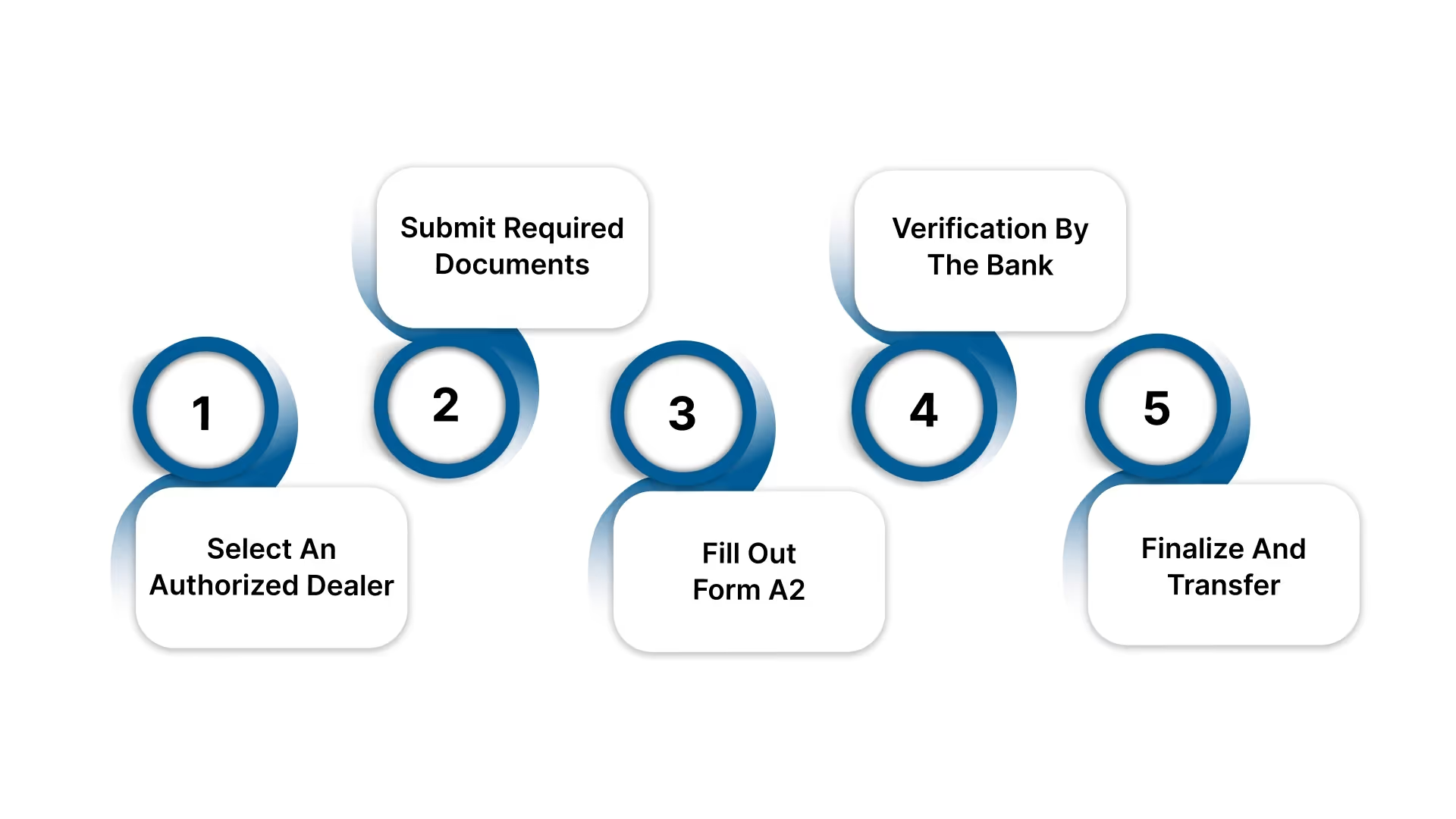
Remitting money abroad under the Liberalized Remittance Scheme involves a few structured steps, all of which are handled through authorized dealers (banks).
While the LRS provides flexibility for legitimate remittances, it also has strict boundaries to prevent misuse. Knowing what’s prohibited is just as important as knowing what’s allowed.
Prohibited Transactions Under Liberalized Remittance Scheme
By staying updated with these changes, individuals can better plan their overseas remittances and avoid unnecessary costs.
RBI Guidelines for Outward Remittance under LRS
When transferring funds abroad under the Liberalized Remittance Scheme (LRS), individuals must comply with the guidelines set by the Reserve Bank of India (RBI). These rules ensure that remittances are transparent, legal, and compliant with foreign exchange laws.




.avif)


