Managing tax season can feel overwhelming, especially when deadlines, compliance, and client demands collide. Are you struggling to meet tax season deadlines while handling growing workloads with limited staff? Mistakes, missed filings, and long hours can quickly increase stress and risk penalties.
Outsourced tax services for CPAs provide a practical solution, helping firms manage spikes in workload, maintain accuracy, and stay compliant. In 2025, more firms are adopting domestic and offshore outsourcing to balance resources and streamline operations. According to the AICPA’s MAP survey of 1,100 firms, 30% already outsource domestically and 25% rely on offshore teams, with many others planning to adopt outsourcing strategies soon.
Key Takeaways
Outsourcing tax preparation is a strategic move that helps CPA firms manage workload spikes without straining internal teams.
By assigning repetitive tax tasks externally, you create more time for client advisory and long-term relationship building.
A structured outsourcing process with scope definition, provider selection, pilots, and reviews minimizes risk and ensures consistency.
Providers like VJM Global bring dual expertise, strict confidentiality, and scalability, aligning directly with U.S. CPA firm needs.
Firms that adopt outsourcing gain stability across cost, compliance, and capacity, preparing them for demanding tax seasons ahead.
What Is Tax Preparation Outsourcing and Why It Matters for CPAs
Tax preparation outsourcing means hiring an external team to handle tax-related work that would otherwise be done in-house. Instead of adding more staff or stretching your current team, you assign routine and complex tax tasks to qualified professionals outside your firm.
CPA firms increasingly rely on outsourced tax services for CPAs because tax season brings intense deadlines, compliance risks, and client expectations that are hard to meet with limited internal capacity. By outsourcing, you gain structured support that balances workloads, keeps compliance on track, and protects profitability.
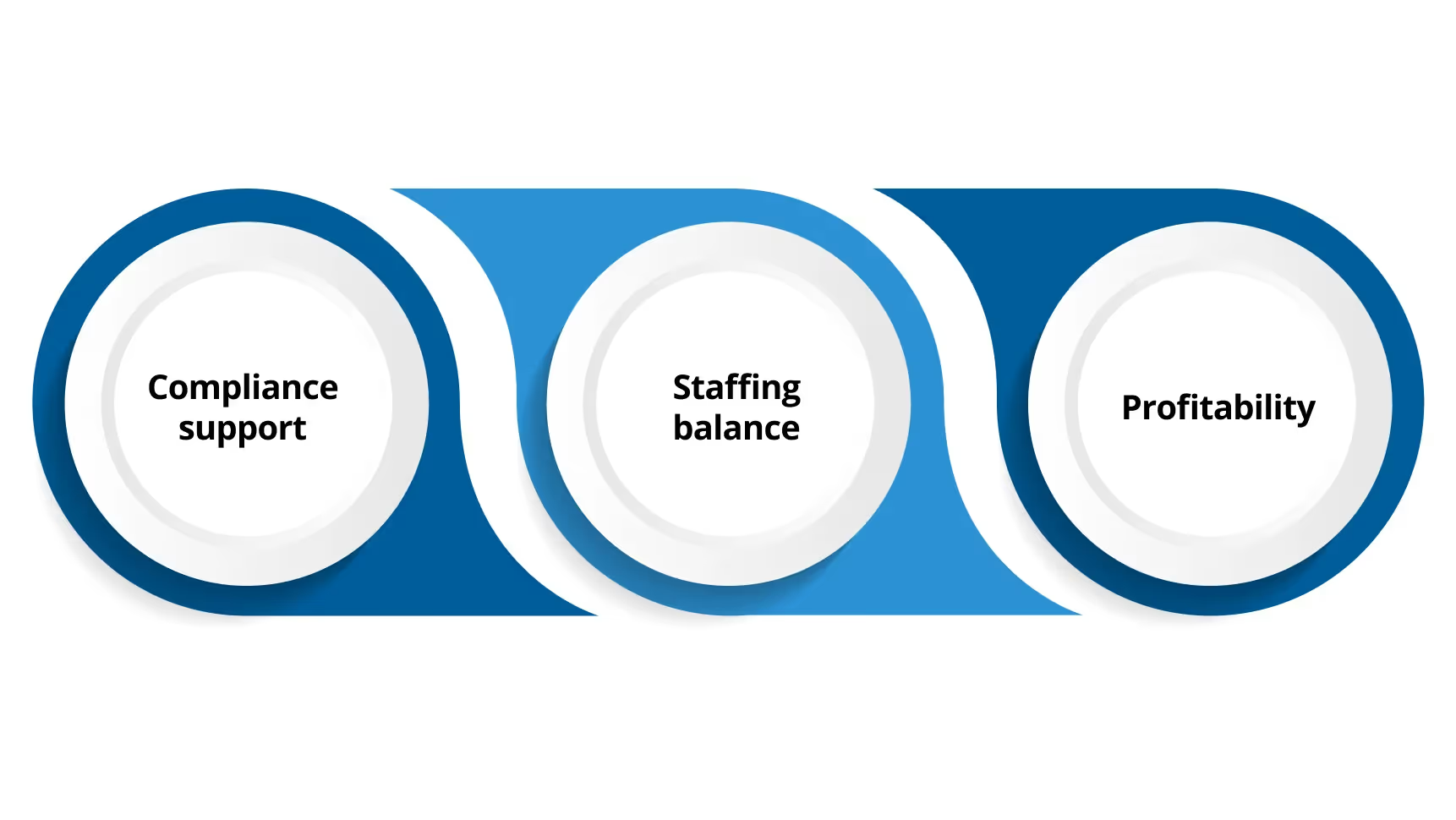
Here are three concrete ways outsourcing matters to your practice:
Compliance support: An outsourced tax professional ensures filings meet IRS requirements and are submitted within deadlines. For example, if your firm prepares hundreds of partnership returns, outsourced teams can handle the volume without increasing error rates. This consistency reduces the risk of penalties or notices from tax authorities and helps safeguard your reputation.
Staffing balance: During peak season, in-house teams often work 60–70 hours per week. Outsourcing allows you to assign time-consuming work such as form preparation and documentation review externally, so your staff can focus on advisory services and audits. Instead of hiring temporary employees who require training, you get access to ready-to-work professionals who can handle the workload immediately.
Profitability: Fixed outsourcing agreements help convert variable staffing expenses into predictable costs. For instance, rather than paying overtime wages or onboarding seasonal hires, you can work with a provider who charges a consistent rate per return or per project. This makes it easier to forecast margins and allocate resources toward services that generate higher revenue for your firm.
To understand the difference outsourcing makes, consider how common challenges compare with outsourced solutions:
Challenge Without Outsourcing
How Outsourcing Helps
Staff burnout during tax season
Outsourced teams absorb routine tasks so your staff can focus on higher-value work
Risk of compliance errors
Dedicated tax professionals stay updated with U.S. regulations
Rising overhead costs
Offshore outsourcing reduces salary and training expenses
Also Read: Understanding the Advantages of Outsourcing Accounts Payable
Onshore vs Offshore Outsourced Tax Services for CPAs
When outsourcing tax preparation, you can work with providers based in your own country (onshore) or outside it (offshore). Both options can support your firm, but the differences in cost, talent, and compliance knowledge affect which model is best suited to you.
Here is a clear comparison:
Factor
Onshore Outsourcing
Offshore Outsourcing
Cost
Higher, as providers operate within the same wage and overhead environment as your firm.
Lower, as offshore locations like India provide qualified staff at reduced labor costs.
Talent Access
Limited pool, often strained during peak tax season.
Broader pool of professionals trained to handle U.S. tax work year-round.
Compliance Familiarity
Naturally aligned with U.S. rules and regulations.
Requires verification, but many offshore providers (e.g., India) specialize in U.S. GAAP and IRS standards.
Many CPA firms choose offshore outsourcing to India in 2025 because it combines cost savings with access to teams trained in U.S. compliance. However, if you prioritize closer communication and same-time-zone coordination, onshore outsourcing may feel more convenient.
Moving from definition to practice, let’s look at the specific tax services CPA firms outsource most often.
Top Outsourced Tax Services CPA Firms Rely On in 2025
US CPA firms turn to outsourced tax services in India for CPAs to handle routine but critical tasks that demand accuracy and speed. By outsourcing, you reduce strain on your internal team and focus resources on client advisory and planning. The following are the most common tax tasks firms outsource to external experts.
5 Common Tax Tasks CPA Firms Outsource to Experts
Individual and corporate tax return preparation Preparing returns for individuals and corporations is one of the most time-intensive services. When you outsource, tax professionals handle data entry, return calculation, and filing, leaving your staff free to review only the final deliverable. This not only shortens turnaround time but also reduces the risk of errors when large volumes of returns are due at once.
Payroll tax filing Payroll taxes involve recurring submissions with strict deadlines. Outsourcing ensures that calculations for withholdings, employer contributions, and state-specific requirements are managed consistently. For example, if you have multiple small business clients with employees in different states, outsourced professionals can file correctly across jurisdictions without burdening your in-house team.
Year-end reconciliations Reconciling accounts at the end of the fiscal year is essential for compliance and for preparing accurate tax filings. Outsourced teams can match ledgers, bank statements, and tax records efficiently, providing you with reconciled reports that are ready for submission. This step is critical for avoiding discrepancies that can trigger IRS queries.
Document review and support Many CPA firms face backlogs when reviewing supporting documents such as receipts, invoices, and schedules. Outsourcing this task gives you organized, reviewed files that are ready for tax return preparation or audit submission. For example, a mid-sized firm handling dozens of corporate clients can outsource document sorting and indexing, ensuring your in-house team spends time only on advisory reviews.
Audit-ready schedules Preparing schedules for audits requires precision and time. Outsourced professionals compile these schedules according to U.S. audit requirements, making your firm ready for both internal reviews and external audits. If your firm supports a client undergoing a statutory audit, you can rely on the outsourced team to prepare reconciled trial balances, depreciation schedules, or expense breakdowns, saving your staff dozens of hours.
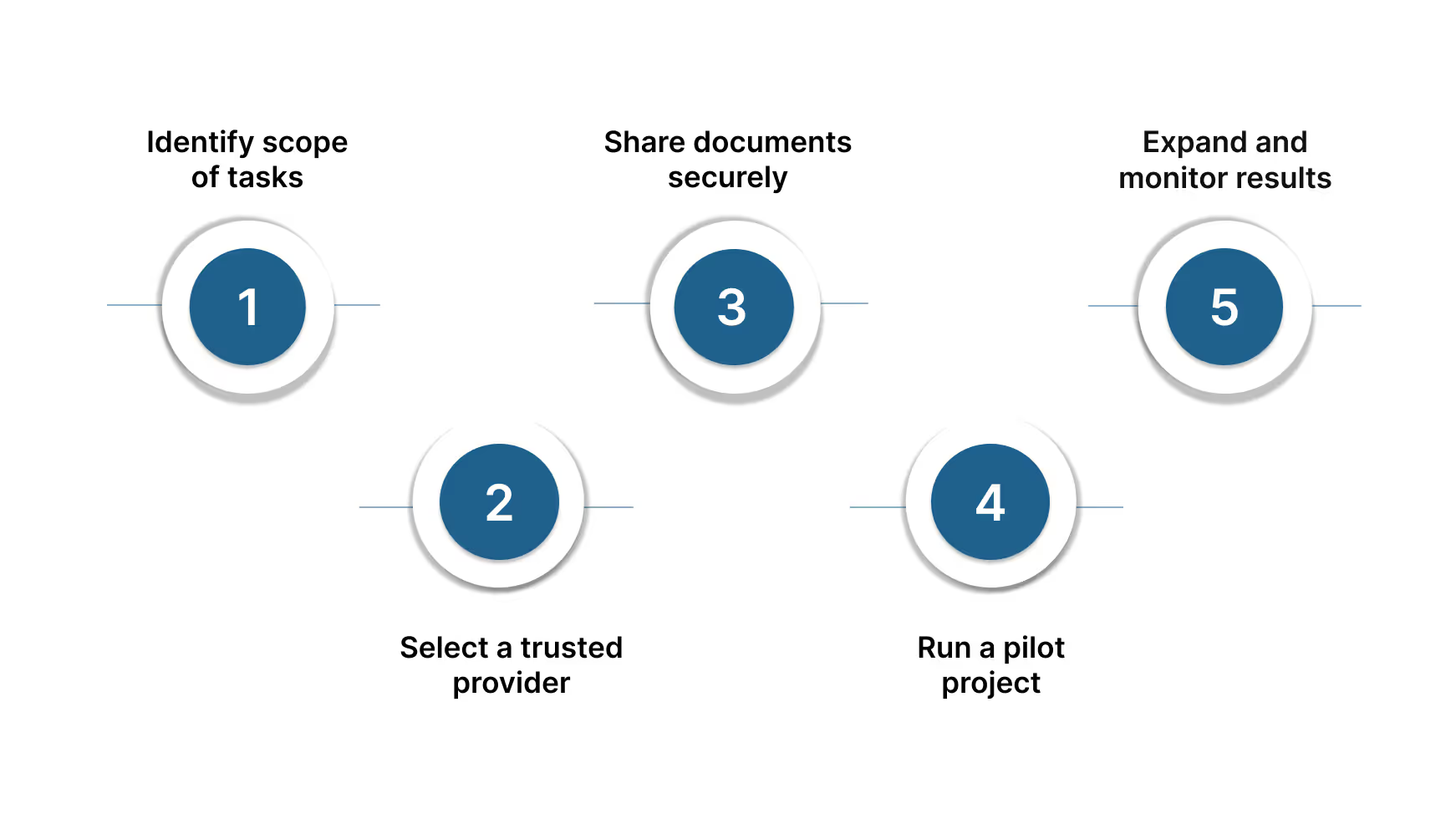
Start by defining which services are suitable for outsourcing. This may include high-volume tasks such as individual and corporate returns, payroll filings, or reconciliations. Many CPA firms begin with repetitive work that consumes significant staff hours and then gradually move to more complex tax projects. Starting small allows you to measure outcomes without shifting every process at once.
2. Select a trusted provider
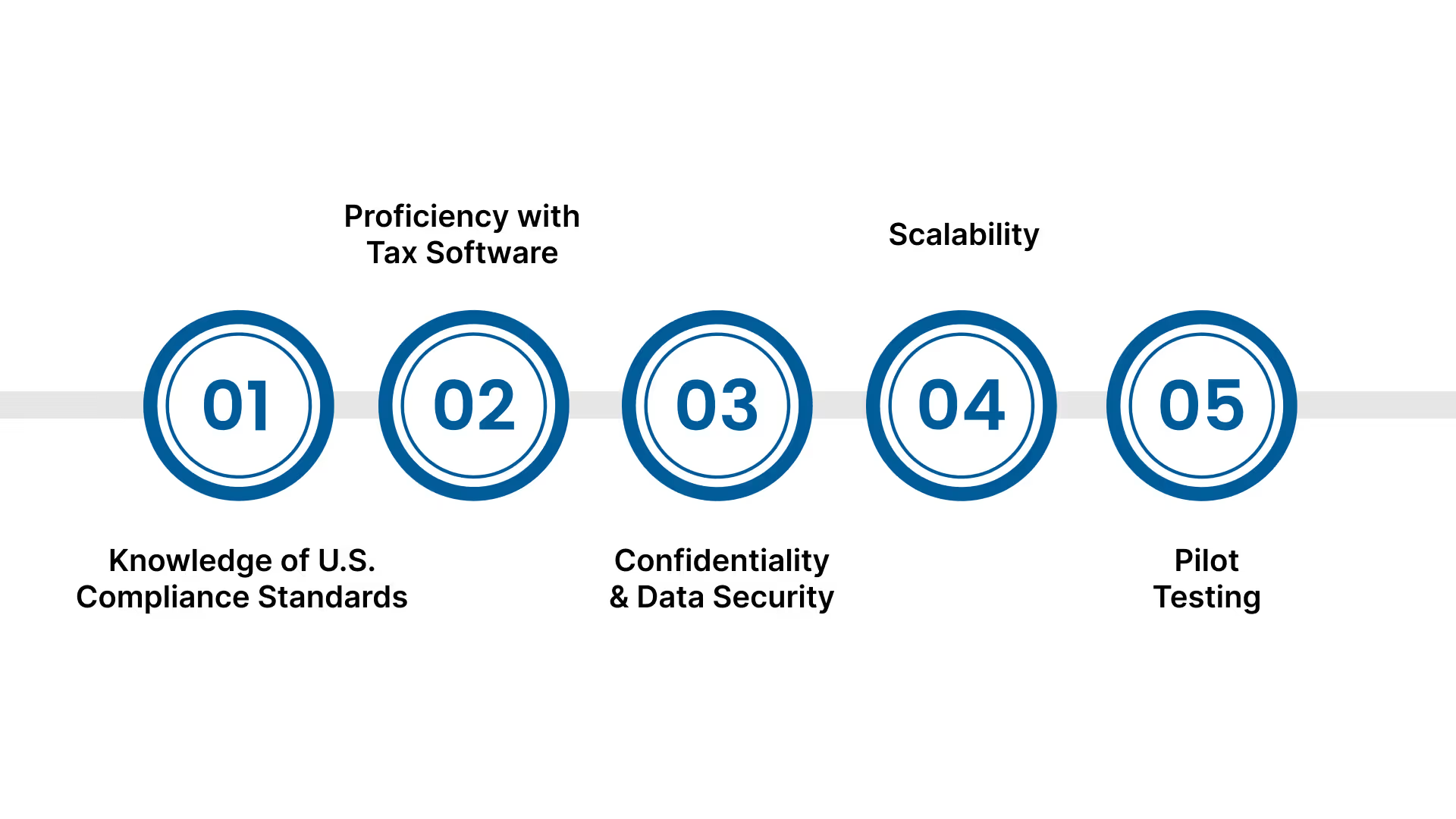
Evaluate providers based on their knowledge of U.S. tax laws, ability to work with your preferred software, and track record with CPA firms. Ask for references or case studies that show how they handled peak-season workloads. Providers offering outsourced tax services for CPAs should also demonstrate scalability so you can expand the engagement as your client base grows.
3. Share documents securely
Use encrypted file-sharing systems or dedicated cloud portals to transmit data. This step protects sensitive information such as Social Security numbers and financial statements while maintaining compliance with confidentiality standards. Establish a standard operating procedure for how your team exchanges files with the provider so there is no confusion during deadlines.
4. Run a pilot project
Begin with a controlled batch of work, such as 20 returns or a single payroll cycle. Monitor how the provider communicates, the speed of delivery, and the accuracy of the completed tasks. A pilot project allows you to adjust processes, clarify expectations, and confirm whether the provider is equipped to handle a larger share of your workload.
5. Expand and monitor results
If the pilot meets your expectations, increase the volume of outsourced work. Set measurable benchmarks such as turnaround time, error rate, and client satisfaction to track ongoing performance. Periodic reviews with the provider help you refine the process, address concerns quickly, and ensure service quality remains consistent across tax seasons.
With those questions in mind, it is clear why VJM Global stands out as a trusted outsourcing partner.
Why VJM Global Is the Right Outsourcing Partner for You
Outsourcing in 2025 is more than cost-cutting. For CPA firms, it is about building a finance function that is consistent, scalable, and designed for peak seasonal demands. VJM Global specializes in outsourced audit and tax preparation support, helping you manage high volumes of tax returns and audit documentation with accuracy and confidentiality.
With the right outsourcing partner, your firm can maintain compliance, reduce pressure on staff, and deliver consistent results even during the busiest months.
Conclusion
Outsourcing tax preparation has moved from being a cost-saving option to becoming a strategic choice for CPA firms in 2025. It addresses staffing challenges, ensures compliance with U.S. regulations, and provides the scalability you need during peak tax season.
VJM Global supports U.S. CPA firms with outsourced tax preparation and audit services designed for heavy workloads and strict compliance requirements. With trained teams, secure processes, and scalable capacity, VJM Global helps you handle tax season without sacrificing accuracy or profitability.
By outsourcing routine tax tasks, you free your internal team to focus on client advisory and higher-value services that strengthen long-term relationships. This shift not only reduces operational strain but also positions your firm to deliver greater value where it matters most.
Struggling to keep up with tax season deadlines or audit preparation? VJM Global provides outsourced tax services for CPAs that give your firm offshore capacity to manage workload spikes without compromising accuracy or compliance. Schedule a consultation to see how outsourcing can strengthen your firm’s operations.
FAQs
Q: How can outsourcing tax preparation to India reduce overtime costs for my CPA firm?


%20(4).avif)

.avif)


