


Are you planning to seek funding for business growth, and your investors have requested your GAAP-compliant financial statements and GAAS audit reports? Many small business owners freeze when hearing these terms.
GAAP and GAAS are essentially two different accounting frameworks that serve distinct purposes. One is a set of accounting principles, while the other is a set of auditing guidelines.
Together, these two frameworks act as the cornerstone of financial reporting and auditing in the United States. Most accounting professionals consider both GAAP and GAAS essential for maintaining financial integrity and preventing fraud.
In this article, we will clear up the confusion around US GAAP vs US GAAS to help you make informed decisions for your business.
While both frameworks contribute to financial integrity, they serve distinct purposes and apply to different stages of financial reporting. This comprehensive comparison highlights their fundamental differences:
For those who wish to dig deeper and learn what each term entails, here's a detailed illustration:
Generally Accepted Accounting Principles (GAAP) are the standardized guidelines that govern how U.S. companies record and report their financial information. GAAP provides a common language for businesses to communicate their financial position to investors, creditors, regulators, and other stakeholders.
The official definition of GAAP includes all the conventions, rules, and procedures necessary to define accepted accounting practice at a particular time. These principles are established to ensure financial statements are consistent, comparable, reliable, and clear.
Many state laws require GAAP compliance for certain entities. For example, Louisiana law (Louisiana Revised Statute 24:514) requires local government entities to prepare their financial reports according to GAAP.
The law provides an exception for local entities that are prohibited from issuing bonded debt under state law, giving them more flexibility in their reporting.
GAAP is built on a foundation of core principles that guide financial reporting:
Companies apply these principles across their balance sheets, income statements, cash flow statements, and notes to provide a complete picture of their financial health.
GAAP impacts virtually every aspect of financial management in U.S. businesses. These principles provide structure and consistency that benefit companies in multiple ways:
For growing businesses, early adoption of GAAP practices prepares you for future expansion, investment rounds, and potential acquisition opportunities.
Companies that delay GAAP implementation risk facing costly accounting overhauls when they need reliable financial statements for major business decisions.
Next, let’s learn in detail about GAAS.
Generally Accepted Auditing Standards (GAAS) are the systematic guidelines that auditors use when examining and verifying a company's financial statements.
GAAS provides a framework for conducting high-quality audits that users can rely on for accurate assessments of financial information.
GAAS defines the professional qualities and judgment auditors must possess, procedures they must follow, and reporting requirements they must meet when performing an audit. These standards ensure audits are thorough, objective, and consistent.
GAAS is organized into three key categories that guide the audit process. These categories ensure that audits are performed in a consistent, unbiased, and thorough manner.
Here’s a breakdown of each category:
These standards provide a systematic approach to testing financial information, evaluating internal controls, and forming professional judgments about financial statements.
Now that we've explored both frameworks individually, let's examine how they differ in purpose and application.
GAAS serves as the foundation for quality financial audits that stakeholders can trust. When auditors follow these standards, they provide reasonable assurance that financial statements are free from material misstatements and fraud.
For businesses undergoing audits, GAAS compliance brings several benefits:
Up next, it’s time to understand how GAAP fundamentally differs from GAAP..
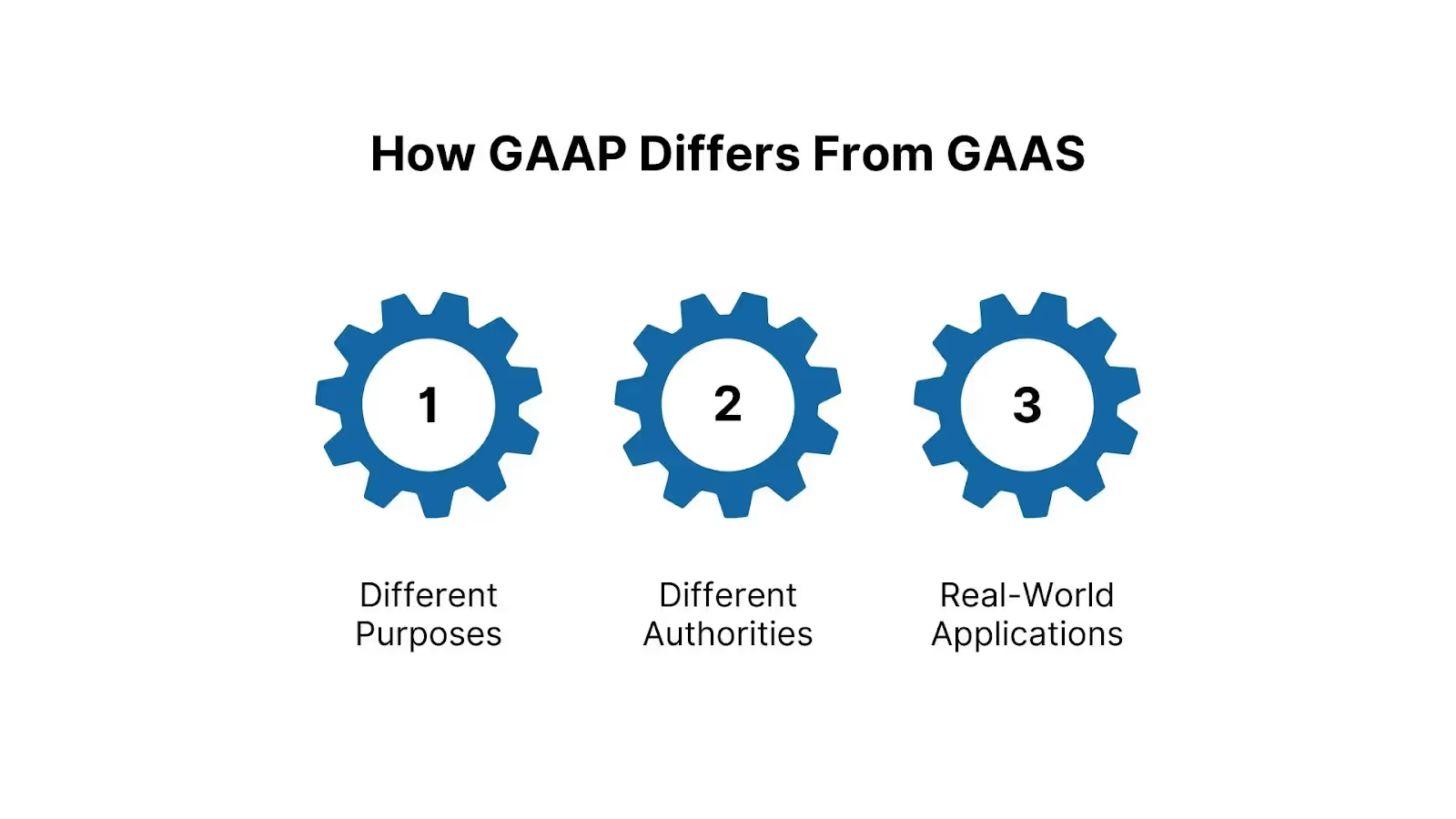
Although we highlighted the key differences between US GAAP and US GAAS earlier, we now deep-dive into the topic for those who wish to understand these frameworks in greater detail.
Exploring their development, purpose, and relationship will help you gain a clearer understanding of how they shape financial reporting and auditing in the U.S.
The development of GAAP and GAAS reflects America's commitment to transparent and reliable financial reporting. GAAP emerged in response to the 1929 stock market crash, when investors lost confidence in financial reporting.
The Securities and Exchange Commission (SEC) gained authority to set accounting standards, but delegated this responsibility to the private sector.
GAAS was developed separately through the American Institute of Certified Public Accountants (AICPA). Following major accounting scandals like Enron in the early 2000s, Congress passed the Sarbanes-Oxley Act, creating the Public Company Accounting Oversight Board (PCAOB), which now oversees auditing standards for public companies.
The fundamental difference between these frameworks is the following: GAAP is a set of accounting principles governing how companies prepare financial statements, while GAAS consists of auditing standards dictating how auditors verify those statements.
The American Institute of Certified Public Accountants (AICPA) and the Financial Accounting Standards Board (FASB) are two distinct organizations that shape accounting and auditing standards in the United States.
The AICPA is the national professional organization for Certified Public Accountants (CPAs). Founded in 1887, it represents the accounting profession with over 400,000 members across various industries.
The FASB is an independent, private-sector organization established in 1973 that sets accounting standards for public and private companies and nonprofits that follow GAAP.
Understanding how GAAP and GAAS function in practice helps clarify their importance to your business operations. Here are common scenarios where these standards impact financial reporting and auditing:
When preparing annual financial statements, your accounting team applies GAAP principles by:
During an audit of your financial statements, independent CPAs follow GAAS by:
Both GAAP and GAAS influence significant business activities:
That said, these frameworks also share a few similarities. While we are on the topic, let's also learn about them.
GAAPとGAASは財務報告プロセスにおいてそれぞれ異なる目的を担っていますが、重要な基盤となる要素を共有しています。どちらの枠組みも、ステークホルダーを保護し、市場において信頼性の高い財務情報を確保するために策定されました。
米国GAAPと米国GAASの詳細な比較を終えたところで、次はよくある誤解について解説します。
多くの経営者が、これらの財務フレームワークについて誤解を抱いています。ここで明確にしておきましょう。
次のセクションでは、ビジネスにおいてGAAPとGAASのガイドラインに従うことの重要性について説明します。
次のセクションでは、ビジネスにおいてGAAPとGAASのガイドラインに従うことの重要性について解説します。
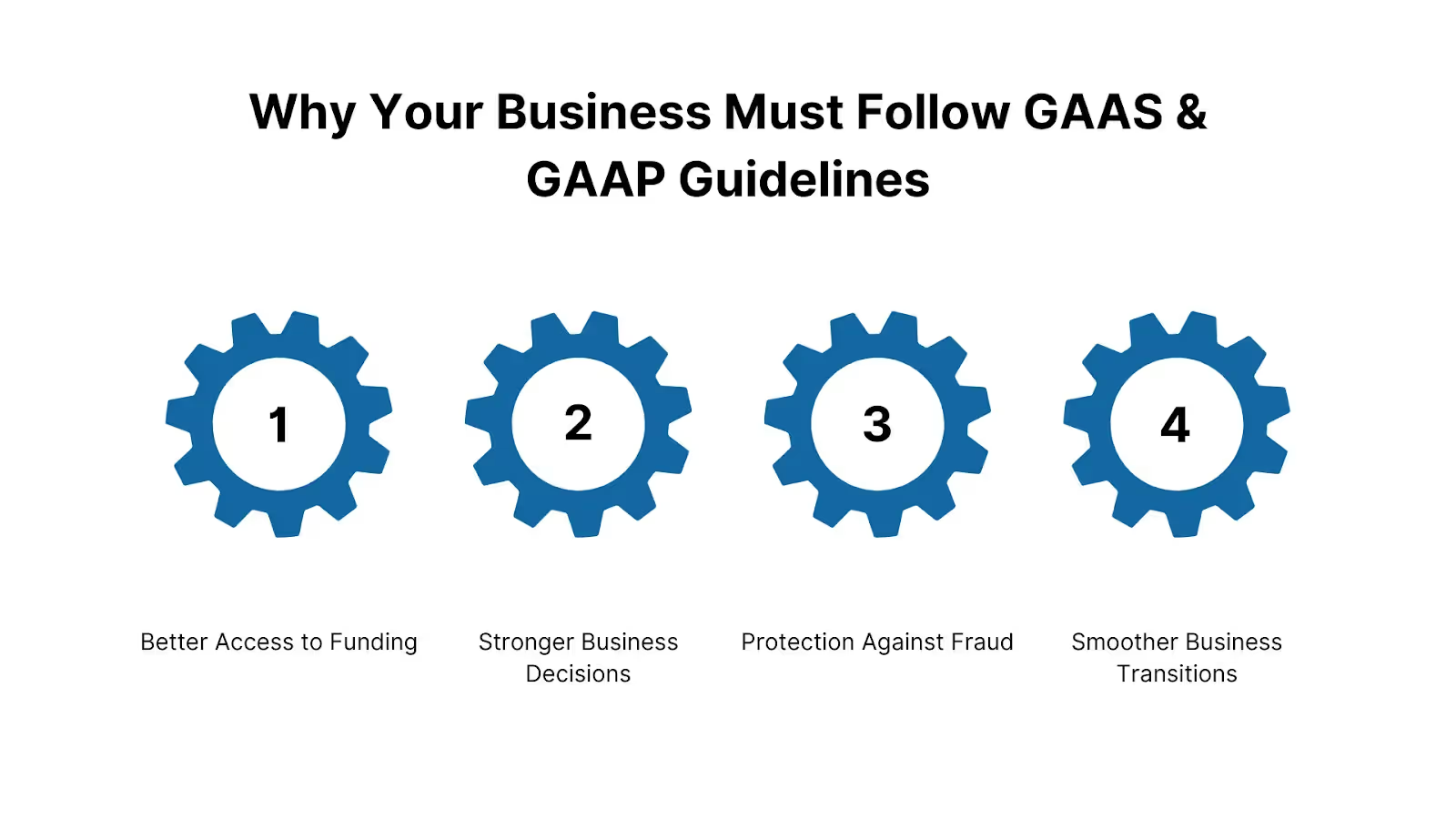
これらの基準がビジネスにとって重要である4つの主な理由を見ていきましょう。
銀行や投資家は、適切な会計基準に従っている企業を高く評価します。
融資や投資が必要な際、GAAPに準拠した財務諸表(特にGAAS監査によって検証されたもの)があれば、競合他社に対して優位に立てます。貸し手は、財務記録がクリーンでリスクが低いと判断できる企業に対して、より良い条件を提示します。
適切な情報がなければ、賢明な選択はできません。GAAPに基づいた財務諸表は、ビジネス戦略を導くための信頼できるデータを提供します。
厳格な会計・監査基準は、ビジネスを財務不正から守る助けとなります。これらの基準が求める体系的なアプローチにより、重大な問題に発展するまで見過ごされがちな不備が早期に発見されることがよくあります。
将来的に事業売却やパートナーの受け入れを検討していますか?GAAPとGAASに準拠しておくことで、こうした移行が非常にスムーズになります。
事業承継の際、GAAS(米国監査基準)に基づいて監査されたGAAP(米国会計基準)準拠の財務諸表は、企業価値評価の強固な基盤となります。これにより、企業価値をめぐる紛争を減らし、デューデリジェンスのプロセスを迅速化できます。
米国GAAPと米国GAASの違いを理解することは、ビジネスの財務基盤をより強固にする力となります。
これらの基準は専門的で難解に思えるかもしれませんが、最終的には「信頼できる財務情報の作成」と「その正確性の検証」という実用的な目的を果たします。これらの枠組みに従うことで、エラーや不正、機会損失から会社を守ることができます。
GAAP準拠の会計事務所へのアウトソーシングをご検討なら、VJM Globalにお任せください。米国内15以上の業界で500社以上の経営者から信頼を寄せられており、財務報告における卓越性と信頼性で高い評価をいただいています。
当社のチームには、経験豊富な米国公認会計士(CPA)、チャータード・アカウンタント、および高度な学位を持つ財務専門家が在籍しており、米国の会計基準や税法を熟知しています。
正確な財務諸表、包括的な債務者レポート、徹底した銀行勘定調整分析を迅速に提供し、お客様が成長に集中できるよう、ビジネスの完全なコンプライアンスを維持します。
今すぐお問い合わせください。会計業務を効率化いたします。

.avif)


