
Las empresas de Singapur que se expanden a la India se encuentran con un entorno contable fundamentalmente distinto que puede tomar desprevenidos incluso a los equipos financieros más experimentados. A diferencia del marco de información más flexible de Singapur, el sistema de la India se basa en varios pilares diferenciados:
Los desafíos van más allá de la armonización de normas. La Ley de Sociedades de la India de 2013 prescribe el formato exacto que deben seguir los estados financieros (Anexo III) y establece vidas útiles específicas para la depreciación (Anexo II). Todas las empresas, independientemente de su tamaño, deben presentar cuentas auditadas ante el Registro de Sociedades dentro de plazos estrictos.
La estructura de cinco niveles del GST, las obligaciones de TDS en prácticamente todos los pagos entre empresas y los requisitos de documentación de precios de transferencia sin un umbral mínimo hacen que la carga de cumplimiento sea más pesada que en la mayoría de los mercados de la ASEAN.
Esta guía cubre lo que las empresas de Singapur necesitan saber antes y después de su entrada:
Las Normas de Contabilidad de la India (Ind AS) son formuladas por el Consejo de Normas de Contabilidad (ASB) del Instituto de Contadores Públicos de la India (ICAI) y notificadas por el Ministerio de Asuntos Corporativos (MCA) de la India bajo las Reglas de Sociedades (Normas de Contabilidad de la India) de 2015. Estas normas están basadas en las NIIF y en gran medida convergidas con ellas, pero incluyen exclusiones y modificaciones específicas que reflejan las condiciones legales y económicas de la India.
La India seguía anteriormente los PCGA indios (IGAAP) antes de realizar la transición a la convergencia con las NIIF a través de las Ind AS. La adopción obligatoria comenzó el 1 de abril de 2016 para las empresas más grandes, lo que mejoró significativamente la comparabilidad de los estados financieros indios para los inversores internacionales y las empresas matrices de Singapur que gestionan consolidaciones transfronterizas.
Tres organismos rigen la jerarquía normativa contable de la India:
Las empresas de Singapur deben seguir las actualizaciones de los tres organismos para mantenerse al día.
La adopción de las Ind AS sigue un enfoque gradual basado en umbrales:
FaseFecha de entrada en vigorEmpresas cubiertasFase 11 de abril de 2016Empresas cotizadas + empresas no cotizadas con un patrimonio neto ≥ 500 millones de rupias, además de todas las empresas del grupoFase 21 de abril de 2017Todas las empresas cotizadas restantes + empresas no cotizadas con un patrimonio neto de 250 a 500 millones de rupias, además de todas las empresas del grupo
Las empresas por debajo de estos umbrales continúan bajo las antiguas Normas de Contabilidad (AS). Este sistema de dos niveles es importante cuando las empresas de Singapur estructuran su entidad india.
Una regla tiene un peso importante a largo plazo: una vez que una empresa adopta las Ind AS, ya sea voluntaria u obligatoriamente, no puede volver a las normas antiguas, incluso si su patrimonio neto cae posteriormente por debajo del umbral. Esto hace que la estructura inicial de la entidad y la decisión sobre su tamaño sean significativas desde el principio. Si una matriz de Singapur sigue las Ind AS, todas las filiales indias también deben seguirlas, independientemente de su patrimonio neto individual.
El año financiero legal de la India va del 1 de abril al 31 de marzo según la Sección 2(41) de la Ley de Sociedades de 2013, a diferencia del año financiero flexible de Singapur o el enfoque común del año natural. Las empresas de Singapur gestionan efectivamente dos ciclos de información separados, lo que afecta a los plazos de información consolidada, las conciliaciones entre empresas y la programación de auditorías. Las filiales de matrices extranjeras pueden solicitar al Gobierno Central permiso para utilizar un año financiero alternativo para la consolidación, aunque la aprobación se concede caso por caso.
Tanto las Ind AS como las Normas de Información Financiera de Singapur (SFRS) convergen con las NIIF, lo que significa que sus fundamentos conceptuales son similares. Sin embargo, las Ind AS de la India contienen excepciones específicas y la Ley de Sociedades de 2013 impone requisitos de presentación adicionales (formato del Anexo III) que no tienen un equivalente directo en el marco más flexible de Singapur.
Las divergencias clave incluyen:
ÁreaTratamiento Ind ASTratamiento SFRSHedge AccountingSolo se permite la NIIF 9; sin opción de NIC 39Elección entre NIIF 9 y NIC 39Propiedades de inversiónSolo modelo de costo; valor razonable revelado en notasElección entre modelos de costo y valor razonableGanancias por compra ventajosaReconocidas en ORI y acumuladas como Reserva de CapitalReconocidas inmediatamente en PyGOpciones de conversión de FCCBClasificadas como patrimonio si el precio de ejercicio es fijoPasivo derivado con volatilidad en PyG
.avif)
Más allá de la tabla anterior, cuatro áreas operativas merecen una atención más detallada:
Toda empresa constituida en la India, incluidas las filiales de empresas de Singapur, debe nombrar un auditor legal que sea un Contador Público colegiado o una firma de contadores registrada ante el ICAI bajo la Sección 139 de la Ley de Sociedades de 2013. El Consejo de Administración debe nombrar al primer auditor dentro de los 30 días posteriores a la constitución.
Los estados financieros auditados deben ser aprobados en la Junta General Anual (AGM), que debe celebrarse dentro de los 6 meses posteriores al cierre del ejercicio financiero (antes del 30 de septiembre para los cierres al 31 de marzo). Posteriormente, los estados deben presentarse ante el Registro de Sociedades; no presentarlos a tiempo conlleva sanciones y puede afectar el estatus de "activo" de la empresa.
La Sección 128 de la Ley de Sociedades de 2013 exige que todos los registros contables se mantengan:
Las empresas de Singapur que dependen de plataformas financieras globales centralizadas deben asegurarse de que sus datos de la India cumplan con los requisitos locales de almacenamiento y denominación de moneda. El incumplimiento conlleva sanciones de 50.000 a 500.000 rupias para el funcionario responsable.
Más allá de las cuentas auditadas, las empresas indias deben presentar:
El incumplimiento de estos plazos resulta en sanciones acumulativas: 10.000 rupias iniciales más 100 rupias por cada día de retraso, con un tope de 200.000 rupias para la empresa y 50.000 rupias por director. Los directores asumen responsabilidad personal y deben pagar las multas con fondos personales, no con fondos de la empresa.
.avif)
Las transacciones entre una matriz de Singapur y su filial india se clasifican como transacciones internacionales y deben valorarse a precios de mercado. Bajo la Sección 92E de la Ley del Impuesto sobre la Renta, las empresas deben:
Crítico: No existe un umbral mínimo. Incluso una sola transacción internacional que califique activa la obligación de presentar el Formulario 3CEB, cuyo vencimiento es el 31 de octubre del año fiscal correspondiente. Este es un requisito de cumplimiento que las empresas de Singapur con tarifas de servicios intragrupo, regalías o préstamos suelen pasar por alto.
El equipo de precios de transferencia de VJM Global ayuda a las empresas de Singapur a preparar la documentación del Formulario 3CEB y a determinar los precios de plena competencia en las transacciones intragrupo, antes de la fecha límite del 31 de octubre, no después de recibir una notificación.
El informe de los directores y los estados financieros auditados deben estar firmados por al menos dos directores, incluido un Director de Tiempo Completo cuando corresponda. Los directores de entidades indias con sede en Singapur tienen obligaciones de cumplimiento personal bajo la ley india, no solo las de la empresa. Los requisitos clave incluyen:
La India utiliza una estructura de impuestos corporativos diferenciada:
Tipo de empresaTasa impositiva efectivaNotasEmpresa nacional (Sección 115BAA)~25.17%Régimen de opción; renuncia a ciertas deducciones; sin MATEmpresa nacional (Estándar)~29.12% a ~34.94%Depende del volumen de negocios y nivel de ingresosEmpresa extranjera (Sucursal)~43.68%Incluye recargo y tasa
Una filial constituida en la India califica como empresa nacional elegible para la tasa del 25.17% bajo la Sección 115BAA (introducida en 2019). Una empresa de Singapur que opera a través de una sucursal enfrenta hasta un 43.68%, aproximadamente 18 puntos porcentuales más. Para la mayoría de las empresas de Singapur, esta brecha fiscal hace que constituir una filial local sea una opción estructural más inteligente que una sucursal.
.avif)
Desde el 1 de julio de 2017, el GST reemplazó los impuestos indirectos anteriores con una estructura de cinco niveles:
Los declarantes mensuales deben presentar el GSTR-1 (suministros salientes) antes del día 11 del mes siguiente y el GSTR-3B (declaración resumen) antes del día 20. Los pequeños contribuyentes con un volumen de negocios de hasta 50 millones de rupias pueden optar por la presentación trimestral bajo el esquema QRMP.
El TDS es un mecanismo de retención que requiere que el pagador deduzca el impuesto antes de realizar pagos por servicios, alquileres, honorarios profesionales y otros pagos especificados. La Sección 195 se aplica a cualquier pago a un no residente sujeto a impuestos en la India, sin exención de umbral. Se aplican obligaciones mensuales de declaración de TDS.
India y Singapur tienen un Acuerdo para Evitar la Doble Imposición (DTAA) que cubre dividendos, intereses, regalías, ganancias de capital y beneficios empresariales. Reducciones clave de impuestos retenidos bajo el tratado:
Tipo de ingresoRetención en la fuente (WHT) nacionalTasa DTAAAhorrosDividendos20% + recargo10%Reducción del 50%Intereses (general)20% + recargo15%Reducción del 25%Intereses (bancarios)20% + recargo10%Reducción del 50%Regalías/FTS10% + recargo10%Tasa limitada al nivel del tratado
Para solicitar los beneficios del DTAA, una entidad de Singapur debe proporcionar:
Sin un TRC válido, el pagador indio debe aplicar retenciones a las tasas nacionales más altas. Las empresas extranjeras también necesitan un PAN indio antes de poder presentar el Formulario 10F electrónicamente.
Implicación contable: Los registros de la entidad india deben separar claramente los tipos de ingresos para que los ingresos elegibles para el tratado puedan identificarse con precisión durante la evaluación. Los libros contables mal estructurados son una razón común por la que las empresas no logran obtener los beneficios del DTAA, y el costo de ese descuido puede ser significativo.
VJM Global asesora a empresas de Singapur sobre las reclamaciones de DTAA, desde los requisitos de TRC y el cumplimiento del Formulario 10F hasta la estructuración de los registros contables para que los beneficios del tratado se aprovechen plenamente desde el primer día.
Las empresas de Singapur tienen tres opciones estructurales principales:
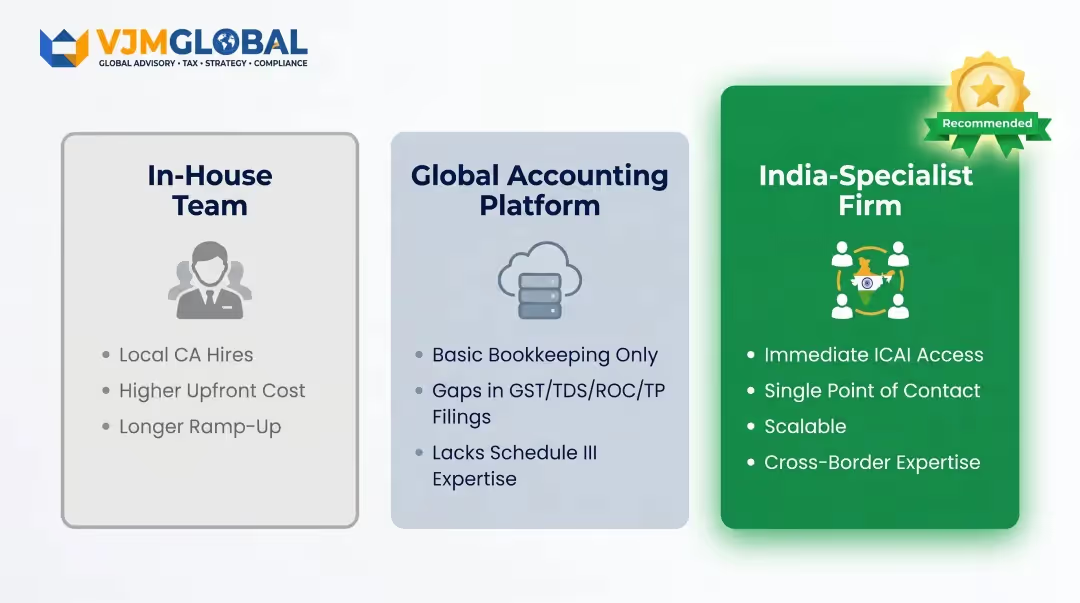
Ventajas prácticas de subcontratar a una firma especializada en la India:
Para las empresas de Singapur que desean este tipo de apoyo especializado, VJM Global —con más de 30 años de experiencia ayudando a empresas extranjeras a operar en la India— cubre todo el paquete de cumplimiento: coordinación de auditorías legales, documentación de precios de transferencia (Formulario 3CEB), presentaciones ante el ROC (AOC-4 y MGT-7), registro de GST, declaraciones de TDS y asesoramiento sobre DTAA.
El equipo también ayuda a configurar los sistemas contables para cumplir con los requisitos del Anexo III y gestiona el ajustado calendario de declaraciones que va desde el cierre del ejercicio el 31 de marzo hasta la temporada de declaraciones de octubre-noviembre.
Antes de que su entidad india comience a operar, siga estos pasos:
Antes de comenzar las operaciones:
La India utiliza las Normas de Contabilidad de la India (Ind AS), que son normas convergentes con las NIIF formuladas por el ICAI y notificadas por el Ministerio de Asuntos Corporativos. Las empresas utilizan un sistema de contabilidad de devengo por partida doble, y los estados financieros deben prepararse en el formato del Anexo III prescrito por la Ley de Sociedades de 2013.
Las normas Ind AS están en gran medida convergidas con las NIIF, pero no son idénticas. India ha introducido excepciones específicas: contabilidad de coberturas (solo se permite la NIIF 9), propiedades de inversión (solo modelo de costo) y ganancias por compras a precio de ganga (a través de ORI). Las empresas de Singapur familiarizadas con las NIIF no deben asumir una equivalencia total.
El año fiscal estatutario de India va del 1 de abril al 31 de marzo, según lo dispuesto por la Sección 2(41) de la Ley de Sociedades de 2013. Esto se aplica a todas las empresas registradas en India, incluidas las filiales de empresas de Singapur, lo que genera ciclos de presentación de informes duales para las empresas matrices.
Sí, India y Singapur tienen un ADI que reduce significativamente las tasas de retención de impuestos: dividendos al 10%, intereses al 15% (10% para pagos bancarios) y regalías/honorarios por servicios técnicos al 10%. Para reclamar los beneficios, las entidades de Singapur deben proporcionar un Certificado de Residencia Fiscal de IRAS y presentar el Formulario 10F electrónicamente en el portal fiscal de India.
Sí. La Ley de Sociedades de 2013 exige que las auditorías estatutarias sean realizadas por un contador público (Chartered Accountant) o una firma de contadores registrados ante el ICAI; un auditor con licencia de Singapur no puede cumplir esta función. Ciertas presentaciones de cumplimiento, incluido el Informe del Contador sobre Precios de Transferencia (Formulario 3CEB), también requieren la certificación de un contador público.
La falta de presentación a tiempo del Formulario AOC-4 (estados financieros) o del Formulario MGT-7 (declaración anual) conlleva una sanción inicial de 10 000 ₹ más 100 ₹ por cada día de incumplimiento continuo, con un tope de 200 000 ₹ (2 lakh) para la empresa y 50 000 ₹ por director. Los directores deben pagar las multas con fondos personales, y el incumplimiento subyacente debe subsanarse independientemente del pago.