


Companies are under more scrutiny for revenue recognition in the modern, fast-changing financial reporting world. For U.S. businesses across industries, complying with ASC 606, the current revenue recognition standard, is critical to ensuring accurate financial statements and maintaining stakeholder trust.
ASC 606, introduced by the Financial Accounting Standards Board (FASB), provides a consistent framework that replaces diverse industry-specific guidelines with a unified, principle-based approach. By focusing on the transfer of control and performance obligations, ASC 606 enhances transparency and comparability across organizations.
In this blog, we will break down the core principles of ASC 606, walk through its five-step revenue recognition model, discuss implementation best practices, highlight common challenges, and explore how different industries apply this important standard.
ASC 606, or Accounting Standards Codification Topic 606, is a revenue recognition standard issued by the Financial Accounting Standards Board (FASB). It provides a unified framework for companies to recognize revenue from contracts with customers consistently across industries. ASC 606 replaced previous, more fragmented revenue recognition rules to improve transparency, comparability, and financial reporting accuracy.
The standard requires companies to identify contracts, determine performance obligations, establish transaction prices, allocate prices to obligations, and recognize revenue when those obligations are satisfied. This approach ensures revenue is recorded when control of goods or services is passed to the customer, reflecting the true economic activity.
Understanding ASC 606 is essential for companies to comply with U.S. GAAP, provide clear financial information, and meet regulatory and investor expectations.
Revenue recognition sets the rules for when a business can count income from its sales, not just when money is received, but when the product or service is actually delivered. This approach prevents companies from inflating their financial health by recording sales too early and ensures earnings reflect real business performance.
By applying these standards consistently, companies provide clearer, more reliable financial reports. This transparency helps investors and stakeholders compare businesses fairly, building trust and reducing the risk of financial misrepresentation. Ultimately, revenue recognition grounds financial statements in the actual value created for customers and the marketplace.
Now that you understand what ASC 606 and revenue recognition are, let’s explore ASC 606 compliance matters for businesses.
Here are key reasons why ASC 606 compliance matters for businesses:
Next, let’s explore the core principles and the five-step revenue recognition model.
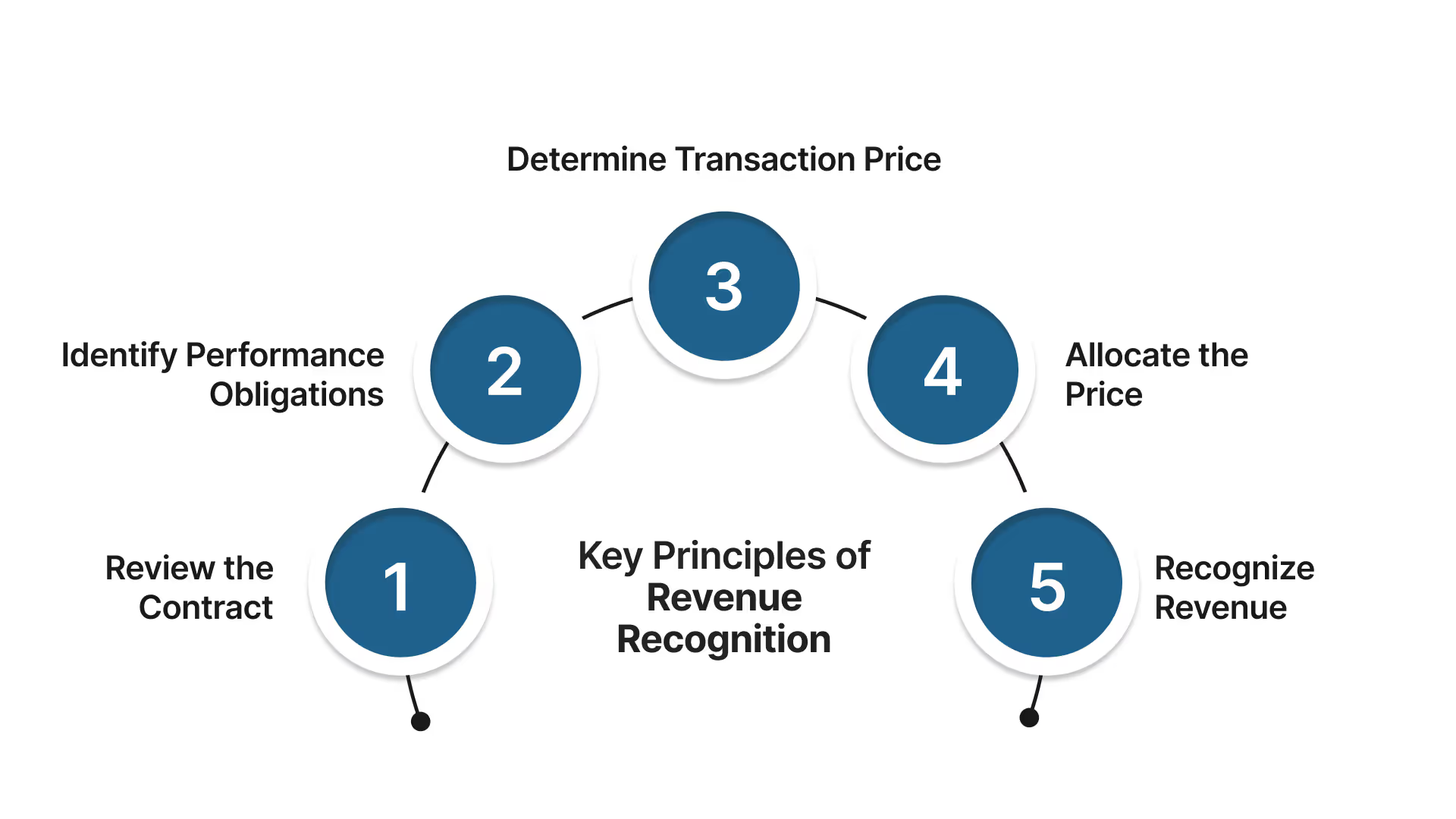
ASC 606 is built around five key steps that guide how companies recognize revenue consistently and accurately. These steps ensure revenue reflects when control of goods or services passes to customers, providing a clear picture of financial performance.
Before any revenue can be recorded, a valid contract must exist between the company and the customer. This is not just a simple signed document; it’s a legally enforceable agreement where both parties clearly understand their rights and obligations.
Look for:
Una vez establecido el contrato, identifique todos los bienes o servicios distintos prometidos al cliente, denominados obligaciones de desempeño.
Un bien o servicio es distinto si:
Calcule el monto total que la empresa espera recibir por la transferencia de bienes o servicios, excluyendo los impuestos recaudados para terceros.
Esto no siempre es sencillo y puede incluir:
Si existen múltiples obligaciones de desempeño, asigne el precio total de la transacción de manera justa a cada una basándose en sus precios de venta independientes.
Considere:
Los ingresos se reconocen cuando el cliente obtiene el control de los bienes o servicios prometidos, ya sea a lo largo del tiempo o en un momento determinado.
El reconocimiento de ingresos a lo largo del tiempo se aplica cuando:
Ahora que comprende la metodología de cinco pasos para el reconocimiento de ingresos, veamos ejemplos prácticos para adoptar la norma ASC 606 en su empresa.
Lea también: Comprender las normas de reconocimiento de ingresos según los US GAAP
La implementación de la norma ASC 606 requiere un análisis cuidadoso y una documentación clara de los contratos, las obligaciones de desempeño y los precios de las transacciones. A continuación, se presentan ejemplos para ilustrar los pasos clave de la implementación:
La implementación de la norma ASC 606 puede ser compleja, pero seguir estas mejores prácticas puede garantizar una transición fluida y un cumplimiento continuo:
Collect and organize all active contracts in a single system. This makes it easier to analyze terms, identify performance obligations, and ensure consistent application of the five-step model across business units. A central repository also helps surface high-risk contracts quickly during audits.
Accurate allocation of transaction prices depends on defensible SSPs. Companies should base SSPs on historical sales data when possible and establish clear, documented estimation techniques when observable prices aren’t available. Regularly reviewing these assumptions keeps allocations aligned with market conditions.
Contract amendments are one of the most complex aspects of ASC 606. Set policies for when a modification should be treated as a new contract versus a revision of the existing one. Consistent application avoids restatement risk and ensures recognition matches the economic substance of the change.
Revenue recognition isn’t just a finance issue. Sales, legal, operations, and finance must align on how obligations are structured and documented. Creating cross-functional review teams helps prevent conflicts between what is promised to customers and what is recorded in financials.
Areas such as variable consideration, overtime recognition, and allocation methods require significant judgment. Documenting assumptions, rationale, and calculations creates a defensible audit trail. Strong documentation also ensures new team members can apply policies consistently.
Automation tools in ERP or specialized revenue recognition software reduce manual effort, but their value lies in standardization and accuracy. Automated allocation, recognition schedules, and reporting help finance teams focus on analysis instead of repetitive tasks, while also improving audit readiness.
ASC 606 is not a one-time exercise. Regular training ensures staff understand evolving interpretations and company policies. Periodic internal reviews of recognition practices, disclosures, and contract terms help catch issues early and keep compliance aligned with business growth.
Effective ASC 606 implementation requires more than ticking boxes; it demands structured policies, cross-functional alignment, and continuous refinement. By treating these best practices as part of everyday operations, companies strengthen compliance and create more reliable financial reporting.
Next, let’s explore the most common obstacles companies face.
Also Read: Understanding Company Audits: Key Processes and Types
.avif)
One of the most frequent challenges is correctly defining distinct performance obligations within a contract. Bundled products or services can blur the lines, requiring careful judgment to decide what constitutes a separate obligation.
ASC 606 requires allocating the transaction price based on SSPs, which can be hard to determine for unique or highly customized offerings. Poor SSP estimates can lead to improper revenue allocation.
Handling renewals, upgrades, or changes in contract scope under ASC 606 adds complexity in determining if modifications are separate contracts or part of existing obligations.
Estimating variable considerations like discounts, bonuses, and penalties requires significant judgment, increasing room for error and audit challenges.
ASC 606 demands accurate, complete, and readily accessible data across contracts, pricing, and performance. Lack of integrated systems can cause errors and delays.
Now that you are aware of these challenges, let’s look at how VJM Global can help you with this.
VJM Global ofrece servicios de apoyo contable y de auditoría personalizados que ayudan a las empresas estadounidenses a navegar por las complejidades de los requisitos de reconocimiento de ingresos de la norma ASC 606 con confianza y precisión. Su profundo conocimiento tanto de las normas GAAP de EE. UU. como de los marcos normativos de la India les permite ofrecer soluciones offshore que cumplen con altos estándares de cumplimiento y, al mismo tiempo, reducen los costos operativos.
En VJM Global, proporcionamos a las empresas estadounidenses servicios de externalización contable, apoyo a la auditoría y cumplimiento de la norma ASC 606. Nuestros equipos offshore ofrecen una gestión de cumplimiento eficiente mientras optimizan los costos.
Simplifique el reconocimiento de ingresos según la norma ASC 606 y garantice un cumplimiento sin problemas. Contacte a VJM Global hoy mismo para construir una base sólida para una información financiera precisa y el crecimiento.
Identify the contract, identify performance obligations, determine transaction price, allocate price, and recognize revenue when obligations are satisfied.
Yes, ASC 606 is a revenue recognition standard issued by the FASB under U.S. GAAP.
Se alinean con los cinco pasos de la norma ASC 606: identificación del contrato, obligaciones de desempeño, precio de la transacción, asignación y reconocimiento de ingresos.
Identificar el contrato, determinar las obligaciones de desempeño, medir el precio de la transacción y reconocer los ingresos una vez cumplidas las obligaciones.




