%20(3).avif)
Muchas pequeñas empresas privadas que operan en Singapur creen erróneamente que ser pequeñas implica no tener requisitos de información financiera. Esta idea equivocada conduce a un costoso incumplimiento ante la Autoridad Reguladora de Contabilidad y Empresas (ACRA), lo que puede resultar en multas de entre 300 y 3000 dólares de Singapur por presentación tardía o falta de presentación.
Desde 2015, la Ley de Sociedades de Singapur ha proporcionado una vía clara para la exención de auditoría bajo la Sección 205C a través del concepto de "pequeña empresa", que reemplazó al antiguo marco de "empresa privada exenta". El marco actualizado amplía el alivio de auditoría a una gama más amplia de empresas privadas, incluidas aquellas con accionistas corporativos, manteniendo al mismo tiempo las obligaciones de cumplimiento esenciales.
Según la Sección 205C de la Ley de Sociedades de 1967, las "pequeñas empresas" que califican están exentas de auditorías obligatorias de sus estados financieros por parte de un auditor externo. Esta disposición se introdujo a través de la Ley de Sociedades (Enmienda) de 2014 y entró en vigor para los ejercicios financieros que comenzaron a partir del 1 de julio de 2015.
Distinción clave: La exención de auditoría significa que no necesita un auditor, no que no tenga obligaciones financieras. Las empresas exentas aún deben:
Estas obligaciones permanecen vigentes independientemente del estado de auditoría. Donde el nuevo marco sí cambia las cosas es en la elegibilidad: el régimen de "pequeña empresa" es considerablemente más amplio que su predecesor, el régimen de "empresa privada exenta" (EPC):
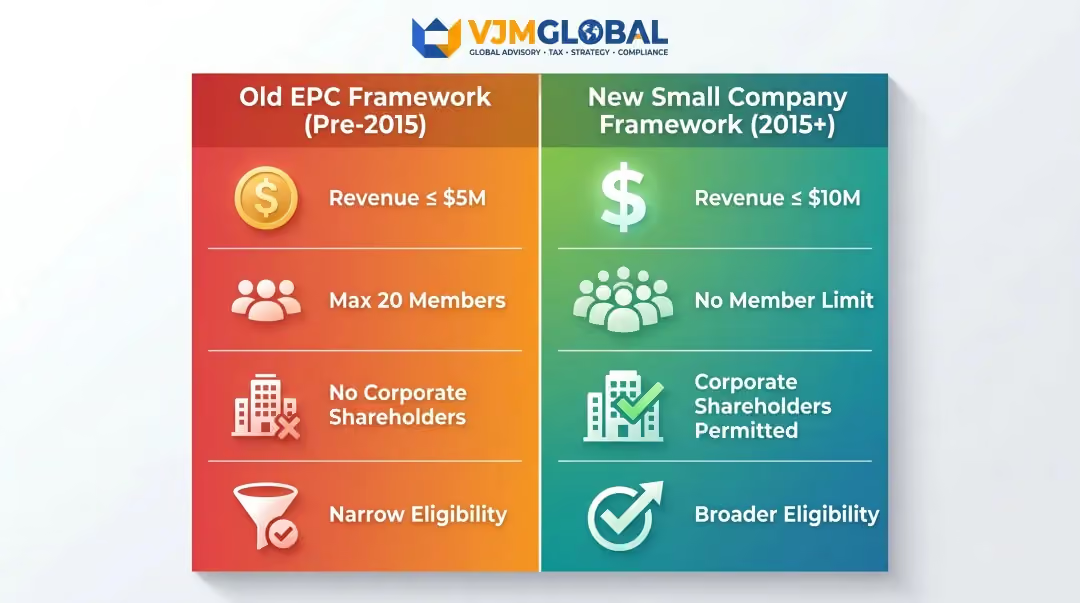
Entender qué marco normativo se aplica a su empresa es el primer paso; el siguiente es confirmar si cumple con los criterios de elegibilidad.
La elegibilidad para la exención de auditoría depende de cumplir dos condiciones generales:
El Decimotercer Anexo de la Ley de Sociedades define estos umbrales:
Los contratistas y trabajadores a tiempo parcial no cuentan para el límite de empleados.
Una empresa califica si cumple con cualesquiera dos de los tres criterios anteriores para los dos ejercicios financieros consecutivos anteriores.
Ejemplo:
En este escenario, la empresa supera el umbral de activos en ambos años, pero se mantiene por debajo de los límites de ingresos y empleados, por lo que cumple los requisitos para la exención de auditoría a partir del ejercicio fiscal 2024.
Las empresas nuevas (con menos de dos años de antigüedad) no cuentan con un historial de dos años para evaluar. En su lugar, cumplen los requisitos si satisfacen 2 de los 3 criterios dentro del mismo ejercicio financiero actual.
Ejemplo:
Una empresa constituida en marzo de 2023, cuyo primer ejercicio financiero finaliza en diciembre de 2023, puede optar a la exención de auditoría para el ejercicio 2023 si cumple los umbrales durante ese primer año. Una vez que la empresa completa su segundo ejercicio financiero, se aplica la regla estándar de revisión de dos años.
Si su empresa forma parte de un grupo corporativo, ya sea como matriz o filial,la calificación individual no es suficiente. Todo el grupo también debe calificar como "grupo pequeño" sobre una base consolidada.
Un grupo pequeño debe cumplir 2 de los 3 criterios siguientes (ingresos, activos, empleados) calculados sobre una base consolidada durante los dos ejercicios financieros consecutivos inmediatamente anteriores, utilizando:
El término "Grupo" sigue las normas contables de Singapur, independientemente de si se presentan estados financieros consolidados. Una filial en Singapur debe evaluar su pertenencia al grupo bajo estas definiciones, incluso si nunca prepara cuentas consolidadas.
Esta norma afecta directamente a las empresas extranjeras. Si una empresa de Singapur es filial de una matriz extranjera grande, el tamaño del grupo global determina la elegibilidad, no solo las finanzas de la entidad local.
Ejemplo:
Una pequeña filial en Singapur con ingresos de 3 millones de S$ y 10 empleados es propiedad total de una empresa matriz en el Reino Unido con ingresos de 50 millones de £ y 200 empleados. Aunque la entidad de Singapur cumple fácilmente los tres criterios individualmente, no puede solicitar la exención de auditoría porque el grupo consolidado no alcanza los umbrales.
Las entidades de propiedad extranjera deben evaluar el tamaño del grupo desde el principio; esperar hasta el momento de la auditoría para descubrir la falta de elegibilidad es un error costoso.
El estatus de exención de auditoría es no es permanente—debe reevaluarse anualmente en función del rendimiento actual.
Una empresa conserva su estatus de pequeña empresa a menos que:
Ejemplo de pérdida de estatus:
Incumplir los criterios durante solo un año no conlleva la pérdida del estatus. La empresa debe incumplirlos durante dos años consecutivos para que finalice la exención de auditoría.
Las empresas que pierden el estatus de pequeña empresa pueden volver a calificar automáticamentePara ello, deben cumplir las mismas condiciones que los calificaron originalmente:
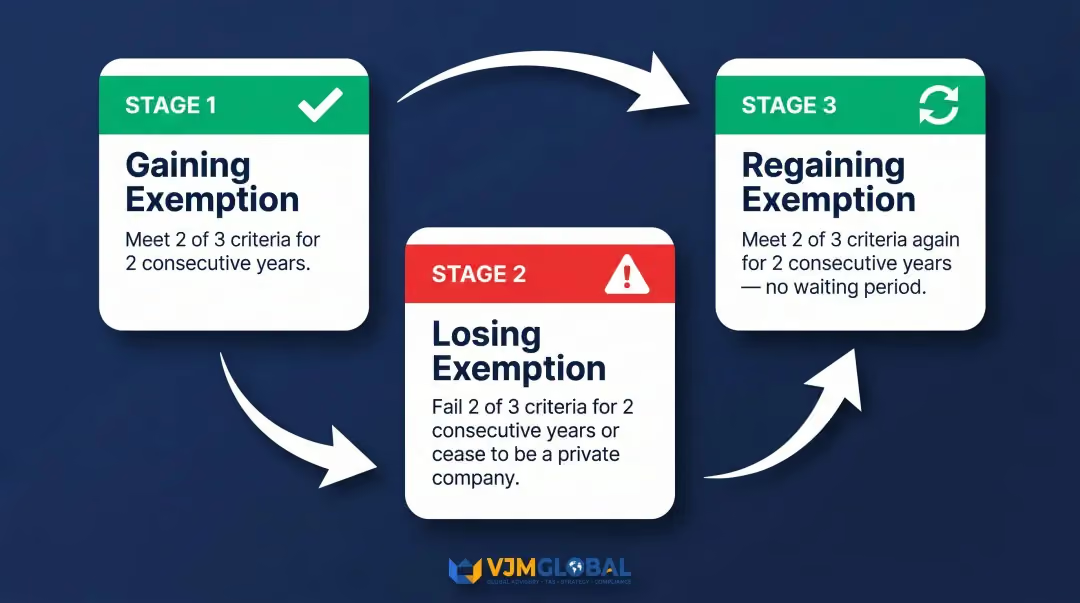
No existe penalización por haber perdido la exención anteriormente. Una vez que se vuelven a cumplir los criterios durante dos años consecutivos, la empresa recupera su estatus de exención a partir del ejercicio financiero siguiente.
La exención de auditoría reduce los costes, pero no elimina las responsabilidades financieras fundamentales.
Mantener registros contables adecuados (Sección 199)
Los registros deben reflejar con precisión la situación financiera de la empresa y permitir la preparación de estados financieros conformes.
Preparar estados financieros según las SFRS
Todas las empresas exentas deben preparar estados financieros anuales que cumplan con las Normas de Información Financiera de Singapur (SFRS), incluso sin la firma de un auditor.
Presentar las declaraciones anuales ante ACRA
Las declaraciones anuales deben presentarse a tiempo. Dependiendo del tamaño y la estructura de la empresa, es posible que los estados financieros deban enviarse en formato XBRL:
En virtud de la Sección 205D, el Registrador puede exigir a una empresa que, de otro modo, estaría exenta, que presente estados financieros auditados si lo considera necesario. Esto significa:
Para las empresas extranjeras que gestionan entidades en múltiples jurisdicciones —como una matriz en el Reino Unido con filiales tanto en Singapur como en la India—, mantener una contabilidad coherente y conforme a la normativa resulta especialmente complejo. VJM Global ayuda a las empresas a navegar precisamente por esta complejidad. Con más de 30 años de experiencia en contabilidad y cumplimiento transfronterizo, la firma ayuda a las empresas internacionales a gestionar su contabilidad, cumplir con los plazos de presentación de informes y alinear los informes de las filiales con las normas de todo el grupo, especialmente para clientes con operaciones en la India junto con otras jurisdicciones.
Incluso cuando una empresa cumple los requisitos para la exención de auditoría, ciertas situaciones pueden seguir exigiéndola, ya sea de forma voluntaria o por obligación contractual:
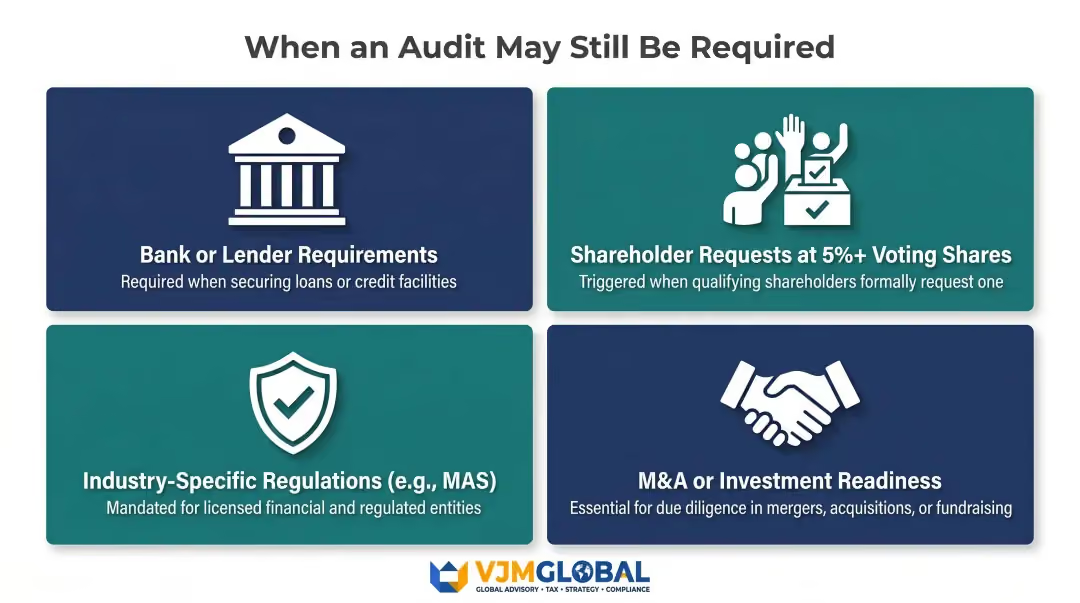
Importante: En estos casos, la exención de auditoría sigue siendo técnicamente aplicable; la empresa decide auditarse por motivos comerciales o contractuales, no porque la ley lo exija. Los directores deben mantener un registro escrito de los motivos por los que se encargó la auditoría voluntaria, especialmente si los accionistas o prestamistas lo solicitan.
No automáticamente, pero las empresas recién constituidas (con menos de dos años de antigüedad) pueden calificar si cumplen con 2 de los 3 criterios de tamaño en un solo ejercicio financiero, sin necesidad de contar con dos años consecutivos de historial.
Sí. A diferencia del antiguo marco de empresas privadas exentas, el concepto de pequeña empresa no impone restricciones sobre el tipo de accionistas. Los accionistas corporativos no descalifican a una empresa para la exención de auditoría.
La empresa debe gestionar una auditoría legal a partir del ejercicio financiero en el que deje de cumplir los requisitos. Sin embargo, puede volver a calificar en un año posterior si cumple los criterios nuevamente durante dos años consecutivos.
No. La exención de auditoría solo elimina el requisito de contar con un auditor. Las empresas deben seguir preparando estados financieros de acuerdo con las normas SFRS y presentar sus declaraciones anuales ante la ACRA a tiempo.
Sí. Según la Sección 205D, el Registro puede ordenar a una empresa, aunque esté exenta, que presente cuentas auditadas cuando lo considere oportuno; por lo tanto, es recomendable mantener registros limpios y completos independientemente de su estatus de exención.
No. La exención bajo la Sección 205C es exclusivamente para empresas privadas. Las empresas públicas deben auditar sus cuentas independientemente de su tamaño.