Are you planning to expand your water business operations into India but are unsure where to begin? India presents one of the world's fastest-growing packaged water markets, offering significant cost advantages and access to skilled manufacturing professionals. The Indian market offers significant opportunities, with per capita consumption being much lower than the global average, highlighting vast untapped potential.
Knowing how to start a water business in India requires understanding complex regulatory frameworks, licensing requirements, and investment considerations that can determine your venture's success. This blog will guide you through how to start a profitable water business in India, including compliance requirements, licensing procedures, investment planning, and market opportunities.
Quick Summary
Mandatory licenses include FSSAI, BIS (ISI), pollution control board clearance, and trade license.
Profit margins typically range between 15% and 30% for established operations.
Market demand grows consistently due to poor municipal water quality and health awareness.
Premium positioning and bulk supply channels offer higher profitability opportunities.
The Industry Overview: A Booming Essential
India's packaged water market presents a significant growth opportunity, driven by increasing health awareness, urbanization, and the growing demand for safe drinking water. As the industry continues to grow, new businesses entering the market can capitalize on this demand.
Market Size: The packaged water market in India was valued at a significant amount in 2022, with an anticipated steady growth rate until 2027, expected to reach a substantially higher value by the end of the forecast period.
Demand Drivers: Factors such as inadequate public water infrastructure, rising disposable incomes, urbanization, and increasing health consciousness are driving the demand for packaged water.
Market Leaders:Major brands such as Bisleri, Aquafina, Kinley, and Himalayan lead a significant portion of the market share by volume.
Recession-Proof Industry: The water business in India benefits from recession-proof characteristics as consumers prioritize health and safety, regardless of economic conditions.
The water industry's growth potential in India is vast, with rising demand and opportunities for new businesses to gain a foothold. As consumption increases, entrepreneurs can tap into an ever-growing market, creating substantial profits while contributing to public health and safety.
With the market landscape clear, let’s move on to a structured roadmap that shows exactly how you can establish and grow your water business in India.
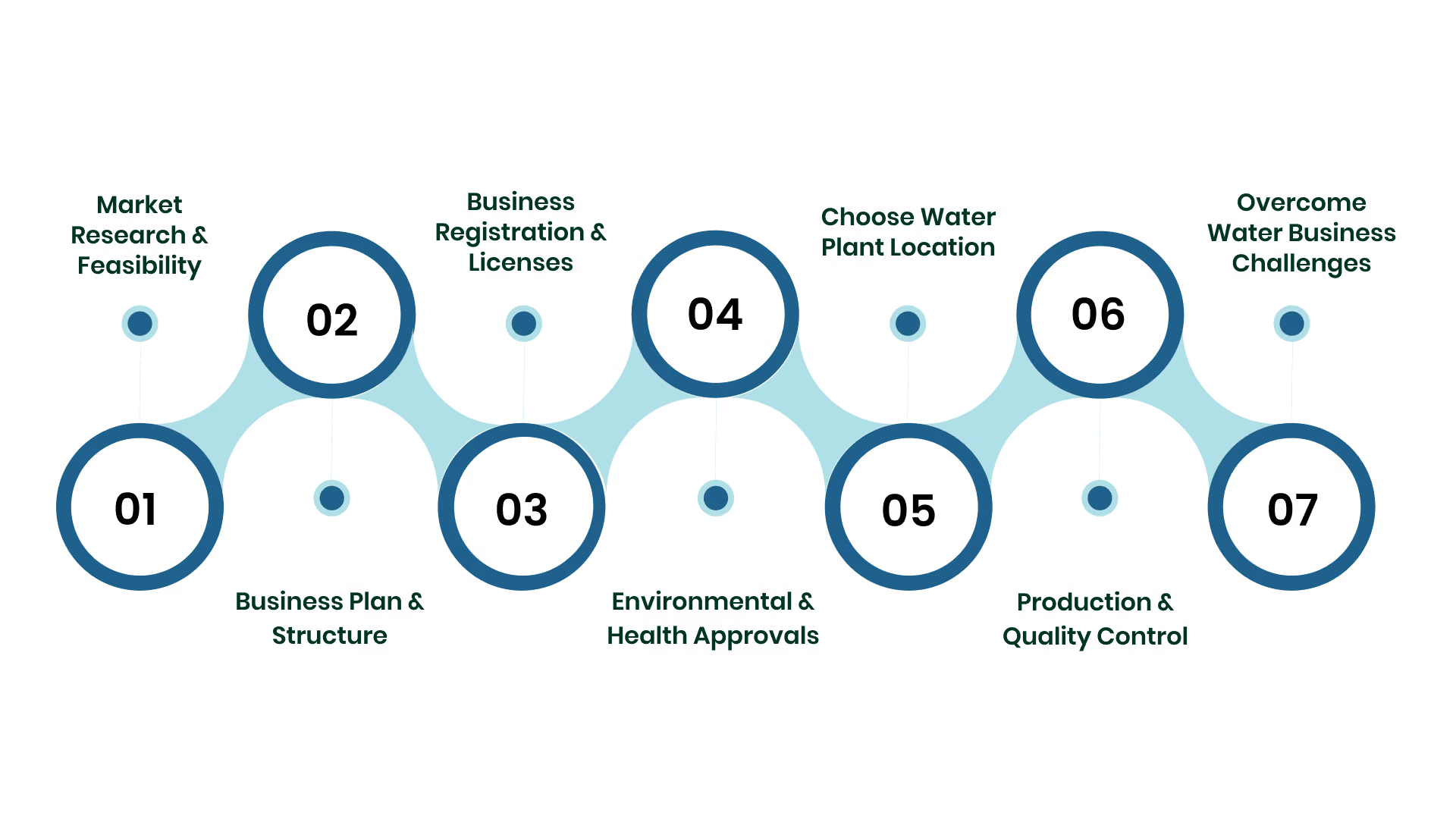
Step-by-Step Guide on How to Start a Water Business in India
Starting a water business in India offers tremendous potential, given the country's growing demand for clean, packaged drinking water. However, it's crucial to follow a structured approach to understand legal requirements, operational challenges, and market competition. Throughout this section, you'll find important steps on how to start a water business in India, including market research and plant setup.
Step 1: Conduct Market Research & Feasibility Study
Before jumping into the water business, start by understanding the market dynamics.
Assess the Market Demand: India's water market is diverse, with urban areas generally having a higher demand for packaged drinking water due to poor water quality in public systems. Rural areas may have a more limited market, but opportunities exist depending on location.
Understand Consumer Preferences: Different water products (mineral, purified, flavored) cater to various segments of the population. Research which product suits your target demographic, whether it's health-conscious consumers looking for mineral water or younger buyers seeking flavored options.
Evaluate Distribution Channels: Identify the most effective ways to distribute your product. Retail, direct-to-consumer, and institutional sales (like to schools, offices, and restaurants) are all viable routes.
Regulatory Landscape: Familiarize yourself with the local regulations governing the water business. Understanding the legal framework from the start will save you time and money down the line.
Step 2: Develop a Comprehensive Business Plan & Structure
With an understanding of the market, the next step is to define your business structure and draft a detailed plan.
Decide on Your Business Structure: The Indian government allows you to create a sole proprietorship, partnership, or private limited company. Each has different implications in terms of ownership, liability, and tax. A private limited company offers limited liability protection, which is ideal for business growth and attracting investors.
Prepare Your Business Plan: Your business plan should be detailed and include financial projections, marketing strategies, and an outline of how you will handle operational expenses.
Set Financial Goals and Timelines: Having clear financial targets and a timeline for your business goals is essential. This includes when you plan to break even, how much revenue you anticipate generating, and your strategies for scaling up.
Step 3: Register Your Business and Secure Necessary Licenses
India has specific regulatory requirements for setting up a business. Ensuring compliance with local laws is important to avoid penalties or delays.
Registro mercantil: Debe registrar su empresa ante el Ministerio de Asuntos Corporativos. Esto reconocerá oficialmente a su compañía como entidad legal. Si decide formar una sociedad de responsabilidad limitada privada, deberá presentar los Estatutos Sociales (AOA) y el Acta Constitutiva (MOA).
Registro de GST: Para vender agua envasada, debe obtener un registro de GST si su facturación anual supera los 4.000.000 $. El registro de GST le permitirá aplicar impuestos a sus ventas y reclamar créditos por sus compras.
Licencia FSSAI: La FSSAI (Autoridad de Seguridad Alimentaria y Normas de la India) emite licencias para empresas relacionadas con la alimentación, incluidas las compañías de agua. Esta certificación garantiza que su agua cumple con los estándares de salud y seguridad requeridos.
Certificación BIS: Necesitará la certificación de la Oficina de Normas de la India (BIS) para confirmar que su agua envasada cumple con las normas de seguridad. Sin esto, no puede vender legalmente agua embotellada en la India.
Paso 4: Obtener las aprobaciones ambientales y sanitarias necesarias
Además del registro mercantil, debe cumplir con las normativas ambientales y las directrices de seguridad del agua para garantizar que su planta opere legalmente.
Aprobación de la Junta de Control de la Contaminación: Dado que la purificación del agua implica la gestión de residuos y productos químicos potencialmente nocivos, necesitará la aprobación de la Junta de Control de la Contaminación a nivel estatal. Esto certificará que los procesos de su planta cumplen con las normas ambientales, incluida la eliminación de residuos.
Permiso de fuente de agua: Debe obtener permiso para utilizar agua de una fuente específica, como aguas subterráneas o un río. El gobierno local o las autoridades pertinentes deben aprobar la fuente de agua para garantizar que sea sostenible y cumpla con los estándares de calidad.
Paso 5: Seleccionar la ubicación ideal para su planta de agua
La ubicación de su planta es crucial tanto para su éxito operativo como para su sostenibilidad a largo plazo.
Proximidad a fuentes de agua: Elija una ubicación cercana a fuentes de agua fiables, ya sean aguas subterráneas, lagos o ríos, para minimizar los costes de transporte y garantizar un acceso constante al agua bruta.
Enlaces de transporte y distribución: Una planta debe estar ubicada estratégicamente cerca de redes de transporte clave, como autopistas, para facilitar el flujo de materias primas y productos terminados. La proximidad a centros de distribución y minoristas es vital para mantener una entrega eficiente.
Consideraciones de costes: Los costes de terreno y servicios públicos varían según la ubicación. Los centros urbanos pueden ofrecer un mejor acceso a los mercados, pero conllevan mayores costes de terreno y operativos. Las zonas rurales pueden tener costes más bajos, pero podrían plantear desafíos logísticos. Equilibre su estructura de costes con la demanda potencial del mercado al elegir su ubicación.
Paso 6: Establecer sistemas de producción y control de calidad
El siguiente paso es configurar el proceso de producción una vez que su empresa haya sido registrada y se haya asegurado la ubicación de la planta.
Tecnología de purificación de agua: Invierta en los sistemas de purificación de agua más modernos, incluyendo ósmosis inversa (RO) y filtros UV, para garantizar que su producto cumpla con los estándares de seguridad. Implemente controles de calidad estrictos para mantener la pureza y el sabor del agua.
Equipos de envasado: Elija equipos de embotellado y envasado que se adapten a su escala de producción. Los sistemas automatizados son ideales para operaciones a gran escala, mientras que los sistemas semiautomáticos pueden ser más rentables para plantas más pequeñas.
Procesos de garantía de calidad: Establezca sistemas de control de calidad para asegurar que su agua cumpla constantemente con las normas reglamentarias. Las pruebas periódicas de contaminantes, así como garantizar el pH y el contenido mineral adecuados, son esenciales para la confianza del consumidor.
Paso 7: Superar los desafíos comunes en el negocio del agua
Aunque el negocio del agua ofrece un potencial considerable, se enfrentará a varios desafíos en el camino. Identificar estos desafíos desde el principio y contar con estrategias para mitigarlos es esencial.
Cumplimiento normativo: La India tiene regulaciones estrictas que rigen la industria del agua, y garantizar su cumplimiento puede ser complejo. Contratar a consultores legales y empresariales, como VJM Global, puede ayudarle a cumplir con estos requisitos de manera eficiente.
Abastecimiento y purificación de agua: Encontrar una fuente de agua fiable y sostenible puede ser difícil en algunas regiones. Además, mantener estándares de purificación de alta calidad es esencial para generar confianza en el consumidor.
Competencia: La industria del agua en la India es competitiva, con grandes actores como Bisleri y Aquafina dominando el mercado. Para diferenciar su producto, céntrese en la calidad, los mercados de nicho y productos de agua únicos, como agua alcalina o saborizada.
Need an India subsidiary? We handle FDI approvals, taxation, and local compliance.
Tras los pasos de configuración, deberá obtener una lista detallada de documentos y licencias que protejan tanto a su empresa como a sus consumidores.
Documentos y licencias necesarios para establecer un negocio de agua rentable
Para una entrada exitosa en el negocio del agua en la India, es necesario gestionar un entorno estrictamente regulado que proteja tanto a los consumidores como al medio ambiente. A medida que planifica sus operaciones, obtener las licencias y la documentación adecuadas es crucial para el cumplimiento legal, el acceso al mercado y la confianza del consumidor. Estos son los principales:
Licencia FSSAI: Esta licencia es ahora el registro obligatorio clave para cualquier empresa involucrada en la producción, envasado o venta de agua potable envasada en la India. El tipo de licencia depende del tamaño de su empresa, y el cumplimiento implica realizar pruebas periódicas de cada lote de agua en un laboratorio aprobado por la FSSAI para verificar que está libre de contaminantes.
Permiso de fuente de agua: La extracción y el uso legal del agua requieren permisos de las autoridades correspondientes. La Autoridad Central de Aguas Subterráneas (CGWA) emite Certificados de No Objeción (NOC) para el uso de aguas subterráneas en operaciones comerciales. No obtener estos permisos puede dar lugar a sanciones o cierres operativos. Comprender las leyes locales de abastecimiento de agua y mantener los permisos exactos son pasos vitales.
Aprobación de la Junta de Control de la Contaminación: Su planta de tratamiento y embotellado de agua debe cumplir con las normas ambientales supervisadas por la Junta Estatal de Control de la Contaminación (SPCB). Bajo las reglas de Responsabilidad Extendida del Productor (EPR) regidas por la Junta Central de Control de la Contaminación, puede obtener una licencia de Consentimiento para Establecer y Consentimiento para Operar.
Estas aprobaciones reglamentarias garantizan colectivamente que su negocio de agua opere dentro de los marcos legales, salvaguardando la salud pública y el medio ambiente. Además, las licencias comerciales municipales, las licencias de fábrica (cuando corresponda) y el registro de GST completan su lista de verificación de cumplimiento y permiten funciones comerciales fluidas. Mantener una documentación meticulosa y renovar estas licencias a tiempo evita interrupciones y genera confianza en su marca.
El cumplimiento legal sienta las bases, pero su rentabilidad dependerá en última instancia de elegir la combinación adecuada de productos de agua para su público objetivo.
Product portfolio decisions significantly impact profitability when determining how to start a water business in India. Market segmentation allows targeting different customer needs and price points effectively.
1. Packaged Drinking Water
Standard packaged drinking water represents the largest market segment with consistent demand across all consumer categories. This category uses treated water from any source, processed through filtration, UV treatment, and reverse osmosis to meet safety standards. Pricing remains competitive with thin margins but high volume potential.
2. Natural Mineral Water
Natural mineral water commands premium pricing due to its underground source origin and minimal processing requirements. This category requires BIS certification under the IS 13428 standard and a source location near natural mineral springs. Limited availability of suitable sources restricts market entry but offers higher profit margins.
3. Functional and Flavored Water
Functional water products, such as alkaline, electrolyte-enhanced, and vitamin-fortified options, are experiencing the fastest growth in the market. These products target health-conscious consumers willing to pay premium prices for perceived benefits. Development requires additional research, testing, and marketing investments.
4. Packaging Size Variations
Multiple packaging sizes address different consumption occasions and customer segments. Small bottles (200ml-500ml) serve individual consumption and travel needs. Medium bottles (1-2 liters) target household usage. Large containers (5-20 liters) supply offices, schools, and institutional customers with better profit margins.
5. Distribution Channel Strategy
Retail distribution through grocery stores, supermarkets, and convenience stores requires competitive pricing and strong brand recognition. Bulk supply to offices, hotels, hospitals, and educational institutions generally offers higher profit margins compared to retail supply. Direct-to-consumer delivery services capture growing demand for convenience.
Each product category comes with its own complexities, so knowing how to tackle industry-wide challenges becomes critical to staying competitive.
Overcoming Common Challenges
Overcoming obstacles is essential when learning how to start a water business in India. By understanding common challenges, you can develop effective strategies to address them
1. Regulatory Compliance Complexity
Multiple agencies govern different aspects, creating coordination challenges. The Central Ground Water Authority controls water extraction. State Pollution Control Boards manage environmental compliance. BIS handles quality certification while FSSAI oversees food safety. Hiring an experienced consultant or legal advisor helps to efficiently manage regulatory requirements.
Solution:
Maintain detailed documentation for all applications and approvals.
Establish relationships with regulatory officials through professional interactions.
Plan extended timelines for license acquisitions, accounting for potential delays.
2. Market Competition and Brand Building
Established brands dominate market share, making entry challenging for newcomers. Competing solely on price erodes margins and sustainability. Focus on differentiation through superior quality, customer service, or specialized products. Target underserved segments like rural markets or specific institutional customers.
Solution:
Invest in local marketing and community engagement.
Build trust through consistent quality and reliable supply.
Consider private labeling arrangements with retailers to gain market access.
3. Quality Control and Consistency
Maintaining consistent product quality requires robust systems and procedures. Establish comprehensive testing protocols covering physical, chemical, and microbiological parameters. Train staff on quality control procedures and documentation requirements.
Solution:
Implement preventive maintenance schedules for equipment reliability.
Source quality raw materials from reputable suppliers.
Maintain backup systems for critical equipment to prevent production disruptions.
4. Financial Management and Cash Flow
High initial investment combined with competitive pricing creates cash flow pressures. Seasonal demand variations affect revenue predictability. Manage working capital efficiently through inventory optimization and customer payment terms.
Solution:
Diversify customer base across retail and bulk segments.
Negotiate favorable payment terms with suppliers.
Maintain adequate credit facilities for seasonal fluctuations and growth opportunities.
While you can handle these challenges independently, partnering with experts like VJM Global can simplify compliance and financial management.
From bookkeeping to audit prep, we handle it all. Discover how outsourcing can work for you.
How VJM Global Supports Businesses in Opening a Profitable Water Business in India
Setting up a water business in India requires more than just regulatory approvals and plant establishment. You need reliable partners to manage company incorporation, compliance, and financial operations effectively. That's where VJM Global plays a crucial role for businesses, including US entrepreneurs, looking to capitalize on India's growing water market.
Specialized Support You Gain with VJM Global:
Company Setup and Registration: VJM Global assists with entity incorporation, preparing foundational documents like the Memorandum and Articles of Association, and obtaining essential statutory IDs, including PAN, TAN, and GST registration.
Regulatory Compliance: The team manages critical license applications such as FSSAI approvals and Pollution Control Board clearances. They ensure timely compliance with water sourcing permissions and environmental regulations, reducing legal risks.
FEMA and RBI Adherence: VJM Global handles foreign exchange reporting and filings associated with foreign direct investment (FDI), such as FC-GPR filings, ensuring adherence to RBI guidelines and avoiding compliance penalties.
Accounting and Tax Compliance: Their experts process end-to-end accounting outsourcing for the water business, including bookkeeping, payroll, tax filing, and month-end reconciliations compliant with both Indian and international accounting standards.
Audit Support: VJM Global prepares audit schedules, performs internal reconciliations, and supports statutory audits to ease your operational burden and help maintain transparency.
Why This Matters to You as a Business Owner:
You avoid building large in-house teams in India by utilizing VJM Global's experienced professionals.
Outsourcing compliance and accounting can reduce operational costs by 40-50%, freeing capital to invest in product development, marketing, or expansion.
You gain peace of mind knowing your Indian venture aligns with both Indian regulatory requirements and international best practices, reassuring investors, auditors, and partners.
If you are exploring how to start a water business in India, VJM Global offers proven expertise and end-to-end support to help you at every stage of the company setup, compliance, and financial management process. With this partnership, you can focus on strategic growth while maintaining compliance and smooth operations in India.
Starting a profitable water business in India offers access to a rapidly expanding market driven by health awareness, urban growth, and infrastructure gaps. Success depends on selecting the right business structure, obtaining all necessary licenses such as FSSAI, securing environmental compliance, and investing wisely in plant setup. Maintaining regulatory and financial compliance is critical for smooth operations and longevity.
¿Está listo para establecer su negocio de agua en la India con un soporte operativo y de cumplimiento confiable? VJM Global ayuda a las empresas con el registro de sociedades, informes de divisas bajo FEMA/RBI, cumplimiento de GST, externalización de contabilidad y soporte de auditoría.
Asóciese con VJM Global para ingresar con confianza al mercado del agua en la India y concentrarse en expandir su negocio. Programe una llamada con VJM Global hoy mismo y dé el primer paso hacia una estructura empresarial rentable, eficiente y que cumple con todas las normativas.
Preguntas frecuentes
P. ¿Cuánto cuesta iniciar un negocio de agua en la India?
R. El costo de iniciar un negocio de agua en la India puede oscilar entre 1 y 2 millones de rupias para una planta a pequeña escala. Las operaciones más grandes pueden costar más de 5 millones de rupias, dependiendo de la ubicación, el equipo y la escala.
P. ¿Qué licencias se requieren para un negocio de agua en la India?
R. Las licencias clave incluyen la certificación BIS, la aprobación FSSAI, el permiso de fuente de agua y la aprobación de la Junta de Control de Contaminación.
P. ¿Puedo iniciar un negocio de agua con una inversión limitada?
R. Sí, es posible empezar poco a poco con una planta de purificación de agua a pequeña escala. Durante la fase inicial de su negocio, puede gestionar los costos mientras su empresa crece.
P. ¿Cómo puedo asegurar que mi negocio de agua cumpla con todas las regulaciones legales y financieras en la India?
R. Garantizar el cumplimiento de las normativas locales, como la obtención de las licencias y certificaciones necesarias, es fundamental. Trabajar con expertos como VJM Global puede ayudarle a gestionar los requisitos legales y financieros, asegurando que su negocio avance por el camino correcto a medida que crece.
P. ¿Cómo puedo hacer que mi negocio de agua destaque en la India?
R. Ofrecer un empaque único, una calidad de agua superior y una estrategia de marketing dirigida le ayudará a diferenciar su marca en este mercado competitivo.
VJM Global
Descubre opiniones de expertos, consejos y novedades de VJM Global


%20(15).avif)
.avif)




