

.avif)
Foreign Direct Investment (FDI) from South Korea into India reached approximately USD 400 million in FY 2024, marking a notable increase over the previous year. This growth reflects the rising confidence Korean companies have in India’s manufacturing strength, digital economy, and long-term market potential.
To support this momentum, the Indian government, through the Korea Plus Programme, offers Korean investors dedicated, end-to-end facilitation for entering and operating in India. From resolving regulatory issues to coordinating with state authorities, Korea Plus has become a critical bridge between Korean businesses and Indian opportunities.
This guide explains the complete process of business setup in India for South Korea, covering everything from selecting the right entity to understanding the National Single Window System (NSWS) for FDI approvals, ensuring compliance, and building a sustainable presence in India.
Korea Plus es una unidad dedicada a la facilitación de inversiones establecida en junio de 2016 mediante una iniciativa bilateral entre los gobiernos de la India y Corea del Sur. Actúa como una agencia de apoyo de ventanilla única para las empresas surcoreanas que exploran o amplían su presencia en la India.
While Korea Plus offers hands-on assistance with market entry, registrations, and operational guidance, Korean investors still need to understand the broader regulatory framework that governs foreign investment in India. The foundation of this framework lies in India’s FDI rules and the Foreign Exchange Management Act (FEMA), which define what sectors are open, under what conditions, and how investments must be structured.
Foreign direct investment (FDI) is the foundation of most market entry routes in India. South Korean investors can own up to 100% equity in several sectors, including manufacturing, retail, and IT services, under what’s called the automatic route. This means no prior government approval is required, only post-filing with the Reserve Bank of India (RBI).
Sin embargo, sectores como la defensa, las telecomunicaciones y los medios de comunicación entran en la ruta de aprobación, que anteriormente implicaba múltiples ministerios y presentaciones manuales. Para simplificar esto, la India lanzó el Sistema Nacional de Ventanilla Única (NSWS) en 2025, una importante reforma digital en su proceso de IED.
The NSWS acts as a centralised platform for securing approvals and licenses across ministries and states. Investors can:
While it doesn’t replace RBI filings or sectoral compliance, NSWS has replaced the earlier Foreign Investment Facilitation Portal (FIFP) and now handles approval-based FDI sectors end-to-end.
With FDI rules clarified and approval channels streamlined through NSWS, Korean investors can begin the formal setup process.
The following guide walks you through each phase from choosing the right legal structure to securing tax registrations, injecting capital, and ensuring compliance. Each step is tailored to the practical needs of Korean businesses entering India in 2025.
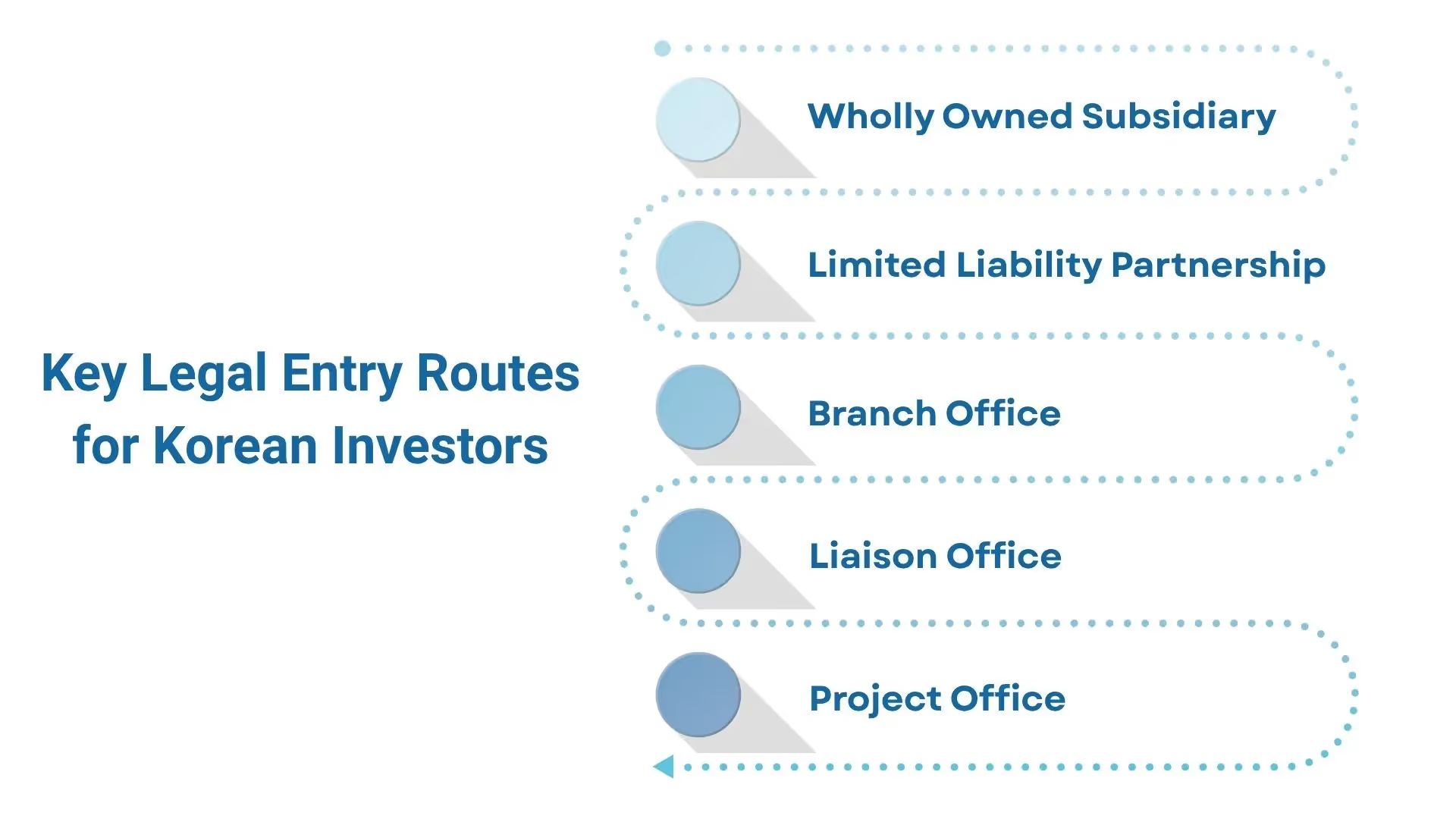
Under India’s Foreign Exchange Management Act (FEMA) and FDI policy, foreign investors, including South Korean businesses, are not permitted to directly set up sole proprietorships or general partnerships. Instead, they must operate through legally recognized structures that comply with India’s foreign investment framework.
The appropriate structure depends on sector eligibility, FDI route, tax treatment, liability protection, and long-term business objectives. Below are the most common entry vehicles available to South Korean investors planning to register operations in India.
A Private Limited Company is the most common structure for Korean firms in India, which allows 100% FDI under the automatic route in most sectors. According to the Korea Trade Investment Promotion Agency (KOTRA), about 88% of all Korean subsidiaries established in India are wholly-owned, while approximately 11.3% are joint ventures.
LLP is a flexible model combining corporate and partnership features. FDI is allowed only in sectors under the automatic route without restrictions.
Used to conduct specific business activities such as R&D, export/import, or technical services. No incorporation required, but RBI approval is mandatory.
A non-commercial office for coordination and promotion purposes. Cannot engage in sales or revenue-generating activities.
A temporary office set up to execute a specific contract in India. Typically used by engineering or infrastructure firms.

Once the legal structure is chosen, setting up a business entity in India involves a defined sequence of filings and document submissions. This is a crucial phase of business setup in India for South Korean companies, covering legal registration, tax IDs, digital infrastructure, and capital setup.
This process is governed by the Ministry of Corporate Affairs (MCA) and other regulatory bodies.
Start by reserving your company’s name on the MCA portal using the RUN (Reserve Unique Name) service. You can submit up to two names along with a brief justification. If approved, the name is reserved for 20 days.
Apply for Digital Signature Certificates (DSCs) for each director—these are used to sign documents electronically. Foreign directors must also obtain Director Identification Numbers (DINs), which can be filed through the SPICe+ form.
Prepare all required Korean company documents in English, duly notarized and apostilled. This includes:
Using the SPICe+ integrated form, submit the incorporation documents digitally signed with DSCs. This form includes Memorandum and Articles of Association (MoA and AoA), PAN, TAN, and optional GST. After approval, the company will receive its Certificate of Incorporation, along with PAN, TAN, and a unique Company Identification Number (CIN).
After incorporation, open a current account with an AD Category-I bank in India. Provide incorporation documents, KYC details, and a board resolution authorizing signatories.
Capital must be remitted from Korea through SWIFT with the purpose marked as “subscription to share capital.” The inward remittance must be reported to the RBI via Form FC-GPR within 30 days of allotting shares.
VJM Global helps Korean investors move from planning to execution, coordinating every stage of incorporation, regulatory registration, and FDI readiness, so you can start operations in India without delays or compliance gaps. Contact Now.
Once the initial capital is credited to the Indian company’s bank account, it must be reported to the Reserve Bank of India (RBI) under the Foreign Exchange Management Act (FEMA). Korean investors should be aware that even routine capital infusion is governed by mandatory filings, and delays here can affect downstream expansion, future FDI rounds, or dividend repatriation.
Key Compliance Actions Required:
Non-compliance with these FEMA regulations can lead to penalties, difficulties in repatriating profits, or bottlenecks in raising future capital. RBI scrutiny during repatriation or M&A transactions is strict and expects all filings to be traceable.
Once your company is incorporated, Korean businesses must meet a combination of central and state-level obligations. These include both financial controls and local labor regulations, which are essential for day-to-day operations and long-term scalability.
Also Read: Cost of Registration of a Company in India | Quick, Easy and Affordable Process
Deploying South Korean nationals to manage or support Indian operations brings immigration, tax, and employment compliance into focus. Companies must ensure that expatriates have the correct visas, valid employment contracts, and are properly registered with Indian authorities.
If you're looking for hands-on assistance, VJM Global supports Korean and other foreign companies with end-to-end FEMA compliance, RBI filings, and regulatory governance. Our India-based CA team helps you stay on track with automated calendars, post-investment documentation, and accurate, on-time submissions, so your expansion runs without compliance delays.
Also Read: How Foreign Investors Can Set Up a Company in India: Legal and Tax Guide
Completing the formal setup is only the first milestone. To succeed long-term, Korean companies must also adapt to India’s business environment, operational realities, and cultural nuances. The following playbook outlines what to expect on the ground and how leading Korean firms have navigated these challenges successfully.
South Korean companies entering India face a large, complex market, but one that rewards those who prepare with local knowledge, operational flexibility, and smart sequencing. Here’s how Korean investors can approach market entry and growth effectively.
Korean companies that have scaled successfully in India tend to adopt a phased, ground-level strategy:
La India no es un mercado para la replicación rápida; recompensa la localización, la paciencia y la ejecución sobre el terreno. Los inversores coreanos que adoptan una planificación flexible, forman equipos indios sólidos y aprovechan los canales bilaterales están mejor posicionados para el éxito a largo plazo.
Los inversores surcoreanos aportan a la India no solo capital, sino también experiencia tecnológica y visión empresarial global. A cambio, la India ofrece acceso a un mercado grande y en crecimiento, una fuerza laboral calificada y un sólido ecosistema de servicios y manufactura.
Con la estructura adecuada, claridad normativa y conocimiento local, las empresas coreanas pueden construir una presencia duradera en la India.
VJM Global apoya a los inversores extranjeros en cada etapa de la configuración y el cumplimiento. Si está planeando su entrada en la India, reserve una cita gratuita con nuestros expertos para recibir orientación personalizada y apoyo en la ejecución local.




