


When businesses provide products or services on credit, they create accounts receivable, money owed by customers. The key question is whether accounts receivable are debit or credit.
In this blog, we’ll explore why accounts receivable is considered a debit and its impact on your company's financial statements. You’ll also learn about the journal entries that affect accounts receivable and how to handle them properly.
Accounts receivable refers to the outstanding amounts of money a company is owed by its customers for goods or services that have been provided but not yet paid for. These amounts are classified as a current asset on the balance sheet, which means they are expected to be collected within the company’s operating cycle, typically within a year.
The importance of accounts receivable lies in its direct impact on cash flow. Efficient management of accounts receivable ensures that a company can maintain liquidity and support day-to-day operations without relying excessively on external funding.
In the accounting equation, Assets = Liabilities + Equity, accounts receivable falls under assets because it represents money that will be received by the business in the near future. Since accounts receivable is classified as a current asset, it contributes to the total value of the company’s assets, which in turn impacts the company’s financial health and ability to meet its obligations.
Accounts receivable plays a crucial role in a company’s cash flow. By keeping track of amounts due, companies can forecast future cash inflows and manage their working capital more effectively. A high accounts receivable balance might indicate that the business is experiencing delays in collecting payments, which could lead to cash flow issues.
Therefore, monitoring and managing accounts receivable is vital for sustaining smooth operations, especially for small businesses that need to maintain a steady flow of cash.
Now that we understand the importance of accounts receivable and its impact on the accounting equation and cash flow, let’s explore how accounts receivable is classified in accounting.
Must Read: Advantages of Partnering with an Outsourced Accounting Firm for Foreign Companies
Understanding the basics of debit and credit in accounting is essential to maintaining accurate financial records. These fundamental concepts ensure that the accounting equation remains balanced and that every transaction is properly recorded.
Double-entry accounting is a core principle in the accounting world, where every financial transaction affects at least two accounts. This system ensures that the accounting equation, Assets = Liabilities + Equity, remains balanced after every transaction. For example, when a business makes a sale on credit, both the Accounts Receivable (asset) and Revenue (equity) accounts are impacted, maintaining balance.
In double-entry accounting, debits and credits serve distinct purposes, and understanding their rules is crucial to proper record-keeping.
These rules ensure that every transaction keeps the accounting system balanced, and each debit has an equal and opposite credit.
Every account in the accounting system has a “normal balance” based on its classification as an asset, liability, or equity account:
Now that we’ve outlined the basics of debits and credits, let’s focus on a specific account, accounts receivable. So, is accounts receivable a debit or credit? Let’s break it down further.
Also Read: How to Choose the Right Bookkeeping Services for Your Business
When it comes to accounting, understanding whether accounts receivable is a debit or credit is a foundational concept. Since accounts receivable represents money that is owed to a business, it is classified as an asset, and like other assets, it is increased with a debit entry.
Therefore, accounts receivable is a debit.
As an asset account, accounts receivable increases when debited. When a business provides goods or services on credit, it essentially gains a future cash inflow, represented as an asset. Since assets increase with debits, the correct accounting entry is to debit the accounts receivable and credit the corresponding revenue account.
Here are two common journal entries that demonstrate the debit classification of accounts receivable:
These entries reflect the movement of money in and out of the business, ensuring that the company's books are balanced and accurate.
The movement of accounts receivable has a direct impact on the balance sheet and income statement. On the balance sheet, the increase in accounts receivable shows that the company has an outstanding amount due. Once the payment is received, the reduction in accounts receivable will shift the funds into cash or bank accounts.
Additionally, on the income statement, the credit entry to sales revenue increases the company's total income, contributing to net profit.
With a solid understanding of how accounts receivable is treated in journal entries, let’s look at some of the common journal entries involving accounts receivable to see how they’re applied in real-world scenarios.
Further Read: How Legal Process Outsourcing (LPO) Is Revolutionizing Businesses
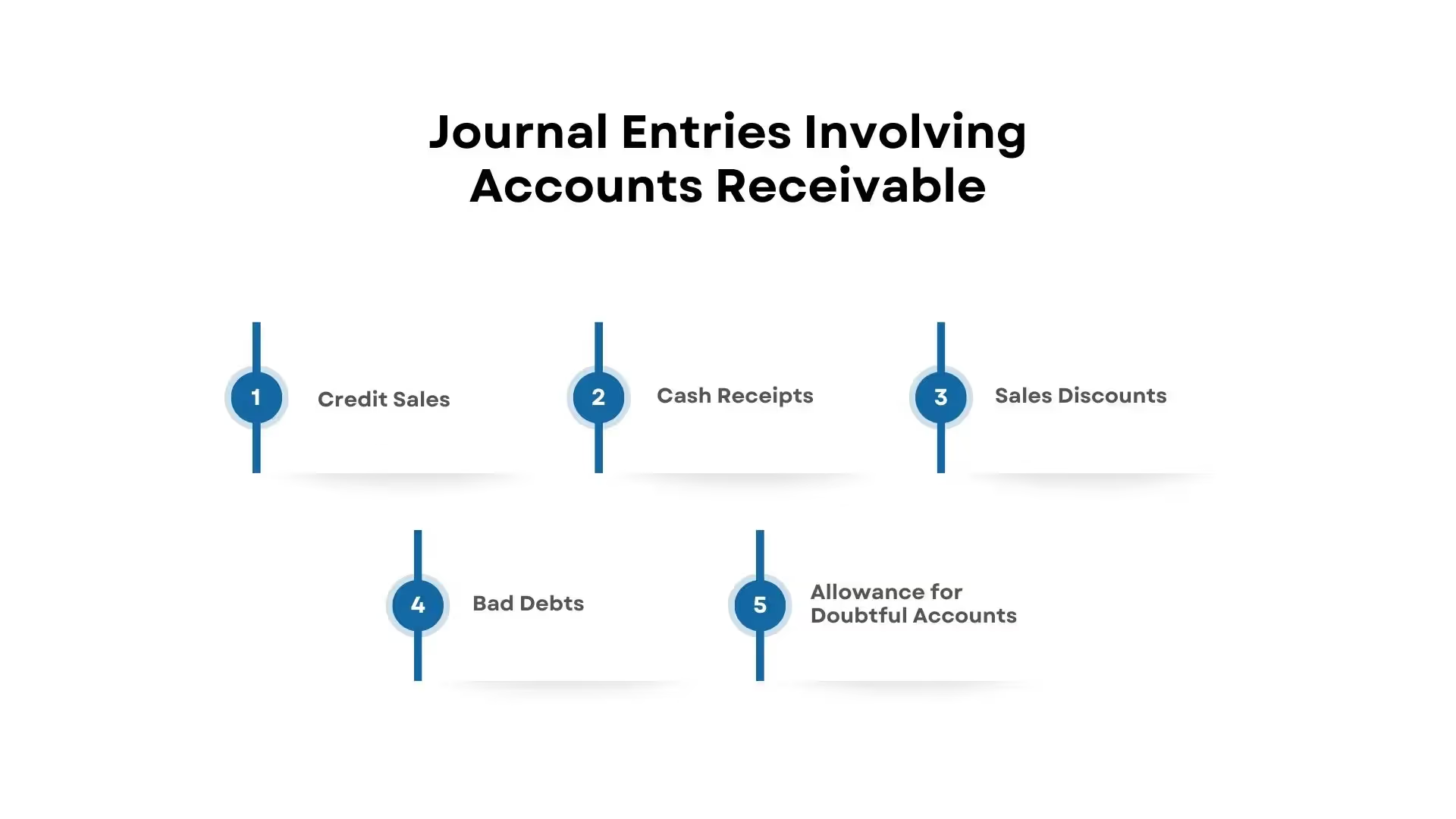
売掛金を管理する際、企業は財務諸表に影響を与えるさまざまな種類の取引を記録します。正確な記帳と財務報告を行うためには、これらの仕訳をどのように処理するかを理解することが不可欠です。以下に、売掛金に関連する一般的な仕訳を示します。
企業が商品やサービスを掛けで販売する場合、収益は認識されますが、代金はすぐには受け取りません。その際の仕訳は以下の通りです。
この仕訳は、提供した商品やサービスに対する代金が未回収であることを示し、その期間に獲得した収益を認識するものです。
顧客から支払いがあった場合、売掛金の残高が減少し、現金または預金口座が増加します。仕訳は以下のようになります。
この取引は、現金を受け取ったことを確認し、顧客に対する未回収額を減少させるものです。
早期支払いを促すため、企業は割引を提供することがよくあります。顧客がこれを利用した場合、その仕訳では支払額の減額を記録します。仕訳は以下の通りです。
例えば、顧客が1,000ドルの支払い義務がある中で、早期支払いに対して5%の割引が適用された場合、新たな売掛金は950ドルとなります。これにより、企業は提供した割引を正確に反映させることができます。
場合によっては、顧客からの代金回収が不可能になることがあります。そのような場合、企業は貸倒損失として処理します。一般的な仕訳は以下の通りです。
貸倒損失を計上することで、企業は回収不能となった代金を認識し、それに応じて帳簿を調整します。
貸倒れが発生した都度処理するのではなく、将来の貸倒れを見越して「貸倒引当金」を設定する企業も多くあります。この方法は、未回収債権を管理する上でより先を見越したアプローチとなります。仕訳は以下の通りです。
この引当金は売掛金の全体的な価値を減額するものであり、回収不能債権による将来の損失見込額を計上するものです。企業は毎年、売掛金のうちどれだけが回収不能になる可能性があるかを予測し、それに応じて引当金を調整します。
売掛金は、1年以内に回収が見込まれる企業への未収金であるため、貸借対照表上では流動資産に分類されます。これは企業の財務健全性において不可欠な要素であり、流動性や運転資本に大きな影響を与える可能性があります。
企業が顧客に商品やサービスを提供すると、未回収の請求書は売掛金として記録されます。これは近い将来に支払われる予定の金銭であり、企業の資産総額に寄与するため、資産として計上されます。
売掛金の動きは、企業のキャッシュフローと直接結びついています。売掛金の残高が高いということは、回収すべき未払い金が残っていることを意味します。回収期間が予想よりも長引くと、キャッシュフローの問題が生じ、事業運営に必要な流動資金を確保できなくなる可能性があります。
いくつかの財務比率は売掛金の額に依存します。これらの比率は、企業が売掛金をどれだけ効率的に管理しているかを評価するのに役立ち、潜在的な流動性の問題を浮き彫りにすることができます。
健全なキャッシュフローを維持し、債権管理を最適化するために専門のサービスプロバイダーがどのように役立つかをご紹介します。
私たちVJM Globalは、お客様のビジネスニーズに合わせた包括的な財務ソリューションの提供を専門としています。当社のサービスは、戦略的な洞察と専門的なアドバイスを通じて、債権管理の効率化、キャッシュフローの最適化、そして財務の安定性を確保するように設計されています。
主なサービス内容:
専門的な会計サービスをお探しなら、今すぐVJM Globalにご連絡ください。財務管理を最適化し、会計記録を万全の状態に保つお手伝いをいたします。

.avif)


