

.avif)
Between employee classifications, tax deductions, benefits management, and compliance reporting, manual payroll processing can easily consume dozens of hours each month.
This is where automated payroll processing changes the game. Automation simplifies every stage of payroll from capturing attendance to generating payslips while ensuring compliance with ever-changing federal and state regulations. It helps companies eliminate manual errors, save time on administrative tasks, and maintain complete transparency across payroll workflows.
For U.S. businesses and CPA firms, automation also supports scalable offshore payroll management. It bridges time zones, reduces costs, and guarantees compliance under both U.S. and Indian standards.
This guide explains automated payroll processing - how it works, what technology powers it, its benefits and challenges, and why automation combined with human expertise delivers the most dependable results.
Automated payroll processing refers to the use of software systems and digital workflows that handle payroll operations, salary computation, benefits, deductions, and reporting with minimal manual effort.
These systems connect HR, accounting, and tax compliance into a single automated pipeline.
Automation reduces dependence on individual staff members and ensures consistency even during high-volume processing periods such as year-end tax filings or seasonal hiring.
Having defined automated payroll processing, let’s now look at how it works step by step to streamline payroll management for companies.
Automated payroll isn’t just about pressing a button; it’s a systematic workflow that integrates data, compliance, and payments into one digital process. The following steps explain how the process unfolds:
Employee information, including salary structure, tax details, and benefits, is entered once. The system retains it securely and uses it for future cycles.
Automated time-tracking software or biometric systems sync attendance data directly to payroll. For remote teams, integration with project management or HR tools ensures accuracy.
The system calculates gross pay, deductions (tax, benefits, retirement), and net pay instantly. It automatically applies the latest federal, state, and local tax tables.
Before disbursing payments, the software cross-checks data for FICA, FUTA, and state compliance. This ensures taxes are filed correctly and on time, reducing the risk of IRS penalties.
Once validated, the system triggers direct deposits through integrated ACH systems or banking APIs. Employees receive e-payslips through secure portals.
Reports like Form W-2 summaries, tax filings, and payroll journals are stored digitally for audits and year-end reporting.
例:
A 20-person firm using Gusto or QuickBooks Payroll can process salaries for all employees in under 90 minutes compared to 8–10 hours of manual processing.
Also read: Financial Reporting Best Practices Guide
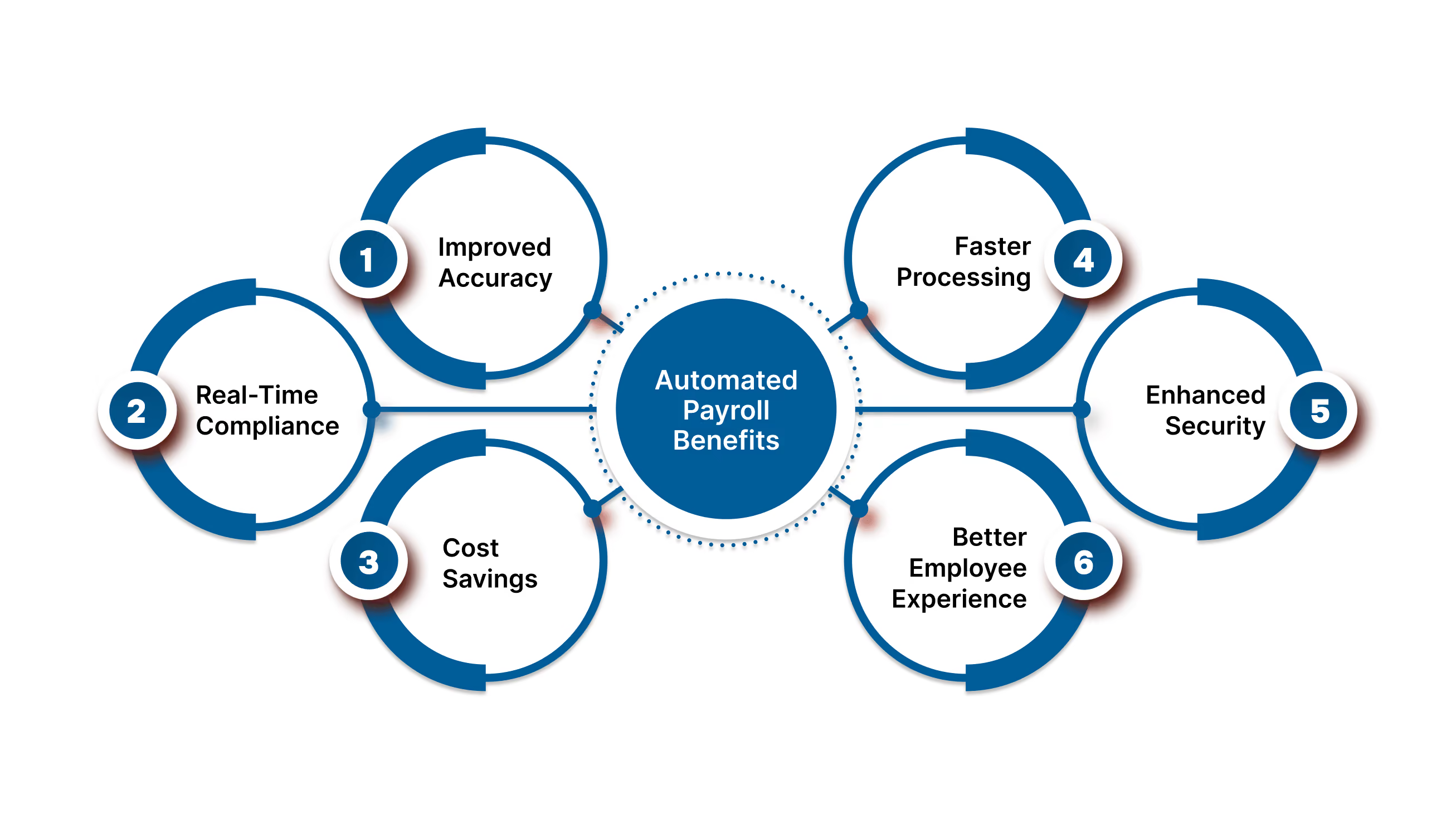
Now that we’ve broken down how automated payroll systems work, let’s explore the tangible benefits they deliver in terms of accuracy, compliance, and overall efficiency.
For companies managing teams or operations across the US, automated payroll services streamline complex, cross-border payroll tasks while ensuring full compliance with regional tax and labour laws. By integrating data, payments, and compliance into a single system, businesses can achieve greater accuracy, faster processing, and reduced administrative effort.
Also read: Top Benefits of Outsourcing Bookkeeping and Payroll
The powerful combination of cloud computing, AI, and RPA drives these benefits. Let’s look at the core technologies behind automated payroll systems that enable such efficiency and accuracy.
Automation integrates multiple technologies into one payroll ecosystem. These include:
Solutions like QuickBooks Online, Xero, ADP, and Gusto provide centralized access from anywhere, enabling CPA firms and business owners to manage payroll remotely.
AI verifies data accuracy and flags anomalies such as duplicate payments or missing deductions, reducing the need for post-processing corrections.
RPAボットは、レポート作成、照合、給与システムと会計システム間のデータ入力といった反復的なタスクを実行します。
APIは、給与システムを人事、会計、銀行の各プラットフォームと接続し、記録を同期させて常に最新の状態に保ちます。
視覚的なダッシュボードにより、給与総額、残業の傾向、納税義務、コンプライアンスに関するアラートなどを把握できます。
これらのテクノロジーは社内スタッフへの依存度を下げ、透明性を高めるとともに、企業の地理的拡大に合わせて容易に拡張することが可能です。
自動化によって社内の給与プロセスは効率化されますが、さらなる効率性と専門家による管理を求めてアウトソーシングを選択する企業もあります。両者のアプローチを比較し、組織のニーズに最適な方法を見極めましょう。
ビジネスの拡大に伴い、給与計算をいかに効率的に管理するかが戦略的な意思決定となります。自動化された給与システムはソフトウェアを活用して社内プロセスを効率化しますが、給与計算のアウトソーシングサービスは、自動化と専門家の知見を組み合わせ、エンドツーエンドの管理を実現します。両者の違いを理解することで、企業は規模やコンプライアンスの要件、米国とインド間での事業展開といった状況に応じて、最適なモデルを選択できるようになります。
企業が給与計算ソフトウェアを購入し、社内で管理します。効率的ではありますが、維持管理やコンプライアンス監視のために専門知識を持つスタッフが必要です。
第三者のプロバイダーが、自動化ツールと専任の専門家を活用して給与計算を管理します。テクノロジーと人の目による監視を組み合わせることで、最大限の信頼性を確保します。
両者の利点を融合:ハイブリッドモデル
Leading firms like VJM Global combine automation tools with professional oversight. Automation handles routine calculations, while human accountants verify accuracy, apply compliance checks, and interpret data insights.
高度な自動化ツールを活用したエンドツーエンドの給与管理パートナー、VJM Globalで、自動化と専門家による監視を両立させましょう。
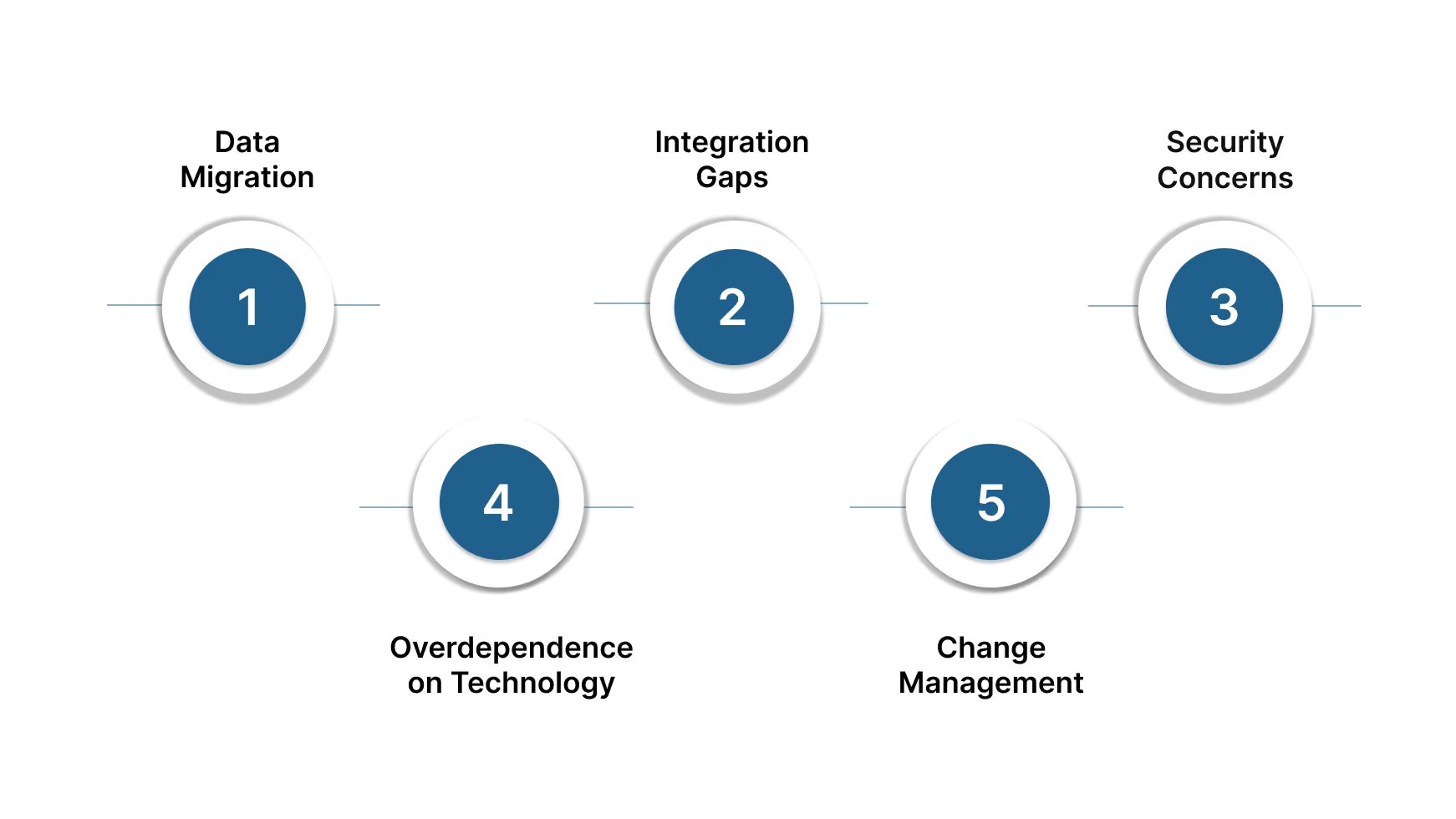
自動化は給与管理を大きく変革しますが、導入を成功させるには慎重な計画、統合、そして監視が不可欠です。ここでは、企業が自動化された給与システムを導入する際に直面する一般的な課題と、その克服方法を紹介します。
1. レガシーシステムから従業員記録や税務記録を移行するには、慎重なデータクレンジングとテストが必要です。
2. 古い人事システムやERPは、最新の給与計算APIとの互換性がない場合があります。
3. 企業は、暗号化、セキュアなサーバー、およびデータアクセスの制限を確実に実施する必要があります。
4. 自動化においては、文脈に基づいた不一致を特定するために、定期的な人間による確認を組み合わせるべきです。
5. 財務チームが新しいシステムへの適応に抵抗を示すことがあります。トレーニングと明確なドキュメントの提供が不可欠です。
ベストプラクティス:
自動化と経験豊富な会計士を組み合わせることで、テクノロジーが進化してもコンプライアンスを確実に維持できます。
統合やコンプライアンスの課題に直面している企業にとって、インドの自動給与計算アウトソーシングサービスは、自動化、正確性、そして国境を越えた専門知識をワンストップで提供する理想的なソリューションです。
導入の課題を克服するために、多くの企業がインドの自動給与計算アウトソーシングサービスを検討しています。これは、高度な自動化と専門的な管理を通じて、コスト効率とグローバルなコンプライアンスの両方を実現するソリューションです。
1. コスト削減 - 米国企業は、コンプライアンスとデータセキュリティを維持しながら、インドへのアウトソーシングにより人件費を大幅に削減しています。
2. 熟練した人材 - インドの専門家は米国会計基準(US GAAP)、IRS規則、給与関連法規に精通しており、CPA(米国公認会計士)やCA(公認会計士)の資格を持つ人材も多数在籍しています。
3. 高度なインフラ - アウトソーシング企業は、世界基準に適合したクラウドベースのシステム、RPA、AIツールを活用しています。
4. 24時間体制のワークフロー - 時差を活用することで、継続的な業務遂行と迅速な給与計算サイクルが可能になります。
5. 二重のコンプライアンス - VJM Globalは、米国の給与関連法とインドのアウトソーシング規制の両方を遵守しており、これは国境を越えて事業を展開する企業にとって極めて重要です。
あわせて読みたい: 米国向け会計サービスのアウトソーシング:なぜそれが最善の決断なのか
適切な給与計算パートナーを選ぶことは、テクノロジー、コンプライアンス、そして信頼できる専門知識のバランスを見つけることを意味します。VJM Globalは、自動化、正確性、専門家による監視に基づいたモデルを通じて、そのバランスを提供します。
要するに: VJM Globalは、テクノロジーによって強化され、専門知識によって支えられた、信頼性が高くインテリジェントで完全に準拠した給与計算自動化プロセスを実現します。
Automated payroll processing is no longer optional; it’s the foundation of efficient business management in 2025. It reduces manual effort, accelerates payments, and ensures compliance in a constantly evolving regulatory environment.
However, technology alone isn’t enough. The most effective payroll systems blend automation with human expertise, with accountants validating data, overseeing compliance, and interpreting reports.
That’s exactly what VJM Global offers: intelligent payroll automation powered by trained accountants, backed by CPA/CA oversight, and delivered securely from India to U.S. firms.
Partner with VJM Global today for your payroll and financial management and make it intelligent, compliant, and worry-free.
Implementation timelines depend on company size, data volume, and existing systems. For small firms, setup can take 1–2 weeks, while larger organizations with legacy integrations may need 4–6 weeks to complete migration, testing, and training.
Absolutely. Automated payroll systems are designed for distributed workforces, integrating remote attendance data and supporting multi-currency payments. This is especially useful for US companies managing offshore teams in India or other regions.
Most service providers offer ongoing support, including real-time monitoring, compliance updates, troubleshooting, and software upgrades. When outsourcing, firms like VJM Global also provide dedicated accountant oversight to ensure every payroll cycle runs smoothly.
Top-tier payroll systems automatically update in line with the latest IRS, FICA, FUTA, and state laws. For cross-border businesses, providers also integrate Indian tax and labour updates (TDS, PF, ESIC) to maintain dual compliance.
During migration, payroll and employee data, such as pay history, benefits, and tax records, are securely imported into the new platform. Reputed providers perform data validation, sandbox testing, and encryption to ensure zero data loss or duplication during transition.

.avif)


