Managing the finances of a car dealership is far more complex than simply balancing a checkbook, especially for those planning to set up their car dealership accounting business from the US to India. With unique challenges such as inventory management, floor plan financing, and variable revenue streams, it requires a precise approach.
Each transaction, from vehicle sales to service income, must be recorded and tracked with accuracy. The right accounting practices not only keep a dealership compliant but also provide insights into profitability, helping owners make decisions that drive growth.
In this guide, we will walk through the key elements of car dealership accounting and offer strategies to streamline operations and enhance financial stability.
Key Takeaways
Complexity of Car Dealership Accounting: It extends beyond sales to include inventory management, floor-plan financing, service income, tax compliance, and payroll.
Key Accounting Components: Focus areas include revenue tracking, expense management, inventory accounting, tax compliance, and commission tracking.
Challenges in Dealership Accounting: Common issues include inventory mismanagement, regulatory compliance, audit readiness, and cybersecurity risks.
Role of CPAs: CPAs help in tax compliance, accurate reporting, and provide strategic advice to optimize cash flow and profitability.
Importance of Accurate Financial Data: Accurate records enable informed decision-making, cash flow optimization, and business growth.
What is Car Dealership Accounting?
Car dealership accounting is the process of managing and tracking the financial transactions that happen within a car dealership. It involves recording all income and expenses, including the sale of vehicles, repairs, financing, and service work.
How does this service help? It helps dealers keep track of their profit margins, manage inventory, and follow tax laws and regulations. It also includes tasks like handling payroll, tracking loans for inventory, and everything from vehicle sales to after-sales services is accounted for correctly.
Essentially, it's about keeping the financial side of the dealership organized, transparent, and compliant.
What Are the Benefits of Accounting Practices for Your Car Dealership's Success?
Managing accounting for car dealership operations goes beyond tracking sales. It involves keeping track of commissions, warranties, and customer payments. Without proper documentation, a dealership risks losing revenue or encountering audit complications. Here’s why it’s crucial:
Accurate Inventory Management: Proper accounting helps track vehicle inventory and related costs, providing accurate valuation and management of assets.
Compliance with Regulations: Dealerships comply with tax laws, including sales tax, payroll tax, and floor plan financing, avoiding penalties and legal issues.
Cash Flow Optimization: Accounting tracks revenue and expenses, providing insights that help optimize cash flow and prevent liquidity issues.
Informed Decision-Making: Clear financial data helps dealership owners make better decisions regarding pricing, inventory, and expansion strategies.
Financial Transparency: Proper accounting is all about recording vehicle sales, repairs, and financing, thereby reducing the risk of financial discrepancies and errors.
These benefits don't materialize by chance. They stem from mastering specific financial pillars that form the backbone of every successful dealership operation.
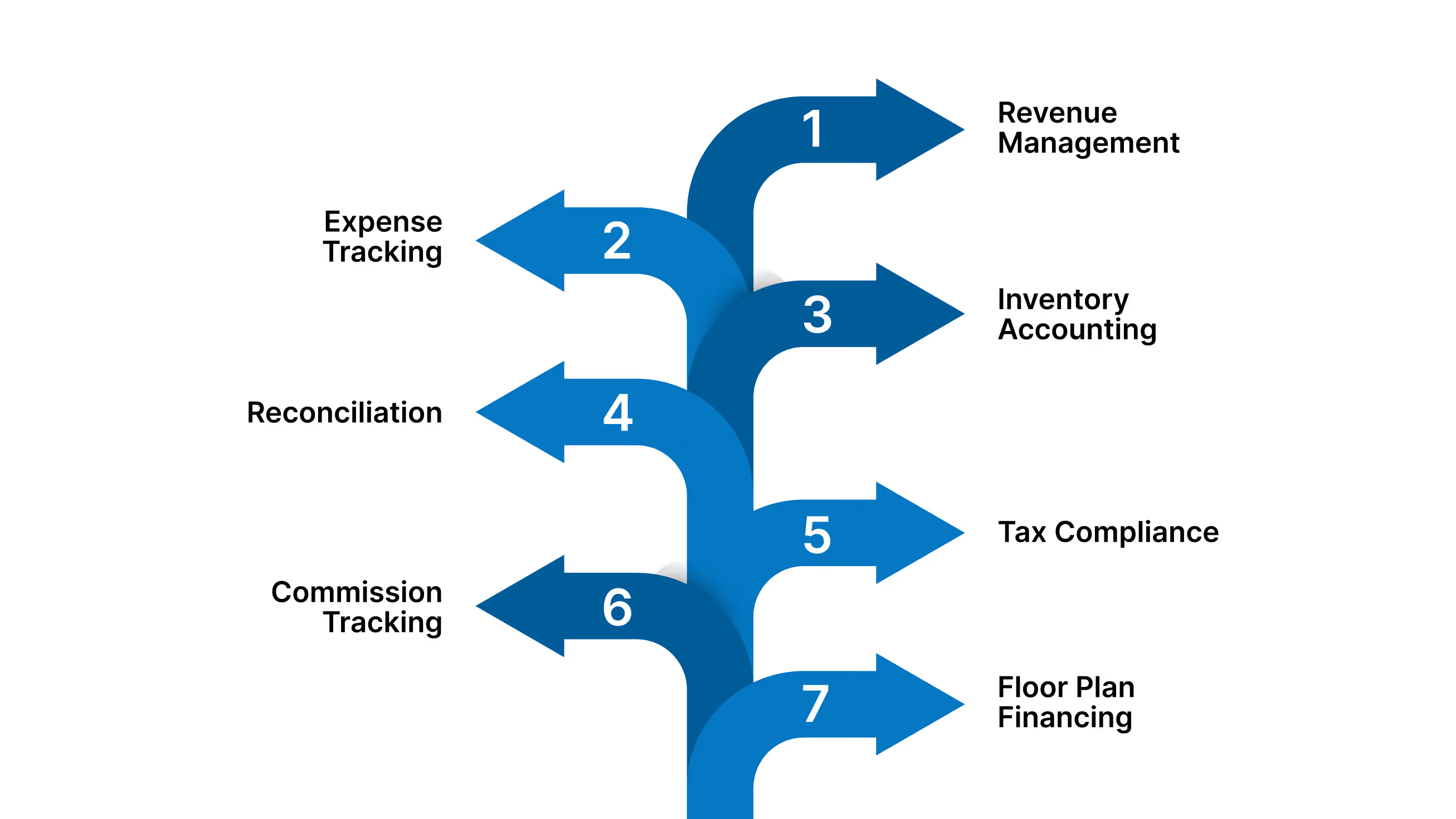
7 Main Components of Car Dealership Accounting
Each of these components plays a key role in maintaining accurate financial records, legal compliance, and providing the dealership with the information needed for growth and profitability, especially for those setting up their business from the US to India. Effective management of these areas supports a dealership’s operational efficiency and long-term success across both markets.
1. Revenue Management
Revenue management in car dealership accounting has multiple revenue streams, including vehicle sales, financing, service, and parts. Proper tracking and categorization of income are essential foraccurate financial reporting and tax compliance.
Vehicle Sales: Car dealerships earn revenue primarily from selling new and used vehicles. Each vehicle sale should be recorded at its gross profit level, factoring in any discounts, trade-ins, and financing options.
Service and Parts Sales: Many dealerships also have service departments offering repairs, maintenance, and parts. Revenue from service and parts sales is tracked separately to assess profitability
Add-ons and Financing: Dealerships also generate income from add-ons such as warranties, insurance, and extended service plans. Financing income is generated by collaborating with lenders and credit institutions.
2. Expense Tracking
Expense tracking is another key component of car dealership accounting, involving the accurate documentation of all costs that a dealership incurs during operations. Tracking expenses helps dealerships monitor their spending, optimize profit margins, and comply with tax laws.
The form must be filed within 15 days of receiving the payment, and dealerships must retain a copy for their records. Accurate and timely reporting of these transactions is quintessential to maintaining regulatory compliance and protecting the dealership from legal issues.
Meeting these complex accounting and compliance demands manually is increasingly impractical. Modern dealerships turn to technology to maintain accuracy.
Software Accounting Tools for Car Dealerships
Many car dealerships now rely on specialized accounting software to improve and minimize errors. While some opt for general accounting systems, others choose solutions designed specifically for the automotive industry.
Some widely-used tools include:
QuickBooks with dealership add-ons
These systems help manage and track crucial data, such as:
Vehicle sales
Inventory valuation
Floor plan financing balances
Employee payroll
Tax filings
Sales commissions
Departmental performance
Additionally, many of these tools integrate with dealer management systems, reducing the need for duplicate data entry.
Technology provides the tools, but maximizing their effectiveness requires implementing proven operational strategies.
Best Practices in Car Dealership Accounting
Implementing these best practices can improve the performance and precision of car dealership accounting, leading to better financial management and compliance.
Daily Bank Reconciliations: Reconciling bank accounts daily identifies discrepancies early, preventing errors and fraud.
Standardize the Chart of Accounts: Using a uniform chart of accounts across all departments simplifies financial reporting and aids in performance analysis.
Utilize Automated Accounting Software: Using dealership-specific accounting software processes reduces manual errors and provides real-time insights.
Maintain Detailed Inventory Records: Accurate tracking of vehicle inventory, like purchase costs and sales prices, supports proper cost of goods sold calculation and tax compliance.
Monitor Cash Flow Regularly: Keeping a close eye on cash flow helps in managing operational expenses, planning for future investments, and avoiding liquidity issues.
Adhere to Tax Compliance Requirements: Staying updated with tax regulations, such as filing IRS Form 8300 for cash transactions over $10,000, avoids penalties.
Train Staff on Accounting Procedures: Educating employees about proper accounting practices and internal controls reduces errors.
Implement Dual Control for Financial Transactions: Requiring two individuals to authorize financial transactions helps prevent fraud and increases accountability.
Regularly Review Financial Statements: Conducting monthly reviews of income statements, balance sheets, and cash flow statements aids in identifying trends.
Separate Personal and Business Finances: Maintaining distinct accounts for personal and business finances simplifies bookkeeping.
.
Free up your team's time, outsource accounting to VJM Global and focus on growth.
Even with best practices in place, car dealership accounting presents distinct challenges that can trip up even experienced financial professionals.
Challenges and Mistakes in Car Dealership Accounting for CPAs
Car dealership accounting presents unique complexities that can lead to significant challenges and costly mistakes if not managed properly. Below is an analysis of common issues faced by CPAs in this sector, based on industry insights:
Inventory Management Complexities: Dealerships often face cash flow issues due to overstocked inventory, leading to missed incentives and increased holding costs.
Reconciling Financial Transactions: Managing loans used to purchase inventory and tracking interest and principal separately can lead to inaccuracies in profit reporting and tax filings.
Regulatory Compliance Challenges: Dealerships must stay updated on tax laws and accounting standards, requiring continuous adaptation of practices.
Audit Preparedness: Weak accounting practices, such as incomplete reconciliations, can lead to errors and loss of stakeholder trust.
Shortage of Qualified Accounting Professionals: A major problem facing many car dealerships is hiring experienced accountants with dealership experience.
Cybersecurity Risks: Rising cybersecurity attacks on accounting and financial data necessitate careful vetting of accounting solutions for strong security features.
Inefficient Accounting Practices: Choosing manual over automatic accounting processes can stifle a dealership’s ability to increase profit, leading to time-consuming tasks and higher risks of financial losses due to fraud or human error.
Misclassification of Workers: Misclassifying workers can result in serious penalties and fines if your company gets audited by federal and state government agencies.
Inaccurate Vendor Records: Without being able to compare the amount you spend on one vendor to that of another, it can be difficult to decide which ones offer the best deals.
Underestimating Tax Deductions: Shop owners can deduct many things that they pay for, including shop furniture, computers, and office supplies, but fail to take advantage of these deductions.


.avif)



.avif)


