

.jpeg)
Making the right financial decisions is crucial for the success of your business, and one of the most significant choices you’ll face is whether to handle your bookkeeping in-house or outsource it. This decision can affect your company’s efficiency, cost management, and overall growth trajectory.
As more small to mid-sized U.S. businesses embrace cloud software, the debate between outsource bookkeeping vs in-house becomes even more pressing. In fact, the global business process outsourcing market is projected to reach USD 525.23 billion by 2030, growing at a 9.8% CAGR from 2025 to 2030, according to a Grand View Research report. Additionally, smaller organizations are more likely to outsource payroll services than larger ones, with 15% of companies with fewer than 2,500 employees outsourcing their payroll, as noted by Statista.
In this article, we'll dive into the pros and cons of both in-house and outsourced accounting, helping you understand which approach aligns best with your unique business needs. Whether you're considering keeping your accounting in-house or outsourcing it, we'll provide actionable tips and insights to guide you in making the right decision for your company's future.
In-house accounting refers to the practice of managing financial tasks such as bookkeeping, tax filings, and financial reporting with an internal team. This approach ensures your business retains full control over financial operations and allows for a more tailored accounting strategy that aligns directly with your company's goals and needs.
Having defined in-house accounting, let's explore its key advantages, especially for small and mid-sized businesses like yours.
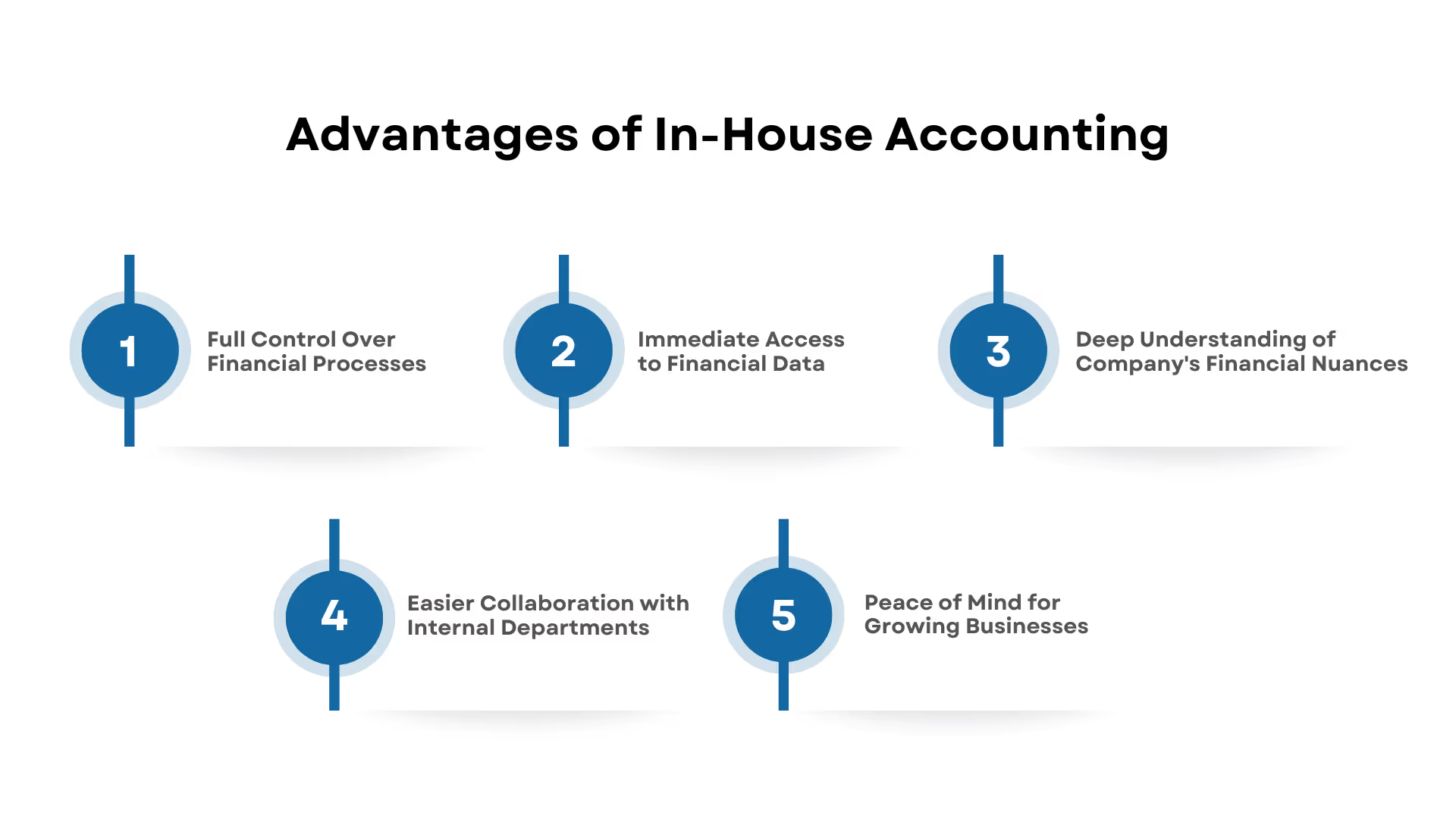
In-house accounting can provide significant benefits to businesses, particularly regarding control, accessibility, and alignment with business strategy. Here are the main advantages:
1. Full Control Over Financial Processes
Managing accounting internally gives you complete oversight of all financial activities. This control allows for a more agile approach to decision-making and helps you ensure that accounting practices remain in line with your business objectives.
2. Immediate Access to Financial Data and Reporting
One of the key benefits of in-house accounting is real-time access to financial reports. Your internal team can provide timely updates, allowing you to make faster, informed decisions without waiting on external accountants.
3. Deep Understanding of Your Company's Financial Nuances
Your in-house team becomes deeply familiar with your business's specific financial structure. This knowledge allows them to tailor financial strategies and identify opportunities or challenges more quickly, ensuring that your financial management evolves with your company.
4. Easier Collaboration with Internal Departments
In-house accountants work directly with other departments, facilitating smoother communication and collaboration. For example, your accounting team can more easily coordinate with HR on payroll or with marketing on budget tracking, improving overall efficiency across teams.
5. Customization and Alignment with Business Strategy
In-house accounting teams are able to adjust financial strategies to directly support your business goals. Whether budgeting, tax planning, or forecasting, having an internal team allows you to modify strategies as your business evolves.
With these clear advantages, it's also important to consider the potential drawbacks of in-house accounting.
While the benefits of in-house accounting are evident, there are several challenges to keep in mind. These can impact your business as it grows and evolves:
1. Higher Costs (Salaries, Benefits, and Overhead)
Running an in-house accounting department can be costly. Besides salaries, businesses incur additional costs such as benefits, training, office space, and equipment. These expenses can add up, especially for small businesses with limited budgets.
2. Limited Expertise and Knowledge Gaps
Your in-house team may have a strong grasp of your company's financial operations but might lack the specialized expertise that external accountants bring. Outside professionals can offer higher knowledge for complex financial tasks like tax optimization or regulatory compliance.
3. Time Spent on Recruitment, Training, and Retention
Hiring and retaining qualified accountants takes time and resources. Recruitment, training, and maintaining a stable in-house team can be a drain on business resources, particularly in a competitive job market.
4. Limited Scalability as Your Business Grows
As your business expands, so will its financial management needs. Scaling an in-house accounting team to handle increased complexity requires additional investment, which can be challenging for small to mid-sized businesses with limited resources.
5. Potential for Inefficiencies Due to Internal Constraints
In-house teams may face internal constraints that limit their ability to perform efficiently. These limitations could be due to staffing issues, lack of specialized tools, or competing priorities within the company, leading to slower response times or errors in financial reporting.
While in-house accounting provides control and direct integration with your business, it also comes with increased costs and challenges in scalability. Now, let's look at how outsourcing accounting tasks might compare and whether it could be a more efficient solution for your business.
Outsourced accounting refers to hiring an external firm to handle your business’s financial responsibilities, such as bookkeeping, payroll, and tax filings. This method provides businesses with access to expertise without the need for a full-time, in-house team. It's especially popular among small to mid-sized companies using cloud software like QuickBooks, Xero, or Gusto, offering a flexible and cost-effective way to manage finances. As you weigh your options, understanding the pros and cons of outsourced accounting is crucial for deciding which method suits your business.
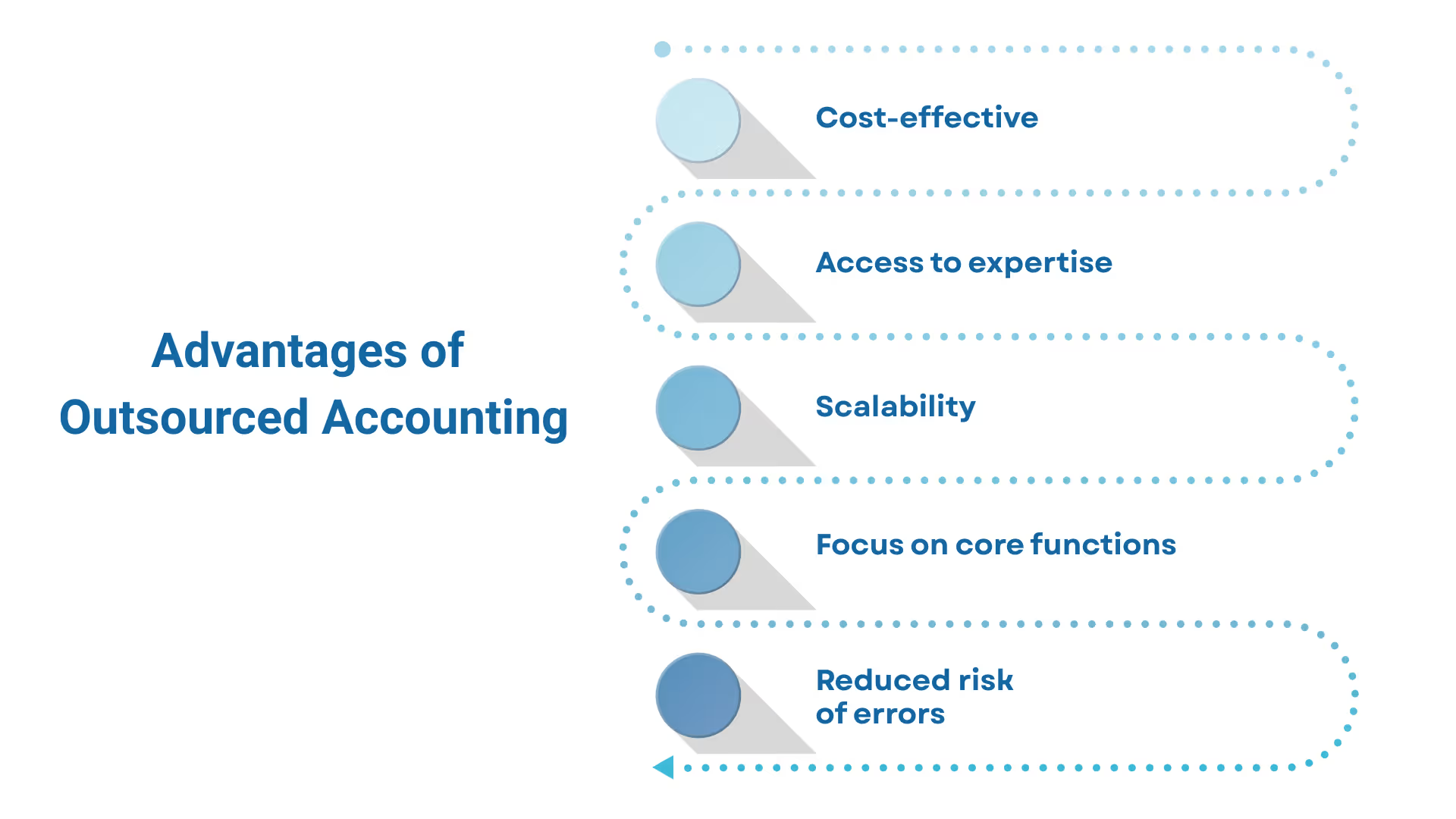
Outsourcing accounting can bring several strategic benefits that streamline financial operations and reduce overhead costs.
1. Cost-effective
Outsourcing often proves cheaper than maintaining an in-house team. You avoid expenses like salaries, benefits, and office space, which can add up quickly in a full-time setup.
2. Access to expertise
Outsourcing gives you access to a team of accounting professionals who bring specialized knowledge in areas such as tax laws and financial reporting. This expertise is invaluable for complex tasks.
3. Scalability
As your business grows, outsourcing allows you to scale your accounting services to match the increasing demands without the need for additional hires or resources.
4. Focus on core functions
With accounting tasks managed externally, you can focus on growing your business, improving customer service, and driving innovation, leaving financial management to the experts.
5. Reduced risk of errors
Professional accountants rely on proven systems and best practices, minimizing the risk of mistakes that can occur with less experienced staff.
With these advantages, outsourcing accounting offers a compelling alternative to managing financial tasks in-house. However, it's also important to consider the potential challenges associated with outsourced accounting.
While outsourcing provides notable advantages, there are some potential drawbacks that affect your business operations.
1. Less control
Outsourcing means giving up some control over your accounting processes. You might find it harder to make quick adjustments or address issues as they arise without immediate oversight.
2. Communication barriers
Working with a third-party provider can sometimes lead to miscommunication, especially if the team is in a different time zone or culture, which could affect efficiency or clarity in financial reporting.
3. Data security risks
Sharing sensitive financial data with an external provider increases the risk of data breaches or unauthorized access, which can compromise your business's privacy and security.
4. Limited understanding of your business
An external provider might not be as familiar with the specific nuances of your company, which could lead to misalignment between the accounting work and your business's evolving needs.
5. Hidden costs
While outsourcing is typically cost-effective, you may encounter unexpected charges for services that fall outside the initial scope of work, which can catch businesses off guard.
While outsourced accounting offers clear benefits such as cost savings and access to specialized expertise, it's essential to weigh these against the potential risks of losing control and facing communication barriers. Deciding between outsourced bookkeeping vs in-house accounting ultimately depends on what aligns best with your company's goals, size, and growth trajectory.
Must Read: India’s Best Accounting Outsourcing Services for USA Companies
社内経理とアウトソーシングのどちらを選ぶか検討する際は、コスト、管理体制、拡張性を比較検討することが不可欠です。最適な選択は、ビジネスのニーズ、リソース、そして今後の成長計画によって決まります。
社内経理とアウトソーシングの比較では、コスト効率、柔軟性、専門知識といった要素を考慮する必要があります。社内チームは管理がしやすいという利点がありますが、アウトソーシングを活用すれば、固定費を抑えつつ専門的なスキルを導入することが可能です。
あわせて読みたい:経理のアウトソーシング:2025年のビジネス成長の鍵
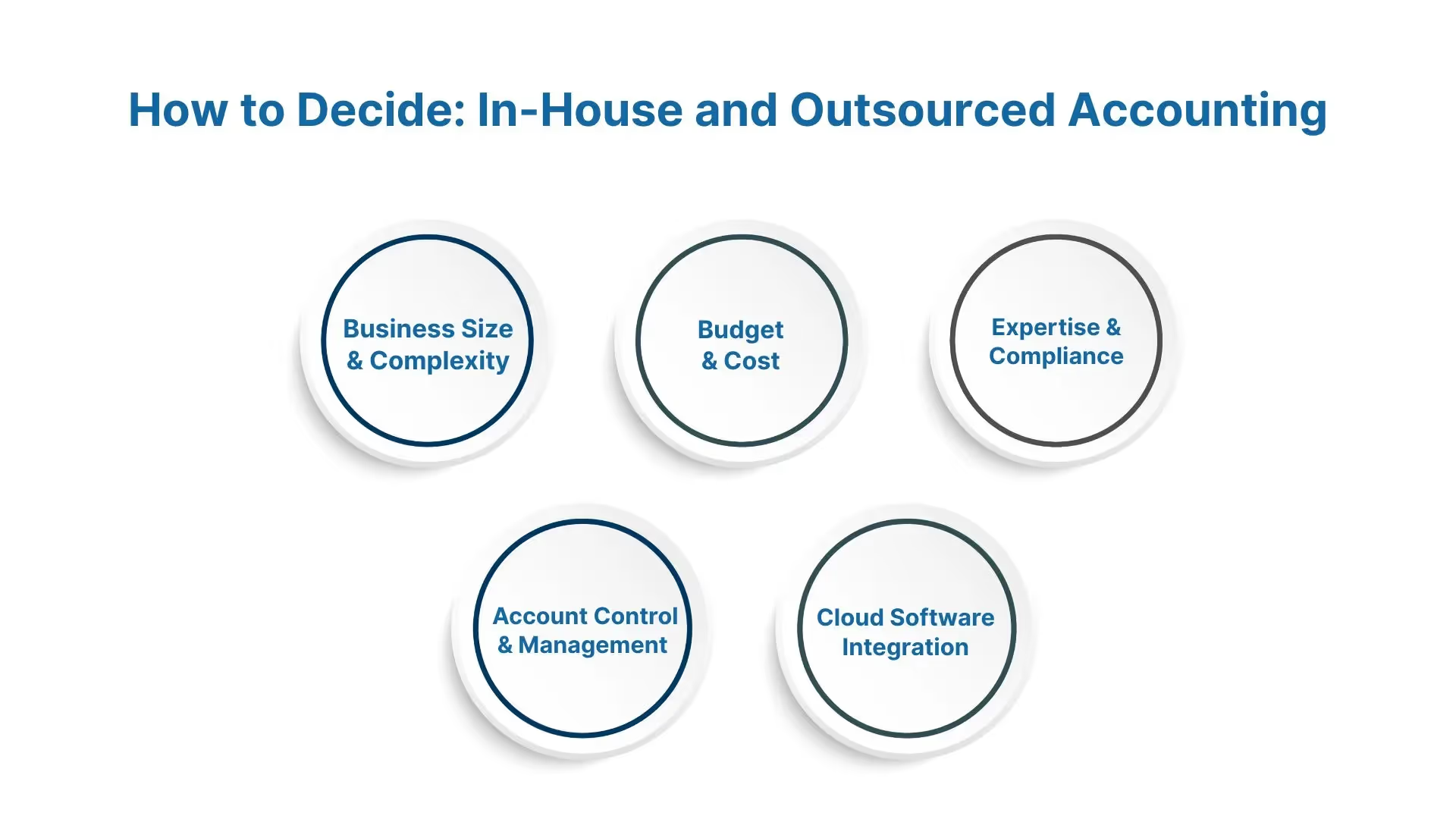
社内経理とアウトソーシングのどちらを選ぶか決める際には、いくつかの重要な要素を考慮する必要があります。それぞれの選択肢がビジネス目標とどのように合致するかを理解することで、納得のいく意思決定が可能になります。
ビジネスの規模と業務の複雑さは、選択を行う上で極めて重要な役割を果たします。
社内経理は、リソースを専任化し、業務を密接に管理できるため、規模の大きい企業や財務ニーズが複雑な企業で選ばれる傾向があります。
アウトソーシングは、経理ニーズがそれほど複雑でない場合や、業務量が変動しやすい小規模・成長中の企業にとって、より効率的なソリューションとなります。
コストは、特に中小企業にとって大きな判断材料となります。
社内経理では、給与、福利厚生、研修費、オフィススペースなどの継続的な予算が必要となります。
アウトソーシングは、間接費を削減できるためコスト効率が高く、必要なサービスに対してのみ料金を支払う仕組みです。フルタイムの経理チームを維持するコストを回避するのに役立ちます。
求められる専門知識のレベルやコンプライアンスへの対応も、重要な検討事項です。
アウトソーシングを活用すれば、税務コンプライアンス、財務報告、業界特有の規制など、幅広い分野の専門知識にアクセスできます。この柔軟性は、ビジネスが変化する要件に適応したり、急速に成長したりする必要がある場合に特に有益です。
社内経理は自社の業務内容を深く理解しているという利点がありますが、特に専門的なコンプライアンス対応においては、アウトソーシングほどの専門知識の深さを備えていない場合があります。
管理体制は、多くの企業にとって重要な要素です。
社内経理は、財務プロセスを直接管理し、社内リソースを容易にコントロールできるという利点があります。業務を細部まで把握し、必要に応じて調整を行うことが可能です。
アウトソーシングは、財務業務を外部の専門業者に委託する形となりますが、社内のチームが他の重要なビジネス領域に集中できるようになり、リソース管理の最適化につながります。
既存のシステムは、経理サービスを統合する上で重要な役割を果たします。
アウトソーシングは、多くの中小企業が利用しているQuickBooks、Xero、Gustoといったクラウドベースのソフトウェアと容易に統合できます。アウトソーシング業者はこうしたツールに精通していることが多く、経理プロセスを効率化し、現在のシステムとスムーズに連携させることが可能です。
社内経理の場合、チームがこれらのプラットフォームの統合や活用に習熟するまで、より多くの時間とリソースが必要になる可能性があります。
これらの要素を慎重に検討することで、貴社のニーズに最適な経理ソリューションを選択できます。
あわせて読みたい:米国向け経理アウトソーシング:なぜそれが最善の選択なのか
VJM Globalは、国際的なビジネス向けにカスタマイズされたフルサイクルの経理アウトソーシングサービスを提供しており、米国、オーストラリア、UAE、シンガポール、英国、インドの規制枠組みに精通しています。同社のサービスは、正確でタイムリーな財務報告を確保しながら、運用コストの削減を支援します。
記帳業務をアウトソーシングするか社内で行うかは、あらゆる企業にとって重要な決断です。アウトソーシングには、人為的ミスの削減、財務報告の迅速化、確定申告時期のストレス軽減など、多くの利点があります。VJM Globalの経理アウトソーシングサービスを利用すれば、社内チームを維持するオーバーヘッドコストをかけずに、フルサイクルの経理サポートを受けることができます。これは特にQuickBooks、Xero、Gustoなどのクラウドソフトウェアを利用している企業にとって、シームレスな統合と円滑な運営を保証する非常に価値のある選択肢です。
VJM Globalの国際経理における専門知識は、米国基準の記帳から国境を越えた財務管理まで多岐にわたり、ビジネスの拡大に合わせてコンプライアンスを維持し、組織を整理された状態に保ちます。複数の国で事業を展開している場合でも、新しい市場に進出する場合でも、VJM Globalの柔軟なオフショアチームが貴社のタイムゾーンで成長をサポートします。
VJM Globalと提携すれば、経理の複雑な業務を専門家に任せ、ビジネスの拡大に集中できます。今すぐお問い合わせください。経理アウトソーシングがどのように財務プロセスを効率化できるかをご案内します。

.avif)


