Considering expanding R&D operations to India? US companies can capitalize on a favorable tax environment that offers a 100% deduction on eligible research expenses, covering in-house and partnered innovations.
India’s flexible regulations, cost-effective talent, and reduced customs and GST rates speed product development while minimizing overhead. This environment helps American firms diversify global R&D investments, improving cash flow and technological growth.
This guide explains how US companies can strategically benefit from tax incentives for R&D in India, going through the regulations to take full advantage.
Key Takeaway
Substantial Tax Benefits Under Section 35: US businesses in India can claim a 100% deduction on revenue and capital R&D expenditures, significantly lowering their taxable income and improving innovation cost-efficiency.
DSIR Recognition Opens Broad Incentives: Recognition by India’s DSIR allows zero customs duty on R&D imports, GST reductions, and access to government grants, accelerating cost savings and operational ease for US firms.
Extensive Deductible R&D Expenses: Eligible deductions cover operational costs like salaries, utilities, raw materials, and capital equipment, excluding land, allowing complete financial relief across diverse R&D activities.
Full Compliance and Documentation Requirements: Companies must maintain detailed financial, technical, and statutory records, including DSIR approval, and file annual returns like Form 3CL to sustain their eligibility for tax incentives.
Industry-Specific Incentives Improve Strategic R&D: Pharma, IT, electronics, aerospace, and renewable sectors benefit from customized incentives, such as weighted deductions, patent tax rates, and accelerated depreciation, driving more focused investment.
Understanding Tax Incentives for R&D in India
Tax incentives for R&D in India represent a comprehensive framework designed by the government to promote scientific research and development activities across industries. These tax incentives operate primarily through Section 35 of the Income Tax Act 1961, which provides substantial deductions for businesses and organizations investing in research activities.
The system aims to reduce the financial burden of R&D investments while encouraging companies to develop new technologies, products, and processes that can drive economic growth and technological advancement.
Tax incentives for R&D in India have gained significant momentum following the government's commitment to allocate ₹20,000 crore for private sector-driven research and development in Budget 2025-26, marking a substantial increase from previous allocations.
This framework contains various types of deductions, customs duty exemptions, and GST benefits that make India an attractive destination for both domestic and international companies seeking to establish research facilities.
What does Tax Incentive for R&D in India Mean for US Businesses?
Tax Incentive for R&D in India offers clear financial advantages to US companies investing in research activities within the country. Recognizing the specific provisions and benefits can help American firms effectively plan and allocate resources for their innovation efforts.
Below are key details tracing how these incentives apply to US businesses operating in India.
Section 35 Tax Deduction: US companies operating in India through subsidiaries or permanent establishments can claim a 100% deduction on both revenue and capital R&D expenditures under Section 35 of the Income Tax Act.
DSIR Recognition: Foreign firms registered in India, including US subsidiaries, qualify for Department of Scientific and Industrial Research recognition, showing benefits like tax deductions and customs duty exemptions on R&D imports.
Customs Duty and GST Benefits: DSIR-approved entities enjoy zero basic customs duty on equipment and inputs, plus reduced GST rates, 5% for interstate and 2.5% CGST plus 2.5% SGST on intrastate transactions.
Accelerated Depreciation: US companies can claim 100% depreciation on research assets in the first year, optimizing capital expense treatment.
Pre-Operational R&D Deductions: Research expenses incurred up to three years before starting business operations in India are deductible once operations commence.
Collaborative Research Contributions: Payments to approved Indian research bodies are deductible up to 100–150%, encouraging partnerships.
Expense Coverage: All operational expenses, including salaries, utilities, raw materials, and consumables, qualify for full deduction in the year incurred.
Exclusions and Documentation: Land costs are non-deductible, and detailed records and DSIR approvals are essential to claim benefits.
Access to Govt Support: DSIR-registered US subsidiaries may also access government grants, subsidized loans, and equity support for their R&D activities.
Plan ahead with expert insights that can help businesses go through global rules and minimise risks, and explore practical approaches in International Tax Planning Strategies for 2025.
Tax Incentives for R&D in India: Benefits Structure
Tax Incentives for R&D for US businesses in India come with a structured framework that defines how different research expenditures are recognized and deducted. Understanding the specific categories and their conditions can help set realistic expectations for tax planning and compliance.
Here’s a clear overview of the key benefits and requirements associated with these incentives.
Expenditure on Scientific Research
Tax Deduction Rate
Section Reference
Key Requirements & Conditions
Form Required
In-house revenue expenditure
100% of expenditure
Section 35(1)(i)
Must be related to business operations
Not specified
In-house capital expenditure (excluding land & building)
100% of expenditure (land cost excluded)
Section 35(1)(iv)
Separate books required; excludes land & building costs
Form 3CK for DSIR approval
Pre-commencement expenditure (within 3 years before business)
100% in the year the business commences
Section 35(1)(i)
Expenditure incurred within 3 years before business start
Not specified
Payment to an approved scientific research company (Indian entity)
100% of payment
Section 35(1)(iia)
An Indian company with scientific research as its main objective
Approval from the Income Tax Authority is required
Contribution to an approved research association/university
100%
Section 35(1)(ii)
The institution must be government-approved
Not specified
Payment to national laboratory/IIT/university
100%
Section 35(2AA)
Recognized by the prescribed authority with an approved program
Form 3CG for approval
Payment to specified person approved by prescribed authority
100%
Section 35(2AA)
Must be approved by the prescribed authority (DSIR)
Form 3CG for approval
In-house R&D by biotechnology/manufacturing companies
Capital expenditure on scientific research equipment
100% of capital expenditure
Section 35(1)(iv)
Equipment only; excludes land & building purchase
Form 3CK for expenditure > INR 1 crore
Historical Context
The tax incentives for R&D in India have undergone substantial modifications:
Pre-2017: 200% weighted deduction under Section 35(2AB).
2017-2021: Reduced to 150% weighted deduction.
2021-Present: Further reduced to 100% standard deduction.
This represents a policy shift from generous weighted deductions to a more balanced approach focusing on patent commercialization through the Patent Box Regime.
Step-by-Step Guide: How US Companies Can Benefit from R&D Tax Incentives in India
Tax incentives for R&D in India provide significant financial benefits to companies conducting scientific research and development activities. These deductions, primarily governed under Section 35 of the Income Tax Act, allow businesses to claim a 100% deduction on both revenue and capital expenditures related to approved R&D activities.
Before claiming any tax benefit, businesses must first check if they meet the core eligibility rules.
Eligibility Requirements
Here are the key requirements these businesses must satisfy.
Aspect
Details
Legal & Operational Status
Must be registered in India under the Companies Act, 2013, including partnerships or LLPs.
Business History
Three financial years must be completed since the start of operations.
R&D Infrastructure
Must have identifiable facilities, qualified personnel, and defined R&D programs.
Facility Size & Location
R&D activities must be carried out on the premises or in dedicated facilities of at least 1,000 sq. ft., in designated areas within India.
Technical Staff
Must demonstrate the availability of sufficient skilled personnel for R&D operations.
Fulfilling eligibility isn’t enough; businesses also need DSIR recognition to validate their in-house R&D units formally.
VJM Global’s international taxation experts help businesses manage complex cross-border compliance while providing eligibility requirements, DSIR recognition, and structured R&D infrastructure that are fully aligned with Indian and global regulatory standards. Talk to our experts!
DSIR Recognition Process
Securing DSIR recognition in India requires following a defined process that verifies the capabilities and compliance of in-house R&D units. Here’s an overview of the key steps involved.
Initial Registration: Register online at the DSIR website and submit an application for recognition of in-house R&D units through the dedicated portal.
Application Submission: Submit both soft copy and hard copy of the application with supporting documents to the DSIR office via speed post.
Meeting at DSIR: DSIR calls the applicant for a meeting with a walk-in video presentation and demonstration of the R&D center capabilities.
Recognition Decision: DSIR evaluates the application and either grants recognition or rejects it based on compliance with guidelines and infrastructure assessment.
Site Visit Possibility: DSIR team may conduct a physical visit to the R&D center, depending on the application requirements and verification needs.
With DSIR recognition in place, the next step for businesses is obtaining Section 35(2AB) approval to unlock deduction benefits.
Need an India subsidiary? We handle FDI approvals, taxation, and local compliance.
Section 35(2AB) Approval Process
Claiming tax benefits under Section 35(2AB) involves a formal approval process that confirms compliance and allows immediate deductions on R&D capital expenses. The main steps in this process are as follows.
Step
Description
Form 3CK Application
Submit Form 3CK to DSIR with detailed R&D information, audited financial statements, infrastructure details, and compliance certificates.
Agreement Execution
Sign a formal agreement with the Secretary, DSIR, establishing cooperation in research and the audit of financial accounts.
Form 3CM Receipt
The company receives an approval certificate in Form 3CM from DSIR for a specific period, as per DSIR guidelines.
Tax Benefit
Eligible to claim a 100% deduction on approved capital R&D expenses in the first year without waiting for depreciation.
Approvals remain valid only when backed by the right documents, making documentation a critical step for businesses.
Documentation Requirements
The key documents that need to be maintained include the following.
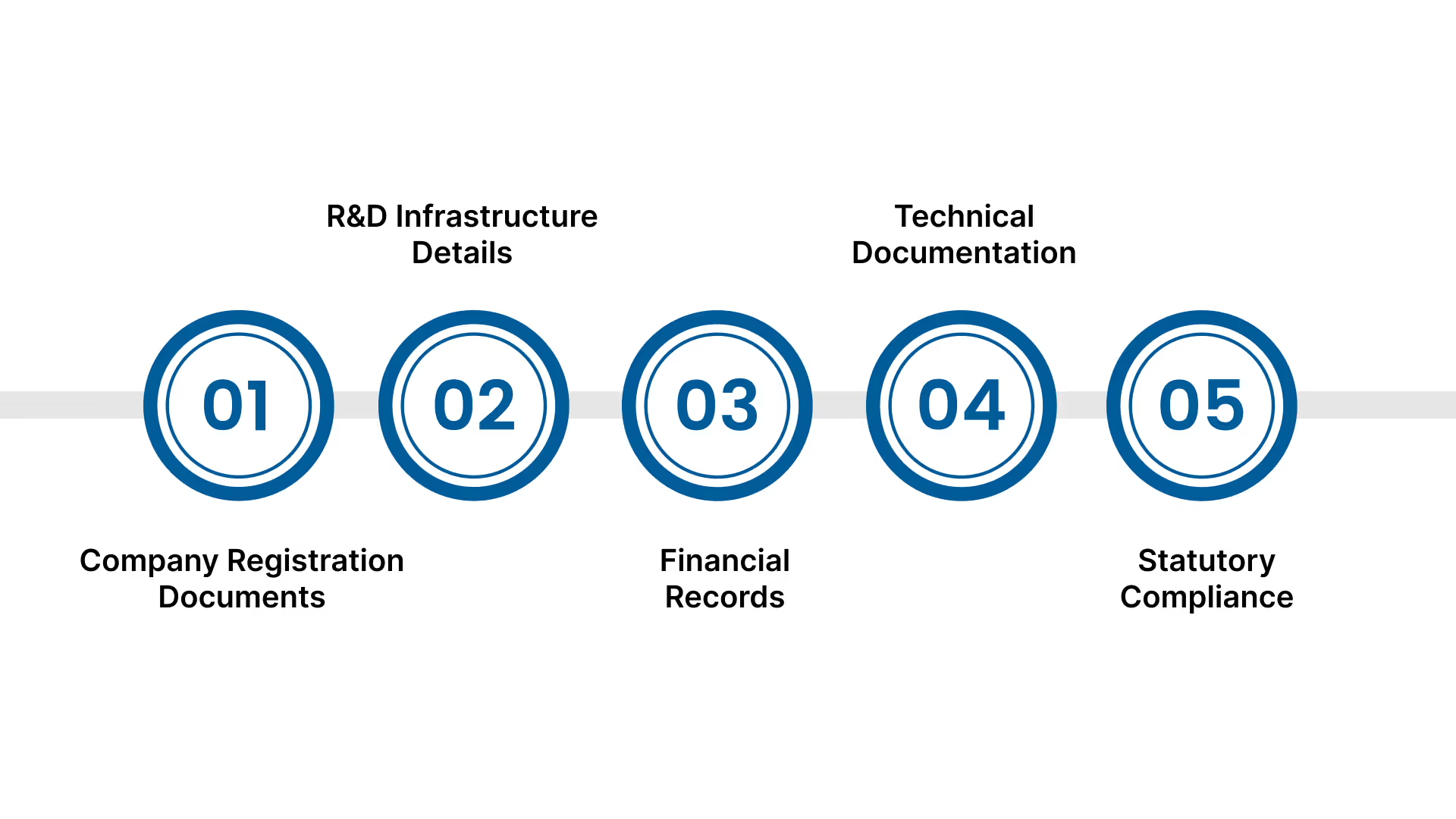
Company Registration Documents: Copy of Memorandum and Articles of Association proving legal existence and corporate structure.
R&D Infrastructure Details: Complete description of R&D unit activities, scope, objectives, methods, and outcomes of research projects.
Financial Records: Three years of annual reports, financial statements, and a detailed breakdown of R&D expenses, including materials, salaries, and equipment costs.
Technical Documentation: R&D unit designs showing physical layout, infrastructure details, installation dates, equipment values, and personnel qualifications.
Statutory Compliance: Valid permits and licenses from statutory authorities for operations and R&D center establishment at a specific location.
Initial approval is just the start; ongoing compliance provides benefits for businesses to continue without interruption.



.avif)

.avif)


