

%20(20).avif)
米国の起業家にとって、クライアントとの打ち合わせ、公聴会、訴訟の期限と経理業務を両立させることは、大きな負担となり得ます。記帳業務は確定申告の時期まで後回しにされがちで、それがミスや期限の逸脱につながることも少なくありません。
米国の記帳代行サービス市場の売上高は、2033年までに265億9,900万ドルに達すると予測されており、専門的な記帳サポートへのニーズが高まっていることを示しています。この成長は、財務状況を常に把握しておくことの重要性を裏付けています。
本ガイドでは、法律事務所の財務管理、コンプライアンスの確保、そして健全な経営を維持するためのベストプラクティスについて解説します。
法律事務所の記帳とは、事務所内のすべての金融取引を体系的に記録・追跡することを指します。単に数字を入力するだけでなく、クライアントの資金や事務所の運営資金を管理する上で、コンプライアンス、正確性、透明性を維持することが求められます。
米国の法律事務所にとって、記帳を外部委託することは、特に信託口座や着手金の管理において、米国の法曹協会の規制に従い、受け取った資金と支出した資金のすべてが適切に記録、分類、照合されることを保証するものです。
はい、法律事務所は専門的な経理サービスの活用から大きな恩恵を受けることができます。法務会計には、クライアントの信託資金の取り扱いや透明性の高い財務記録の維持など、独自のコンプライアンス要件が伴います。これらの規制を理解している専門家と提携することで、法律事務所は時間を節約し、ミスを最小限に抑え、監査に備えることができます。
法律事務所の記帳には、単なる取引の記録以上の役割があります。それは正確性を確保し、法的要件へのコンプライアンスを維持し、事務所の財務状況を明確に把握することです。これらのプロセスを慎重に管理することで、ミスを防ぎ、事務所運営のための情報に基づいた意思決定が可能になります。
効果的な記帳は、より良い財務上の意思決定と長期的な安定を支えます。米国の起業家にとって、正確な帳簿を維持することは、事務所の財務状況を評価し、新しいソフトウェアへの投資や人員配置の決定時期を見極めるのに役立ちます。さらに重要なのは、正確な帳簿が事務所の信頼性を損なうようなコンプライアンス違反を防ぐという点です。
.avif)
法律事務所の記帳における中核要素を理解することは、コンプライアンス、財務の正確性、および運営の透明性を維持するために不可欠です。各領域は特定のタスクに焦点を当て、クライアントの資金が保護され、事務所の財務が透明かつ適切に整理された状態を保ちます。
クライアントの資金は、常に事務所の運営口座とは別に管理しなければなりません。IOLTA(弁護士信託口座の利息)を維持することは、米国の法曹協会の規制を遵守するために不可欠です。入金、出金、残高が記録と一致していることを確認するため、これらの口座を定期的に照合する必要があります。正確な信託会計はミスを防ぎ、倫理的な業務を支え、クライアントの資金を不正使用から守ります。
法律事務所では、クライアント関連の経費と運営経費が混在することがよくあります。これらのコストを明確に分離することが重要です。訴訟費用、専門家の証人費用、裁判費用などのクライアント固有の経費を、事務所の家賃、光熱費、給与などのオーバーヘッド経費とは別に追跡してください。適切な分類は、正確なクライアントへの請求、税務申告、および内部財務分析に役立ちます。
Managing billing accurately is a central part of law firm bookkeeping. Record time entries, retainers, and payments consistently. Proper invoicing ensures transparency with clients and timely cash flow. Advanced billing software can automate recurring invoices, track overdue payments, and simplify retainer management, reducing manual errors and administrative workload.
Payroll management goes beyond issuing salaries. You need to calculate bonuses, commissions, and benefits accurately while meeting the US federal and state tax obligations. Timely filing of payroll taxes, Social Security, and Medicare contributions ensures compliance and avoids penalties. Proper payroll management also maintains staff trust and financial stability.
Regular financial reporting provides actionable insights into your firm’s performance. Generating income statements, balance sheets, and cash flow reports allows you to monitor profitability, detect trends, and make informed decisions. These reports help guide strategic decisions and ensure compliance.
By focusing on these core components, you maintain a clear, compliant, and organized financial system. Effective law firm bookkeeping not only supports day-to-day operations but also strengthens long-term decision-making and client trust.
Also Read: Features of Online Accounting Services To Transform Business
.avif)
Accurate bookkeeping helps law firms stay compliant, manage client funds responsibly, and make better financial decisions. Legal accounting rules differ from general business accounting. These following best practices are especially important for US law firms:
Use legal-specific tools such as Clio Manage or QuickBooks for Law Firms. These tools track client funds, firm expenses, billing, and trust ledgers in one system. These tools reduce manual errors and help US law firms stay compliant.
Your trust account holds client funds; your operating account handles firm costs. Mixing them risks ethical violations or misallocation of funds. Always keep them separate and clearly document every deposit, disbursement, and transfer.
At the month’s end, reconcile bank statements with your internal ledgers. Doing so reveals discrepancies quickly. It helps you comply with state bar rules and ABA Model Rule 1.15 about safekeeping client property.
When you record transactions promptly, daily if possible, you avoid backlog errors, missing entries, and confusion. Timely recording also simplifies tax preparation and audit readiness.
Use automation for recurring reports, reconciliations, and rule-based checks. Automation reduces manual work and the chance of human error. It gives you real-time visibility into trust balances, revenue, and expenses.
Everyone who handles or views financials should know trust accounting rules, IOLTA (Interest on Lawyers’ Trust Accounts), and local regulations. Regular training helps you maintain compliance and avoid missteps.
If managing in-house is too burdensome, hire or outsource to a specialist with experience in legal bookkeeping. A partner like VJM Global can handle reconciliations, reporting, and trust accounting oversight, freeing your law firm’s internal team to focus on legal work.
Discover how VJM Global’s Accounting Outsourcing for USA Businesses supports law firms in the U.S. with precision and compliance.
Also Read: Streamline Your Finances with Accounting Services Outsourcing
Even with effective systems in place, small bookkeeping mistakes can create compliance risks and financial inaccuracies. For US law firms, being aware of common mistakes can help you avoid costly issues:
A frequent compliance issue in legal accounting is the improper handling of client trust funds. Mixing these funds can result in compliance issues.
Keep IOLTA (Interest on Lawyers’ Trust Accounts) separate from firm accounts at all times. Use dedicated trust ledgers to track client-specific deposits, disbursements, and balances. Every transaction must be supported by clear documentation and periodic reconciliation.
Failure to perform monthly reconciliations can lead to unnoticed discrepancies and inaccurate trust balances. These errors accumulate quickly, making audits and tax filings difficult.
You should reconcile your operating and trust accounts every month by matching your bank statements against internal ledgers. Legal accounting tools can automate this process and flag inconsistencies before they grow into compliance issues. Regular reconciliation is essential for US law firms to maintain accurate financial records and meet local and international compliance requirements.
Inaccurate time tracking directly affects your firm’s revenue and client billing transparency. Unrecorded hours or incorrect entries reduce billable income and may lead to disputes during audits or client reviews.
Adopt a time-tracking system integrated with your billing software. Recording time entries in real-time ensures that no billable work is lost and invoices remain accurate and defensible.
Misclassifying expenses can distort your financial reports and lead to incorrect tax deductions. For instance, recording a client reimbursement as an overhead cost can inflate your firm's operational expenses.
Categorize every transaction accurately; client reimbursements, court filing fees, and professional subscriptions should each have distinct expense codes in your chart of accounts. Consistent classification helps you generate accurate profit-and-loss reports and meet IRS documentation standards.
Data loss or missing audit trails can disrupt financial continuity and complicate compliance reviews. Without regular backups, you risk losing months of financial records due to hardware failure or system errors.
US law firms should use secure, cloud-based accounting platforms that automatically back up data and maintain audit trails. Outsourcing accounting services allows you to track every change made to your financial records, preserving accountability and compliance integrity.
Avoiding these common bookkeeping mistakes keeps your firm’s financial records accurate, compliant, and audit-ready. By applying these preventive measures consistently, you build a transparent accounting system that supports long-term client trust and firm stability.
Managing finances in a law firm requires more than just basic bookkeeping; it demands precision, compliance, and data control. Legal accounting software is designed specifically to meet these needs, helping you maintain accuracy across every part of your law firm's bookkeeping process.
Legal accounting software includes built-in features to handle IOLTA (Interest on Lawyers’ Trust Accounts) compliance. It automatically separates client funds from operating accounts, tracks trust balances for each client, and prevents overdrafts or unrecorded withdrawals. These tools also generate compliance-ready trust ledgers, ensuring your firm meets Bar Council and ABA requirements at all times.
Manual time tracking and billing often lead to lost hours or underbilling. Legal accounting systems integrate time-tracking modules that sync directly with client invoices. Each time an entry is logged, it is automatically tied to the correct case file. This improves billing accuracy and helps you maintain transparent communication with clients about the work performed and billed.
Dashboards provide up-to-date reports on revenue, expenses, and trust balances, giving US law firms real-time visibility into their financial status and helping guide strategic decisions.
By automating reconciliations, payment tracking, and reporting, legal accounting software reduces the risk of human error. Automated matching of bank transactions against internal ledgers helps you detect discrepancies instantly. This not only saves time but also strengthens audit readiness and record accuracy.
Legal teams, accountants, and partners can securely access financial data through role-based permissions. This ensures that sensitive information, such as client trust details or payroll records, is available only to authorized personnel. Cloud-based platforms also offer encrypted storage and automatic backups, reducing the risk of data loss.
Most U.S. law firms already use cloud-based systems like QuickBooks, Xero, or Clio Manage. Modern legal accounting software integrates smoothly with these platforms, enabling centralized financial management. This integration simplifies multi-user access, tax reporting, and real-time synchronization between your firm’s accounting and case management systems.
As your firm expands, legal accounting software allows you to manage more clients, cases, and transactions without additional manual effort. You can customize workflows, automate multi-user billing approvals, and generate consolidated reports for multiple entities or branches.
When you combine advanced legal accounting tools with professional accounting support from VJM Global, you gain the advantage of both technology and expertise. VJM Global assists U.S.-based law firms with Accounting and Bookkeeping Outsourcing, using cloud platforms such as QuickBooks, Xero, and Gusto. Our team ensures every transaction is accurately recorded, reconciled, and compliant with U.S. accounting standards.
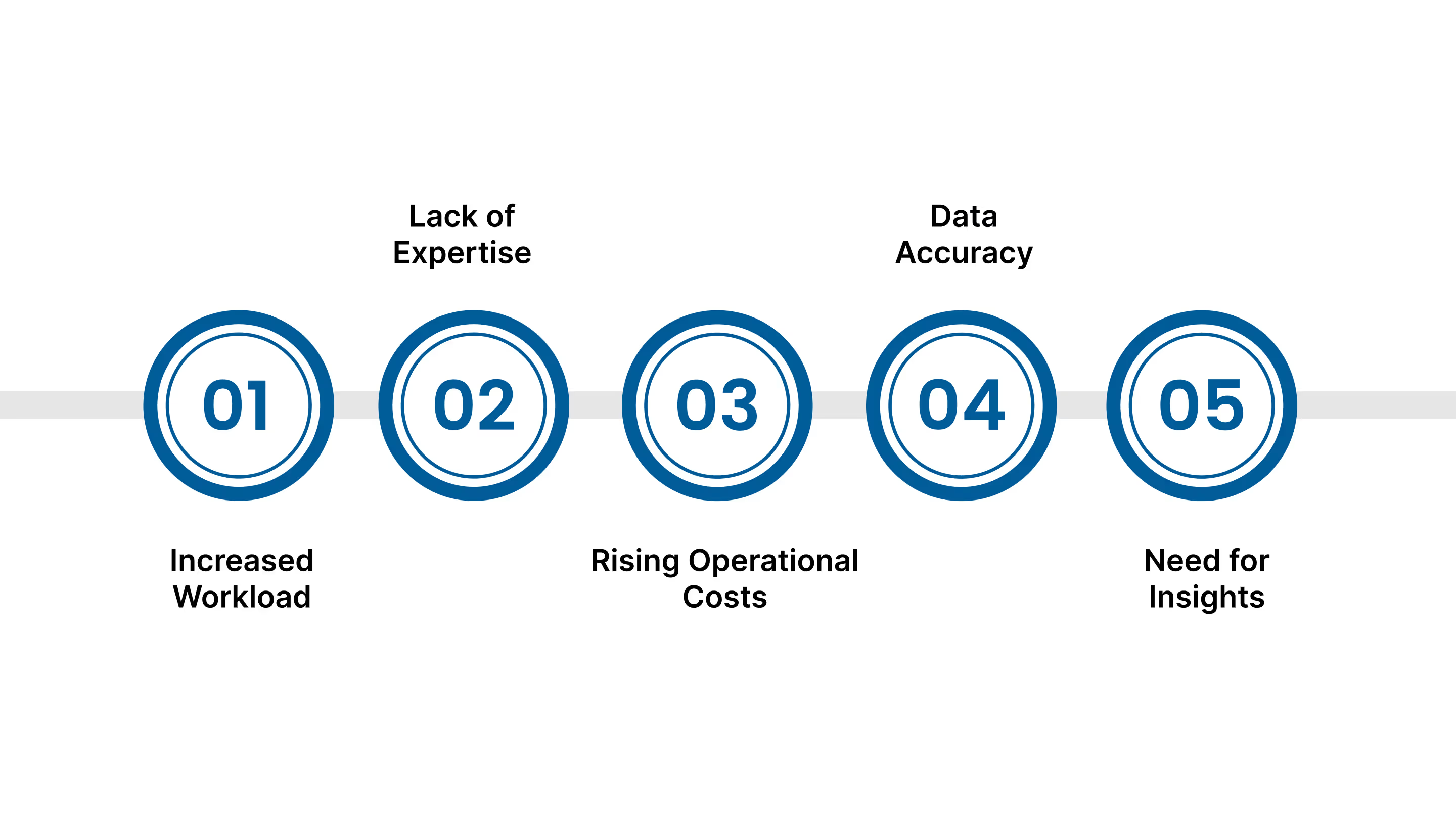
Even with the best accounting tools, managing your firm’s books internally can become challenging as operations grow. Compliance demands, increasing caseloads, and evolving tax regulations often make it hard to maintain accuracy and timely reporting. Outsourcing your law firm's bookkeeping offers a practical solution, giving you access to specialized professionals while retaining control over your finances.
Here are five key indicators that outsourcing might be the right choice for your firm:
If partners or staff spend significant hours on bookkeeping rather than client work, it affects productivity and billable time. Outsourcing allows your team to focus on legal services while accountants handle reconciliations, trust accounting, and reporting efficiently.
Law firm bookkeeping involves managing IOLTA accounts, client retainers, and compliance with bar regulations. If your internal team lacks this specialized knowledge, outsourcing ensures accuracy and adherence to legal and ethical standards.
Hiring in-house accounting staff requires salaries, training, software, and ongoing compliance management. Outsourcing offers access to expert bookkeeping at a lower cost while providing scalable support as your firm grows.
Outsourced bookkeeping teams use cloud-based systems like QuickBooks and Xero to maintain accurate, real-time records. They ensure reconciliations, ledgers, and trust balances are always audit-ready, reducing the risk of compliance violations.
Professional bookkeeping provides detailed insights into revenue, expenses, and cash flow. Outsourced experts can generate financial statements and reports that help you make informed business decisions and plan for growth confidently.
Outsourcing law firm bookkeeping gives you more than administrative relief; it provides precision, compliance, and financial clarity. You maintain oversight through regular reports while professionals handle the technical work.
VJM Global offers specialized Accounting and Bookkeeping Outsourcing for U.S. law firms using cloud tools like QuickBooks, Xero, and Gusto. Our team helps your law firm reduce overheads, stay compliant, and optimize financial operations.
As a US business owner or entrepreneur, managing finances in a new market can be overwhelming, especially when you’re also focused on client work and growing your business. That’s where VJM Global comes in; our expert remote accounting and bookkeeping services are designed to support your firm as you grow and ensure financial clarity and compliance in the US.
Here’s how VJM Global can help your law firm succeed:
What sets VJM Global apart?
法律事務所の記帳業務をVJM Globalにアウトソーシングすることで、専門的な知見と高度なテクノロジーを融合させることができます。これにより、監査に対応可能な記録の維持、運営コストの削減、そして長期的な財務の安定を実現します。当社のサポートがあれば、財務管理を効率的かつ正確に任せられるため、事務所の成長に専念していただけます。
VJM Globalと提携して、法律事務所の記帳および財務管理を効率化し、コストを削減して、いつでも監査に対応できる体制を整えましょう。
理想的には、損益計算書や貸借対照表などの財務諸表を毎月確認することをお勧めします。定期的な確認は、収益や費用の傾向を把握し、不整合を早期に発見し、問題が深刻化する前に適切な財務判断を下すのに役立ちます。
記帳は、支払い、預かり金、経費といった日々の金銭取引を記録・整理することに重点を置いています。一方、会計は、そのデータを分析して財務報告書の作成や税務申告を行い、戦略的な財務計画を策定する役割を担います。
小規模事務所であれば、法律業務に特化した会計ソフトの導入、週次での照合スケジュールの設定、そしてすべての取引を即座に記録することが正確性維持の鍵となります。また、記帳の専門家にアウトソーシングすることは、社内の負担を増やさずにコンプライアンスを維持するための費用対効果の高い方法です。
はい、弁護士会およびIRS(内国歳入庁)の文書化基準を満たしている限り、デジタル記録は認められています。安全な保管、監査証跡の確保、そして法律で定められた期間(通常7年間)の保存が義務付けられています。

.avif)


