

%20(12).avif)
製造業の成否は、正確な原価データにかかっています。2025年7月時点で、米国の製造業における総在庫額は約9,520億ドルに達しており、コストの記録や評価が不適切であれば、利益率が大きく変動しかねない水準です。同四半期、製造業の単位労働コストは2.0%上昇しました。これは、現場でのわずかな変化が損益計算書に直ちに反映されることを財務チームに再認識させる結果となりました。
原価計算、在庫評価、そして製造原価(COGM)と売上原価(COGS)の照合を明確に行うことで、流動的な状況を信頼できる意思決定へと変えることができます。米国とインドに拠点を展開している場合、基準や通貨が異なるため、一貫したポリシーと共通の定義を設けることがさらに重要になります。
本ブログでは、製造業における会計について、その内容や主要なコスト構成要素、そして製造原価(COGM)や売上原価(COGS)といった重要な指標の算出方法を詳しく解説します。
製造会計は、原価計算および管理会計の専門分野であり、物理的な製品の製造にかかるすべてのコストを扱います。直接材料費、直接労務費、製造間接費を追跡し、それらを生産単位に配賦することで、期末在庫や売上原価の評価を支援します。
一般的な財務会計とは異なり、製造会計は生産プロセスに密接に焦点を当て、内部の意思決定をサポートします。ただし、そのアウトプットの多くは、外部向けの財務諸表や規制当局への開示にも影響を与えます。
製造会計の対象範囲を理解した後は、工場の財務を正確かつ透明に保つために連携する、さまざまな会計の種類を見ていきましょう。
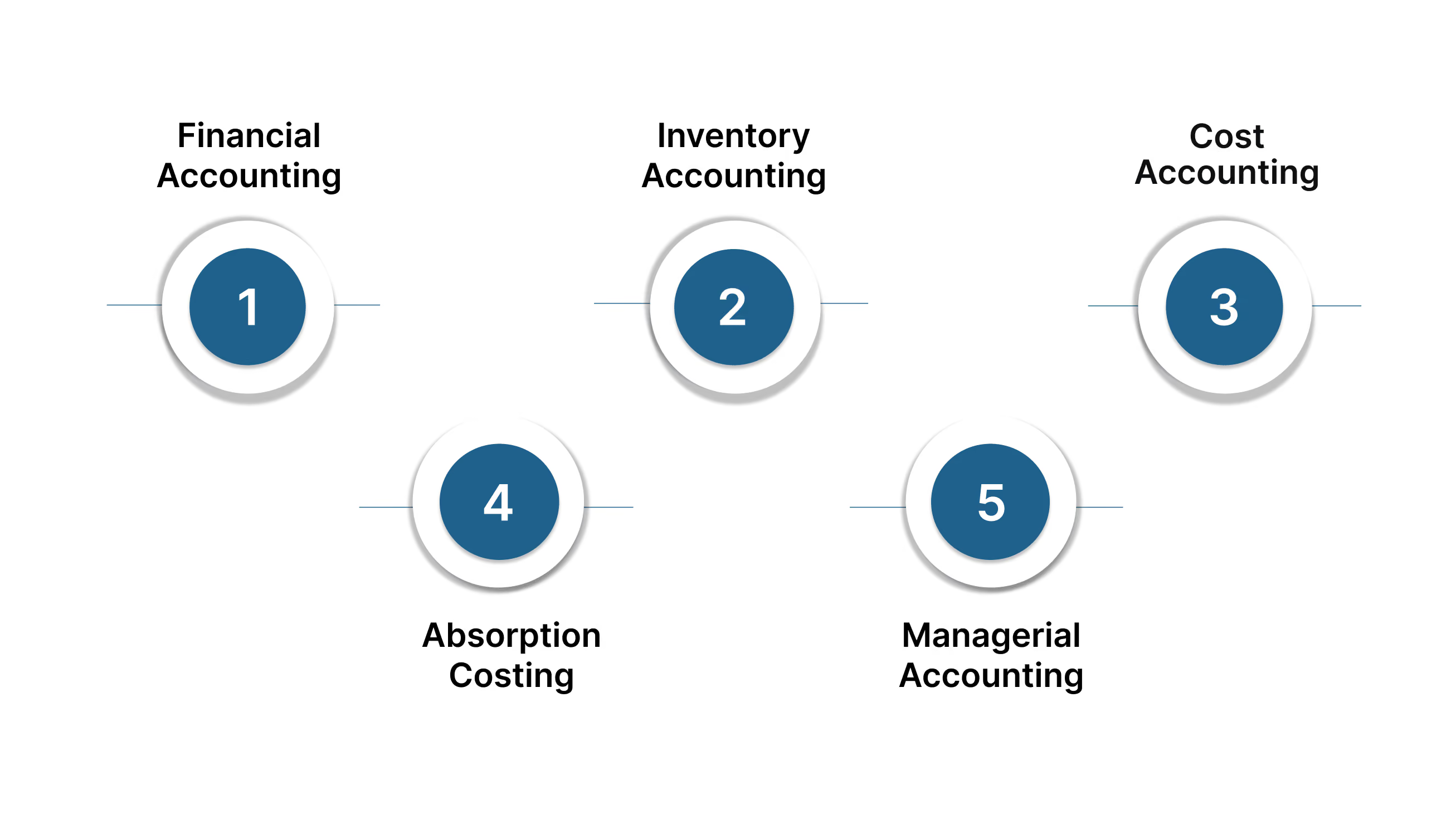
製造業では、現場から財務諸表に至るまで、複数の会計分野が連携して機能しています。それぞれが「製造コストはいくらか」「在庫をどう評価すべきか」「利益率を改善するために経営層は何を変えるべきか」という異なる問いに答えます。
これは外部報告において最優先されるものです。米国の製造業者は米国会計基準(US GAAP)に従い、インドの事業体はIFRSに基づくインド会計基準(Ind AS)に従います。
どちらの基準でも、在庫は原価で計上され、後に正味実現可能価額と比較されます。米国会計基準ではFIFO、平均原価法、後入先出法(LIFO)などの手法が認められていますが、IFRSおよびインド会計基準ではLIFOが禁止されているため、米国からインドにかけて展開する企業は、手法の選択に細心の注意を払う必要があります。
この会計は、生産活動を貸借対照表および売上原価の数値へと変換します。企業は一般的にFIFOまたは平均原価法を使用します。IFRSおよびインド会計基準では、原価と正味実現可能価額のいずれか低い方で評価するモデルが求められます。
米国会計基準も同様のモデルを使用しますが、LIFOや小売法が適用される場合には異なる「市場」テストが適用されます。これらのルールは利益率や税務に影響を与えるため、米国とインドの帳簿間で一貫性を保つことが重要です。
原価計算は、いわばエンジンのような役割を果たします。直接材料費、直接労務費、製造間接費を把握し、生産された単位に割り当てます。製造業者は、生産方法に基づいて手法を選択します。個別原価計算はカスタムオーダーや小ロット生産に適しており、総合原価計算は連続的で均質な生産に適しています。
多くの工場では、目標と実績の乖離を特定するために、差異分析を伴う標準原価計算も採用しています。活動基準原価計算(ABC)は、大まかな平均値ではなく、実際のコストドライバーを使用して間接費を配賦するのに役立ちます。
This costing is required for external financial statements. It puts all manufacturing costs into inventory, including fixed factory overhead. That keeps reporting comparable and ties cost to revenue when goods are sold. Managers often review variable costing internally to see contribution margins and short-run decisions more clearly, but they still publish absorption-based results.
Managerial pulls the above into plans and decisions. Teams use cost and inventory data to set prices, budget materials and labour, monitor capacity, and evaluate product line profitability.
When a company operates from the US to India, managerial reports also reconcile method differences across GAAP, IFRS, and Ind AS so leaders see one version of the truth for unit cost, margins, and cash tied up in stock.
Put together, these disciplines give manufacturers a full view of performance. Financial accounting keeps you compliant. Inventory and absorption rules keep statements consistent. Cost and managerial tools help you reduce waste, set prices with confidence, and plan production with fewer surprises.
VJM Global brings expertise in U.S. GAAP, IFRS, and Ind AS, helping cross-border manufacturers maintain consistency in cost reporting and financial compliance across both jurisdictions.
Each of these accounting types plays a role in measuring production performance. But before we can calculate profits or value inventory, we need to understand the building blocks: the main cost components that make up total manufacturing expense.
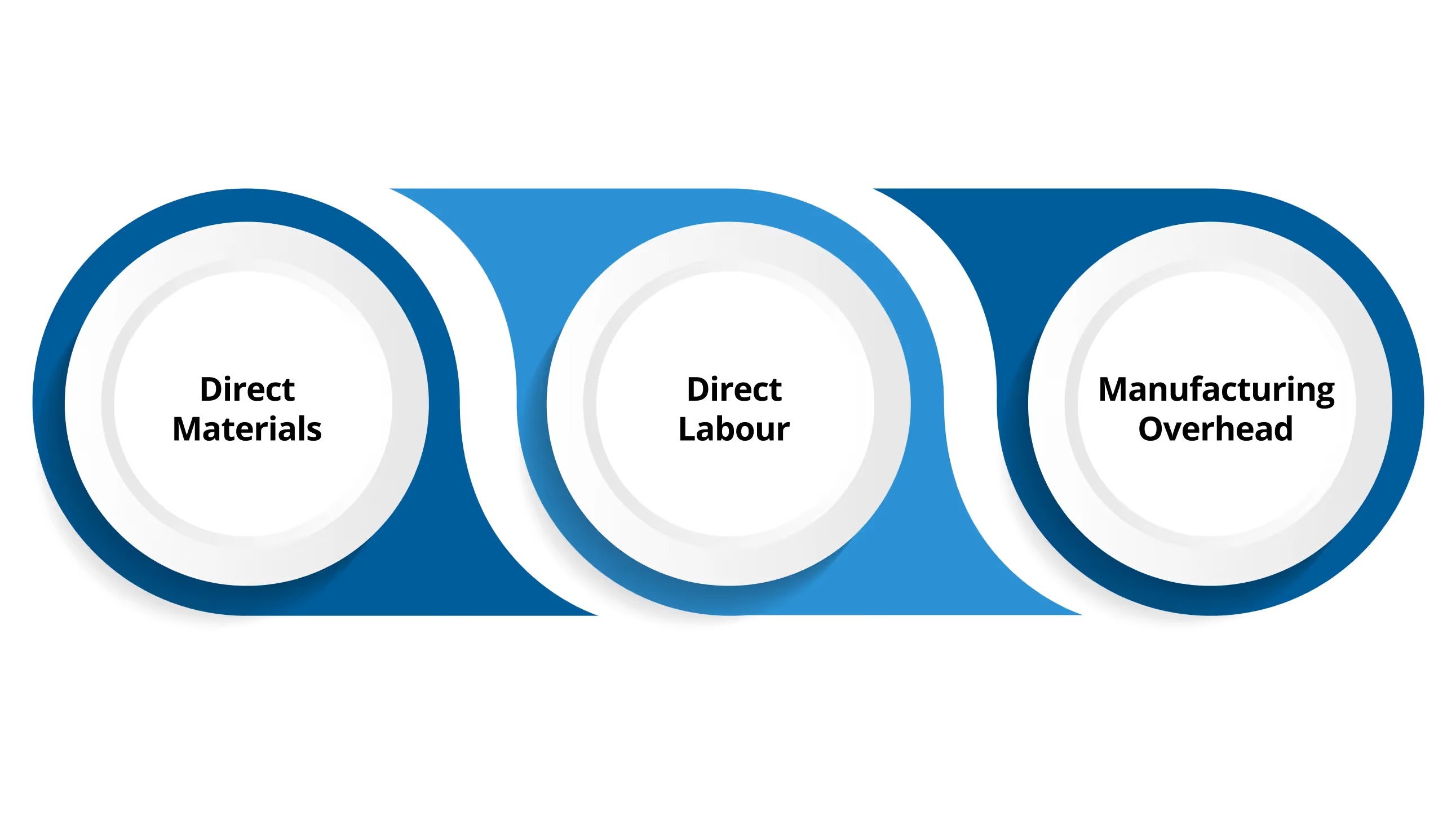
Manufacturing relies on a mix of accounting disciplines that work together to turn shop-floor activity into clear financial insight. Here are the core types and how they fit:
These three together are often called product costs because they are capitalised into inventory and later flow into COGS when you sell the goods. Selling and administrative costs sit outside manufacturing and are treated as period costs, expensed in the period incurred. Keeping the line clear between product and period costs is a basic control that protects reported profit.
You will also hear two helpful summaries:
Costs behave differently as output rises or falls, so it helps to group them by behavior:
Finally, tie costs to where goods sit in the flow. Raw materials await use, work in progress (WIP) holds partially completed items carrying materials, labor, and overhead, and finished goods are sale-ready. Accurate moves between these stages keep your balance sheet clean and your COGS trustworthy.
If your operations run from the US to India, align definitions and valuation rules on both sides so reports match and decisions stay consistent.
Suggested read: How to Claim R&D Tax Credits for Manufacturing: Outsource to India from the US
When these costs are identified and grouped correctly, manufacturers can translate them into measurable outputs. The next logical step is to see how these costs flow through the production process, from raw material to finished goods, by calculating the cost of goods manufactured and the cost of goods sold.
製造業において、製造原価(COGM)と売上原価(COGS)という2つの重要な数値を理解することは不可欠です。これらの数値は、製造現場の動きを財務諸表に結びつけるものであり、特に米国からインドにまたがるようなグローバルな事業展開を行っている場合には極めて重要となります。
COGMは、ある期間中に完成品を製造するために発生した総コストを指し、その製品が販売されたかどうかは問いません。これには直接材料費、直接労務費、製造間接費が含まれ、仕掛品(WIP)の期首在庫を加え、期末在庫を差し引いて算出されます。
標準的な計算式は以下の通りです。
COGM = 期首仕掛品在庫 + 当期製造費用 – 期末仕掛品在庫
ここで、当期製造費用 = 直接材料費 + 直接労務費 + 製造間接費 となります。
Why it matters:
COGSは、その期間中に販売された完成品のコストを反映します。これは製造コストと収益を結びつけるもので、損益計算書に直接記載されます。
製造業における一般的な計算式は以下の通りです。
COGS = 期首製品在庫 + COGM – 期末製品在庫
これは在庫フローのより広い視点と一致します。期首在庫に製造した分(COGM)を加えると販売可能な商品となり、そこから期末在庫を差し引くことで、実際に販売された分が算出されます。
Why it matters:
これらを効果的に計算するには、以下が必要です。
あわせて読みたい:GAAPと非GAAPの売上総利益の理解:なぜ企業は米国からインドへアウトソーシングするのか
Knowing your COGM and COGS gives you a clear picture of profitability. But how you assign value to your inventory along the way can change those results significantly. That’s why the next section focuses on inventory costing methods and how to choose the right one for your business.
Inventory is the heartbeat of any manufacturing business. How you value it determines your cost of goods sold (COGS), gross profit, and ultimately, how healthy your balance sheet looks:
FIFO assumes the oldest inventory items are sold first. The cost of older materials moves to COGS, while newer purchases remain in ending inventory. In times of rising material prices, FIFO shows lower COGS and higher profits because cheaper, earlier costs are matched against current sales. It’s widely accepted under both US GAAP and Ind AS/IFRS, making it a practical choice for manufacturers operating across both markets.
LIFO assumes the most recently purchased goods are sold first. It matches current costs with current revenue and can reduce taxable income when prices rise. However, LIFO is allowed under US GAAP but prohibited under IFRS and Ind AS, so multinational manufacturers from the US to India must maintain reconciliation between LIFO books in the US and FIFO or weighted-average books in India.
The weighted-average method smooths price fluctuations by averaging total cost of goods available for sale over total units. Each unit in inventory carries the same average cost. It’s simple to maintain in automated systems and is accepted under both US GAAP and Ind AS/IFRS. Many Indian manufacturers prefer this method for its stability when raw-material prices change frequently.
This method traces the exact cost of each unique item, making it suitable for high-value or custom-made goods, such as machinery or luxury components. It provides the most precise matching of cost and revenue but requires detailed tracking and is rarely used in high-volume manufacturing.
Standard costing sets predetermined costs for materials, labour, and overhead, and records differences as variances. It’s often combined with other methods for internal control and performance monitoring. Variances, favourable or unfavourable, help managers evaluate efficiency and take corrective action.
ABC allocates overheads using actual activities, machine hours, quality checks, or batch setups, rather than broad averages. It offers a clearer picture of true production cost, especially in complex or multi-product environments. For cross-border manufacturers from the US to India, ABC supports better transfer-pricing documentation by linking costs to specific operational drivers.
The best costing method depends on your production type, price volatility, and reporting obligations. A U.S. firm manufacturing in India might maintain FIFO or weighted-average in Indian books for Ind AS compliance, while keeping LIFO for U.S. tax purposes. Consistency and disclosure are key. When reporting consolidated results, adjustments ensure inventory valuation aligns with group policy.
At VJM Global, we advise manufacturers on selecting and applying the right inventory-costing method, whether FIFO, weighted average, or standard costing, to keep valuations consistent and transparent across entities.
Costing is only one part of the financial picture. To turn cost data into decisions, manufacturers need tools that link production, volume, and profitability, which brings us to cost-volume-profit (CVP) analysis and why it matters for strategic planning.
Cost-Volume-Profit (CVP) analysis is a simple but powerful way to understand how costs, sales volume, and profits relate to each other. It helps manufacturers answer one of the most practical questions in business: how many units do we need to sell to cover our costs, and how much profit will we earn beyond that point?
計算式は非常にシンプルです:
損益分岐点(単位数)= 固定費 ÷ (製品単価 - 変動費単価)
この分岐点を超えると、製品が1単位売れるごとに、限界利益分だけ利益が増加します。
製造業では、プロセスの自動化、部品の外注、生産能力の拡大など、常にトレードオフの判断が求められます。CVP分析は、各決定がコスト構造をどのように変化させるかを明らかにします。例えば、自動化によって固定費が増加しても変動費が下がれば、損益分岐点が変化します。また、米国からインドまで拠点を展開する企業にとって、為替変動や原材料価格の変動が与える影響を予測する際にも役立ちます。
マネージャーはCVPモデルを以下の目的で使用します:
CVP分析は意思決定の指針となりますが、システム全体の信頼性を保つには健全な会計実務が不可欠です。最後に、製造業の会計を強化し、地域をまたいで一貫性を維持するためのベストプラクティスを確認しましょう。
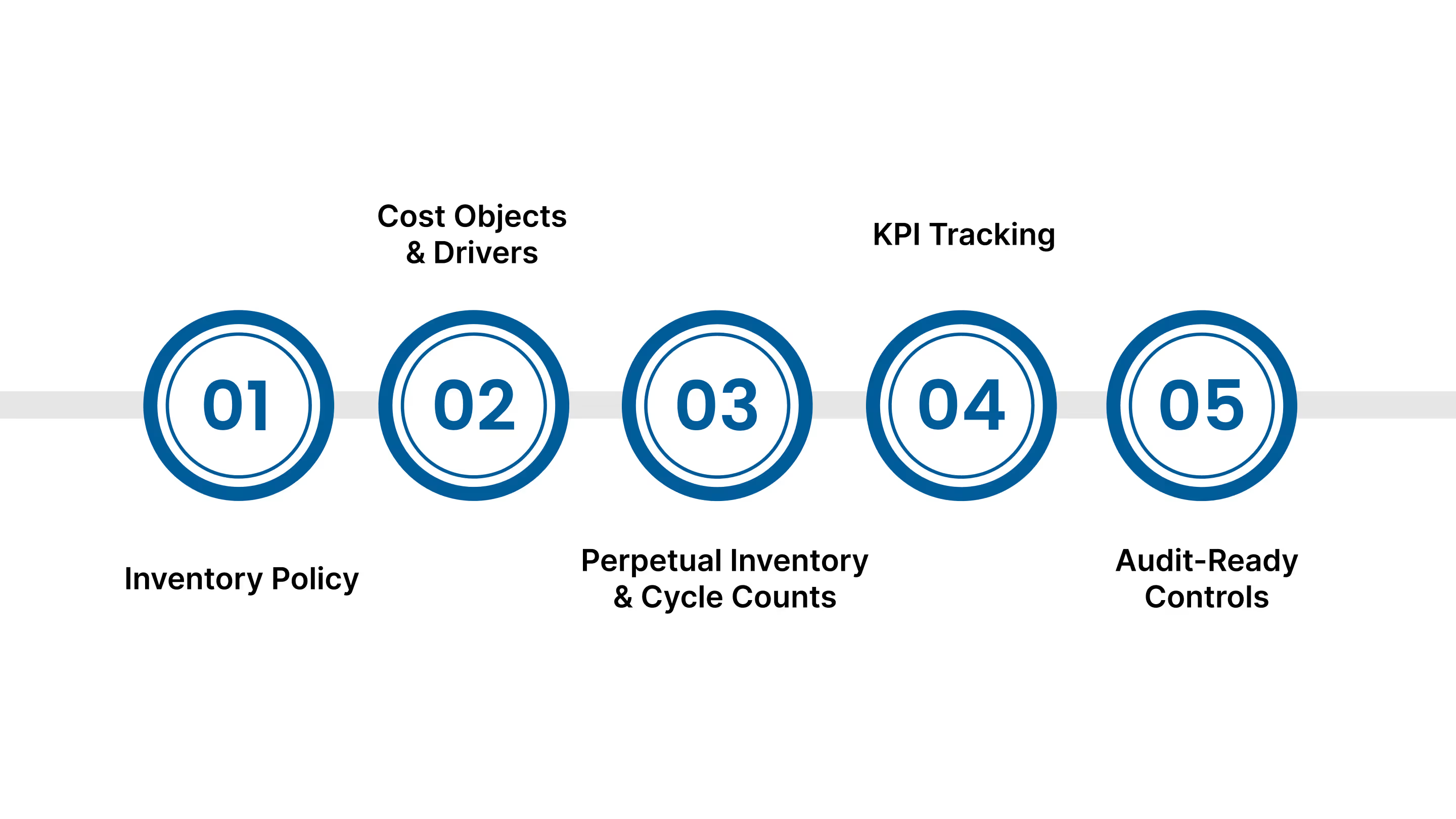
強固な製造業会計は、毎月守るべきシンプルなルールから始まります。その目的は、価格設定、計画策定、監査において信頼できる明確な数値を把握することにあり、特に米国からインドまで事業を展開している場合には重要です。
原価計算方式と評価ルールを決定して文書化し、毎期一貫して適用します。IFRS(国際財務報告基準)およびInd AS(インド会計基準)では、在庫は「取得原価」と「正味実現可能価額」のいずれか低い方で評価されます。
米国会計基準(US GAAP)では、多くの在庫は「取得原価」と「時価」のいずれか低い方で評価されますが、近年の指針では「取得原価」と「正味実現可能価額」のいずれか低い方で評価する企業も増えています。米国の帳簿で後入先出法(LIFO)を採用し、インドで先入先出法(FIFO)や平均原価法を採用している場合は、グループ全体で結果を一致させるための調整表を作成してください。
製品、バッチ、ライン、顧客など、何をコスト対象とするかを決定し、機械稼働時間や段取り回数など、実際の作業を反映した配賦基準を選択します。
間接費が多額である場合や、製品ごとのリソース消費量に大きな差がある場合は、活動基準原価計算(ABC)の導入を検討してください。工場、財務、監査の各チームが同じ認識を持てるよう、モデルを文書化しておくことが重要です。
動きの速い工場では、年1回の実地棚卸だけでは不十分です。サイクルカウント(循環棚卸)を活用して、少量の在庫を頻繁にテストし、差異を調整して根本原因を解決しましょう。
継続的な棚卸システムとサイクルカウントの併用は、記録の正確性を高め、信頼性の高い財務報告を支えます。政府や業界の指針においても、サイクルカウントは管理と効率化のための主要な実践手法と見なされています。
原材料、仕掛品、製品の在庫回転率を監視してください。傾向を分析することで、動きの鈍い品目、ボトルネック、データ上の問題を特定できます。回転率は単純な比率ですが、在庫に固定されたキャッシュや売上原価(COGS)の正確性を測るための最も重要な指標の一つです。
品目の追加、原価の変更、調整仕訳の入力を許可する権限を制限してください。購買、受入、記録の職務を分離します。これらの管理項目をCOSOフレームワークにマッピングすることで、日常業務においてリスクがどのように対処されているかを経営陣や監査人に示すことができます。
部品表(BOM)、標準工程、差異分析、間接費プール、および承認済みの棚卸表を適切に管理しましょう。会計業務を外部委託している場合は、その管理体制の妥当性を確認するために、関連するSOC保証報告書の提出を求めてください。
現場のデータから元帳への反映までをスムーズに行える月次チェックリストを作成します。材料の払い出し、労務費の把握、間接費の配賦、仕掛品の繰越、製造原価(COGM)および売上原価(COGS)の計算、そして在庫補助元帳との照合を含めることが重要です。
米国からインドにかけて事業を展開している場合は、通貨換算の手順に加え、ポリシーで定められた米国会計基準(GAAP)とインド会計基準(Ind AS)の差異を調整するための恒久的な照合プロセスを組み込んでください。
優れた製造会計には3つの役割があります。各製品の真の原価を明らかにすること、在庫価値の信頼性を保つこと、そして経営陣が改善の優先順位を判断する助けとなることです。原価計算や在庫管理のために選択した手法と、それを毎月継続的に適用する方法が、価格設定、生産能力計画、そして売上総利益を左右します。工場、サプライヤー、財務チームが国をまたいで連携する場合、共通のルールと明確な引き継ぎの重要性はさらに高まります。これこそが、決算時の予期せぬ事態を防ぎ、キャッシュ、コスト、生産量のバランスを維持する秘訣です。
工場の現場における原価計算から連結決算時の法定報告までを理解するパートナーをお探しなら、VJM Globalにご相談ください。当社のチームは、在庫評価、製造原価および売上原価の構築、監査対応のワークペーパー作成、そして米国からインドにわたるプロジェクトを含むクロスボーダーの報告業務をサポートします。
今すぐお問い合わせください。貴社のプロセスを伺い、システムや期限に合わせた実践的な計画をご提案します。
多くの製造業では標準原価を四半期または半年ごとに見直しますが、大量生産を行う工場では、価格や効率の変化を迅速に把握するために、材料費や労務費を毎月再確認することが一般的です。
最新のERP
システムは、生産データ、在庫追跡、会計モジュールを統合します。これにより、人為的なミスを減らし、部門を横断したリアルタイムの原価可視化を実現します。
間接費の配賦が不適切だと、製品原価が歪められ、在庫価値が誤って表示され、価格設定のミスにつながる可能性があります。定期的な差異分析とコストドライバーの定期的な再調整を行うことで、こうした問題を未然に防ぐことができます。
It provides insights into cost behaviour, product profitability, and capacity use, information that helps managers decide on pricing, process improvements, and investment priorities.

.avif)


