

.avif)
Understanding your company’s financial health means knowing the right numbers to focus on. Two common metrics you’ll hear about to assess business performance are operating income and EBITDA. While they might seem similar, each tells a different story about your business’s profitability and cash flow.
EBITDA is typically higher than operating income because it adds back depreciation and amortization, which can be a significant portion of operating expenses, sometimes exceeding 90% of operating income. Understanding the difference between operating income vs. EBITDA helps you make smarter decisions and manage daily operations. In this blog, we’ll explain what operating income and EBITDA mean, how they’re calculated, and when to use each.
Operating income, also known as operating profit or EBIT (Earnings Before Interest and Taxes), measures the profit a company earns from its core business activities. It reflects the amount of money remaining after covering the costs necessary to run the business, but before paying interest or taxes.
There are two common ways to calculate operating income:
Bottom-Up Formula: Operating Income = Gross Profit − Operating Expenses − Depreciation − Amortization
Depreciation accounts for the wear and tear on physical assets, such as equipment, while amortization spreads out the cost of intangible assets, like patents or trademarks, over their useful life. ‘
Amortization is the gradual expense of spreading the cost of an intangible asset, like patents or trademarks, over its useful life to reflect its declining value over time.
This method begins with gross profit (revenue minus the cost of goods sold) and then subtracts operating costs and non-cash expenses, such as depreciation.
Top-Down Formula: Operating Income = Net Income + Interest Expenses + Tax Expenses
Both approaches yield the same operating income figure but offer different perspectives depending on the available data.
Now that we’ve covered operating income, let’s take a look at EBITDA and what it means.
EBITDA stands for Earnings Before Interest, Taxes, Depreciation, and Amortization. It’s a financial metric that helps you understand a company’s operating performance by focusing on earnings from its core business activities. By excluding interest, taxes, and non-cash expenses such as depreciation and amortization, EBITDA provides a clear view of the company’s ability to generate cash from operations.
This measure is useful when comparing companies, as it removes factors that can vary widely due to financing decisions or accounting policies.
If you want to calculate EBITDA yourself or interpret reported figures, here’s the basic formula:
EBITDA = Operating Income + Depreciation + Amortization
Some companies also report an “adjusted EBITDA,” which removes one-time or unusual expenses to give a clearer view of ongoing performance.
While EBITDA gives valuable insight, it’s important to remember that it doesn’t account for all expenses, such as interest payments or investments in equipment. Therefore, it’s best used with other financial metrics to gain a comprehensive understanding of a company’s financial health.
To make these ideas straightforward, let’s walk through some examples of how to calculate both operating income and EBITDA.
To better understand how operating income vs. EBITDA calculations work, let’s walk through some practical examples using simple formulas.
Parts Galore, a small manufacturing company, has:
計算方法:
Operating Income = $430,000
This shows the profit from their core business activities before interest and taxes.
Peaches and Cream Ice Cream Company has:
計算方法:
EBITDA = $500,000
This represents earnings before interest, taxes, depreciation, and amortization.
Jane’s General Store has:
計算方法:
EBITDA = 570,000ドル
これは、減価償却費などの非現金支出の影響を受ける前の収益を示しています。
計算方法を理解すると、営業利益とEBITDAの違いがより明確になります。押さえておくべき主なポイントは以下の通りです。
営業利益は、減価償却費を含む営業費用を差し引いた後の本業による利益を表しますが、利息や税金は含まれません。一方、EBITDAは、減価償却費、利息、税金を加算することで、企業の現金創出能力を浮き彫りにします。
そのため、EBITDAは設備投資額や税務構造が異なる企業同士を比較する際に有用であり、営業利益は実際の業務効率や経営成績をより明確に把握するのに役立ちます。
これらの違いをまとめるため、比較表で並べて解説します。
営業利益は企業の事業運営の健全性を示し、EBITDAは会計や財務要因を考慮する前の収益力を示します。
あわせて読みたい: GAAPとGAASの違いを理解する。
どちらの指標にも、企業の財務健全性のどの側面を理解したいかによって、長所と短所があります。それぞれのメリットとデメリットを見ていきましょう。
営業利益とEBITDAにはそれぞれ強みと限界があるため、財務分析に用いる前に各指標のメリットとデメリットを理解しておくことが重要です。
これらの利点と欠点を比較検討することで、特定の財務目標や分析の文脈に基づいた最適な指標を選択できるようになります。
これらの指標への理解が深まったところで、VJM Globalがどのようにその活用を最大化できるかをご紹介します。
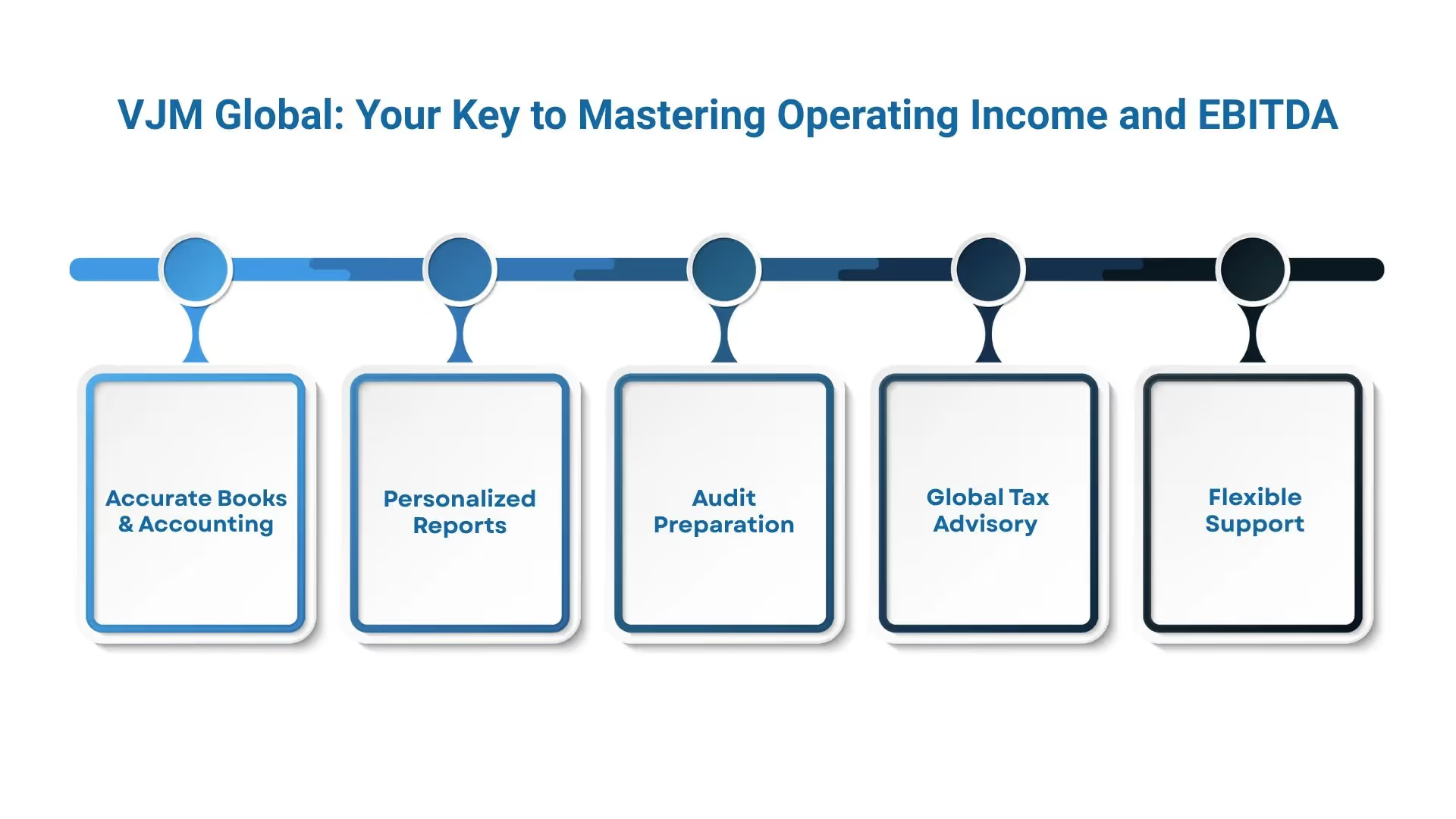
営業利益やEBITDAといった複雑な財務指標を読み解くには、正確な会計処理と明確な財務報告が不可欠です。VJM Globalは、正確な記帳、詳細な財務分析、監査サポートを専門としており、これらの指標を文脈に沿って理解し、情報に基づいた意思決定を行えるよう支援します。
当社が提供するカスタマイズされたサービス:
VJM Globalまで今すぐお問い合わせください。単に数字を管理するだけでなく、営業利益やEBITDAといった指標を真に理解し、成長を促進するために活用できる財務チームが貴社をサポートします。

.avif)


