


Managing long-term projects often presents the challenge of mismatched timing between the completion of work and the receipt of payments. This discrepancy can make it difficult to accurately report revenue, justify profits, and effectively plan cash flow. For contracts that extend over several months or even years, a more reliable method is needed to align financials with the progress of the work. The percentage of completion accounting method offers a practical solution to this issue.
Most general and speciality commercial contractors use PoCM to report revenue on multi-month projects. This accounting approach lets you recognize revenue as a project progresses, not just when it's finished. It gives a more accurate view of your earnings, especially in construction, engineering, or custom manufacturing industries, where delivery takes time and every phase counts.
In this blog, you’ll see how it works, when to use it, and how it can give you better control over your financial reporting.
You use the percentage of completion accounting method to recognize revenue and costs during long-term contracts, typically those extending beyond one accounting period. This prevents revenue from piling up until the project ends and gives you a realistic financial snapshot.
This method allows U.S.-based businesses to recognize revenue and expenses as a project moves forward, providing a more accurate financial picture over the course of the contract. It is especially useful for U.S. companies working on long-term projects, where revenue and costs are tracked based on the progress made in completing the work.
You should use the percentage of completion accounting method as it provides a more accurate reflection of a project's financial status. It also matches revenue recognition with the progress of the work, and offers better financial visibility for projects that span multiple periods.
The Percentage of Completion Accounting Method works best in situations where long-term contracts or projects span multiple accounting periods, such as construction or large-scale manufacturing. You should choose this method when the project has a clearly measurable progress and a reliable basis for estimating its completion.
The Percentage of Completion Accounting Method is a widely used approach for recognizing revenue and expenses over the life of long-term projects. While this method can be extremely beneficial for U.S.-based businesses, there are certain challenges to keep in mind. U.S. companies need to accurately estimate the completion percentage and project costs to avoid overestimating or underestimating revenue.
Following this process, you recognize income as work progresses, giving you steadier profits and timely insights into each contract’s financial health.
So, what do you gain by using this method? Let’s break down the practical benefits beyond just ticking compliance boxes.
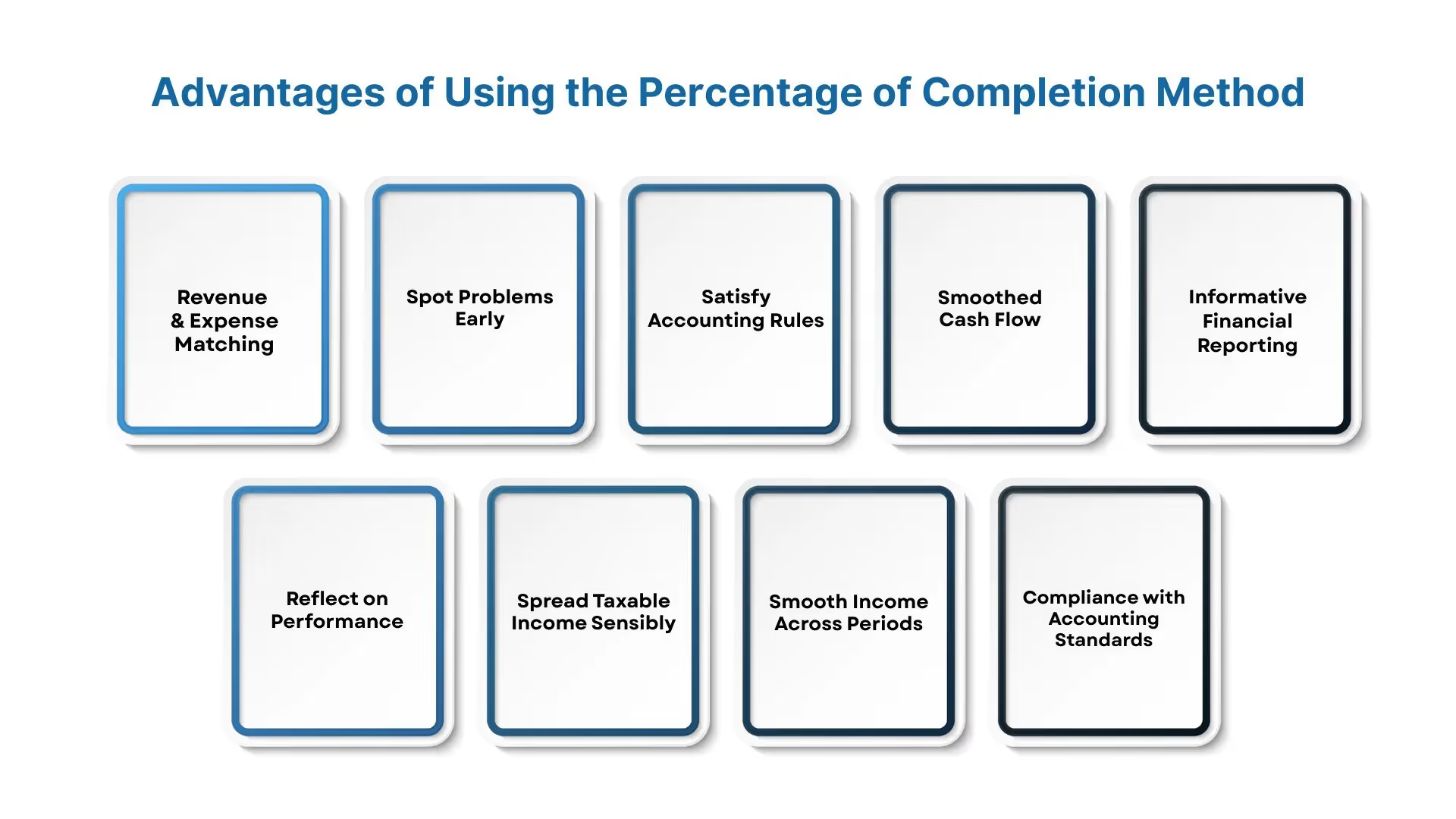
The percentage of Completion Accounting Method provides a realistic view of income over multiple accounting periods. The benefits of using the percentage of completion method in accounting are as follows:
あわせて読みたい: 移転価格:原価加算法(コストプラス法)
この手法を適用することで、収益と費用が発生ベースで報告されるようになり、財務の予測可能性が高まり、透明性が向上し、ステークホルダーからの信頼も強化されます。
メリットを理解したところで、この手法がどのようにプロジェクトの進捗を追跡・報告するのか、その仕組みを見ていきましょう。
この工事進行基準による会計処理は、複数の会計期間にまたがるプロジェクトを抱える米国の企業にとって特に有益です。米国企業はこのアプローチを用いることで、契約の進行状況を反映させ、財務報告を実際の作業進捗とより正確に一致させることができます。プロジェクトの進行に合わせて収益を認識するためのステップは以下の通りです。
作業を月単位やマイルストーン単位などの測定可能な段階に分割し、進捗を記録します。これらの段階が収益認識の基礎となります。
まずは仕掛品(WIP)スケジュールを作成し、契約金額(承認済みの変更注文を含む)、総予定コスト、現在までの実際コスト、およびクライアントへの請求額を追跡します。このスケジュールが収益計算の根拠となり、過大請求や過少請求の有無を明らかにします。
以下の計算式で進捗率を算出します:
進捗率 = 現在までのコスト ÷ 総予定コスト
これにより、業務のどの程度が完了したかがわかります。
進捗率に契約総額を掛けて、収益を認識します:
収益認識額 = 進捗率 × 契約金額
例えば、12万ドルの契約で進捗率が50%の場合、6万ドルの収益を計上します。
過大請求または過少請求は、以下の計算で求めます:
Revenue Recognized – Progress Billings
A positive result (underbilling) appears as an asset; a negative (overbilling) shows as a liability on your balance sheet.
Multiply the same percentage complete by the total estimated cost to calculate the current-period expense. Then, you subtract that from revenue to get profit.
Update costs, billing, and progress at the end of each reporting period, repeating steps 2 through 5 to keep financials current.
This method keeps your revenue reports in sync with the actual work done. You update estimates as work continues to maintain accuracy.
There’s more than one way to calculate progress. Let’s examine the different methods used to determine a project's progress.
The Percentage of Completion Accounting Method is ideal for U.S. businesses managing contracts that take more than one year to complete, such as large construction projects or multi-phase software development. For U.S. CPA firms handling these projects, this method ensures that revenue and costs are consistently recognized as the work progresses, reducing the risk of financial discrepancies. You can select the calculation method based on your project type and what you measure reliably:
Base completion on the costs spent compared to the total projected cost. This is the most widely used method, especially in construction, since costs mirror progress.
% Complete = Costs Incurred ÷ Total Estimated Cost
Example: If you’ve spent $40,000 out of an estimated $80,000 budget, you’re 50% complete.
Also Read: Cost Of Registration Of A Company In India
Measure progress by effort, like labor or machine hours, divided by total estimated hours. This works if hours relate closely to the outcome.
% Complete = Hours Worked ÷ Total Estimated Hours
Example: If your team logs 1,200 hours of an expected 2,400, you're at 50%.
契約上の総数に対して、引き渡し済みの成果物の数をカウントします。この方法は、成果物が均一で数えられる場合に適しています。
進捗率(%)= 引き渡し済みユニット数 ÷ 総ユニット数
例:10棟の同一住宅のうち6棟が完成した場合、進捗率は60%となります。
現代の会計基準(ASC 606 / IFRS 15)では、以下の2つの手法が適用されます:
進捗度基準における各手法の比較は以下の通りです:
プロジェクトの進捗管理方法に合致した手法を選択し、類似の契約ではその手法を継続して適用してください。これにより、作業の進展に合わせて一貫性のある明確な収益報告が可能になります。
VJM Globalは、ソフトウェアおよびサービス業の企業が、信頼できるプロジェクトデータに基づき、コスト対コスト法、工数ベース、アウトプットベースといった適切な進捗度基準を適用できるよう支援します。マイルストーンごとの収益認識やコスト追跡を管理し、クライアントが契約の進捗状況を正確に報告できるようサポートします。当社の会計支援により、インド国内外で多段階プロジェクトを管理するクライアントの収益計上の誤りを削減してきました。
選択肢を理解したところで、実際に数値を当てはめて収益を計算してみましょう。
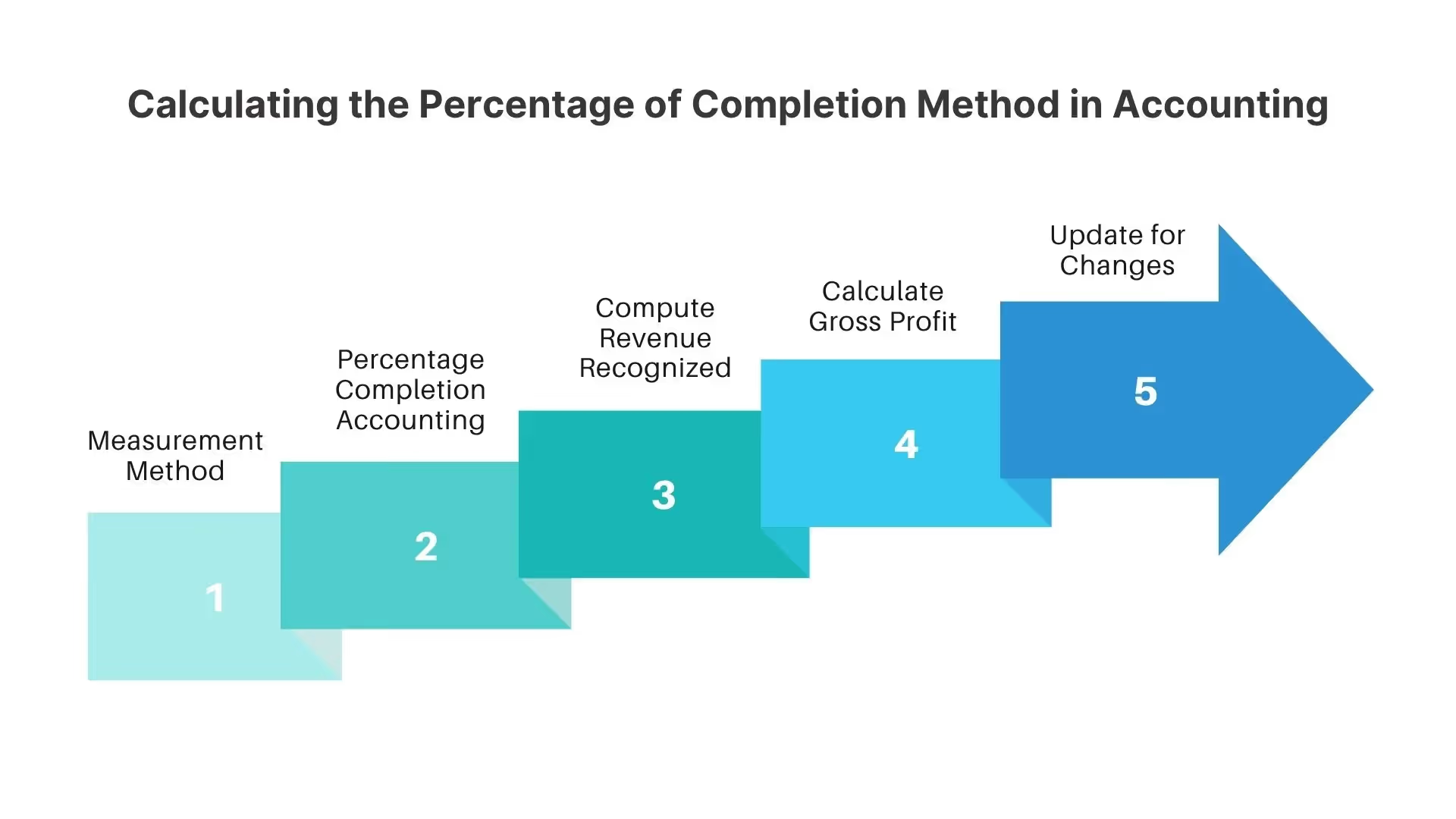
プロジェクトの進行に合わせて収益を認識するには、明確で体系的なプロセスに従う必要があります。進捗度基準の計算における主なステップは以下の通りです:
進捗状況を最も正確に追跡できるアプローチを選択します:
進捗度の測定基準(コスト対コスト、工数、または引き渡しユニット)を選択し、以下を計算します:
進捗率 =(発生したコストまたは工数 ÷ 総見積額)
次に、その数値を収益と総費用の両方に適用します。
or:
= Hours Worked ÷ Total Estimated Hours
or:
= Units Delivered ÷ Total Units Expected
For example, if you’ve spent $4,000 out of an $8,000 estimated budget, you’re 50% complete.
Multiply the completion percentage by the total contract value:
Revenue to Date = Percentage Complete × Contract Price
For example, if your contract is $12,000 and you’re 50% complete, record $6,000 in revenue.
You may also compute the profit earned:
Gross Profit Earned = Revenue to Date – Costs Incurred to Date
For example, if that's $6,000 – $4,000, your gross profit is $2,000 this period.
Reassess total cost and revenue estimates each period. Adjust your calculations when estimates change.
By adhering to these steps, you align revenue and expenses with actual work. Companies using this method report revenue progressively, avoiding irregular spikes and offering clear financial insight.
This next step is about applying what you’ve calculated to your financial statements. Here’s how revenue and expenses show up on your books.
In the accounting percentage of completion method, you recognize revenue and expenses in line with project progress, with no waiting until final delivery.
進捗率に契約総額を乗じて、これまでに獲得した収益を算出します。
例:契約額12,000ドルの案件で、見積原価8,000ドルのうち4,000ドル(50%)を消化した場合、6,000ドルの収益を計上します。
以下の計算式を使用します:
当期までの収益 = 進捗率 × 契約金額
当期までの費用 = 進捗率 × 見積総原価
例:契約総額100,000ドルで進捗率が30%の場合、30,000ドルの収益と費用を計上します。
同じ進捗率を適用して、見積総原価の相当分を費用として計上します:
当期までの費用 = 見積総原価 × 進捗率
見積総原価が8,000ドルで進捗率が50%の場合、4,000ドルの費用を計上します。
あわせて読みたい:CSR活動で発生した費用は仕入税額控除の対象外です。
累計額から前期までに計上した金額を差し引くことで、当期に計上すべき収益と費用を算出します。
獲得した収益と請求額を比較します:
例:契約額100,000ドルの案件で進捗率が50%であるにもかかわらず60%を請求した場合、10,000ドル(10% × 100,000ドル)の過大請求となります。
作業の進捗に合わせて収益と費用を計上することで、財務報告と実際のパフォーマンスを一致させます。これにより、プロジェクト終了時の急激な変動を防ぎ、貸借対照表の数値を常に最新の状態に保つことができます。
作業を始める前に、注意すべき点を知っておくことが重要です。ここでは、気をつけるべきポイントと一般的な問題を回避する方法を解説します。
工事進行基準を採用する際は、その脆弱性と保護策を考慮に入れる必要があります。これらの手順を踏むことで、収益の正確性を維持し、不正利用を防ぎ、キャッシュフローを健全に保つことができます。
収益はコストと進捗の見積もりに基づいて計上します。総コストを過小評価したり、進捗を過大に報告したりすると、利益を誤って表示するリスクが生じます。その結果、本来よりも多くの収益を早期に計上してしまい、後で修正を迫られる可能性があります。
収益を見積もりに基づいて計上するため、コスト追跡の不正確さや楽観的な仮定は、架空の利益や損失につながる恐れがあります。コストを誤って報告した企業は収益を歪めることになり、過去には東芝が利益を過大計上し、規制当局の介入を招いた事例もあります。
請求額と計上収益を照合してください:
現金が入金される前に収益を計上する場合があります。特に顧客の支払いが遅れたり、請求サイクルが長期化したりすると、流動性が圧迫される可能性があります。
コスト対コスト法、投入時間数、または納品単位など、一つの手法を一貫して使用し、各期間で見積もりを更新する必要があります。手法を変更したり、見積もりの修正を怠ったりすると、不整合が生じ、監査リスクが高まります。
範囲やコストを調整する際は、進捗を再計算しなければなりません。頻繁な変更や遅れての変更指示は報告を複雑にし、遡及的な調整が必要になる場合があります。これらは利益や資産・負債の残高に影響を与えます。
この手法は経営陣の見積もりに依存するため、意図的または偶発的な操作のリスクがあり、期間間で収益やコストを付け替えて利益を平準化する恐れがあります。著名な企業がこれを悪用し、規制当局の監視対象となった事例もあります。
GAAP(ASC 606)およびIFRS第15号に基づき、この手法を適用できるのは以下の場合のみです:
詳細な仕掛品(WIP)の追跡、リアルタイムのコスト把握、定期的な見積もりの見直しが不可欠です。強力な内部統制と統合システムがなければ、正確性の維持や監査への対応に苦労することになります。
これらの領域を注視することで、財務および規制上のリスクを軽減し、ステークホルダーからの信頼を維持できます。
理論が明確になったところで、次のセクションでは、この手法がビジネスの現場でどのように機能するかを解説します。
米国の企業は、この手法を用いることで財務諸表を最新の状態に保ち、プロジェクトの実際の進捗状況と一致させることができます。これは、財務パフォーマンスをリアルタイムで把握する必要がある投資家やステークホルダーにとって特に有益です。以下の事例は、工事進行基準(PoCM)がどのように収益とコストをリアルタイムで追跡するかを示しています。
この手法を、目に見える進捗に基づいた請求に適用します。例えば、80万ドルのプロジェクトで推定コストの半分が発生した場合、その期間に収益の50%(40万ドル)を計上します。WIPレポートで進捗を追跡し、それに応じて請求額と収益を調整します。
1年間にわたるソフトウェア構築など、複数のフェーズに分かれたカスタム契約に利用します。納品を待つのではなく、進捗(モジュールの完了や費やした時間など)を記録し、その進捗に基づいて毎月収益を認識します。
あわせて読みたい:インドでソフトウェア会社を立ち上げる方法
複数の期間にまたがる大規模な製造契約や造船契約に利用します。マイルストーンや段階が達成されるごとに、それに応じた収益とコストを報告します。
税務および報告要件は以下の通りです。
これらの適用例は、建設、テクノロジー、重機などの業界において、規制要件を満たしながら、この手法が実際の業務でどのように活用されているかについての実践的な洞察を提供します。
なぜ工事完成基準ではなく、この手法を使うのか疑問に思われるかもしれません。次のセクションでは、工事進行基準(PoC)と工事完成基準(CCM)のどちらを選択すべきか判断するヒントを紹介します。
プロジェクトの完了を待つのではなく、収益とコストをプロジェクト期間全体に分散させたい場合は、工事進行基準(PoCM)を選択すべきです。多くの企業がこの手法を好む理由は以下の通りです。
With PoCM, revenue and expenses are recognized gradually as you progress, delivering steadier financial results. By contrast, the completed contract method (CCM) holds everything until the project ends, causing sharp swings in income.
You show stakeholders, investors, lenders, and auditors how you perform during a project. CCM makes it difficult to evaluate your financial health midway through the project.
Under PoCM, you pay taxes gradually as you earn. CCM could push all tax liability into one year, which might hit you harder if tax rates rise.
Also Read: NO TDS on software purchase.
GAAP and IRS rules generally require you to use PoCM for long-term contracts unless you're small enough to qualify for CCM's exceptions. That makes PoCM your default choice in most cases.
CCM avoids estimation by waiting for actual costs and revenues, but PoCM gives a more accurate and relevant financial picture. The trade-off is between simplicity (CCM) and insight (PoCM).
If your estimates are sound and progress is measurable, PoCM gives you clearer, timelier insights than CCM. CCM remains an option when estimates are unreliable or you're legally small. Otherwise, PoCM makes your reporting more informative and consistent.
You don’t have to manage this alone. If you need help setting up or managing the process, here’s how our team at VJM Global can step in.
If you manage long-term contracts, especially in software development or services that span months, the percentage of completion method of accounting can clarify your revenue reporting. VJM Global helps software businesses apply this accounting method accurately and with compliance, no matter where they operate.
With deep expertise in U.S. GAAP and Indian accounting standards, VJM Global supports your business by:
From initial setup to monthly reporting, VJM Global makes it easier to manage long-term revenue contracts without guesswork. Book an appointment to see how their team can simplify PoC accounting and keep your business audit-ready.

.avif)


