

%20(2).avif)
Why is a GAAP cash flow statement considered one of the most critical reports in financial analysis? A GAAP cash flow statement shows how money moves in and out of a business, providing clarity on financial health, compliance, and investor trust. For US companies and CPA firms, it is a standard reporting requirement, with the SEC mandating comparative cash flow information for at least two years under Regulation S-X Rule 3-02.
Have you ever found preparing or reviewing these statements overwhelming, especially during peak reporting or audit periods? This blog will walk you through the structure, preparation methods, reconciliation steps, analysis techniques, and common challenges of a GAAP cash flow statement. VJM Global can support US businesses and CPA firms with accurate, GAAP-compliant cash flow reporting tailored to your needs.
When you prepare financial reports, a cash flow statement is required under GAAP if your company falls under US reporting rules. The SEC enforces this to maintain transparency and comparability, placing the cash flow statement alongside the balance sheet and income statement in importance.
This statement shows cash inflows and outflows during a period, giving clarity on liquidity and the ability to meet obligations. Profitability alone is not enough, since a company may report net income but still face liquidity problems if operating cash flows are weak.
To comply with GAAP, you must organize the statement into three activity categories. Each category highlights a different part of the financial picture:
To better understand the role of the cash flow statement, it helps to compare it directly with the income statement and balance sheet. The table below shows how each report contributes to a complete financial overview:
By presenting all three reports together, you give stakeholders a full perspective of performance, stability, and cash availability.
あわせて読みたい:GAAPとGAASの違いを理解する
Understanding the structure sets the stage for breaking down the key components of a GAAP cash flow statement.
A GAAP cash flow statement is divided into three sections that separate the sources and uses of cash. Each section shows a different aspect of how money moves through your business, which allows stakeholders to evaluate financial stability and decision-making more accurately.
The operating activities section shows how much cash your core business generates or consumes. It focuses on everyday transactions that determine whether your operations can sustain themselves without relying on external funding.
Examples of cash inflows and outflows you would include are:
キャッシュ・フロー計算書の役割をより深く理解するために、損益計算書や貸借対照表と直接比較することが有効です。以下の表は、各報告書がどのように完全な財務概要に寄与しているかを示しています。
This section is closely reviewed by auditors and investors. A consistent positive cash flow from operations demonstrates that your business can cover expenses, repay debt, and reinvest without relying on external financing.
Investing activities focus on how you allocate resources into long-term assets or recover funds from them. These transactions show whether you are expanding operations or liquidating assets for cash.
Cash flows in this section typically include:
The direction of these cash flows carries important meaning:
For example, if you purchase manufacturing equipment for $200,000, the outflow shows your commitment to expansion. If you sell unused office space, the inflow signals a shift to free up working capital.
あわせて読みたい:米国会計基準(US GAAP)における連結会計ルールの理解
Once you know the components, the next step is deciding which preparation method works best under GAAP.
.avif)
When preparing a GAAP cash flow statement, you can select either the direct or indirect method. Both are compliant under GAAP, but they differ in how you present operating activities. Understanding these methods helps you decide which approach fits your reporting needs and the expectations of your stakeholders.
The direct method presents cash inflows and outflows as they occur. You show actual receipts from customers and payments to suppliers, employees, and other operating parties. This approach gives a clear view of how money moves through your operations.
Typical items listed under the direct method include:
Although this method offers transparency, it requires detailed records of all cash transactions, making preparation labor-intensive. For this reason, most US companies avoid it even though GAAP permits its use.
The indirect method starts with net income from the income statement and adjusts it for items that affect reported earnings but not actual cash. This method is widely adopted because it connects net income to cash flow from operating activities, a link that auditors and investors often find useful.
Key adjustments you make under the indirect method include:
The indirect method is preferred by most US firms and CPA firms because it aligns with data already available from accrual-based accounting. It reduces preparation time while still complying with GAAP requirements.
To make the difference clearer, here is a comparison of the two methods:
手法が定義されたところで、次はキャッシュ・フロー計算書を作成する具体的なステップに進みましょう。
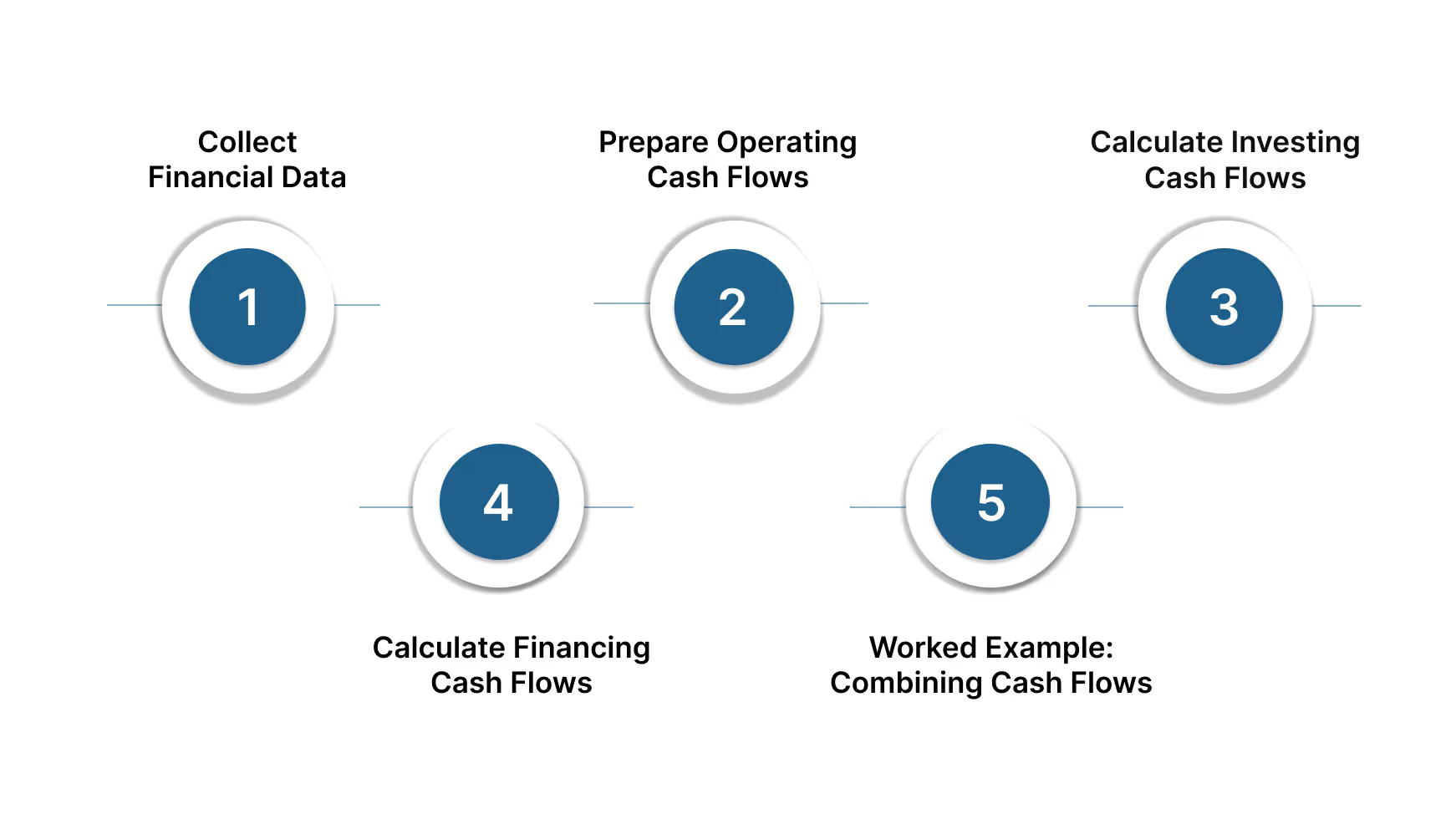
GAAP(米国会計基準)に基づくキャッシュ・フロー計算書を作成する際は、プロセスを段階的に分けることで、正確かつ一貫性を保つことができます。各段階で、財務諸表のデータをGAAPで定義された3つの活動区分に紐付けます。この手法に従うことで、単なる会計上の仕訳ではなく、実際の現金の動きを反映した計算書を作成できます。
まずは、会社の財務諸表から情報を収集します。損益計算書からは当期純利益を、貸借対照表からは期間ごとの資産、負債、純資産の変動を把握します。財務諸表の注記には、非資金取引や資産購入の詳細など、文脈を理解するための情報が記載されています。
例:
<w0>このステップでは、日々の事業活動によって生み出された、または使用された現金に焦点を当てます。GAAPで認められている直接法または間接法のいずれかを使用します。
計算例(間接法):
投資キャッシュ・フローは、長期資産の取引に関連するものです。有形固定資産の購入に費やした現金や、資産または投資有価証券の売却による収入を記録します。
例:
GAAPでは、投資の拡大、縮小、清算の状況を読み手が明確に判断できるよう、これらの活動を財務活動と分けて記載することが求められています。
財務キャッシュ・フローは、資本の調達と返済の状況を示します。借入、債務の返済、株式の発行、配当金の支払いといった活動を報告します。
例:
GAAP also requires disclosure of significant non-cash financing activities, such as converting debt into equity, even though they do not affect immediate cash balances.
Bringing the sections together shows the full effect of cash movement. Suppose your company reports the following in one year:
Your GAAP cash flow statement would look like this:
This total should match the change in your cash balance shown on the balance sheet, which serves as a validation check.
Finding it hard to keep GAAP cash flow statements accurate during busy cycles?
VJM Global can:
After preparing the statement, reconciliation and validation confirm the accuracy of your reported cash flows.
Preparing a GAAP cash flow statement is not complete until you reconcile and validate the figures. These checks confirm that the numbers align with your income statement and balance sheet, reducing the chance of audit issues or regulatory penalties. By focusing on reconciliation and validation, you give investors, auditors, and regulators confidence that your reporting is reliable.
You start by reconciling net income with net cash provided by operating activities. This step explains the differences between accrual-based earnings and actual cash. Adjustments are made for non-cash expenses and changes in working capital so the figures reflect real liquidity.
例:
This reconciliation shows stakeholders how you move from reported profit to the cash actually generated by your business operations.
The ending cash reported in your cash flow statement must equal the cash balance on your balance sheet. This step acts as a built-in control check. If the numbers do not match, you know there is an error in classification, omission, or calculation.
Example validation:
When these figures align, you can confirm that the cash flow statement is consistent with the company’s overall financial position.
Accurate classification ensures compliance with GAAP and avoids red flags during audits. Misclassifying a loan repayment as an operating expense, or treating asset purchases as financing activities, can distort financial ratios and trigger regulatory concerns.
Key classification checks include:
By following GAAP standards for classification, you maintain consistency, improve comparability, and reduce the likelihood of costly restatements.
あわせて読みたい:米国会計基準(US GAAP)における収益認識基準の理解
Once validated, the statement can be analyzed to reveal financial insights that support better decisions.
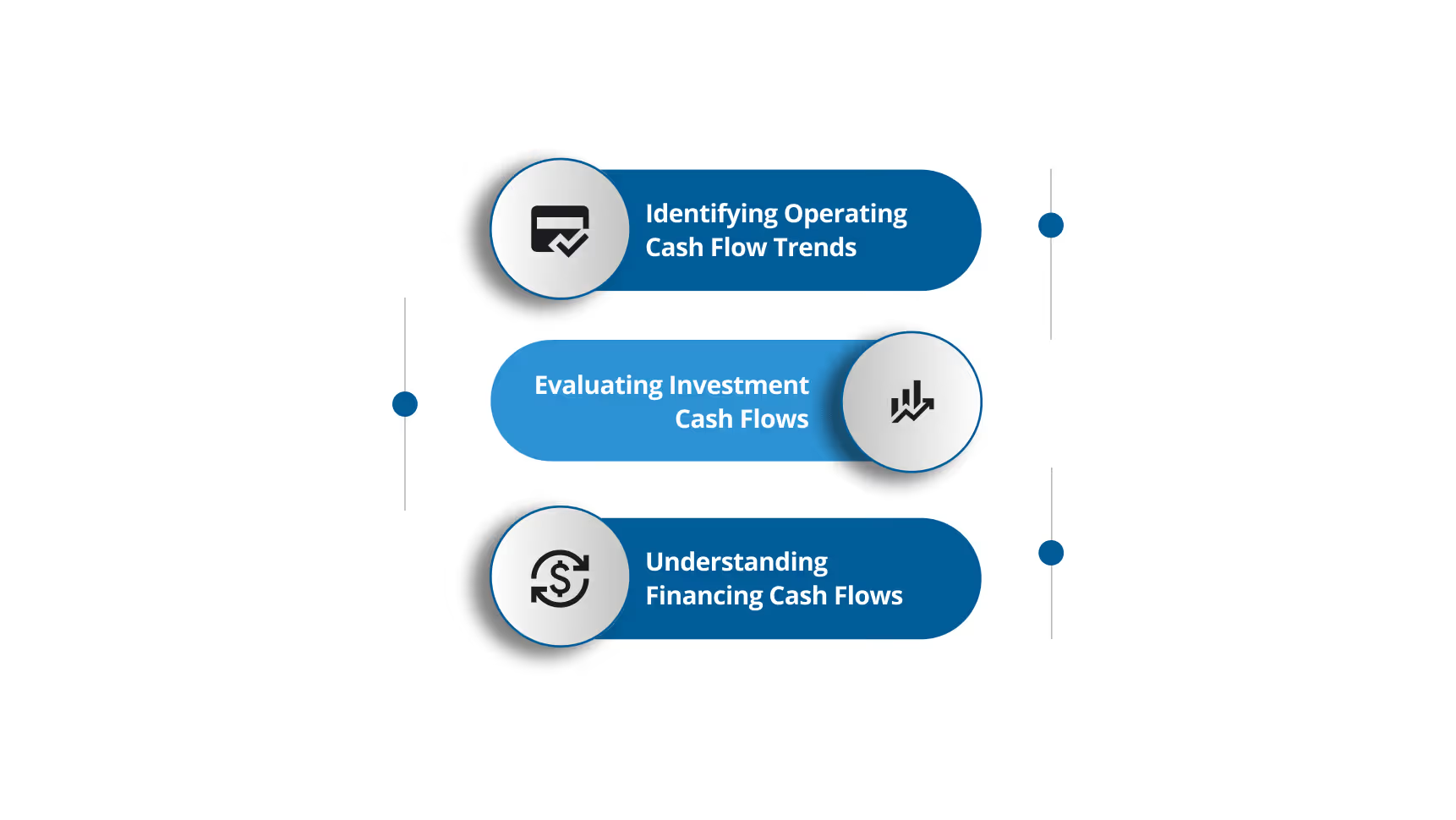
Analyzing a GAAP cash flow statement helps you interpret more than just numbers. By breaking down operating, investing, and financing activities, you can see whether cash is being generated sustainably, whether resources are being reinvested wisely, and how capital is being managed. Each section highlights different signals about stability, growth, and risk.
Operating cash flows show how much cash your business generates from core activities. Consistent positive cash flows in this section indicate that your company can cover expenses, repay debt, and invest without relying on external financing.
Key points to observe include:
Investment cash flows reveal how you are using funds for long-term assets or recovering value from them. These flows help you and your stakeholders understand if your business is positioned for expansion or contraction.
Points to consider:
By comparing these flows over multiple periods, you can distinguish between one-time asset sales and sustained growth investment.
Financing cash flows reflect how you manage your capital structure through debt and equity. They show whether you are raising funds, repaying obligations, or returning value to shareholders.
Important signals include:
分析には価値がありますが、よくある課題とその解決策についても認識しておく必要があります。多くの米国企業は、会計および税務サービスをインドにアウトソーシングすることでこのプロセスを効率化し、コスト削減と専門的なコンプライアンス支援の両方を実現しています。
分析には価値がありますが、よくある課題とその解決策についても認識しておく必要があります。
GAAP(米国会計基準)のルールを厳密に守っていても、キャッシュ・フロー計算書の作成にはいくつかの困難が伴うことがあります。これらの課題は通常、非資金項目の調整、適切な分類の確保、複雑な取引の管理といった点から生じます。これらに正しく対処することで、正確性を維持し、コンプライアンスリスクを回避し、監査人や投資家に対して信頼性の高い情報を提供できるようになります。
非資金項目は純利益には影響しますが、現金には影響しません。そのため、営業キャッシュ・フローを作成する際には調整が必要です。これらを適切に処理しないと、流動性が過大または過小に評価される可能性があります。
一般的な調整の例は以下の通りです:
実践的な解決策:財務諸表の注記から、繰り返し発生する非資金項目のチェックリストを作成しましょう。報告期間ごとにこのリストを見直し、キャッシュ・フロー計算書を確定させる前にすべての項目が網羅されているかを確認してください。
最も頻繁に発生するエラーの一つは、取引を誤ったセクションに分類することです。このような誤分類は財務比率を歪め、正確な内訳を必要とするステークホルダーに混乱を招く恐れがあります。
よくある誤分類の例は以下の通りです:
実践的な解決策:GAAP基準に準拠した分類ガイドを使用しましょう。経理チームに具体例を用いたトレーニングを行い、各報告サイクルで分類を見直すことで正確性を確保してください。
複雑な取引は、GAAPの下で特別な扱いを必要とすることがよくあります。これらを見落としたり、不適切に処理したりすると、連結財務諸表と矛盾が生じる可能性があります。
注意すべき例は以下の通りです:
実践的な解決策:複雑な取引に関する米国財務会計基準審議会(FASB)のガイダンスを確認し、報告には標準化されたテンプレートを適用しましょう。必要に応じて、外部監査人や会計アドバイザーに相談し、コンプライアンスを遵守しているか確認してください。
Addressing these challenges naturally leads to exploring how VJM Global supports accurate GAAP cash flow preparation. Many US firms now outsource tax and accounting services to India for cost efficiency, accuracy, and faster turnaround, making it a strategic choice alongside in-house compliance efforts.
Addressing these challenges naturally leads to exploring how VJM Global supports accurate GAAP cash flow preparation.
Outsourcing in 2025 is about more than cost savings. It is about building a finance function that is reliable, scalable, and compliant. VJM Global works with US CPA firms and mid-sized businesses to handle operational challenges, ensure GAAP compliance, and strengthen financial control. By choosing to outsource from the US to India, you gain the advantage of dual expertise in both US and Indian frameworks while significantly reducing overhead costs.
By combining US GAAP expertise, cost efficiency, and scalable offshore teams, VJM Global strengthens the quality and reliability of your financial reporting process.
A GAAP cash flow statement gives you more than just numbers. It connects structure, preparation methods, reconciliation, analysis, and classification into a report that reflects true liquidity. Throughout this blog, you have seen how operating, investing, and financing activities shape the statement, how reconciliation validates accuracy, and how analysis uncovers financial stability or risk. You also learned about common challenges such as non-cash adjustments and classification errors, along with practical solutions to address them.
Compliance with GAAP is not optional. It is the foundation of credibility with auditors, investors, and regulators, and it directly affects decision-making. Are your GAAP cash flow statements accurate enough to support the decisions that shape your business’s future?
Feeling stretched during audit season or monthly reporting? VJM Global gives you the offshore support you need to manage reporting peaks while keeping compliance intact. Schedule a consultation today!
A: A company may report net income but negative operating cash flows. Outsourcing from the US to India can help identify these issues early with expert support.
A: Many fail to reconcile ending cash with the balance sheet. Outsourcing tax services from the US to India ensures accurate reconciliation and compliance.
A: Outsourcing from the US to India combines GAAP expertise with cost-effective execution, improving accuracy, saving time, and maintaining compliance for U.S. businesses.
A: Lenders examine cash flow to gauge repayment capacity. U.S. companies outsourcing to India gain accurate, timely statements that support financing.
A: Changes in receivables, payables, and inventory impact cash. Outsourcing to India ensures these adjustments are tracked correctly and efficiently.
A: インドへのアウトソーシングは、米国会計基準(GAAP)の専門知識とコスト効率の高い実行力を組み合わせることで、米国のビジネスにおける正確性の向上、時間の節約、そしてコンプライアンスの維持を実現します。

.avif)


