


India’s economic ecosystem is evolving fast, and international businesses are paying close attention. As global supply chains shift and capital moves across borders, many multinational firms are choosing India as the nerve center for their regional operations. But why India? It’s not just about tapping into a large consumer base or cutting costs. It’s about establishing control, mitigating risk, and ensuring long-term scalability, primarily through structured vehicles like holding companies.
As of January 31, 2025, over 5,200 foreign companies were registered in India, with 63% of them actively operating, according to data from the Ministry of Corporate Affairs. Between November 2024 and January 2025 alone, 16 new foreign entities were registered, with many opting for holding company structures to consolidate their regional operations. This signals growing confidence in India's regulatory maturity and investor-friendly framework.
Suppose you’re planning a strategic entry into India or seeking to streamline existing operations under a unified structure. In that case, this guide explains how to register a holding company in India, covering key benefits, the step-by-step registration process, and potential risks to be aware of, so you can proceed with clarity and confidence.
A holding company is a legal entity that owns and controls assets or equity in other businesses but does not engage in the production of goods or the delivery of services. Instead of handling daily operations, it manages ownership stakes and oversees strategic direction. It earns income from dividends, interest, royalties, or capital gains from its subsidiaries and investments.
In India, a holding company operates similarly to its global counterparts. It serves as the parent company in a corporate group. Holding companies are often set up to streamline operations, limit liability, and manage diverse business interests.
As per Section 2(46) of the Companies Act, 2013, a holding company is defined as one that:
This definition forms the legal basis for group structures in India, where holding companies are often used to consolidate ownership, control risk, and enhance operational flexibility across subsidiaries.
With India becoming an attractive destination for foreign investment, many U.S.-based multinational corporations have begun establishing Indian subsidiaries. In many of these cases, the U.S. parent company operates as a holding company, maintaining control through equity ownership and board appointments. The Indian entity manages local operations, compliance, and customer engagement. This structure helps foreign firms enter the Indian market efficiently while retaining centralized oversight.
For example, a U.S. tech company may form an Indian subsidiary to handle software development or customer support functions. The U.S. entity, acting as the holding company, owns the majority of shares and provides strategic direction. The Indian arm focuses on executing daily operations and meeting local business requirements.
A holding company is a business entity that owns controlling stakes in other companies, known as subsidiaries, but does not produce goods or services itself. In India, setting up a holding company can offer several strategic, financial, and operational advantages:
Also Read: How to Register a Trademark in India: Step-By-Step Guide
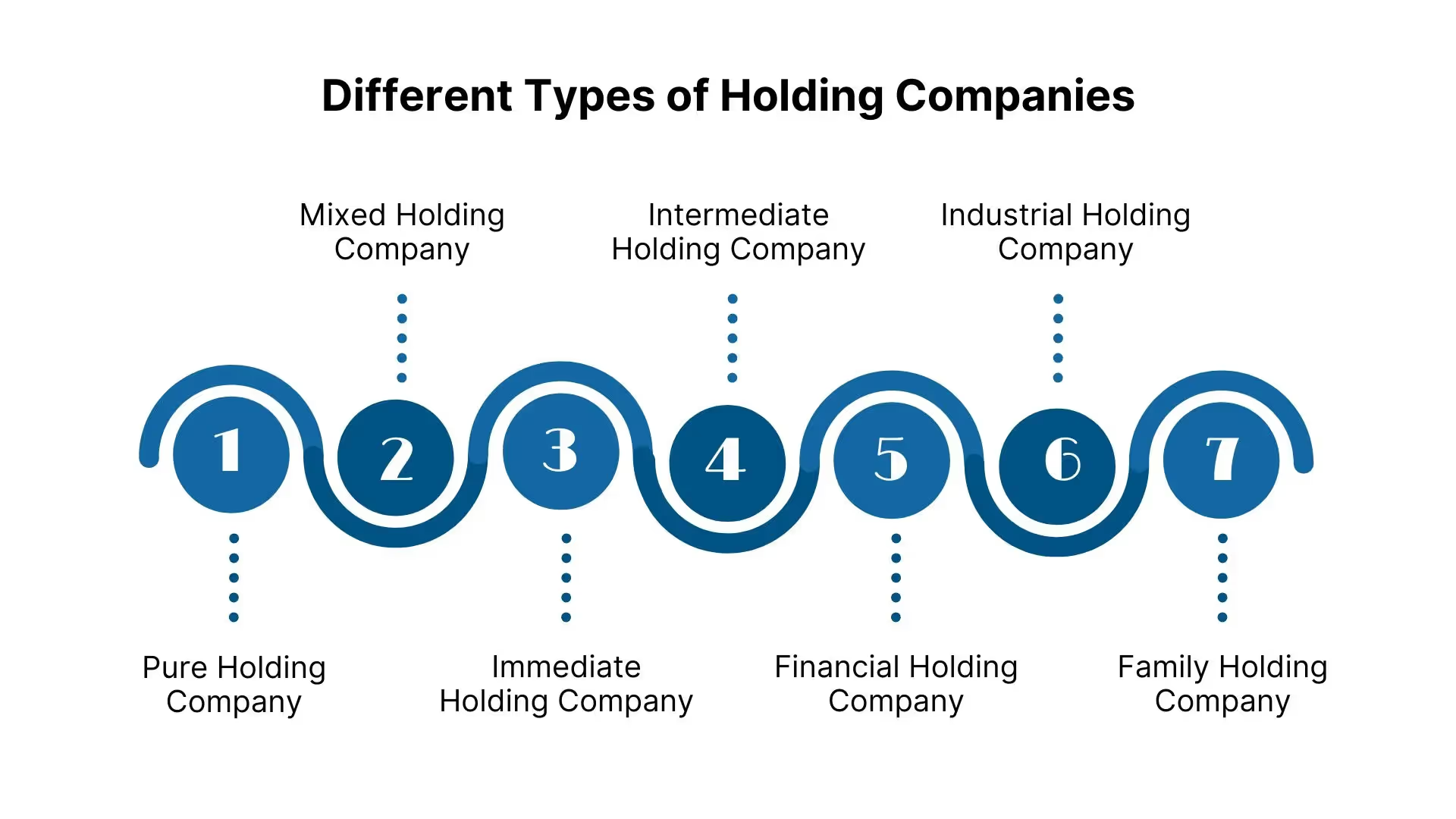
When you want to know how to register a holding company in India, you must know that holding companies come in various forms. It depends on their structure, purpose, and the extent of control they exert over subsidiaries. Some hold full ownership and actively influence management decisions, while others maintain minority stakes and serve more as investment vehicles.
When you are looking at how to register a holding company in India, understanding these types helps clarify their strategic roles in business and investment:
1. Pure Holding Company: A pure holding company exists solely to own shares of other companies. It does not engage in any other business activities or operations. Its primary purpose is to control subsidiary companies by holding a majority stake in their stock, influencing key decisions, and overseeing overall corporate strategy.
Example: Berkshire Hathaway is often cited as a pure holding company since it primarily owns stakes in diverse businesses without directly producing goods.
2. Mixed Holding Company (or Operating Holding Company): A mixed holding company not only owns shares in other companies but also conducts its own business operations. It combines investment in subsidiaries with direct production, sales, or service activities.
例:さまざまな業界の子会社を所有し、自社でも製造工場を運営する親会社を持つコングロマリットは、混合持株会社とみなされます。
3. 直接持株会社:直接持株会社とは、別の会社に対して直接的な支配権を持つ会社であり、多くの場合、その会社を直接子会社と呼びます。通常、過半数の株式を保有し意思決定権を有しますが、それ自体がより大きな持株会社の子会社である場合もあります。
例:A社がB社の株式を70%保有している場合、A社はB社の直接持株会社となります。
4. 中間持株会社:中間持株会社は、最終的な親会社と事業子会社の中間に位置する会社です。1つ以上の子会社を所有していますが、企業階層の上位にある別の持株会社によって所有されています。
例:多層的な企業構造において、A社(最終親会社)が所有し、かつC社(子会社)を支配しているB社は、中間持株会社となります。
5. 金融持株会社:金融持株会社は、銀行、保険会社、投資会社など、金融セクターの事業を所有・管理することに特化しています。管轄区域によっては、特定の規制の対象となる場合があります。
例:複数の地方銀行や金融サービス子会社を所有する銀行持株会社。
6. 産業持株会社:産業持株会社は、製造、鉱業、建設などの産業分野に関わる企業グループを管理します。多くの場合、子会社間の戦略を調整し、効率性と市場へのリーチを最大化します。
例:鉄鋼、自動車部品、機械を製造する複数の工場を所有する企業。
7. ファミリー持株会社:ファミリー持株会社は、世代を超えて家族の資産や事業利益を管理するために設立されます。複数の同族企業や投資を一元管理することが可能です。
例:不動産、小売、ホスピタリティ事業を所有・統括するために家族が設立する持株会社。
おすすめの記事:インドにおける個人事業主の登録ガイド
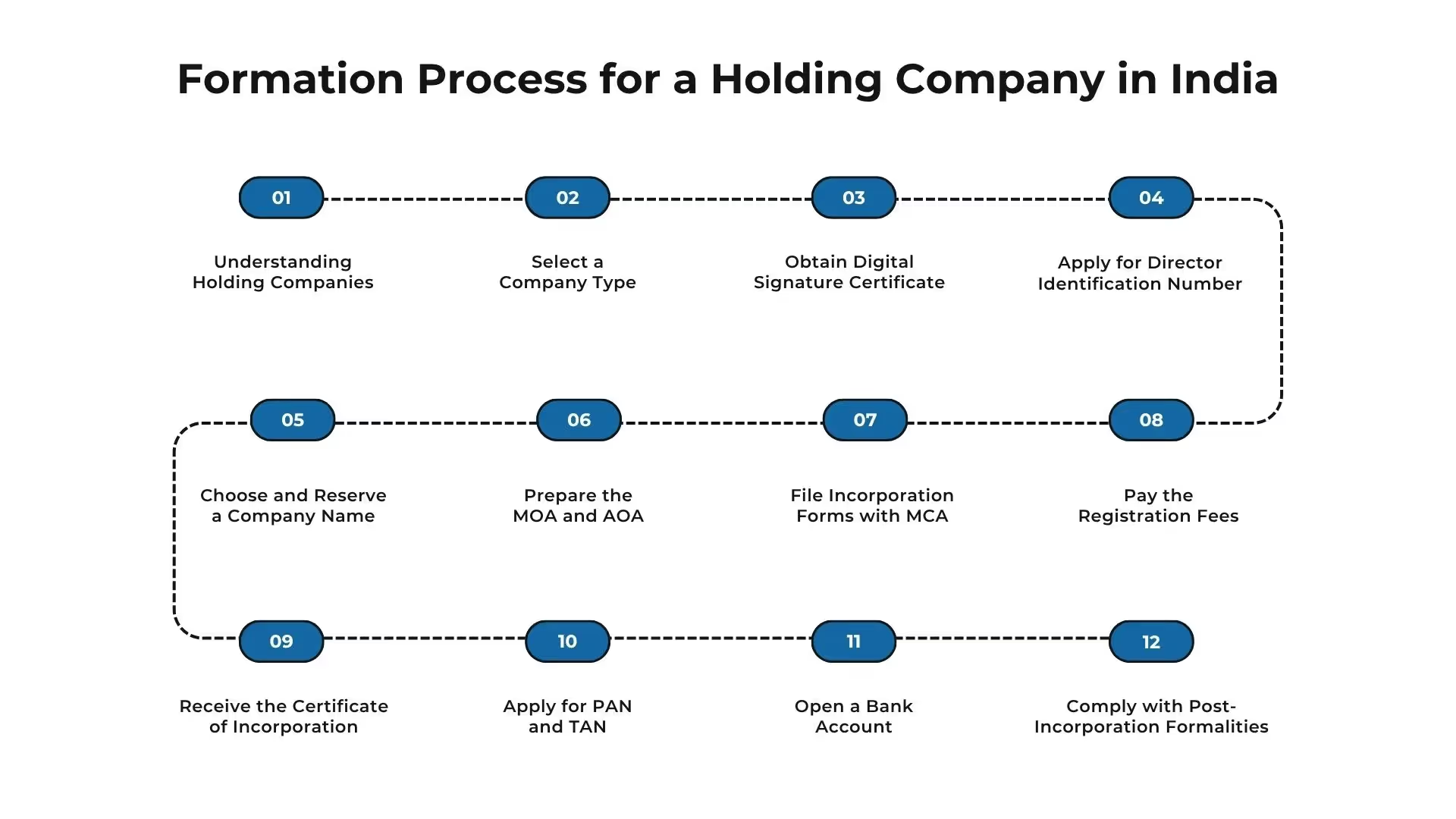
インドの持株会社は、1つ以上の子会社の過半数株式を保有し、その方針や経営に対する支配権を有します。多くの多国籍企業が、子会社の管理、税務戦略の最適化、地域運営の効率化を目的として、インドに持株会社を設立しています。
事業拡大や事業利益の統合を目的としてインドに持株会社の設立を計画している外国人投資家や起業家にとって、登録プロセスを理解しておくことは不可欠です。
インドで持株会社を登録するためのステップバイステップガイドは以下の通りです。
登録の前に、自社が持株会社として機能する意図があることを明確にしてください。つまり、積極的な事業運営を行うのではなく、主に他社の株式を保有することを目的とします。持株会社は通常、傘下の子会社や関連会社を管理します。
インドでは、持株会社は以下のように登録できます。
多くの持株会社は、コンプライアンスや所有構造が簡素であることから、非公開会社を選択しています。
取締役就任予定者は全員、まず電子署名証明書(DSC)を取得する必要があります。DSCにより、企業省(MCA)への書類提出をオンラインで安全かつ確実に行うことが可能になります。
持株会社の取締役には、それぞれ取締役識別番号(DIN)が必要です。本人確認書類と住所証明書類を提出し、MCAポータルを通じてDINを申請してください。
持株会社にふさわしい、独自の名称を選択してください。MCAポータルの RUN(名称予約サービス) を利用して、名称の空き状況を確認し、予約を行います。名称は会社法に準拠し、既存の会社と類似していない必要があります。
会社の目的を定める定款(MOA)と、内部規則を定める付属定款(AOA)を作成します。持株会社の場合、MOAには主要事業が株式の保有や他社の支配であることを明記する必要があります。
MCAのオンラインシステムで SPICe+(会社設立のための簡略化申請フォーム) を提出します。この統合フォームには以下の手続きが含まれます:
本人確認書類、住所証明書類、定款(MOA)、付属定款(AOA)、本店所在地証明書などの必要書類をすべて添付してください。
授権資本金および会社形態に基づき、所定の政府手数料と印紙税を支払います。これらの料金はMCAポータルで自動的に計算されます。
承認されると、MCAから設立証明書が発行されます。この証明書には、インドで登録された各社に固有の法人識別番号(CIN)が記載されています。
SPICe+フォームにはPANおよびTANの申請が含まれていますが、これらの書類は税務手続きや銀行口座開設に必須となるため、確実に受領するようにしてください。
Open a current bank account in the company’s name to handle all financial transactions. You can choose from leading banks such as HDFC Bank, ICICI Bank, Axis Bank, or State Bank of India, depending on your preferred services and branch accessibility.
After incorporation, hold the first board meeting within 30 days to appoint key officials, auditors, and approve statutory registers. Also, file the necessary returns with the Registrar of Companies (ROC).
You Might Also Like: Understanding Company Audits: Key Processes and Types
While holding companies provide advantages such as centralized oversight, asset protection, and operational flexibility, they also pose certain challenges. Businesses and investors must weigh these carefully, including tax complexities, regulatory scrutiny, and added compliance responsibilities:

For U.S.-based CPA firms, multinational corporations, and businesses seeking to expand into India, setting up a holding company offers strategic benefits like better control, tax efficiency, and streamlined asset management. However, navigating India’s complex corporate regulations requires expert assistance.
VJM Global specializes in supporting U.S. companies, CPA firms, and multinational enterprises with smooth holding company registration in India. Here’s why top firms rely on us:
Many U.S. CPA firms and companies are turning to India for strategic expansion. VJM Global’s expert guidance ensures your holding company registration process is smooth, compliant, and efficient.
Ready to establish your holding company in India with expert offshore support? Contact VJM Global today!
A. Yes. Foreign nationals can own a holding company in India under the Foreign Direct Investment (FDI) policy. Ownership is permitted either through the automatic route or the government approval route, depending on the business sector involved.
A. With accurate and complete documentation, registering a holding company in India typically takes around 10 to 15 working days. Timelines may vary slightly based on regulatory approvals and application processing times.
A. No. The Companies Act, 2013, does not specify a minimum capital requirement to incorporate a holding company. However, it is advisable to allocate sufficient capital to cover basic operational needs and meet ongoing legal compliance obligations.
A. Only if the proposed name follows the Ministry of Corporate Affairs (MCA) naming guidelines. It must not be identical or too similar to any existing registered entity in India to avoid rejection or legal conflicts.
A. Yes. Indian company law requires at least one director to be a resident of India. As per Section 149 of the Companies Act, 2013, a resident is defined as someone who has stayed in India for a minimum of 182 days in the previous calendar year.

.avif)


