Struggling with rising operating costs or talent shortages in the US? Many businesses face these challenges when expanding globally, and that’s why starting a global capability center in India has become a strategic move.
India is now called the “GCC Capital of the World,” housing around 1,700 GCCs (FY24), and by 2030, the number is expected to surpass 2,200 with a workforce of 2.8 million.
For US entrepreneurs, SMEs, and professional service firms, exploring a global capability center setup in India is more than just cost arbitrage. It involves accessing a deep talent pool, maintaining compliance, and building future-ready operations. With expanding policy support and India’s proven track record as a GCC hub, setting up a GCC in India gives you a competitive edge in both growth and efficiency.
In this guide, you’ll discover the practical steps to set up a global capability center in India, covering entity structure, regulatory compliance, hiring, and scaling operations.
In a Nutshell
Beyond Cost Savings: GCCs have shifted from back-office roles to strategic hubs driving R&D, compliance, and global digital transformation.
Structured Setup: Success depends on a clear roadmap. It includes defining purpose, testing feasibility, choosing the correct location, selecting the right entity, embedding compliance, building scalable infrastructure, and more.
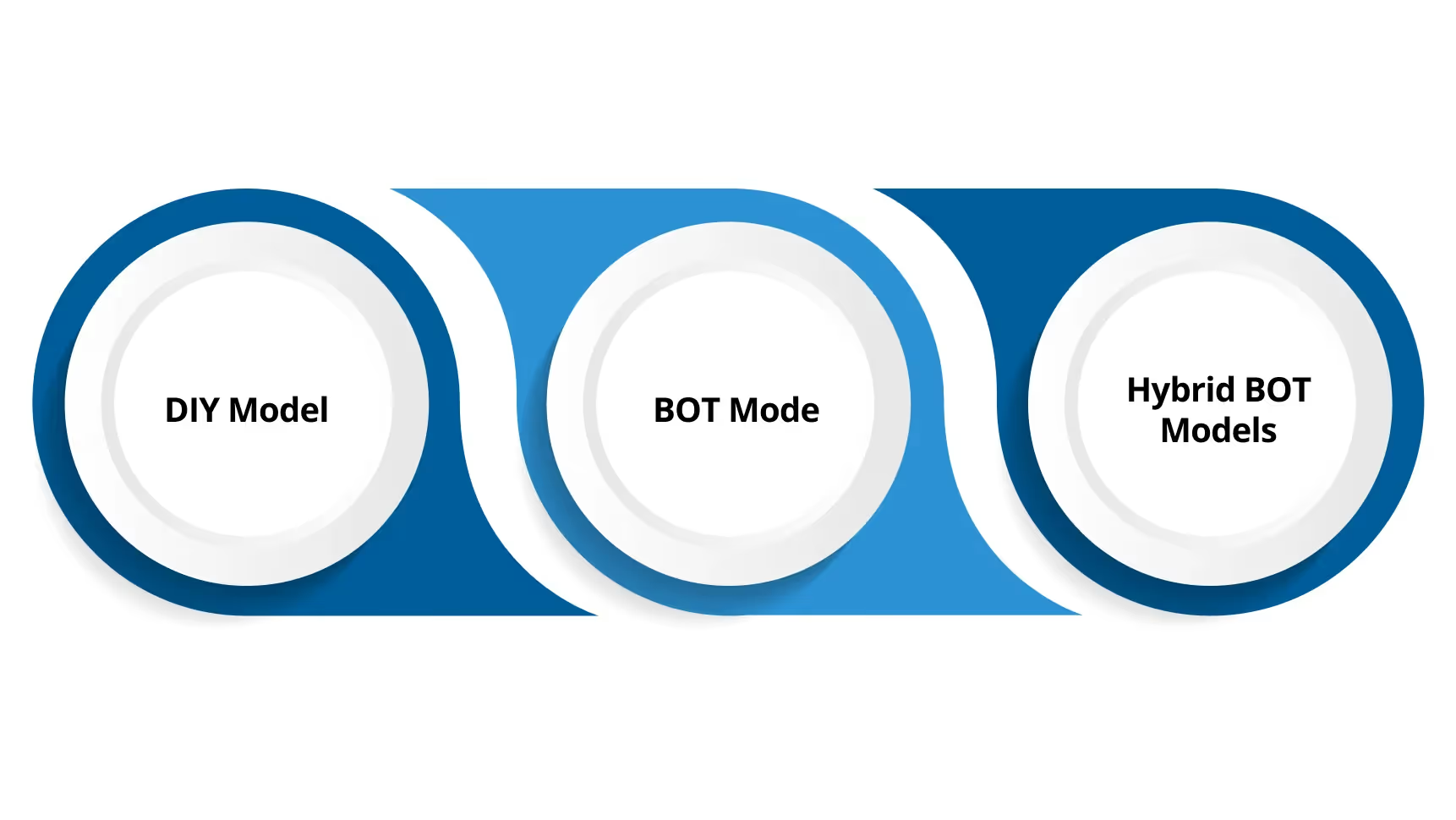
Operating Models: Options include the DIY model, Build–Operate–Transfer (BOT), or hybrids like joint ventures and virtual captive centers. Each offers different levels of control and speed.
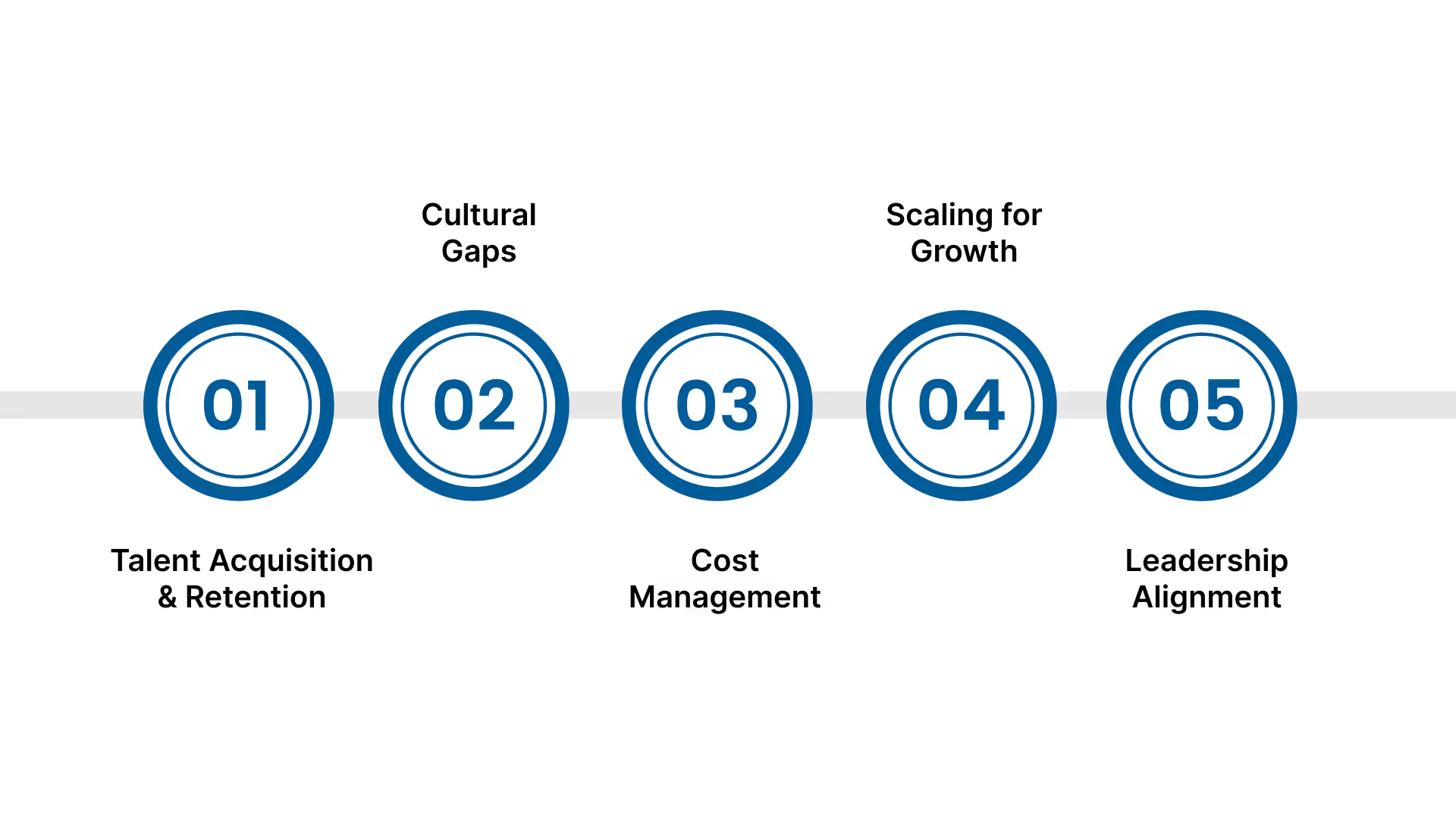
Key Challenges: You must plan for talent competition, compliance complexity, cost management, scalability, and leadership alignment to avoid costly missteps.
Understanding a Global Capability Center (GCC) in India
A Global Capability Center (GCC), also known as a captive center, is a wholly owned subsidiary that multinational corporations, especially from countries like the US, establish in India to manage critical operations for their global headquarters. Unlike outsourcing, a GCC provides direct ownership and control over operations, intellectual property, and workforce quality.
Key Functions and Advantages of GCCs in India
Core Business Functions
Software and product development
Data analytics, AI/ML modeling, and automation
Finance and accounting services
Risk management and compliance reporting
Talent Advantage
India has one of the world’s largest pools of engineers, finance professionals, and IT experts.
US businesses can tap into specialized skills at scale without inflating domestic payroll costs.
Innovation Hubs
GCCs in India now drive digital transformation projects, testing new technologies before global rollout.
Many Fortune 500 companies use their Indian GCCs to pilot automation, AI tools, and new service models.
Cost Efficiency Without Compromise
You can reduce operating costs compared to the US. This includes salaries, infrastructure, and overhead.
Unlike outsourcing, savings come with complete control and brand consistency.
Supportive Ecosystem
India’s government and industry bodies actively support GCC growth through tax policies, skill development programs, and infrastructure investment.
Cities like Bengaluru, Hyderabad, Pune, and Gurugram are established GCC hubs with strong vendor ecosystems.
What it Means for US Businesses:
Suppose you’re a US-based fintech startup looking to scale operations without ballooning payroll expenses in New York or San Francisco. By setting up a Wholly Owned Subsidiary GCC in India, you could:
Hire a 50-member finance and compliance team in Gurugram to support US clients.
Run 24/7 operations to cover multiple time zones.
Maintain complete control over data security and processes while achieving a significant reduction in annual operating costs.
So, how do you go from exploring the idea of a GCC to actually setting up one in India? Let’s break down the process step by step.
Starting a Global Capability Center in India: A Complete Planning Guide for US Businesses
Industry experts predict that India’s GCC ecosystem will continue expanding for the next decade, with more global players across technology, finance, pharma, and professional services setting up advanced operations.
For US companies, setting up a GCC in India requires a structured, step-by-step approach. Here’s how to plan yours effectively:
Step 1: Clarify the Purpose of Your GCC
Remember, a GCC is not a mere cost center; it should act as a strategic extension of your business. Defining objectives upfront translates into clarity and alignment with the parent company’s long-term goals.
実施事項:
Identify the primary purpose of your GCC: IT services, R&D, finance, compliance, or customer support.
Align these with the parent company’s growth strategy (e.g., scaling product development, improving customer service, or reducing operational costs).
Document Key Performance Indicators (KPIs) such as the number of product features per quarter, employee attrition, etc., to measure success.
Example: A California-based SaaS firm establishes a GCC in Bengaluru focused exclusively on AI/ML development, while US teams remain customer-facing. KPIs include reducing feature rollout time by 25% and lowering engineering costs by 40%.


%20(3).avif)
.avif)

.avif)


