


According to the Association of Americans Resident Overseas (AARO) report from October 2024, over 5.5 million USA citizens live abroad. As an expatriate, you are required to file USA taxes regardless of your location. Not meeting this requirement can result in severe penalties and legal challenges.
When conducting business in foreign markets or managing international investments, the risk of tax inefficiencies is elevated. Tax planning is not merely about staying compliant; it’s about making informed decisions that safeguard your financial interests.
Key decisions, such as identifying double taxation, using tax treaties, and selecting the appropriate structure for international operations, are critical. Getting them right can significantly enhance your financial success; getting them wrong can lead to substantial costs.
This guide outlines the essential strategies for effective tax planning, providing the insights needed to structure your global finances with efficiency while avoiding costly errors.
Yes, under U.S. tax law, expatriates must file taxes on worldwide income even if they live overseas. The United States is one of the few countries that follows citizenship-based taxation, meaning U.S. citizens and green card holders are always required to report income to the IRS.
That said, Expat Tax Planning strategies can help reduce or eliminate the actual tax owed. Key tools include the Foreign Earned Income Exclusion (FEIE), which allows expats to exclude up to $120,000 of foreign-earned income, and the Foreign Tax Credit (FTC), which offsets taxes already paid in the host country. Tax treaties between the U.S. and countries like India also help prevent double taxation.
The bottom line: U.S. expats must file annually, but with smart expat tax planning, many can significantly minimize their U.S. tax burden.
An expatriate (or expat) refers to a citizen or permanent resident who resides in a foreign country for an extended period, often for work, investment, or personal reasons. Expats may move abroad for various reasons, including employment opportunities, entrepreneurial ventures, retirement, or to be closer to family. While living abroad offers many advantages, such as exposure to new cultures and markets, it also comes with specific tax obligations and complexities.
For USA expatriates, tax planning is crucial for several reasons:
Understanding the unique tax challenges expatriates face is the first step toward effective planning. Now, let’s explore how you can manage your tax responsibilities when investing abroad.
Investing abroad as a USA expatriate introduces unique tax complexities. Beyond managing the financial performance of your investments, you must also ensure you're compliant with both USA and foreign tax regulations. Here's a closer look at the critical tax considerations and strategies to effectively manage your investments abroad.
As a USA expatriate, all your global income, including dividends, capital gains, and interest from foreign investments, must be reported to the IRS. This global taxation system means you may face double taxation unless strategic planning is in place.
While the Foreign Tax Credit (FTC) can help offset taxes paid to foreign governments, not all foreign income qualifies for this credit. For example, passive income like rental income or interest may be subject to tax in both the USA and the host country, unless covered by a tax treaty.
To stay compliant, you must meet USA tax reporting requirements for foreign investments:
Effective investment tax planning for expatriates requires careful attention to both local and the USA tax obligations. Next, we’ll break down key tax considerations and strategies for expatriates starting a business abroad.
Also read: Financial Optimization Strategies for Business Success
.avif)
Expanding your business abroad brings key tax challenges. It's not just about following the host country's tax laws but also about how they align with the USA tax regulations. Smart tax planning can help you reduce liabilities, avoid double taxation, and keep your business running smoothly across borders.
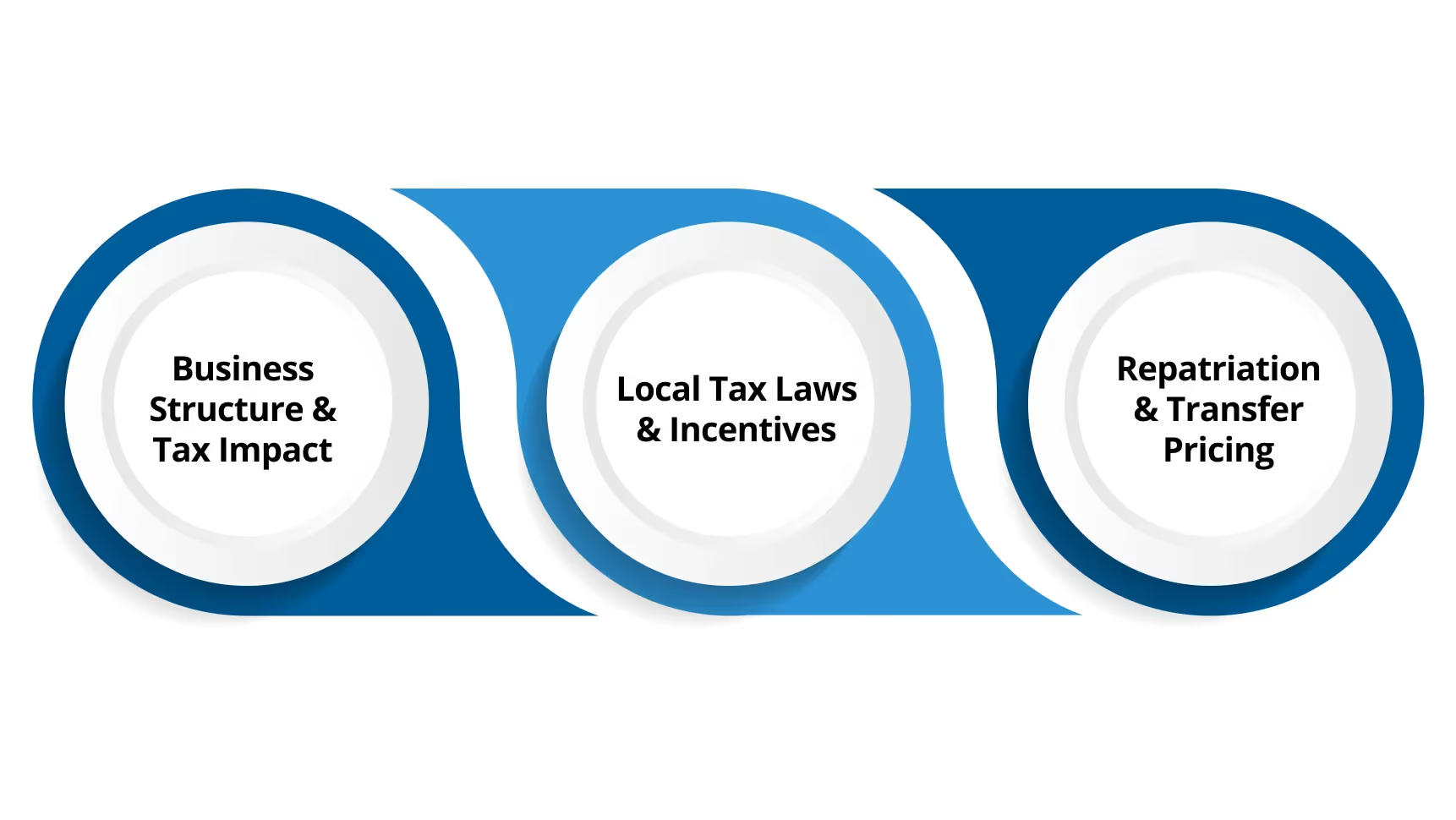
When you establish a business in a foreign country, the first key decision is choosing the business structure. This decision impacts how income is taxed, how profits are repatriated, and how tax-efficient the business will be.
Each country has its own tax framework for foreign businesses, including corporate tax rates, exemptions, and incentives. Some countries offer attractive tax incentives for new businesses, while others may impose high corporate tax rates.
Repatriating profits back to the USA can incur significant taxes, as the USA taxes global income. However, the Tax Cuts and Jobs Act (TCJA) of 2017 reduced the USA corporate tax rate to 21%, which helps make repatriation more manageable. Additionally, using tax treaties can help reduce withholding taxes on repatriated dividends, royalties, and interest.
Some countries, like Ireland or Singapore, have corporate tax rates as low as 12.5% and 17%, respectively, making them favorable destinations for repatriating profits with lower tax exposure. Proper tax planning allows expatriates to take advantage of these favorable tax rates while complying with both local and USA tax laws.
India offers significant opportunities for USA expatriates looking to invest or establish businesses, with its growing economy and favorable tax policies. However, understanding the local tax landscape and regulatory requirements is crucial for success.
インドは米国駐在員にとって多くの機会を提供していますが、税務計画を理解することが不可欠です。次に、海外投資の税務を管理するための主要な戦略を見ていきましょう。
明確な戦略がなければ、税金を払いすぎたり、税負担を軽減する重要な機会を逃したりするリスクがあります。適切なアプローチを理解することは、収益を守り、国境を越えてコンプライアンスを維持するために極めて重要です。
米国とカナダや英国などの国々との間の租税条約は、二重課税のリスクを軽減するのに役立ちます。例えば、米国・英国租税条約では、米国駐在員が配当や利子に対して両国の税率のうち低い方を適用して納税することが認められており、全体的な税負担を軽減できます。
一部の駐在員は、オフショアの退職口座や年金プランなどの課税繰延投資手段を利用して、米国の納税義務を最小限に抑えています。これらの手段には報告やコンプライアンスに関する特定の規制が伴うことが多いため、知識豊富な税務アドバイザーと協力して投資を適切に構築することが不可欠です。
シンガポールやスイスなどの国々は、キャピタルゲインや配当に対して有利な税制を提供しています。こうした地域に投資することで、特に資産を長期保有する場合、キャピタルゲインに対する低い税率の恩恵を受けることができます。米国の納税義務は依然として適用されますが、税率がより有利になる可能性があります。
オフショア口座は、より柔軟な投資オプションを提供できるため有益です。しかし、IRS(米国内国歳入庁)はFATCAに基づき包括的な報告を求めています。税務上のメリットを最大化しつつコンプライアンスを確保するためには、税務アドバイザーへの相談が不可欠です。
米国と現地の両方の税務規則は複雑であるため、ミスを避け、投資を最大限に活用するには適切なサポートを受けることが重要です。VJM Globalがどのようにこれらの課題に取り組み、税務戦略を軌道に乗せるお手伝いができるかを見ていきましょう。
続きを読む:米国からインドで会社登記するために必要な書類
インドに拠点を置くVJM Globalは、駐在員向けの専門的な税務プランニングサービスを提供しており、特にインドで勤務またはビジネスを行う米国市民やNRI(インド系非居住者)に重点を置いています。私たちは、駐在員が国境を越えた税務の複雑さを管理し、納税義務を最小限に抑えながらコンプライアンスを確保できるよう支援します。
Our Key Services
Successfully managing expatriate taxes requires more than just meeting basic compliance requirements; it’s about strategic planning that aligns with both your financial goals and the intricacies of international tax laws. By understanding the full scope of tax implications, from double taxation to filing obligations, you can unlock opportunities to minimize their liabilities and optimize their investments. The right guidance can turn complex tax challenges into a clear path for financial success.
At VJM Global, we specialize in helping expatriates identify these complexities with fruitful tax strategies and expert advice. If you’re ready to take control of your tax planning and secure a smarter financial future, get in touch with our team today for a personalized consultation.
Schedule a demo now to get started with expert expatriate tax planning.
Yes, USA citizens must report and pay taxes on their worldwide income, regardless of their residence abroad. Tax credits and exclusions, such as the Foreign Tax Credit (FTC) and Foreign Earned Income Exclusion (FEIE), can help minimize the impact of double taxation.
The FEIE allows expatriates to exclude up to $120,000 of foreign-earned income from USA taxes, provided they meet certain residency or physical presence tests. This helps reduce the taxable income that needs to be reported to the IRS.
You can prevent double taxation by utilizing tax treaties between the USA and your host country, using the Foreign Tax Credit, and qualifying for the Foreign Earned Income Exclusion. These options help offset taxes paid in the foreign country.
Owning property abroad can lead to both rental income taxes in the host country and potential USA tax obligations. You'll need to report rental income, but tax treaties and credits may help offset the burden. Long-term capital gains from property sales may also be subject to taxes.
Yes, expatriates generally need to file taxes in both the USA and the host country. However, tax treaties and credits can reduce the amount of taxes owed to each country, ensuring you don’t pay taxes twice on the same income.

.avif)


