

%20(11).avif)
Understanding financial consolidation can be a challenge for businesses, especially when it comes to managing interests in variable entities. ASC 810 plays a crucial role in determining how businesses disclose their interests and relationships with subsidiaries and variable interest entities (VIEs). Without a clear grasp of ASC 810, companies risk non-compliance, improper reporting, and financial misstatements, leading to potential audits, fines, and stakeholder distrust.
This blog will break down the key principles behind ASC 810, focusing on the requirements for consolidating financial statements and identifying VIEs. You will be given insights needed to ensure compliance and enhance financial reporting accuracy.
ASC 810 is a key U.S. GAAP standard established by the Financial Accounting Standards Board (FASB) to guide companies in consolidating financial statements. It ensures that businesses with multiple entities stay compliant when reporting financials, especially during mergers, acquisitions, or expansion efforts.
This standard is particularly relevant for industries like SaaS, where companies often have a complex network of investments and partnerships. ASC 810 helps businesses tackle situations involving acquisitions, joint ventures, or the use of Variable Interest Entities (VIEs).
ASC 810 provides two main models for consolidation:
These models are essential for understanding how control is determined and how consolidation should be applied.
あわせて読みたい:米国会計基準(US GAAP)におけるリース会計基準の理解:包括的ガイド
Now that we’ve defined ASC 810, let’s understand how it can enhance the accuracy and transparency of your financial reporting.
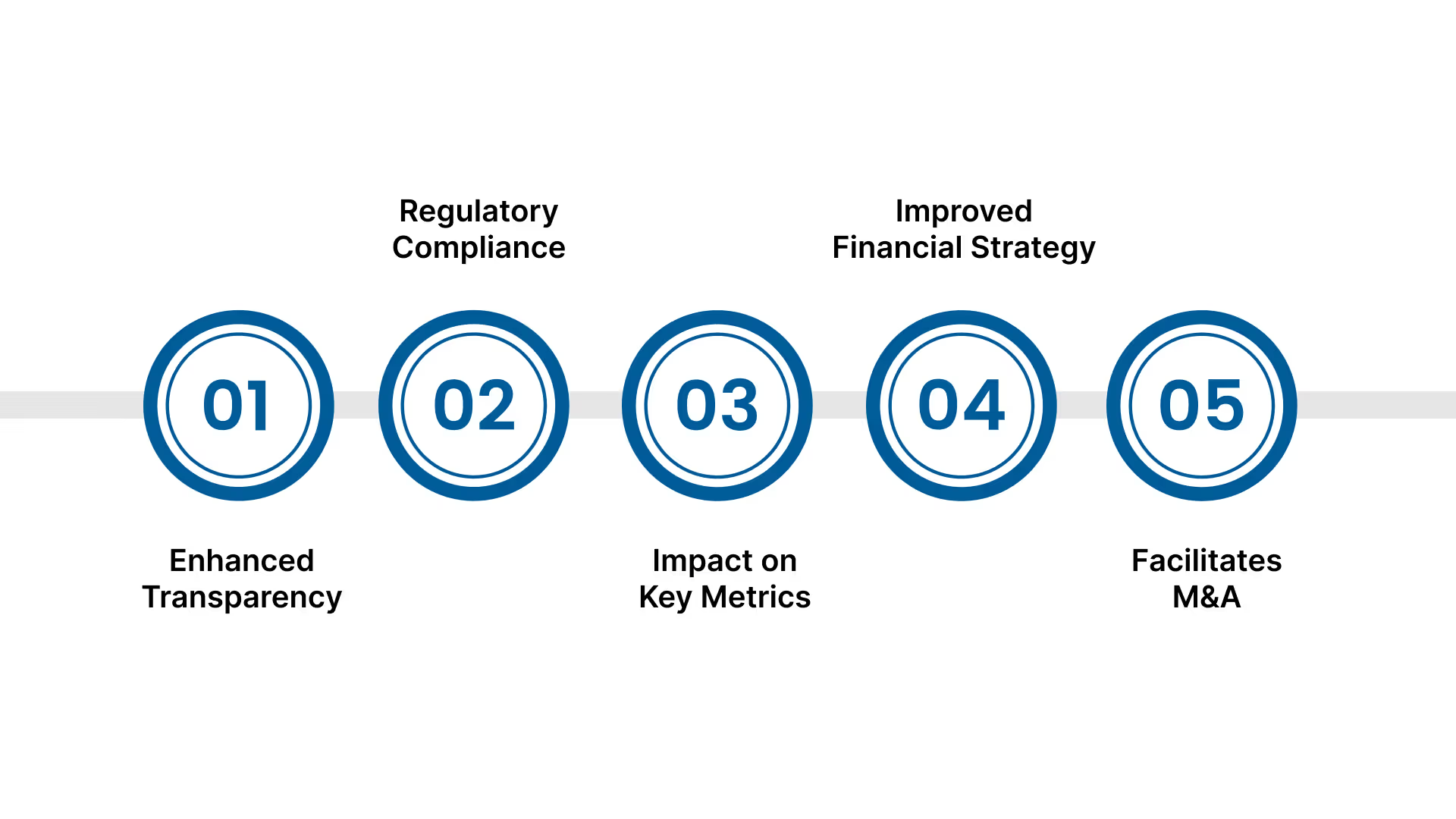
ASC 810 provides clear guidance for consolidating financial statements across multiple entities, offering several benefits for SaaS companies:
Consolidating financial results into one set of statements offers investors a clear, unified view of the company’s performance. This reduces the complexity of analyzing multiple separate statements, helping investors make more informed decisions and assess risk with greater accuracy.
Adhering to ASC 810 ensures SaaS companies comply with U.S. GAAP, which is crucial for businesses with subsidiaries or joint ventures. Compliance builds trust and credibility with investors and regulators, protecting against legal risks and maintaining market confidence.
Consolidation directly affects key financial metrics such as revenue, profitability, and cash flow. Accurate consolidation ensures these metrics reflect the true financial health of the business, supporting strategic decision-making and capital-raising efforts.
A consolidated financial view helps identify inefficiencies, streamline operations, and allocate resources more effectively. By consolidating financial data, SaaS companies can align their resources more effectively across different business units and improve operational efficiency.
M&Aに関与する企業にとって、ASC 810は統合プロセスを簡素化します。正確な財務報告を保証し、デューデリジェンスを効率化するとともに、買収後の予期せぬ事態を最小限に抑えます。
ASC 810は財務の透明性、コンプライアンス、戦略的計画を強化し、SaaS企業に成長と安定へのより明確な道筋を提供します。
VJM Globalは、貴社のSaaSビジネスをASC 810の複雑な要件へと導き、正確な連結決算、完全な規制遵守、そしてより強固な財務戦略の実現をサポートします。当社の専門知識は、連結プロセスの効率化、財務諸表の誤謬防止、そして成長を促進する主要指標の明確化に貢献します。
次に、SaaS企業がその財務構造や関係性に基づいて、いつ連結会計を適用すべきかを探ります。
SaaS企業は、支配的な財務上の利益を有している場合、他社の財務諸表を連結しなければなりません。支配力を評価するために使用される主なモデルは2つあります。
SaaS企業が他社の議決権株式の50%超を保有している場合、一般的に支配権を有しているとみなされ、連結が必要となります。議決権モデルでは、議決権株式の過半数を保有することが、親会社による対象企業への支配を意味すると想定しています。
ただし、保有比率が50%未満であっても、その他の契約上の取り決めや状況によって支配権が他者に帰属する場合があることに留意してください。
契約上の合意によって支配が定義される場合には、VIEモデルが適用されます。 VIEとは、持分投資家が期待される損失を負担したり、潜在的な利益を享受したりするのに十分なリスクにさらされていない事業体を指します。
その代わり、支配力は運営上または契約上の取り決めによって決定されます。SaaS企業は、以下の場合にVIEを連結しなければなりません。
VIEモデルは、所有権が直接的に支配力を反映していない状況であっても、企業が実質的に支配している事業体を確実に連結させるためのものです。
以下は、ASC 810に基づく議決権モデルと変動持分事業体(VIE)モデルの主な違いをまとめた比較表です。
各モデルは異なる種類の支配力に対応しており、事業体の構造やガバナンスの性質に基づいて、適切な連結会計のアプローチを決定するのに役立ちます。
あわせて読みたい:GAAPとGAASの違いを理解する
連結が必要なタイミングを理解したところで、次はASC 810の適用範囲と、貴社の具体的な状況への適用方法を把握することが重要です。
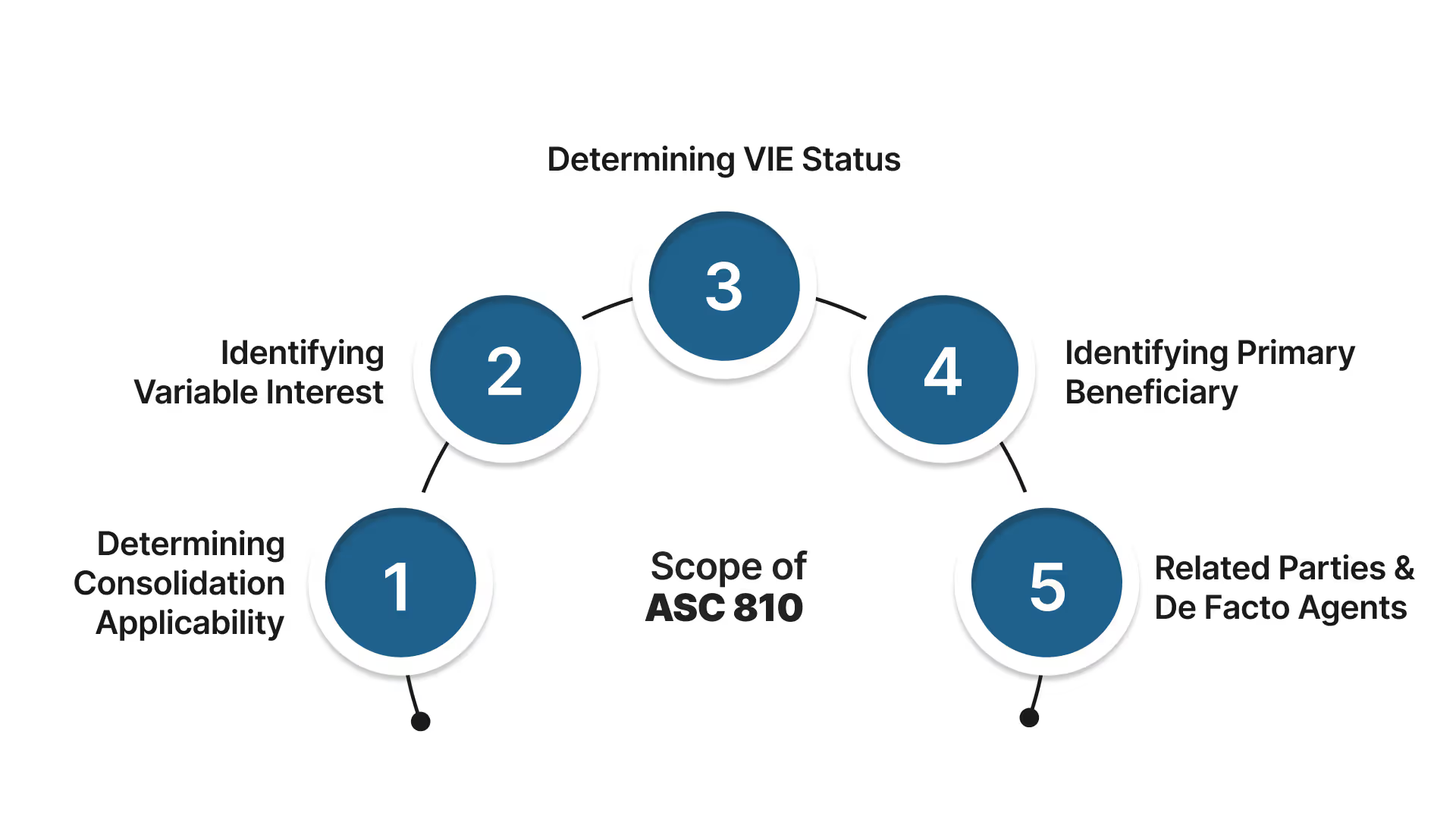
ASC 810は、企業がいつ、どのように財務諸表を連結すべきかについての明確なガイドラインを提供しています。その仕組みの概要は以下の通りです。
Before applying ASC 810, the first step is to determine if both the reporting entity and the legal entity are within the scope of the consolidation guidance and the VIE model.
Most legal entities fall under ASC 810's general consolidation guidance, with some exceptions. If the entity falls under the VIE model, further steps must be taken.
Variable interests refer to any contractual, ownership, or pecuniary interests that change in value in response to changes in the net assets of a legal entity. Common stock is a simple example. As the value of the company’s assets changes, the stock’s value fluctuates with it.
Once a reporting entity identifies a variable interest, the next step is determining if the legal entity qualifies as a VIE. A legal entity is considered a VIE if:
If the legal entity is outside the scope of the VIE model, the voting model applies. Under the voting model, the reporting entity consolidates the legal entity if it holds a majority of the voting rights.
If the entity is identified as a VIE, the next step is to determine the primary beneficiary, i.e., the reporting entity that consolidates the VIE. A reporting entity consolidates a VIE when it has:
Related parties and de facto agents are critical in the VIE model. These entities may not be able to fully pursue their interests independently of the reporting entity, so it's crucial to assess them under ASC 810.
To determine whether an entity is within the scope of ASC 810, ask the following questions:
To determine whether an entity is a VIE, check for characteristics like:
ASC 810の適用範囲を理解することは、正確な財務報告、コンプライアンスの確保、そして連結および変動持分事業体(VIE)に関する適切な意思決定を行う上で不可欠です。
ASC 810とその複雑な課題への対応でお困りですか?
VJM Globalでは、貴社のような企業が適切な連結戦略を理解し、実行できるよう専門的なサポートを提供しています。貴社の事業体がASC 810のVIEモデルの対象となるかどうかの判断から、コンプライアンス遵守のプロセスまで、私たちがサポートいたします。今すぐお問い合わせください。専門的なサポートと貴社に合わせたソリューションをご提案します。
あわせて読みたい:リース会計の税務解説:ASC 842の影響、IRS規則、および州税に関する考慮事項
ASC 810の適用範囲を把握したところで、VJM Globalがどのように財務連結の複雑な課題解決を支援できるかを見ていきましょう。
VJM Globalは、ASC 810に基づく財務連結の複雑な課題に取り組む企業を専門的に支援しています。当社のサポート内容は以下の通りです。
VJM Globalと提携し、ASC 810の複雑な課題を解決して、効率的かつ正確な財務連結を実現しましょう。
ASC 810は、特に変動持分事業体(VIE)や議決権事業体を扱う際、正確な財務連結を行う上で重要な役割を果たします。適用範囲の理解、変動持分の特定、そして適切な連結モデルの適用は、財務報告のコンプライアンスと透明性を維持するための鍵となります。
貴社がASC 810の複雑な課題に直面されているなら、VJM Globalが専門的なガイダンスとサポートを提供いたします。今すぐお問い合わせの上、ご相談ください。
ASC 810は、財務諸表の連結に関する会計ガイダンスであり、変動持分事業体(VIE)などの事業体の構造に基づき、いつ、どのように連結を行うべきかに焦点を当てています。
VIEモデルは、持分保有者に意思決定権がない、または損失を負担する能力がない事業体に適用されます。対照的に、議決権モデルは、議決権を通じて支配される事業体に適用されます。
事業体の活動を賄うための自己資本が不足している場合、または持分保有者が重要な経済活動を指示する権限を持っていない場合、その事業体はVIEとみなされます。
主要な受益者とは、VIEの重要な活動を指示する権限と、経済的利益(損失を負担する権利または利益を受け取る権利)の両方を有する報告企業のことです。
ASC 810は、子会社に対する支配力や経済的持分を財務諸表に正確に反映させることで、より透明性が高く、コンプライアンスに準拠した報告を実現します。

.avif)


