

When analyzing a company's financial health, one question often stands at the forefront: What are the three financial statements that comprehensively convey the complete narrative? While many focus on just one or two, understanding the connections between the Income Statement, Balance Sheet, and Cash Flow Statement is essential for a complete picture of a business's financial performance. These three key documents don't operate in isolation; instead, they are intricately linked, each feeding into and informing the others.
By grasping how they work together, you unlock the ability to read between the lines of financial data, revealing insights that go beyond what meets the eye. Whether you’re an analyst or looking to understand a company's true financial position and performance, this integrated approach is for you. Let’s explore how these three financial statements are interwoven and why their connections matter more than the statements themselves.
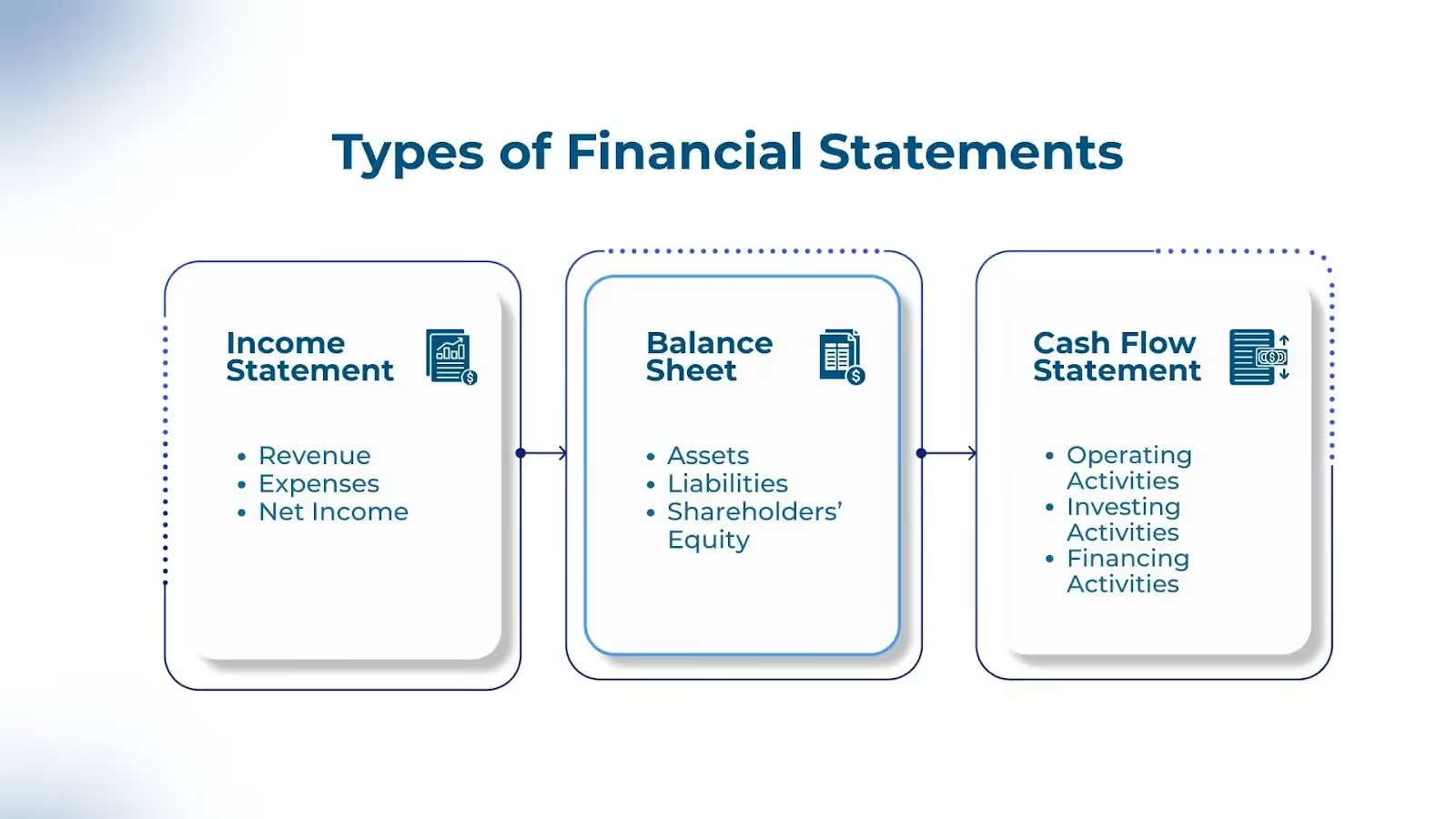
The three key financial statements are (1) the Income Statement, (2) the Balance Sheet, and (3) the Cash Flow Statement. These statements are essential for evaluating a company's financial performance and position. They provide a comprehensive snapshot of a business's financial health and are used by internal management and external stakeholders, such as investors, analysts, and creditors.
To better understand how each of these statements contributes to a company’s financial overview, let’s begin by taking a closer look at the Income Statement.
The Income Statement is like the report card for a company’s performance over a specific period. It shows whether a company is profitable by comparing its revenues to expenses. The statement outlines revenue, cost of goods sold, gross profit, operating expenses, and net income. These components tell a clear story of how much money came in and how much was spent, leading to either a profit or a loss.
For example, imagine a business selling products. The revenue comes from sales, but the company incurs costs (e.g., raw materials and labor) to make these products. These costs are subtracted to find the gross profit. After that, the company subtracts its operating expenses (like rent and salaries), and what’s left is the net income, which shows the final profit or loss.
The Income Statement follows accrual accounting rules. This means it doesn’t wait for cash to change hands; it records revenue when earned and expenses when incurred, making it different from the cash flow statement. The net income from this statement connects directly to both the Balance Sheet and the Cash Flow Statement. It affects retained earnings in the Balance Sheet and is the starting point in the Cash Flow Statement.
Now that we’ve looked at how a company earns and spends, let’s take a step back and see the bigger picture through the Balance Sheet.
The Balance Sheet is a snapshot of a company’s financial health at a specific time. It’s divided into three key sections: assets, liabilities, and shareholders' equity. These components offer a clear picture of what a company owns, what it owes, and the value left for its shareholders.
At the core of the Balance Sheet is the accounting equation: Assets = Liabilities + Equity. This simple but powerful formula ensures that the balance sheet "balances." On one side, you have everything the company owns (assets), and on the other, you have how it financed those assets through debt (liabilities) or the owners' contributions (equity).
The purpose of the Balance Sheet is to provide an overview of the company’s financial position. This includes its ability to meet short-term obligations, invest in growth, and generate profits. For example, if a company’s assets outweigh its liabilities, it’s in a healthy position. But if liabilities are high, it could signal financial strain.
Changes in assets and liabilities directly affect other financial statements, particularly the Income Statement and Cash Flow Statement. For instance, when a company takes on more debt, it may affect its net income and cash flow due to interest payments. Similarly, asset changes, like increasing inventory, could affect cash flow.
It’s time to explore how cash actually moves in and out of the business with the Cash Flow Statement.
The Cash Flow Statement is crucial for assessing a company's liquidity and financial flexibility. Unlike the Income Statement, which includes non-cash items, the Cash Flow Statement focuses solely on actual cash inflows and outflows during a period. It categorizes these cash flows into three main sections: operating activities, investing activities, and financing activities.
Starting with net income from the Income Statement, the Cash Flow Statement adjusts for non-cash items, such as depreciation, and changes in working capital, which are reflected in the Balance Sheet. This approach ensures the statement accurately portrays the company’s actual cash movements, giving an accurate picture of its liquidity.
Having explored the Cash Flow Statement, it's time to compare all three financial statements to see how they work together to provide a complete picture of a company’s financial health.
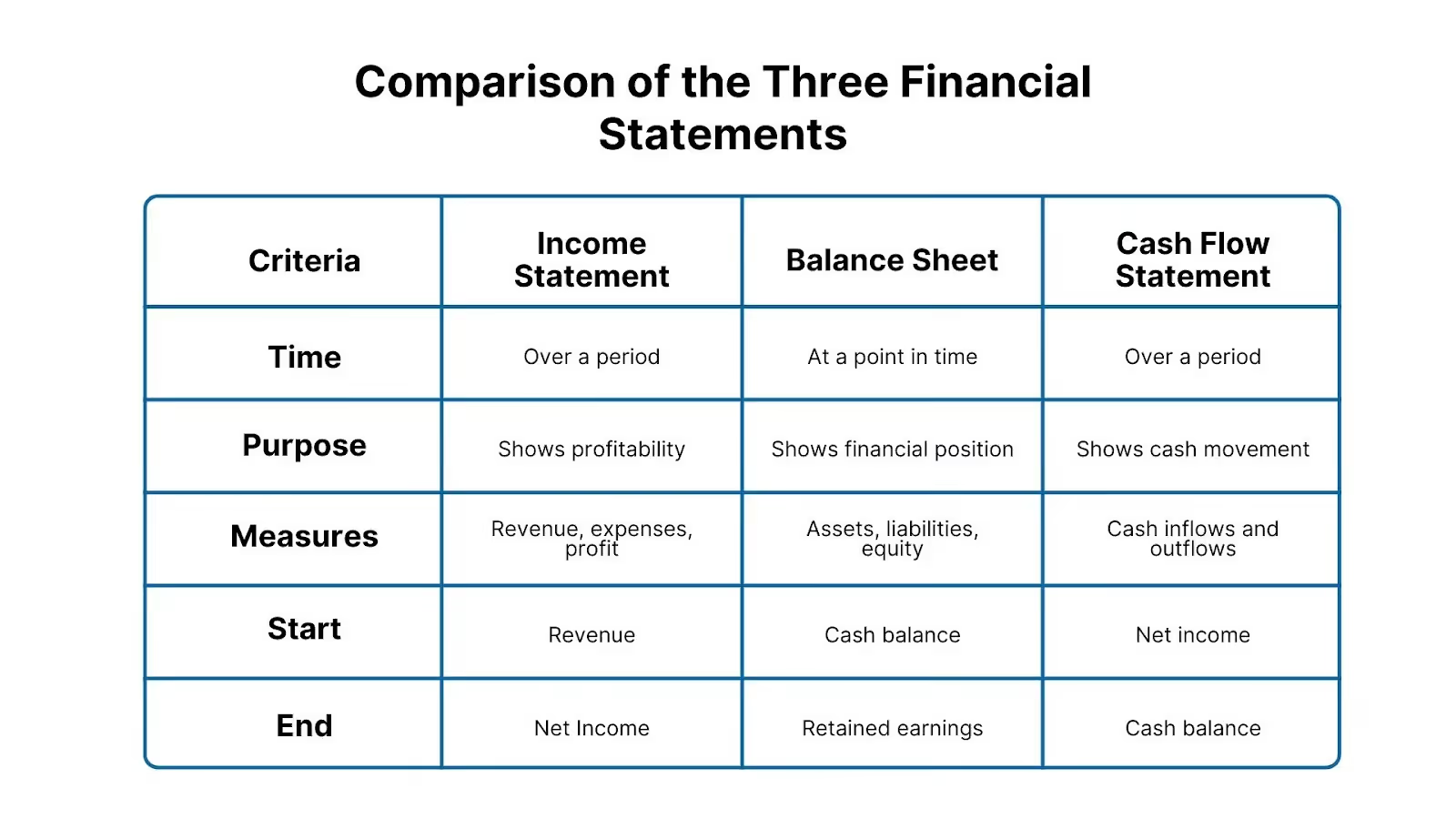
After comparing the three financial statements, let's examine how they relate to one another and function as a whole to present a comprehensive financial picture.
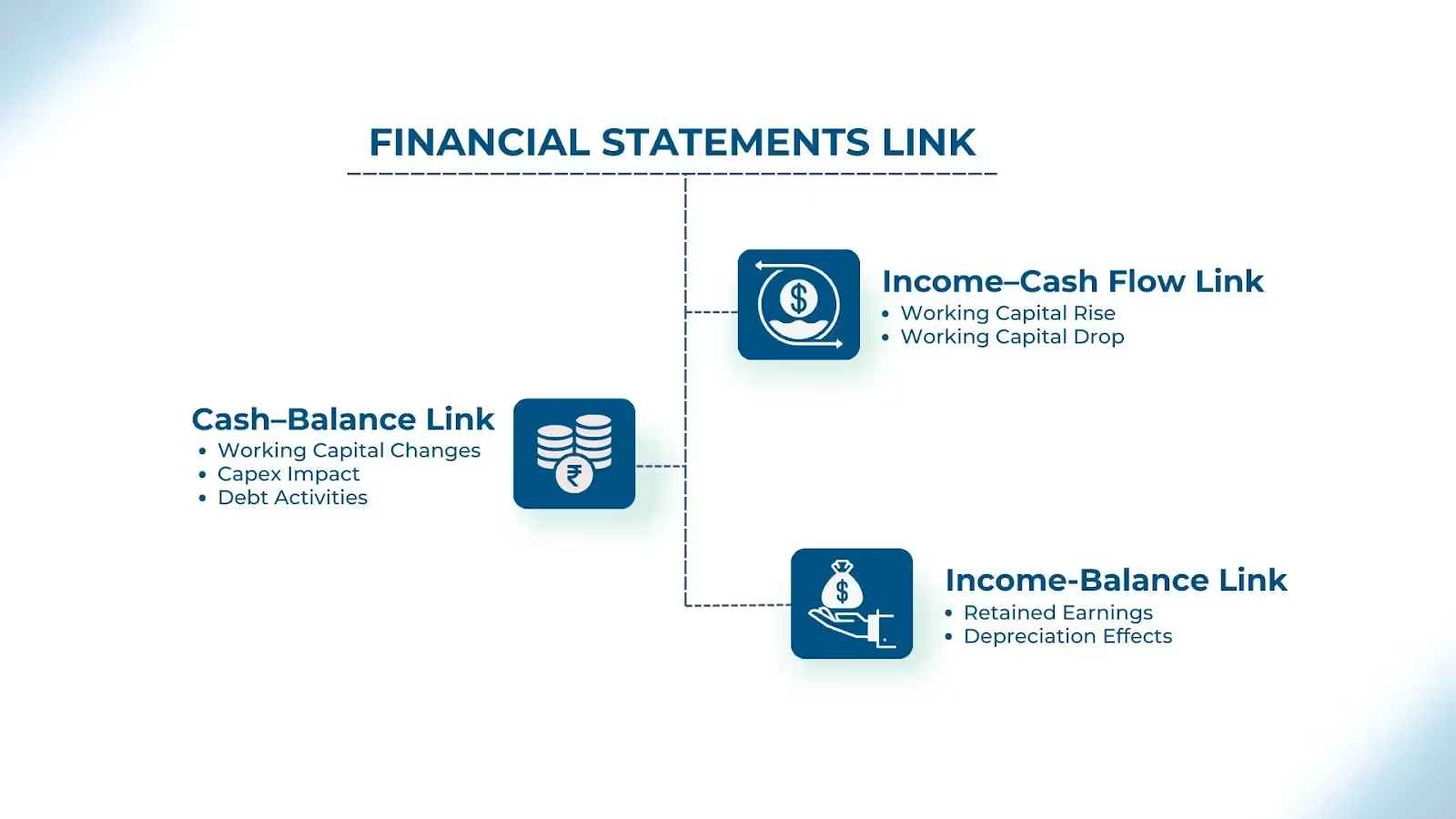
The Income Statement, Balance Sheet, and Cash Flow Statement rely on the principles of accrual accounting, which creates a strong link between them. Each statement provides valuable information, but the interplay among them offers a comprehensive view of a company’s performance and position. Here's how each one connects:
The Income Statement and Cash Flow Statement are directly linked through net income. The net income at the bottom of the Income Statement is the starting point for the Cash Flow Statement.
From this point, the Cash Flow Statement adjusts for non-cash items like depreciation and amortization (D&A), which are expenses that reduce net income but don’t impact cash. Additionally, it accounts for changes in working capital, such as increases in accounts receivable or inventory, which represent cash outflows or inflows.
例:
By adjusting for these items, the Cash Flow Statement provides an accurate picture of the cash a company actually generated or used during a period, despite the accrual accounting in the Income Statement.
The Cash Flow Statement and Balance Sheet are closely connected through changes in working capital, capital expenditures (Capex), and financing activities. Here's how they link:
The Income Statement and Balance Sheet are primarily linked through retained earnings. Here's how this connection works:
The formula for retained earnings is:
Retained Earnings = Beginning Balance + Net Income – Dividends
If the company earns a profit, it adds to the retained earnings, increasing shareholders’ equity; if there is a loss, retained earnings decrease.
Having understood how the three financial statements are linked, let's examine how these core statements are utilized in financial modeling.
Financial modeling is about predicting a company’s future performance. You must integrate the Income Statement, Balance Sheet, and Cash Flow Statement to create an accurate model. These three financial statements work together, providing a complete structure for any monetary model.
財務モデリングの第一歩は、財務三表のそれぞれについて項目を作成することです。これらの項目がモデルの構成要素となります。構造を整えたら、すべての財務諸表間でデータを照合し、整合性を確保します。
例えば、損益計算書の当期純利益はキャッシュ・フロー計算書の開始残高と一致し、キャッシュ・フロー計算書の期末現金残高は貸借対照表の現金と一致しなければなりません。
財務諸表の整合性が取れたら、過去のデータに基づいて前提条件を作成します。これらの前提条件は、将来の業績を予測するのに役立ちます。
予測は財務モデリングの中心です。財務三表の過去の傾向を分析することで、将来の経済的成果を予測できます。例えば、売上高が毎年一貫して10%成長している場合、同じ成長率を用いて将来の売上収益を予測できます。同様に、安定した営業費用も過去の傾向を用いて予測可能です。
キャッシュ・フロー計算書は、特に運転資本や設備投資の変化がキャッシュ・フローにどのような影響を与えるかを理解する上で重要な役割を果たします。これは、企業が債務を履行し、将来の成長を促進するための十分な現金を確保できるかどうかを評価する上で不可欠です。
詳細なモデルを構築するには、複雑な項目を扱うための補助スケジュールが必要になることがよくあります。例:
財務三表を理解することは複雑に思えるかもしれませんが、決して手に負えないものではありません。その相互関係をしっかりと把握することで、企業はより良い財務上の意思決定を行い、将来の成長に向けた明確な道筋を確保できます。各財務諸表は独自の洞察を提供し、それらを組み合わせることで、企業の業績と財務健全性の全体像を把握することができます。
正確な財務記録を維持し、定期的に見直すことで、企業はエラーを未然に防ぎ、課題を予測することができます。財務諸表の構築や解釈について専門的なガイダンスが必要な場合は、VJM Globalにお任せください。
当社のチームは財務モデリングの専門的なサポートを提供し、業界基準への準拠を確実にするとともに、情報に基づいた意思決定に必要な洞察を提供します。個別のご相談は、お気軽にお問い合わせください。財務分析の複雑なプロセスをサポートし、お客様が本来の業務に集中できるようお手伝いします。

.avif)


