


If you're a manager, you’ve likely faced the frustration of trying to keep track of revenue streams, control expenses, and stay ahead of tax regulations. Running a hospitality business means juggling countless responsibilities, but few are as critical as managing your finances.
From fluctuating room rates to unpredictable food and beverage sales, the financial domain can feel like a constant challenge.
This blog will explore those challenges with practical accounting insights tailored specifically for the hospitality industry. We’ll guide you through key areas, including revenue management, expense control, and tax compliance, as well as how to fine-tune your financial processes for better decision-making.
Hotel accounting is a specialized branch of accounting focused on the unique financial aspects of the hospitality industry. It involves recording and organizing financial transactions to provide insights into a business’s financial health.
Hotel accounting adapts standard accounting principles to account for the distinct needs of hotels, guesthouses, and other accommodation businesses.
Internally, hotel managers use financial reports to monitor performance and make strategic decisions. Externally, investors, lenders, and stakeholders rely on these reports to assess the hotel's profitability and stability.
Now that we understand what hotel accounting is, let’s explore the benefits it brings to the hospitality sector.
Hospitality accounting isn’t like traditional business accounting. It must manage unpredictable demand and high operating costs while focusing on customer satisfaction. Here’s how it stands out:
In the dynamic world of hospitality, effective accounting practices are crucial for maintaining profitability while meeting customer expectations, ensuring long-term success in a competitive market.
With a solid grasp of the benefits, let’s take a closer look at what’s involved in hotel accounting.
.avif)
Hotel accounting is a specialized field that focuses on managing the financials of hotels, resorts, and other lodging businesses. Here are some of the key components:
Hotels generate income from various sources, including room bookings, food sales, and additional services. Effective hotel accounting ensures all these streams are tracked and categorized correctly. On the expense side, tracking labor costs, utilities, and maintenance is equally crucial for maintaining profitability.
Dynamic pricing allows hotels to adjust room rates based on demand, seasonality, or market shifts. Hotel accounting must adapt to these fluctuations, accurately recording the changes to revenue in real time. This requires tailored tools and systems designed for the hospitality industry.
Hotels never close, and neither do their financial transactions. Accounting systems must efficiently manage a wide range of transactions, from guest payments to real-time billing. Security and accuracy are essential to prevent fraud and ensure smooth financial operations.
Hotel payroll is a critical part of accounting. Hotels must comply with labor laws, manage wages, benefits, and taxes, and stay on top of payroll filings like W-2s and 1099s. Expert accountants ensure that the process runs smoothly, meeting federal and state requirements.
Hotels rely on multiple vendors for supplies and services. Accounting includes managing vendor relationships, overseeing accounts payable, and ensuring compliance with contracts.
Effective financial management in hospitality is about balancing revenue and controlling costs. Key elements include sales revenue management, cost control, cash flow analysis, and profitability assessment. Managing these areas enables hotels to maintain financial health while optimizing resources.
Payroll, taxes, and compliance are at the core of hospitality financial accounting. Accurate wage distribution, tax withholding, and adherence to labor laws are essential. Regular reporting and record-keeping ensure compliance, help avoid penalties, and keep the business on track financially.
Mastering these elements helps hotel owners and managers handle the complexities of financial management, ensuring profitability and legal compliance across all operations.
Also Read: Outsource Tax Preparation from the US to India: A CPA’s 2025 Guide
Now that you know the key areas involved, it’s important to understand the core concepts that shape hospitality accounting.
Hospitality accounting follows standard financial structures with hotel-specific elements, providing essential insights into your hotel’s financial position, performance, and decision-making.
Understanding these concepts helps hotel owners and managers tackle the complexities of financial management, improve decision-making, and enhance overall profitability in the competitive hospitality industry.
Also Read: Offshore Accounting in India: 2025 Guide for US CPA Firms
Next, let’s explore some essential hotel accounting metrics that will help you track and improve financial performance.
Vigilantly monitoring key operating metrics is crucial for hotels, as room rentals are limited and the inventory is perishable. Here are some of the most commonly used hotel metrics, along with their formulas, to effectively track financial performance:
Estas métricas son esenciales para monitorear y mejorar el desempeño financiero en la industria hotelera.
Lea también: ¿Preparando un estado de flujo de caja bajo GAAP? Subcontrate desde EE. UU. a la India
Una vez cubiertas las métricas clave, es momento de hablar sobre cómo puede comenzar con la contabilidad hotelera e implementar estas prácticas.
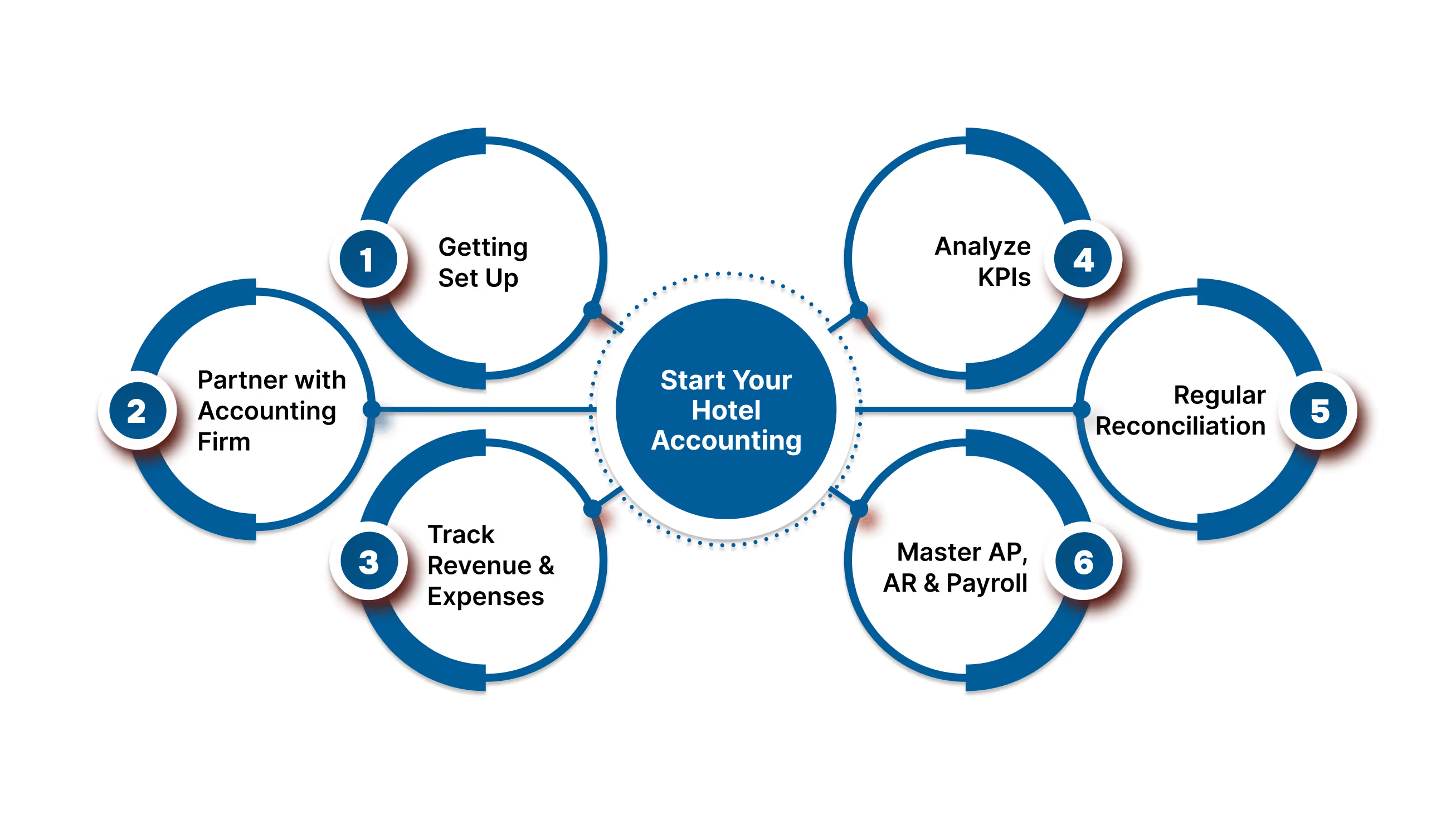
Comenzar con la contabilidad de su hotel no tiene por qué ser intimidante. Vamos a desglosarlo paso a paso:
El primer paso es elegir el software de contabilidad hotelera adecuado, adaptado a las necesidades de su propiedad. Debe ser capaz de manejar el alto volumen de transacciones típico de la industria hotelera. Asegúrese de integrarlo con su sistema de punto de venta (POS) para lograr un flujo de datos fluido y una presentación de informes financieros precisa.
Considere asociarse con soluciones contables y empresariales de confianza como VJM Global, especializada en la industria hotelera. Nuestro equipo de contadores virtuales gestionará sus finanzas, reducirá los costos generales y le brindará tranquilidad, permitiéndole ofrecer experiencias excepcionales a sus huéspedes.
Reserve una demostración para obtener asesoramiento experto sobre cumplimiento financiero, gestión de ingresos y planificación estratégica.
Utilice su software de contabilidad para realizar un seguimiento de los ingresos por reservas de habitaciones, comidas y otros servicios, junto con gastos como nóminas, servicios públicos y suministros. Revisar estas cifras con regularidad le ayudará a detectar tendencias y tomar decisiones informadas que impulsen la rentabilidad.
Además de realizar un seguimiento de los ingresos y gastos, monitoree regularmente los indicadores clave de desempeño (KPI), como la Tarifa Media Diaria (ADR), los Ingresos por Habitación Disponible (RevPAR) y el Beneficio Operativo Bruto por Habitación Disponible (GOPPAR).
Estas métricas brindan información valiosa sobre el desempeño de su hotel, destacando áreas de crecimiento o mejora.
Concilie sus cuentas con frecuencia para asegurarse de que todo cuadre. Esto significa comparar estados de cuenta bancarios, facturas y documentos financieros para corregir cualquier discrepancia. La conciliación periódica mantiene sus registros financieros precisos y ayuda a evitar errores costosos.
Establezca procedimientos claros para gestionar las cuentas por pagar (AP) y las cuentas por cobrar (AR). Utilice su software para realizar un seguimiento de los pagos a proveedores y garantizar el cobro puntual a los huéspedes. Además, optimice su proceso de nómina para garantizar pagos oportunos y precisos a sus empleados.
Seguir estos pasos sienta una base sólida para una contabilidad hotelera eficiente, ayudando a garantizar la estabilidad financiera mientras mejora la experiencia de sus huéspedes.
Ahora que está listo para comenzar, le explicamos por qué asociarse con VJM Global puede optimizar su gestión contable hotelera y garantizar que todo funcione a la perfección.
Abordar las complejidades de la contabilidad hotelera es un reto, pero VJM Global está aquí para simplificar el proceso. Así es como podemos apoyar a su negocio:
Deje que VJM Global se encargue de sus complejidades financieras, permitiéndole centrarse en ofrecer experiencias excepcionales a sus huéspedes.
Iniciar y gestionar un sistema de contabilidad hotelera puede parecer abrumador, pero con las herramientas, los procesos y la experiencia adecuados, se convierte en un activo poderoso para su negocio. Centrarse en áreas clave como el seguimiento de ingresos, la gestión de gastos y el cumplimiento normativo garantiza que sus finanzas estén siempre bajo control.
Utilizar un software de contabilidad hotelera especializado y asociarse con profesionales, como VJM Global, puede ayudar a optimizar las operaciones y mejorar la eficiencia financiera.
¿Listo para optimizar la contabilidad de su hotel?
Libere el tiempo de su equipo externalizando la contabilidad a VJM Global, lo que le permitirá centrarse en el crecimiento. Empiece hoy mismo.
Comience seleccionando un software de contabilidad hotelera fiable, asociándose con un contable especializado en hoteles y estableciendo una rutina para el seguimiento de ingresos, gastos y conciliaciones periódicas.
Monitorizar KPI como el ADR, el RevPAR y el GOPPAR le ayuda a evaluar el rendimiento financiero de su hotel, identificar tendencias y tomar decisiones basadas en datos para mejorar la rentabilidad.
Externalizar la contabilidad le permite reducir los costes operativos, garantizar una gestión financiera precisa y centrarse en mejorar la experiencia de los huéspedes sin comprometer el control financiero.
Los procesos clave incluyen el seguimiento de ingresos y gastos, la gestión de cuentas por pagar (AP) y cuentas por cobrar (AR), las nóminas y la garantía de una conciliación periódica de sus registros financieros.
Asóciese con un contable experimentado que conozca las leyes del sector hotelero, realice un seguimiento de las normativas fiscales específicas del sector y utilice un software que integre los datos financieros para garantizar el cumplimiento continuo.




