%20(3).avif)
La mayoría de los líderes financieros descubren la complejidad de las fusiones en Singapur solo después de ejecutarlas, cuando un método contable mal aplicado o una elección fiscal omitida generan pasivos que podrían haberse evitado. Según la Ley de Sociedades (Cap. 50), la fusión transfiere todos los bienes, derechos, pasivos y obligaciones de las entidades que se fusionan a una única empresa superviviente. Las consecuencias contables y fiscales de dicha transferencia son donde residen las decisiones clave.
Esta guía está dirigida a directores financieros, gerentes fiscales y directores de finanzas de empresas constituidas en Singapur, así como a grupos multinacionales que reestructuran entidades regionales. El procedimiento legal está bien documentado; lo que rara vez se explica de forma conjunta es el tratamiento contable bajo la norma SFRS(I) 3, la elección fiscal irrevocable de la Sección 34C y las compensaciones estratégicas entre ambos.
La guía del IRAS confirma que los plazos de 90 días para realizar la elección se pasan por alto con frecuencia, lo que cuesta a las empresas beneficios fiscales diferidos y pérdidas compensables de forma permanente. Esta guía abarca ambas opciones y lo que está en juego en cada una.
La fusión bajo las secciones 215A a 215K de la Ley de Sociedades de 1967 es el proceso mediante el cual dos o más empresas constituidas en Singapur se combinan en una sola entidad, transfiriéndose automáticamente todos los activos, pasivos y obligaciones a la empresa superviviente (fusionada) por ministerio de la ley. A diferencia de una fusión estándar mediante transferencia de activos o acciones, la fusión crea una consolidación legal: los derechos de propiedad se transfieren sin necesidad de realizar transferencias legales individuales para cada activo.
Fusión simplificada (Sección 215D) disponible para empresas dentro de un mismo grupo:
Fusión de formato largo (Secciones 215B–215C) se aplica a cualquier empresa:
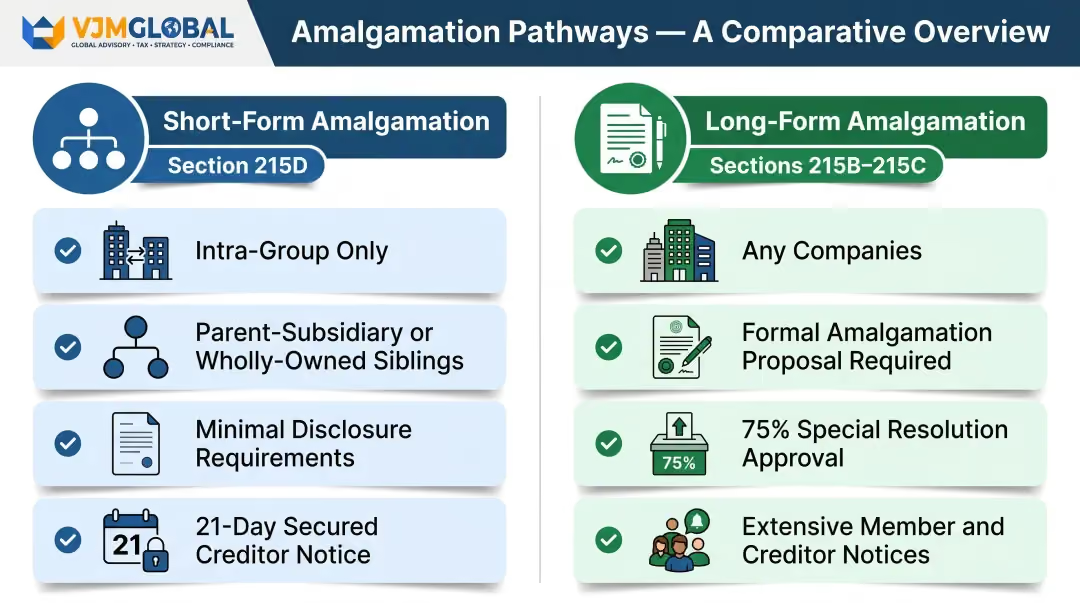
A diferencia de las transferencias comerciales directas, la fusión plantea cuestiones específicas que determinan los resultados financieros:
Cuestiones contables:
Cuestiones fiscales:
La intersección entre los requisitos de las SFRS y las disposiciones de la Ley del Impuesto sobre la Renta crea niveles de complejidad que van mucho más allá de los mecanismos legales de la fusión. Obtener el tratamiento contable y las elecciones fiscales desde el principio evita correcciones costosas una vez que la empresa fusionada ya está operativa.
La norma contable aplicable depende de la sustancia económica de la fusión, no solo de su forma jurídica.
Cuándo se aplica: Fusiones de formato largo entre partes no relacionadas que cumplen con la definición de "combinación de negocios".
La norma SFRS(I) 3, el equivalente en Singapur a la NIIF 3, exige el método de compra (adquisición):
Requisitos clave:
Asientos contables críticos:
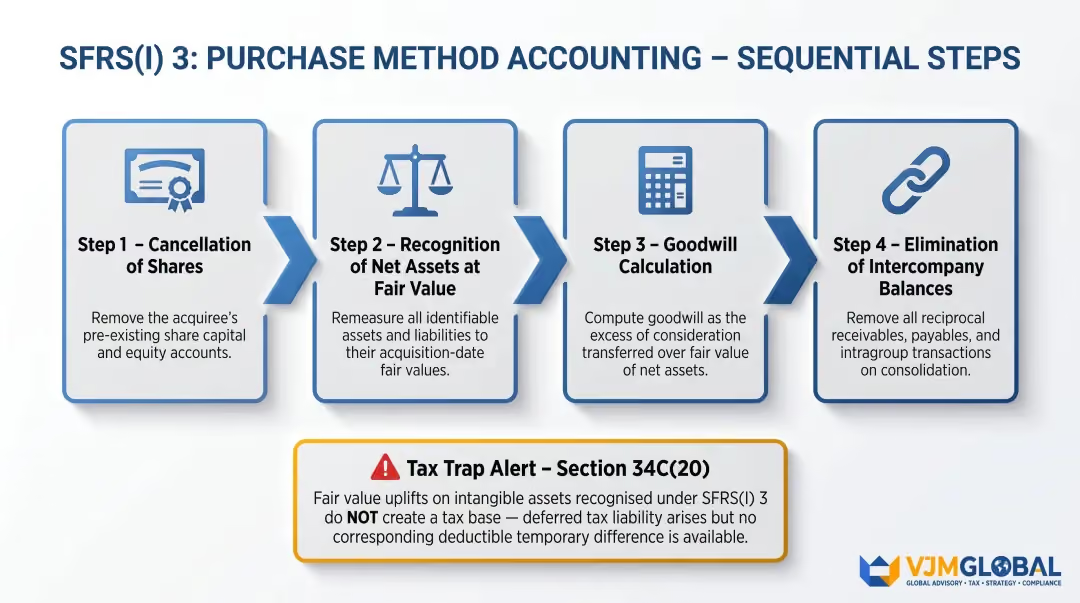
Trampa fiscal según la Sección 34C(20): No se concede ninguna deducción por amortización (WDA) para los derechos de propiedad intelectual reconocidos únicamente debido a la contabilidad de adquisición según la norma SFRS(I) 3 que no existían como activos antes de la fusión. Los incrementos de valor razonable que crean nuevos activos intangibles no generan ningún beneficio fiscal correspondiente.
Cuándo se aplica: Fusiones intragrupo simplificadas donde las entidades que se combinan están bajo control común.
La norma SFRS(I) 3 excluye explícitamente de su alcance las combinaciones bajo control común. Las entidades deben desarrollar políticas contables según la norma SFRS(I) 1-8; la guía ISCA RAP 12 recomienda la contabilidad de fusión/unificación como el enfoque preferido.
Características clave:
La elección del método contable determina directamente su carga de trabajo de cumplimiento fiscal posterior a la fusión. El método de adquisición genera el resultado más complejo:
La contabilidad de fusiones mantiene el panorama fiscal mucho más claro:
El método contable debe determinarse antes de la ejecución de la fusión — no de forma retroactiva. Equivocarse en esto implica corregir el fondo de comercio mal declarado, revertir activos intangibles no deducibles y reconstruir los cronogramas de impuestos diferidos desde cero.
La Sección 34C se aplica únicamente a las fusiones en las que la ACRA emite un Aviso de Fusión bajo la Sección 215F a partir del 22 de enero de 2009, o cuando el Ministro aprueba la fusión.
Requisito fundamental: La empresa fusionada debe realizar una elección formal e irrevocable en un plazo de 90 días a partir de la fecha de la fusión.
Sin esta elección:
Cuando se ejerce la opción de la Sección 34C, la fusión se trata como una continuación ininterrumpida del negocio, no como un cese y reinicio. De esto se derivan tres reglas clave de continuidad:
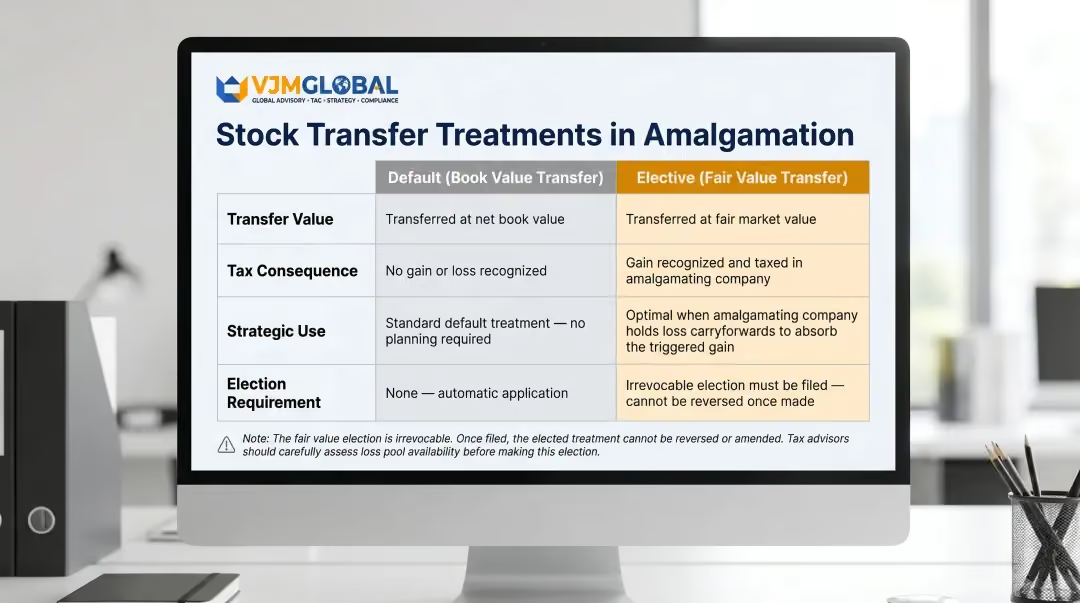
La tabla anterior asume que las existencias comerciales permanecen en la cuenta de ingresos después de la transferencia. Cuando un activo cambia de cuenta por completo (de ingresos a capital o viceversa), se aplican reglas diferentes.
Sección 34C(14): De ingresos a capital
Cuando un bien pasa de la cuenta de ingresos en la empresa fusionada a la cuenta de capital en la empresa resultante de la fusión:
Ejemplo: La empresa fusionante A posee un inventario (cuenta de ingresos) valorado en 500.000 $ (valor contable neto). La empresa fusionada B pretende mantener estos artículos como activos fijos, por lo que la transferencia se realiza al valor de mercado de 600.000 $; la ganancia de 100.000 $ está sujeta a impuestos para la empresa A.
Sección 34C(16): De capital a ingresos
Cuando una propiedad pasa de la cuenta de capital a la cuenta de ingresos, el tratamiento es distinto: la contraprestación es el menor valor entre el valor de mercado y el pago real, deducible como gasto en la empresa fusionada cuando las existencias se vendan finalmente.
Ejemplo: La empresa fusionante C posee equipos (cuenta de capital) con un valor fiscal residual de 200.000 $ y un valor de mercado de 250.000 $. La empresa fusionada D los mantendrá como existencias comerciales; la contraprestación de la transferencia se fija en 250.000 $, que la empresa D deduce en el momento de la venta final.
La sección 34C(7) aborda una trampa que suele pasarse por alto:
Cuando una empresa fusionante posee acciones de otra empresa fusionante y dichas acciones se cancelan:
Esto afecta directamente a las reestructuraciones intragrupo apalancadas en las que la deuda de adquisición permanece pendiente después de la fusión; un punto de planificación que a menudo se pasa por alto hasta que se deniega la deducción.
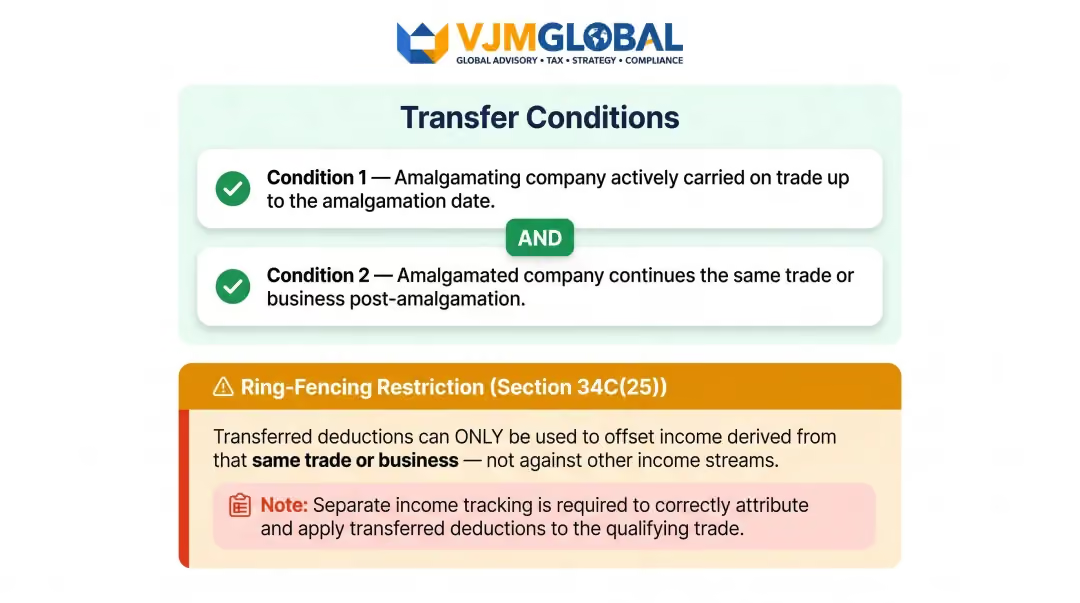
Según las secciones 34C(23) y (24), las amortizaciones de capital, las pérdidas comerciales y las donaciones no absorbidas de una empresa fusionante pueden transferirse a la empresa fusionada, pero solo si se cumplen dos condiciones:
Condición 1: Continuidad del negocio (empresa fusionante)
Condición 2: Continuidad del negocio (empresa resultante de la fusión)
Restricción de aislamiento (Sección 34C(25)):
Las deducciones transferidas solo pueden compensarse con ingresos provenientes de esa misma actividad comercial o empresarial, no con otras fuentes de ingresos de la empresa resultante de la fusión.
Las pérdidas transferidas no pueden utilizarse para reducir ingresos no relacionados, lo que hace que la elección de la entidad resultante de la fusión sea estratégicamente importante. La empresa resultante de la fusión debe mantener un seguimiento de ingresos separado para cumplir con los requisitos de aislamiento.
Estas normas de aislamiento están directamente relacionadas con la forma en que se gestionan las amortizaciones de capital . Según la Sección 34C(8), la fusión preserva la continuidad para instalaciones, maquinaria y edificios industriales.
Tratamiento de la Sección 34C(8):
Para instalaciones, maquinaria y edificios industriales sobre los cuales se concedieron amortizaciones previamente:
La sección 34C(8A) proporciona continuidad adicional para las deducciones por edificios de la sección 18C.
Los instrumentos relacionados con transferencias de activos durante una fusión calificada pueden optar a la exención del impuesto de timbre ad valorem según la sección 15 de la Ley de Impuestos de Timbre, siempre que:
Condiciones:
Plazos de presentación:
Periodo de retención: Se aplica un periodo de retención de activos/acciones de 2 años, con disposiciones de recuperación que incluyen un interés anual del 6% en caso de incumplimiento.
Cuando una fusión constituye una Transmisión de una empresa en funcionamiento (TOGC) conforme al Reglamento 10 del Reglamento General del GST, la transmisión puede considerarse como una operación que no constituye ni entrega de bienes ni prestación de servicios y, por tanto, fuera del ámbito del GST.\
Deben cumplirse cinco condiciones:
Limitaciones importantes:
Muchas empresas asumen que, dado que la fusión es una unificación legal —y no una venta a terceros—, no existen consecuencias fiscales inmediatas. Sin la elección de la Sección 34C, esa suposición resulta costosa:
No aprovechar el plazo de elección irrevocable de 90 días hace que estas consecuencias fiscales sean permanentes; no existe ningún mecanismo para revertirlas.
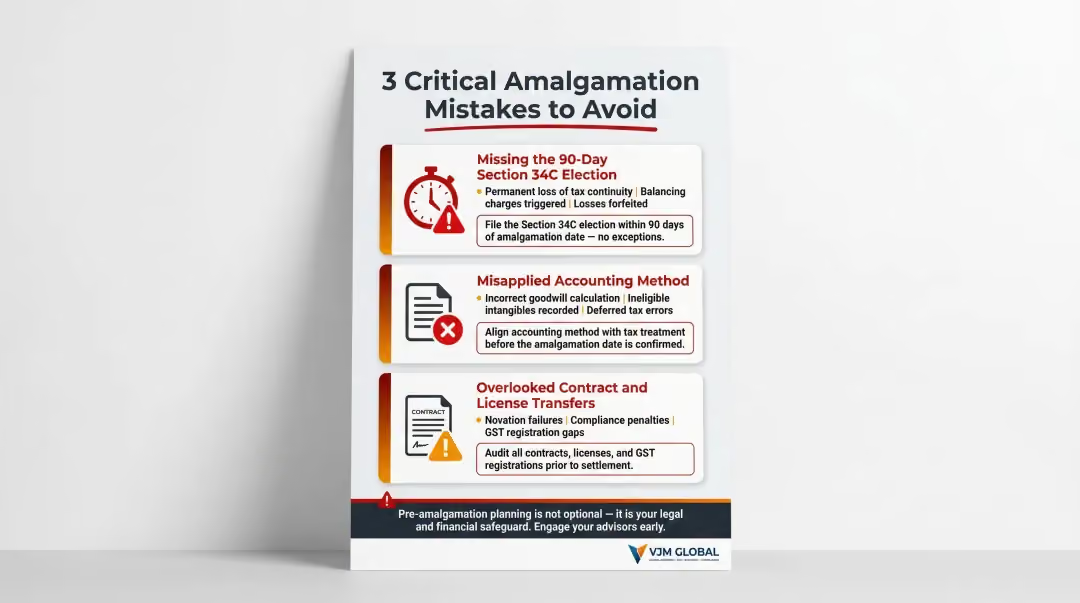
Aplicar el método de adquisición (valor razonable) a una fusión bajo control común —o el método de contabilidad de fusión donde no corresponde— crea una cascada de errores posteriores:
El método contable debe determinarse antes de ejecutar la fusión, no de forma retrospectiva. La elección depende de la relación entre las empresas (control común frente a combinación de negocios) y determina tanto la presentación contable como las consecuencias fiscales.
Este paso en falso contable a menudo agrava los errores fiscales mencionados anteriormente, convirtiendo la decisión sobre el método en una de las elecciones más tempranas y trascendentales del proceso.
La consolidación legal no transfiere automáticamente todas las relaciones comerciales. Las empresas suelen pasar por alto la necesidad de transferir activamente contratos laborales, licencias y acuerdos con terceros, lo que conlleva consecuencias reales de cumplimiento:
Cuando estas transferencias se pasan por alto, los ingresos pueden seguir declarándose bajo una empresa que ya no existe legalmente, lo que provoca incumplimientos normativos y posibles sanciones.
Buenas prácticas: Obtenga el consentimiento de la contraparte para los contratos importantes antes de la fusión, especialmente aquellos regidos por leyes extranjeras donde la transferencia legal de Singapur podría no ser reconocida.
La fusión sigue el procedimiento de forma abreviada (Sección 215D, para empresas del mismo grupo de propiedad total) o de forma larga (Secciones 215B–215C, para cualquier empresa). Ambos requieren declaraciones de solvencia de los directores, resoluciones de los accionistas y presentación ante la ACRA, culminando en un Aviso de Fusión que activa la transferencia automática de activos y pasivos.
La SFRS(I) 3 (Combinaciones de negocios) se aplica a las fusiones entre partes no relacionadas y requiere el método de adquisición. Las fusiones bajo control común pueden utilizar en su lugar la contabilidad de fusión (agrupación de intereses), que es una opción de política permitida bajo la SFRS(I) 1-8.
El método de adquisición registra los activos netos a valor razonable y puede reconocer el fondo de comercio. La contabilidad de fusión (agrupación de intereses) combina los activos y pasivos a sus valores contables históricos sin reconocer fondo de comercio.
Bajo la Sección 34C(23), las pérdidas no absorbidas y las deducciones por capital se transfieren a la empresa fusionada si se cumplen las condiciones de continuidad del negocio. La empresa fusionada debe continuar con el mismo comercio o negocio, y las deducciones transferidas solo pueden aplicarse contra los ingresos de ese comercio específico.
La elección de la Sección 34C es un aviso escrito e irrevocable presentado ante el IRAS dentro de los 90 días posteriores a la fecha de la fusión. Debe cubrir a todas las empresas que se fusionan y, una vez realizada, activa las disposiciones de continuidad fiscal que evitan consecuencias fiscales adversas en las transferencias de activos y existencias comerciales.
Si la fusión califica como una transferencia de negocio en marcha (TOGC) bajo la Regulación 10 de las Regulaciones (Generales) del GST, la transferencia queda fuera del alcance del GST. Las condiciones clave incluyen que ambas partes estén registradas en el GST y que el cesionario utilice los activos para suministros sujetos a impuestos; consulte al IRAS antes de proceder.