

%20(6).avif)
Crypto bookkeeping can often feel like an uphill struggle, especially when setting up your business from the US to India. As you handle the complexities of crypto finance across borders alone, you’ll face challenges such as volatility, constant data reconciliation, and complex reporting requirements. These hurdles can leave you scrambling to keep up. Many accountants in the blockchain and Web3 space experience the same frustrations during this transition.
This blog will guide you through the components of crypto bookkeeping, the common challenges you'll encounter, and the tools that can simplify the process. We’ll also explore tax compliance, strategies for staying organized, and much more to help you gain control over your crypto financials as you scale your operations.
Crypto bookkeeping involves recording and organizing all cryptocurrency transactions to maintain clear, accurate financial records. It includes tracking every buy, sell, swap, and transfer across wallets and exchanges. Each entry notes the date, value, and fees to calculate gains or losses correctly.
Unlike traditional bookkeeping, it deals with decentralized assets and volatile market prices. Maintaining precise records is key for tax reporting and regulatory compliance. It also gives businesses a transparent view of their crypto finances and helps with better decision-making. In short, crypto bookkeeping keeps digital asset management organized, compliant, and audit-ready.
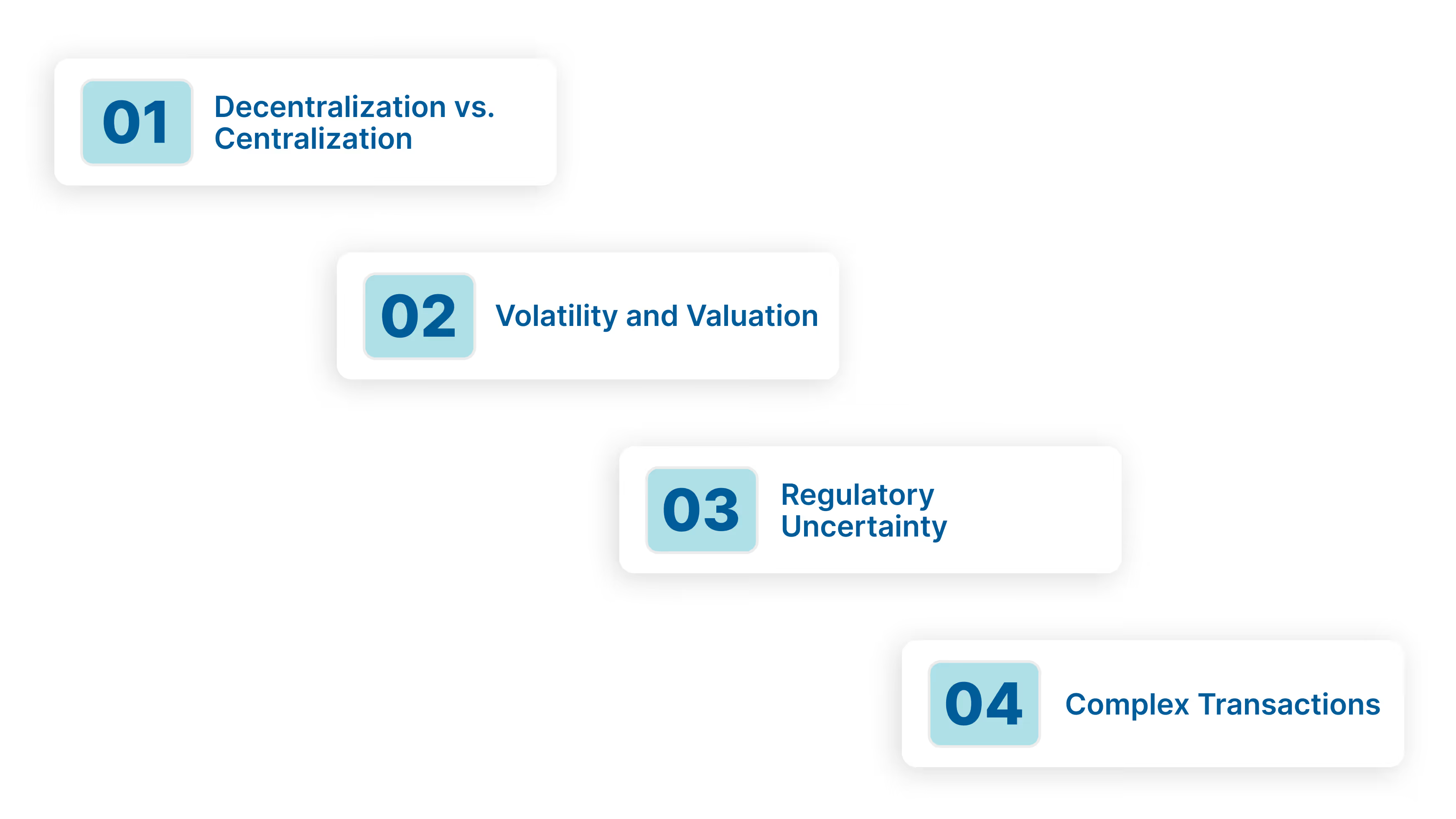
Crypto bookkeeping introduces complexities that set it apart from traditional accounting methods. Key distinctions include:
These fundamental differences create a challenging environment for businesses managing digital assets. Understanding why meticulous record-keeping matters becomes critical when handling this complex terrain.
As you expand your crypto business from the US to India, understanding tax and compliance expectations in both regions becomes critical. In the US, the IRS classifies cryptocurrency as property, meaning every sale, trade, or payment can trigger a taxable event. In India, while regulations are still evolving, crypto transactions are taxed at a flat 30% on profits, with a 1% TDS on transfers under the Income Tax Act. Accurate bookkeeping helps businesses in both countries track gains and losses, report them correctly, and avoid compliance issues.
Beyond taxes, proper crypto bookkeeping offers clear visibility into profits, losses, and cash flow, essential for financial transparency and investor trust. It also helps manage risk in a volatile market and ensures operational efficiency through automation and reliable data. With global reporting frameworks like the OECD’s Crypto-Asset Reporting Framework (CARF) emerging, maintaining organized records positions businesses to stay compliant as regulations tighten worldwide.
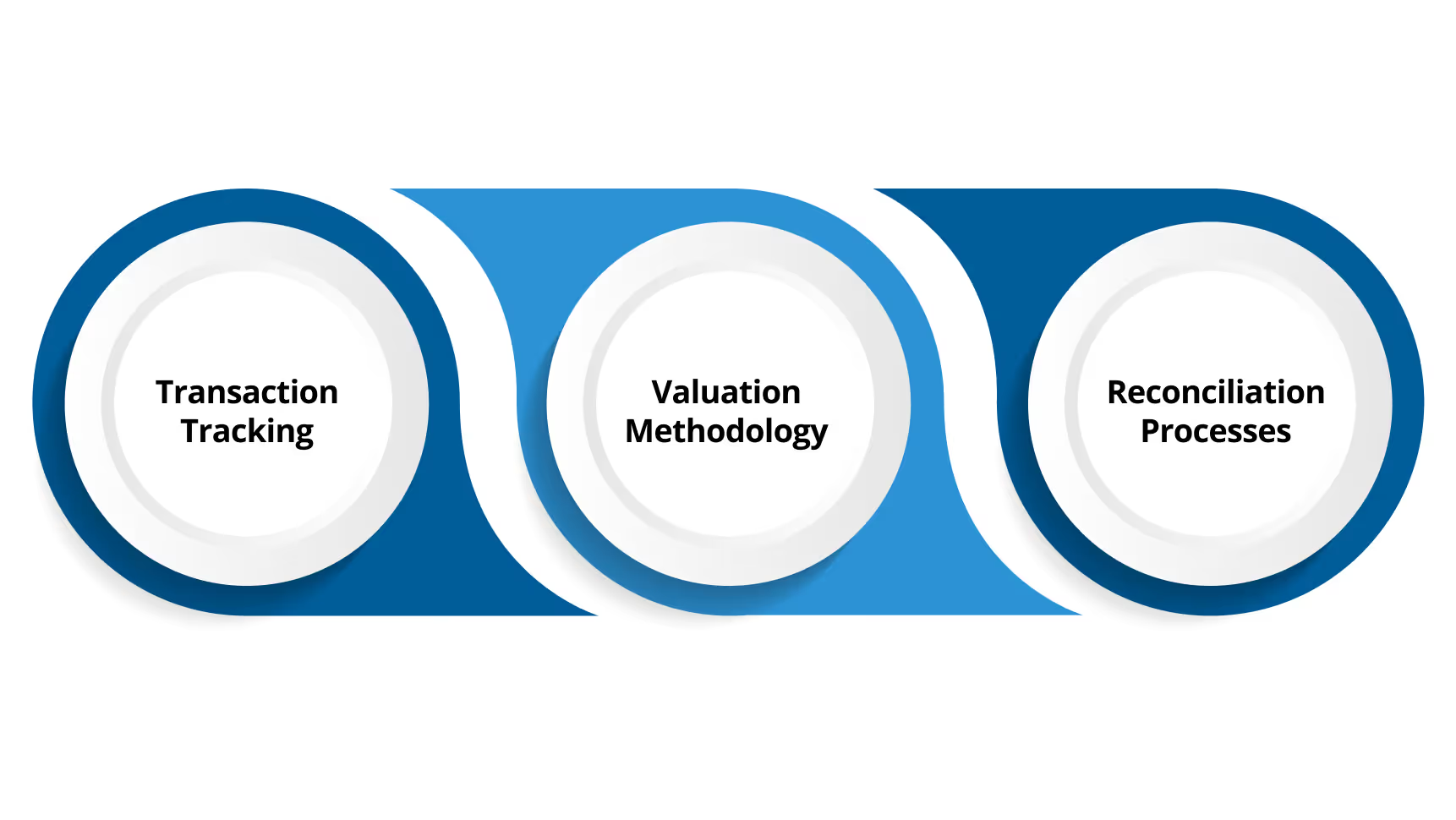
Crypto tax professionals take specific steps in digital bookkeeping to accurately record your business's capital gains or losses. Without systematic financial reporting, your company risks penalties. Due to the decentralized and volatile nature of cryptocurrencies, crypto accountants apply specialized methods to reduce financial risks.
Tracking every cryptocurrency transaction is the foundation of crypto bookkeeping. Every buy, sell, transfer, and trade must be accurately recorded to understand the full financial picture. Here's a breakdown of what to track:
Valuation in crypto bookkeeping is complex due to the volatile nature of cryptocurrency prices. To maintain consistency in your financial statements and tax calculations, you must adopt a valuation method that fits your business. The primary methods used are:
La conciliación es un paso vital para que los registros de sus transacciones de criptomonedas coincidan con los saldos reales de sus billeteras y cuentas de intercambio. Una conciliación precisa ayuda a prevenir discrepancias que pueden derivar en auditorías, declaraciones de impuestos omitidas o incluso posibles fraudes financieros. Estos son los pasos clave en la conciliación:
Incluso con una comprensión sólida de estos componentes básicos, las empresas se encuentran con obstáculos importantes en la práctica. El ecosistema criptográfico presenta desafíos que pueden descarrilar incluso los esfuerzos de contabilidad mejor intencionados.
La gestión de transacciones de criptomonedas presenta desafíos únicos que difieren de las prácticas tradicionales. A continuación, se ofrece una descripción general de los principales obstáculos que enfrenta la contabilidad de criptomonedas:
Abordar estos desafíos requiere algo más que automatización; necesita la combinación adecuada de tecnología y asesoramiento experto. Si bien las herramientas de contabilidad de criptomonedas pueden simplificar el seguimiento de las transacciones, no pueden abordar áreas complejas como la fiscalidad internacional, el cumplimiento de FEMA, o la configuración transfronteriza. Ahí es donde VJM Global aporta valor. Con una profunda experiencia en contabilidad de criptomonedas, asesoramiento sobre DTAA y establecimiento de empresas en India, nuestro equipo ayuda a las empresas globales a cerrar las brechas regulatorias y mantener un cumplimiento total. Comience hoy mismo.
Comprender y cumplir con el tratamiento regulatorio de las criptomonedas, desde EE. UU. hasta India, es fundamental para cualquier empresa que realice transacciones con criptomonedas. Sin embargo, definir y ejecutar una estrategia de contabilidad de criptomonedas puede ser complejo debido a la volatilidad y la naturaleza única de los activos digitales. Estas son algunas de las mejores prácticas a adoptar para una gestión eficiente de las transacciones de criptomonedas.
Realice un seguimiento meticuloso de cada transacción de criptomonedas, incluida la fecha, el monto, el tipo de criptomoneda, la información del remitente/receptor, las tarifas de transacción y el valor justo de mercado en el momento de la transacción. Esto garantiza el cumplimiento fiscal y la precisión en los informes financieros.
Elija un método de valoración coherente para sus activos de criptomonedas. Los métodos comunes como FIFO (primero en entrar, primero en salir), LIFO (último en entrar, primero en salir) o el costo promedio ponderado (WAC) ayudan a determinar la base de costo para los cálculos de impuestos y la declaración de ganancias de capital.
Utilice software de contabilidad de criptomonedas para importar y categorizar transacciones automáticamente. Esto minimiza los errores y ahorra tiempo, lo que permite una fácil conciliación de los registros entre billeteras y exchanges.
Las regulaciones sobre criptomonedas evolucionan constantemente. Sus prácticas contables deben alinearse con las leyes fiscales y los requisitos de presentación de informes más recientes, como los descritos por el IRS, para evitar sanciones.
Protect your crypto data with robust security practices. Use hardware wallets for large holdings, enable two-factor authentication (2FA) on all accounts, and regularly back up financial data to safeguard against data breaches.
Establishing strong standalone crypto bookkeeping processes is essential, but most businesses don't operate in a crypto-only environment. The real transformation happens when digital asset tracking becomes part of your unified financial ecosystem.
Integrating crypto bookkeeping into your existing accounting systems adds another dimension to your financial processes. As cryptocurrency continues to gain traction in business transactions, this integration helps achieve a comprehensive overview.
Crypto bookkeeping involves tracking all digital asset transactions while managing traditional fiat currencies like USD and INR. For businesses operating between the US and India, this integration helps reconcile the flow of funds between wallets, exchanges, and bank accounts. A unified system gives finance teams a full picture of how crypto activity impacts cash flow, revenue, and taxation across jurisdictions.
Accurate crypto bookkeeping provides visibility into profits, losses, taxes, and liquidity across borders. Modern accounting software can automate much of this process, syncing data from exchanges and wallets while aligning with regional standards, whether it’s FASB’s fair value guidelines in the US or evolving Indian tax disclosure requirements under the Income Tax Act.
Strong bookkeeping practices are your best defense during audits or regulatory reviews. Maintaining detailed transaction records, especially cost basis and transfer details, is crucial for compliance in both regions. For India, accurate reporting supports TDS tracking and proof of source of funds, while in the US, it minimizes IRS audit risks. A consistent approach ensures transparency and protects your business from penalties or non-compliance.
Successfully integrating crypto into your financial infrastructure requires both technical know-how and strategic expertise. Partnering with specialists who understand both the digital asset space and international regulatory frameworks can make the difference between compliance and costly mistakes.
VJM Global is a distinguished Chartered Accountancy firm that specializes in providing comprehensive financial, taxation, and business advisory services to both domestic and international clients.
As crypto becomes part of mainstream business, bookkeeping is no longer just about compliance; it’s about building financial clarity across borders. For companies operating between the US and India, the real challenge lies in syncing two evolving regulatory landscapes while maintaining transparent, verifiable records.
The focus should be on creating systems that adapt, automating what’s repetitive, documenting what’s complex, and auditing what’s uncertain. Done right, crypto bookkeeping doesn’t just prevent penalties; it builds investor trust and strategic visibility into your digital asset flow.
While specialized tools can aid in crypto bookkeeping, integrating this process into your broader accounting strategy and utilizing expert services like VJM Global can help in financial management, especially for international taxation and business setups. Talk to our advisors today!
The 30-day rule in crypto, often referred to as the "wash sale rule," prevents taxpayers from claiming a tax deduction on a loss if they repurchase the same or substantially identical asset within 30 days. This rule is intended to discourage tax-loss harvesting through short-term sales.
To record crypto in accounting, track the date of the transaction, the amount of cryptocurrency involved, its fair market value in fiat at the time, and any associated fees. When expanding from the US to India, it’s crucial to account for both countries' tax regulations. Crypto transactions should be treated as assets, and gains or losses should be recorded based on changes in value, with compliance with both US and Indian tax laws.
To minimize or avoid capital gains tax on crypto, consider holding your assets for over a year to qualify for long-term capital gains rates, or offset gains with losses through tax-loss harvesting. You can also donate crypto to charities to potentially avoid taxable gains.
The four major types of cryptocurrency are:
Yes, cryptocurrency is considered taxable income. If you receive crypto as payment for services or goods, its fair market value is taxable as income. Additionally, capital gains tax applies when you sell, trade, or exchange crypto for a profit.




