


El clima de inversión extranjera en la India está en pleno auge. En el año fiscal 2024-25, la IED aumentó hasta los 81.04 mil millones de dólares, un incremento del 14%, impulsado por reformas sectoriales que ahora permiten la propiedad extranjera del 100% en muchas industrias. Sin embargo, para las empresas estadounidenses deseosas de aprovechar este mercado en crecimiento, el camino no siempre es sencillo.
La Ley de Gestión de Divisas (FEMA, por sus siglas en inglés) regula la inversión extranjera, y abordar sus complejidades puede ser un desafío, especialmente en lo que respecta a aprobaciones, cumplimiento y la comprensión de los detalles técnicos de las regulaciones financieras de la India.
Esta guía explorará las regulaciones de FEMA y desglosará los requisitos clave para los inversores extranjeros. Aprenderá a garantizar el cumplimiento, obtener las aprobaciones necesarias y simplificar el proceso de su inversión. Comencemos.
La Ley de Gestión de Divisas (FEMA), promulgada en 1999, sirve como la principal legislación de la India para regular el comercio exterior, los pagos y las transacciones de divisas.
FEMA está diseñada para gestionar el creciente flujo de inversiones extranjeras y el comercio exterior, alineándose con el impulso de la India hacia la globalización. Regula todas las transacciones de divisas, incluidas las remesas entrantes y salientes, las inversiones extranjeras y la importación/exportación de bienes y servicios.
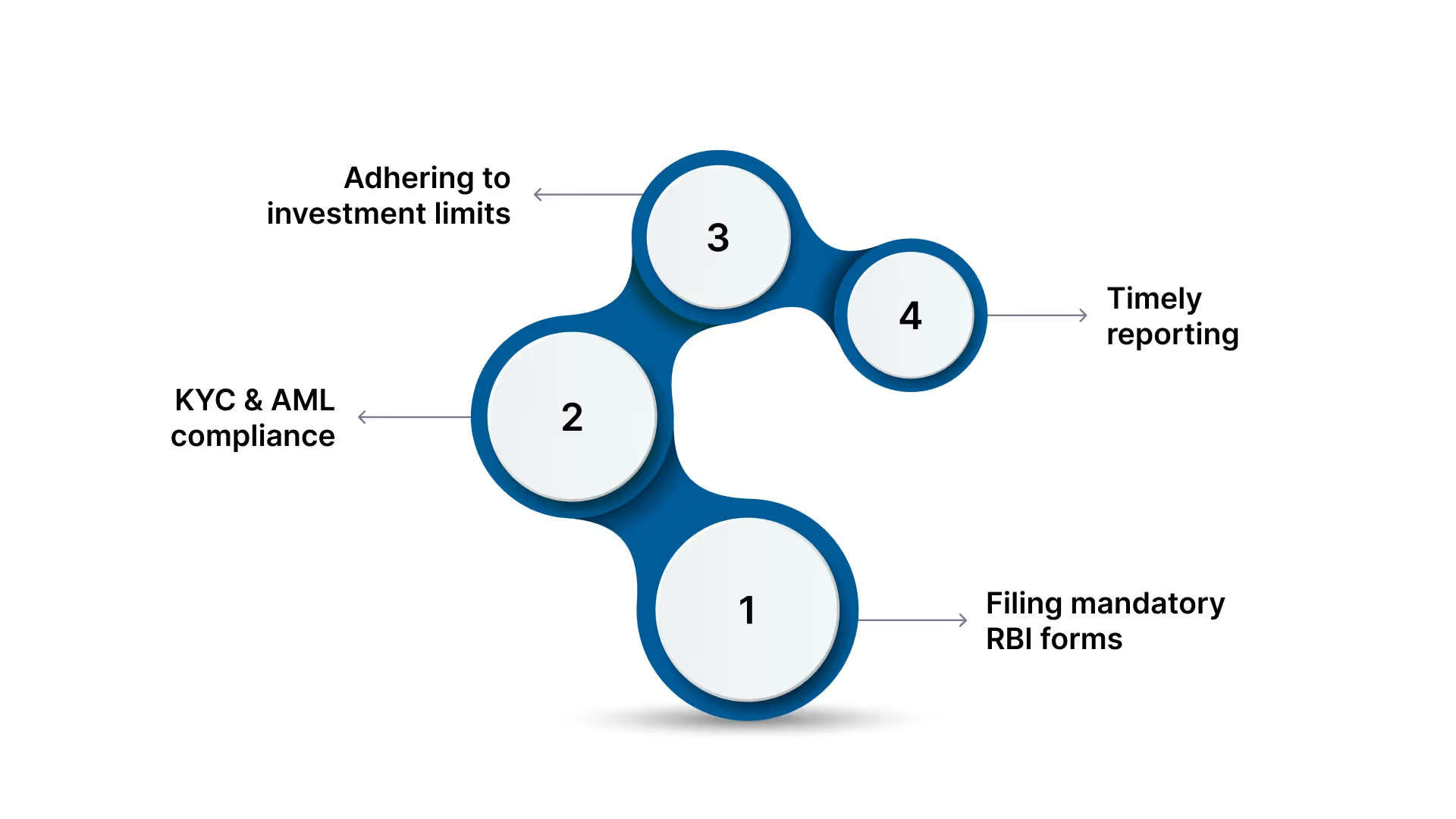
El cumplimiento de FEMA significa cumplir con todos los requisitos legales y reglamentarios establecidos en la Ley de Gestión de Divisas y las directrices del Banco de la Reserva de la India (RBI) para las transacciones transfronterizas. Abarca varias áreas clave, entre ellas:
Para las empresas estadounidenses que invierten en la India, comprender la Ley de Gestión de Divisas (FEMA) es similar a cómo las empresas estadounidenses deben abordar el régimen del Comité de Inversión Extranjera en los Estados Unidos (CFIUS) bajo la Ley de Modernización de la Revisión de Riesgos de Inversión Extranjera (FIRRMA).
Mientras que el CFIUS/FIRRMA regula la inversión extranjera entrante en los EE. UU. desde una perspectiva de seguridad nacional, FEMA se centra en la gestión de divisas y los flujos de capital hacia la India.
Lea también: Por qué la India es ideal para la expansión de negocios internacionales
Ahora que hemos cubierto los conceptos básicos del cumplimiento de FEMA, veamos por qué es tan importante para los inversores.
Al planificar la entrada en el mercado indio, la Ley de Gestión de Divisas (FEMA) es a menudo el primer punto de contacto legal que muchos inversores extranjeros pasan por alto. He aquí por qué FEMA es importante:
En un mercado tan dinámico y competitivo como el de la India, no priorizar el cumplimiento de FEMA puede ser perjudicial para el crecimiento de una empresa.
Comprender por qué los inversores deben priorizar el cumplimiento de FEMA nos lleva a la pregunta de quién debe seguir exactamente estas regulaciones.
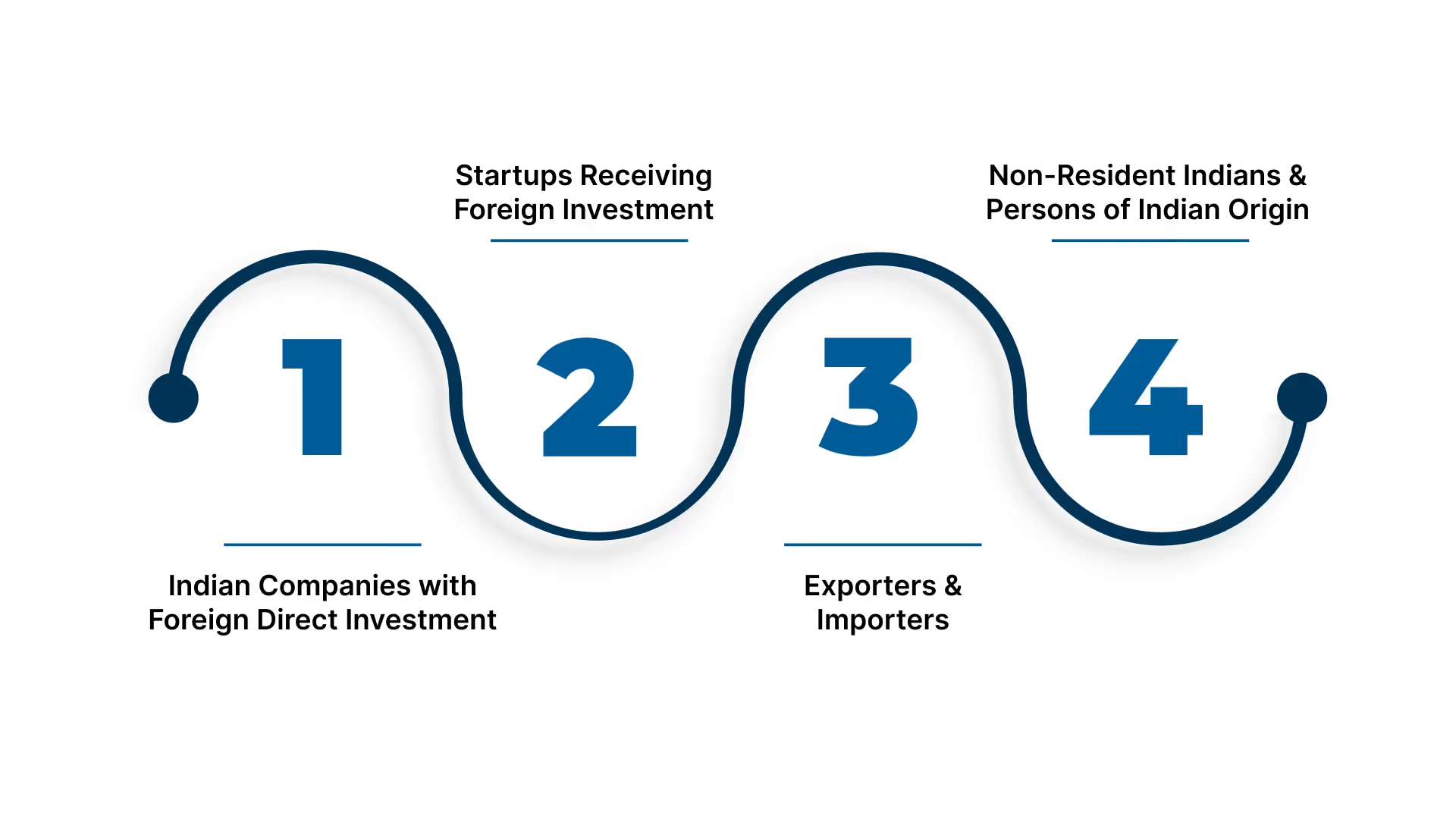
El cumplimiento de la normativa FEMA es esencial para cualquier persona involucrada en transacciones de divisas en la India.
Cualquier empresa en la India que reciba IED u opere filiales extranjeras debe cumplir con la normativa FEMA. Las acciones clave de cumplimiento incluyen:
Mantener la documentación actualizada es fundamental para evitar sanciones o retrasos en las inversiones.
Las startups, ya sean registradas o reconocidas por el DPIIT, que reciban financiación extranjera deben cumplir con:
El cumplimiento de la normativa FEMA es crucial, incluso para startups respaldadas por inversores ángeles o capital riesgo.
Para las empresas dedicadas a la importación o exportación de bienes y servicios, el cumplimiento de la normativa FEMA garantiza un comercio transfronterizo fluido. Estas empresas deben:
Las presentaciones oportunas y el cumplimiento de las directrices del RBI son cruciales para evitar sanciones.
Los NRI y PIO que invierten en la India o envían fondos al país deben seguir las normas de FEMA. Esto incluye:
El cumplimiento de la normativa FEMA garantiza que las remesas entrantes sean legítimas y rastreables, proporcionando claridad y seguridad en las transacciones financieras transfronterizas.
En VJM Global, ofrecemos servicios expertos de asesoramiento y cumplimiento de FEMA, incluyendo planificación de inversiones extranjeras, presentaciones legales y asistencia con las aprobaciones del RBI. Tanto si es exportador, una startup o un NRI, nuestro equipo de expertos garantiza que sus operaciones cumplan con las regulaciones de FEMA, para que pueda centrarse en hacer crecer su negocio en la India. Póngase en contacto hoy mismo.
Also Read: Documents Needed For Company Registration In India From The US
Teniendo esto en cuenta, es fundamental conocer las diferentes vías para la inversión extranjera bajo la normativa FEMA. Vamos a analizarlas.
When a foreign investor decides to invest in an Indian company, simply wiring the funds isn’t enough. A key factor here is choosing the correct investment route for the transaction, as every inward remittance of capital needs to follow one of FEMA’s designated routes.
India allows foreign investment in a broad range of sectors without prior government approval, through the automatic route. This route provides a smoother process for investors, but it still requires adherence to sectoral caps, pricing rules, and disclosure requirements for downstream investments.
Common sectors that qualify for the automatic route include:
For some sectors, particularly those with national security concerns or strategic importance, the government route is required. This means the investment must receive approval from the relevant ministry, typically through the Foreign Investment Facilitation Portal (FIFP).
Sectors that often require government approval include:
Understanding the right route for your investment is crucial to ensuring compliance with FEMA regulations and avoiding delays or penalties.
Having covered the investment routes, it’s time to get familiar with the fundamental guidelines under FEMA to ensure you stay on track.
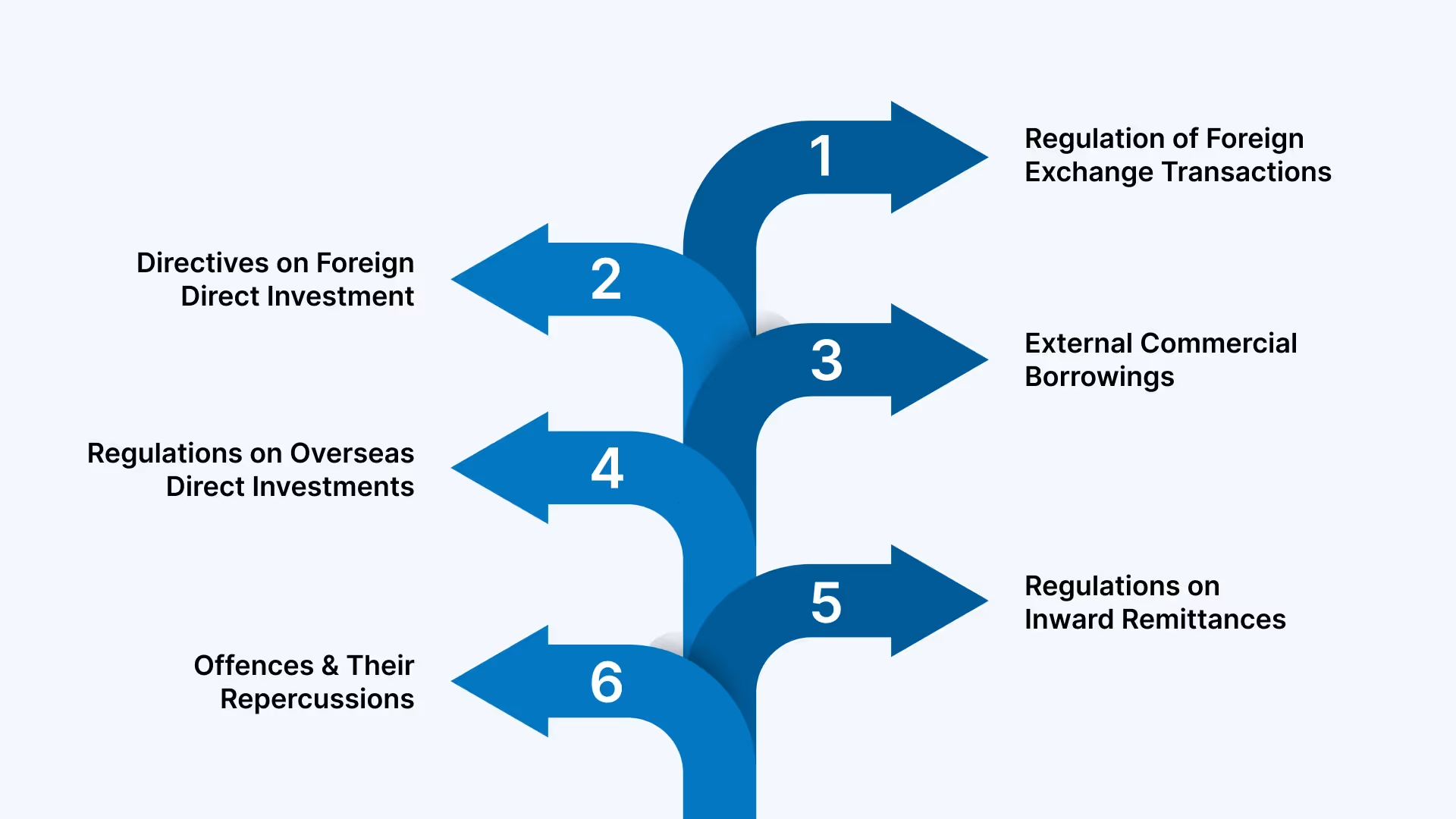
Understanding these basic guidelines is essential for any U.S. business planning to enter or expand within the Indian market.
All foreign exchange transactions in India must be processed through authorized dealers (ADs), licensed by the Reserve Bank of India (RBI). Significant transactions, such as investments or fund transfers, must be reported to the RBI to ensure transparency and compliance.
FEMA sets sector-specific limits on foreign investments. For instance, the aviation sector has a 49% cap on FDI, while telecom allows up to 100%. Repatriation of profits and dividends is allowed, but investors must follow specific procedures to stay compliant with regulations.
External Commercial Borrowings (ECBs) allow Indian companies to raise funds from foreign lenders. These loans come with specific eligibility criteria and reporting requirements. Lenders could be international banks, financial institutions, or foreign equity holders who hold at least a 25% stake in the borrowing company.
The 2022 FEMA amendments govern Overseas Direct Investment (ODI) by Indian companies. Indian entities are permitted to invest in foreign joint ventures (JVs) or wholly owned subsidiaries using equity, debt, or guarantees. However, investments in real estate or banking are not allowed without specific approval.
Inward remittances, such as payments for exports or services, such as consultancy, must be processed through RBI-certified AD banks. The receiving company must declare the source and intended use of the funds, along with supporting documents such as contracts and invoices.
Additionally, the sender’s KYC information must be verified, and all transactions must comply with anti-money laundering (AML) standards. If shares are allotted in exchange for remittances, this must be reported to the RBI within 30 days using Form FC-GPR.
Failure to comply with FEMA regulations can lead to significant fines and penalties. Offenders may face penalties up to three times the transaction amount or INR 200,000, whichever is higher.
For continuing violations, daily fines may be imposed. Severe non-compliance could also result in restrictions on raising foreign capital or reversal of transactions.
Understanding these basic guidelines helps foreign investors safeguard their investments, avoid penalties, and make the most of India’s dynamic market.
Once you’ve grasped the basics, let’s go over a checklist to ensure FEMA compliance for private companies and foreign subsidiaries.
Ensuring FEMA compliance is crucial for any private limited company or foreign subsidiary operating in India. Here’s a detailed breakdown:
By following this checklist, private limited companies and foreign subsidiaries can ensure smooth operations and stay in line with FEMA and RBI regulations.
At VJM Global, we offer expert advisory services to guide you through the complexities of FDI eligibility, shareholding records, annual filings, and more. From submitting your FC-GPR and FLA Return to monitoring foreign fund utilization, our team ensures your company stays compliant with all RBI and FEMA guidelines. Get expert advice today.
Now, let’s shift gears to look at FEMA compliance for businesses involved in international trade, focusing on exports and imports.
Businesses involved in international trade must adhere to FEMA and RBI regulations to ensure their foreign exchange transactions are legal and timely. Below is an overview of the compliance requirements for both exports and imports under FEMA.
Exporters must follow FEMA guidelines to ensure the timely receipt of payments in foreign currency. Key steps include:
For services such as IT, SaaS, consultancy, and remote services, FEMA compliance includes:
For businesses making payments to foreign suppliers, the following steps must be followed:
By following these FEMA guidelines for exports and imports, businesses can mitigate risks, avoid penalties, and maintain smooth cross-border transactions with confidence.
Next, let’s learn how partnering with VJM Global ensures you have expert guidance every step of the way to handle these regulations and stay compliant.
Expanding your business internationally involves managing the complexities of foreign exchange laws. VJM Global specializes in guiding businesses through the nuances of FEMA regulations. Here’s how we can support you:
At VJM Global, we craft strategies that ensure your business operates smoothly across borders, minimizes risks, and stays compliant with all FEMA regulations.
FEMA regulations are often seen as a maze for foreign investors, particularly when it comes to tackling India’s dynamic market. However, these regulations are not obstacles, but rather frameworks that, if understood and applied correctly, can protect your investments and reveal new opportunities.
From sectoral caps to RBI approvals, every step is crucial in ensuring that foreign investments remain smooth, secure, and profitable. For U.S. businesses, the stakes are high, and any misstep could lead to financial penalties or delays, potentially stalling your growth ambitions in India.
That’s where VJM Global comes in. With our in-depth knowledge of both FEMA and international taxation, we simplify these complexities, offering actionable solutions that ensure compliance and help strategically position your business for success in India’s competitive landscape. Contact us today to ensure your business thrives while staying fully compliant.
FEMA compliance in India means adhering to the rules, reporting obligations, and documentation requirements set out by the Foreign Exchange Management Act, 1999. This applies to any transaction involving foreign exchange, including foreign direct investment (FDI), overseas direct investment (ODI), imports/exports, and remittances.
The Reserve Bank of India (RBI) is the primary body responsible for regulating FEMA compliance, with support from the Ministry of Finance. Authorized Dealer (AD) Banks also play a vital role in verifying and processing transactions under FEMA.
No. FEMA compliance is only applicable to businesses or entities involved in foreign exchange transactions, such as receiving foreign investments, making payments for imports, exporting goods/services, or sending/receiving remittances.
Typical documents for FEMA compliance include:
Yes, Non-Resident Indians (NRIs) are permitted to invest in India under FEMA guidelines. They can invest in various forms, including equity, debt, and real estate, subject to specific regulatory requirements and sectoral caps.




