

%20(15).avif)
Incorporating an OPC in India from the US presents a significant opportunity. The complex registration process from abroad can feel overwhelming. You must manage unfamiliar laws and remote procedures alone. This complexity often delays market entry and increases costs.
A One-Person Company (OPC) structure is designed for this challenge. It allows a single entrepreneur to run a corporate entity. This model offers limited liability protection and a formal business status. You can control your entire company without any partners.
This guide will walk you through the process for OPC registration in India. We will outline the steps, documents, and compliance requirements. You will learn how to establish your corporate presence efficiently from the US.
A One-Person Company (OPC) is a corporate business structure in India. It allows a single individual to incorporate and manage a company. This legal framework is defined under the Companies Act of 2013. An OPC is recognized as a separate legal entity from its owner.
Your personal assets remain protected with this business model. The company's debts and liabilities are separate from your personal finances. This structure combines the benefits of a sole proprietorship and a company. You receive corporate status with limited liability protection.
You are the sole shareholder and director of the OPC. There is no requirement for a minimum paid-up capital. You must appoint a nominee during the incorporation process. This nominee will manage the company if you are unable to do so.
Understanding the OPC model leads to a key question about eligibility. The Indian government sets specific criteria for who can form this entity.
Indian law specifies clear eligibility criteria for a One-Person Company. The sole shareholder must be a natural person. This individual must also be an Indian citizen for OPC registration. Foreign nationals cannot act as members or nominees. Your residential status as an Indian citizen is now more flexible.
Recent rule changes have simplified the requirements. Non-Resident Indians (NRIs) who are Indian citizens can now incorporate an OPC. This change makes the structure more accessible for entrepreneurs abroad.
You cannot convert an existing partnership firm into an OPC. Certain business activities also make an enterprise ineligible. This includes banking, insurance, and investment-based financial services. A minor cannot become a member or nominee of the company.
An Indian Citizen, regardless of their residential status (resident or non-resident), can incorporate an OPC in India.
Foreign Citizens/nationals can not incorporate an OPC in India.
After confirming your eligibility, you should consider the advantages. The OPC structure offers several specific benefits for solo entrepreneurs.
Unsure if you meet all the criteria for an OPC? Let VJM Global provide a personalized assessment for your situation. Contact us now.
Also read: Outsource Tax Preparation from the US to India: A CPA’s 2025 Guide
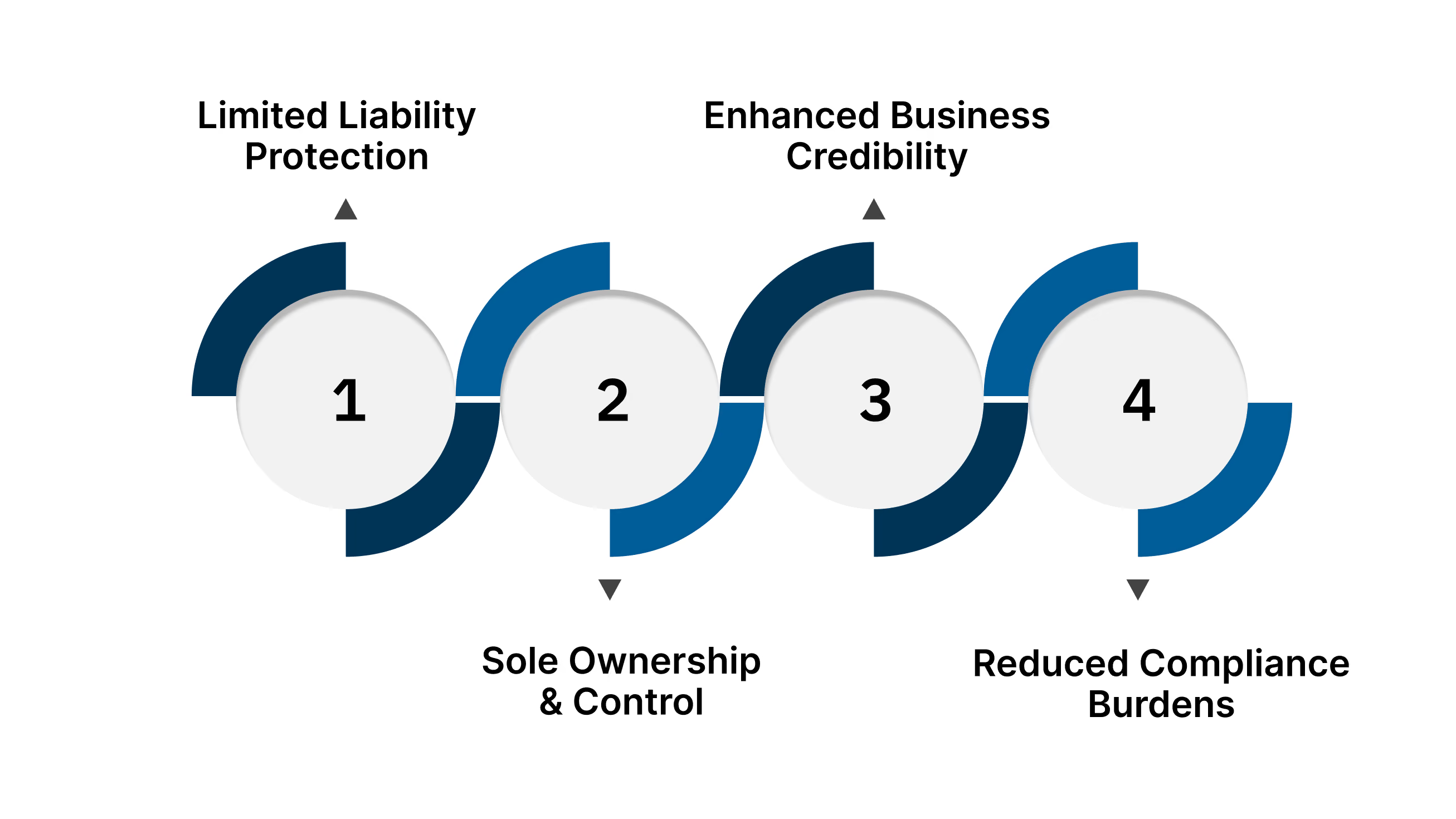
The OPC structure provides distinct advantages for solo entrepreneurs. It offers a formal corporate framework for your business operations. These benefits support growth, enhance credibility, and simplify compliance. Understanding them helps you evaluate their suitability for your venture.
Your personal assets remain separate from company debts. This protects your savings and property from business-related financial risks. The company is a distinct legal entity from you as an individual. Your financial responsibility is limited to your investment in the company.
You retain complete control over all company decisions. There is no need to consult partners or a board of directors. You are the sole shareholder and director of the entity. This allows for quick and unified management of the business.
An OPC carries more weight than a sole proprietorship. Clients and partners often perceive registered companies as more stable. The 'Pvt. Ltd.' suffix in the company name builds trust. This can improve your standing with vendors and financial institutions.
An OPC faces fewer mandatory filing requirements than a private limited company. The annual compliance process is generally simpler and more straightforward. You are not required to hold an annual general meeting. This reduces your administrative workload throughout the year.
These benefits make a strong case for choosing the OPC model. You must next verify that you meet all the detailed eligibility conditions.
Lea también: Liquide deudas fiscales con confianza: opciones de alivio para empresas en EE. UU.
Before you begin the registration process, you must confirm your eligibility. The criteria are specific and defined by Indian company law. Meeting these requirements is mandatory for a successful OPC incorporation from the US. This ensures your application proceeds without legal complications.
You must meet the following key eligibility conditions:
The sole member must be an Indian citizen. The residency rule now accommodates Non-Resident Indians. The previous 182-day residency requirement has been relaxed. Your Indian citizenship is the primary requirement.
You must appoint a nominee during the company incorporation. This nominee must also be an Indian citizen. They will take over the company if you become incapacitated. Their written consent is a mandatory part of the application.
Your OPC must have a registered office address in India. This can be a commercial or residential property. All official correspondence will be sent to this address. Proof of address is required for registration.
The proposed name for your OPC must be unique. It cannot be identical to any existing company or trademark. The name must adhere to the guidelines in the Companies Act 2013. The name approval is a distinct step in the process.
Once you confirm you meet the criteria, you can gather the necessary paperwork. Proper documentation is fundamental for a successful application.
Lea también: Cómo aprovechar las ventajas de la externalización de la auditoría interna
Reunir los documentos correctos es un paso fundamental para el registro de una OPC. Debe proporcionar prueba de identidad, domicilio y ubicación del negocio. Todos los documentos extranjeros requieren notariado y apostilla. Esta preparación garantiza un proceso de solicitud sin contratiempos ante las autoridades indias.
Deberá proporcionar los siguientes documentos:
Tras su constitución, su OPC debe cumplir con las obligaciones legales vigentes. Comprender estos requisitos de cumplimiento es crucial para las operaciones a largo plazo.
Operar una OPC requiere el cumplimiento de obligaciones legales específicas. Estos requisitos continuos mantienen la situación legal de su empresa en la India. Gestionarlos desde los EE. UU. exige estar al tanto de la legislación corporativa india. El cumplimiento puntual evita sanciones y garantiza el buen funcionamiento del negocio.
Debe preparar y presentar estados financieros anualmente. Estos documentos incluyen un balance general y una cuenta de pérdidas y ganancias. Un auditor debe revisar estos estados si el volumen de negocios lo exige. Las presentaciones se realizan ante el Registro de Sociedades.
Su OPC debe presentar una declaración de impuestos sobre la renta corporativa cada año. Esto es independiente de sus declaraciones de impuestos personales en los EE. UU. La declaración debe presentarse antes de la fecha límite especificada. Mantener registros financieros precisos es esencial para este proceso.
Está obligado a mantener registros legales específicos. Estos documentos detallan los directores de la empresa, los miembros y las actas de las reuniones. Los registros deben conservarse en su domicilio social en la India y deben estar disponibles para su inspección por parte de las autoridades.
Debe celebrar al menos dos reuniones de la junta directiva cada año fiscal. El intervalo entre estas dos reuniones no puede ser inferior a noventa días. Las actas de las discusiones y decisiones deben registrarse adecuadamente. Estos registros forman parte de la documentación oficial de su empresa.
Conocer sus obligaciones futuras le permite concentrarse en la configuración inicial. El registro en sí es un proceso digital claro y de varias etapas.
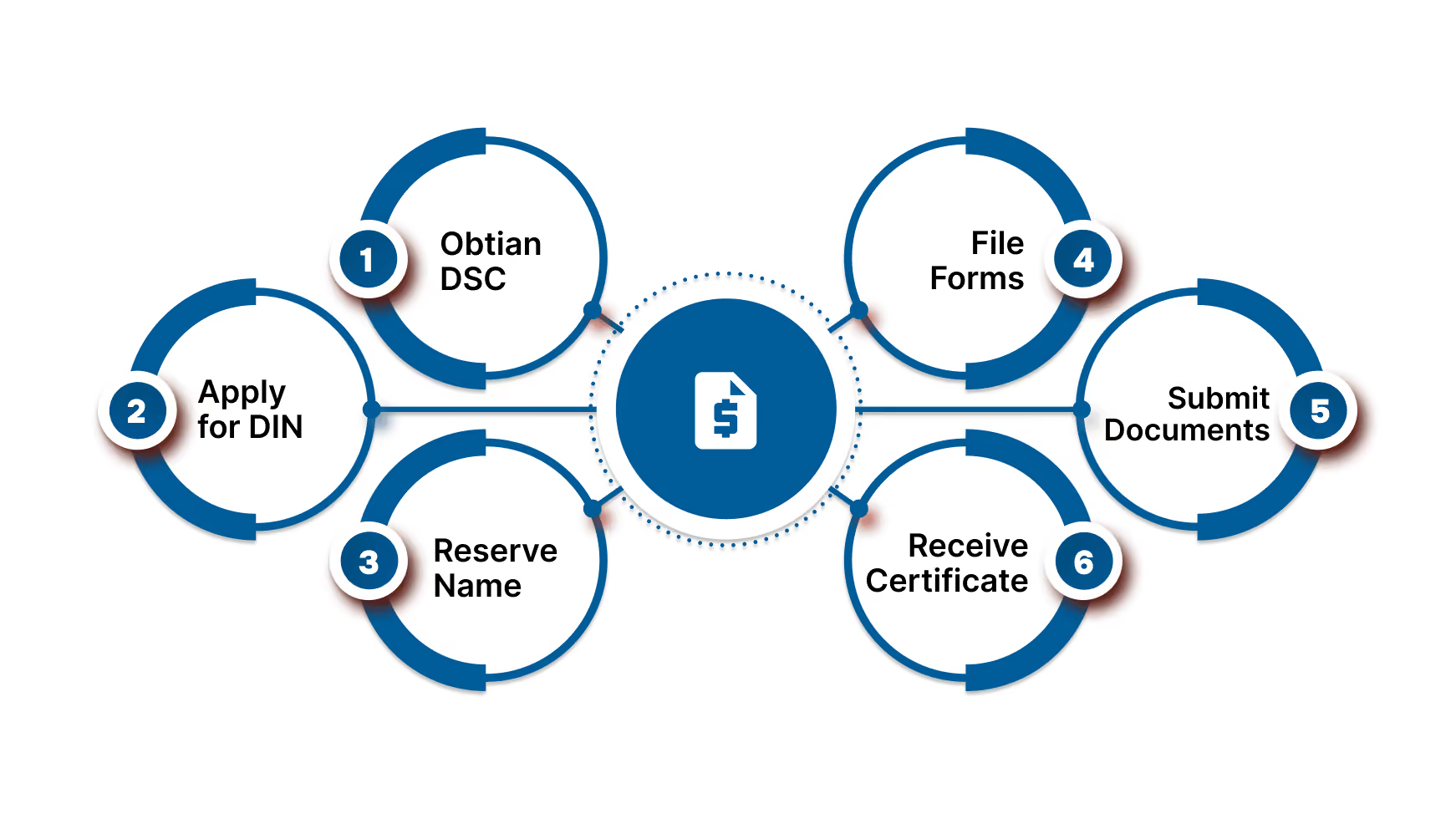
El registro de una OPC desde los EE. UU. sigue una ruta digital definida. Interactuará principalmente con el portal del Ministerio de Asuntos Corporativos de la India. Este proceso requiere una preparación cuidadosa de firmas digitales y documentos.
La ejecución correcta de cada paso conduce a la emisión oportuna de su Certificado de Constitución.
Su primera acción es obtener un Certificado de Firma Digital de Clase 3. Este DSC sirve como su firma en línea para todos los formularios oficiales. Debe obtenerlo de una agencia certificada por el gobierno en la India. Esto es indispensable para todas las presentaciones digitales posteriores.
Necesita un Número de Identificación de Director (DIN) para ejercer como director de la empresa. Debe solicitar este número único mediante el formulario DIR-3. Este formulario requiere su firma digital y documentos de identidad de respaldo. El DIN es aprobado directamente por el Ministerio de Asuntos Corporativos.
Debe seleccionar y reservar un nombre único para su OPC. Esto se realiza enviando el formulario SPICe+ PART-A en el portal del MCA.
Tras la aprobación del nombre, debe presentar el formulario SPICe+ PART-B y el formulario INC-12. Estos formularios consolidan toda la solicitud de constitución.
Adjuntará todos los documentos requeridos a los formularios en línea. Los documentos de respaldo incluyen pruebas de identidad, verificación de domicilio y consentimiento del candidato. El Registrador de Empresas revisará minuciosamente toda la solicitud. Es posible que soliciten aclaraciones o información adicional si fuera necesario.
El Registrador emite este certificado tras aprobar su solicitud. Este documento confirma legalmente el nacimiento de su empresa unipersonal (One-Person Company). Incluye su Número de Identidad Corporativa (CIN). Ahora puede comenzar legalmente sus operaciones comerciales en la India.
La ejecución de cada paso del registro conlleva tarifas específicas. Presupuestar estos costos es una parte importante de su planificación.
Simplifique el proceso de registro de varias etapas desde los EE. UU. Infórmese sobre el servicio integral de constitución de OPC de VJM Global. Póngase en contacto hoy mismo para obtener más información.
Lea también: Entendiendo la auditoría de gestión: definición y usos clave
Comprender el desembolso financiero para el registro de una OPC le ayuda a planificar de manera efectiva. El costo total incluye las tasas gubernamentales y los servicios profesionales esenciales. Estas tarifas son obligatorias para el establecimiento legal de su empresa. Presupuestar estos gastos evita retrasos inesperados.
Los costos principales para el registro de una OPC se describen a continuación:
El Ministerio de Asuntos Corporativos cobra una tarifa por la constitución. Esta tarifa se basa en el capital social autorizado de su empresa. El costo total del registro de una OPC en la India suele oscilar entre 5.000 y 20.000 INR.
Depende de varios factores, como los honorarios de servicios profesionales, el capital autorizado y la ubicación. Las tasas gubernamentales generalmente constituyen una parte importante del costo total.
You must obtain a Class 3 DSC from a certified provider. The cost for this digital signature ranges between INR 500 and INR 1,500. It is a one-time cost for the director and the nominee. This is valid for one to two years.
Engaging a consultancy involves professional fees. These fees cover document preparation, application filing, and liaison work. The cost for these services varies based on the service provider. This support is crucial for a seamless registration from the US.
You should account for costs like notarization and apostille of documents. There may also be charges for a registered office address facility. Initial compliance, such as obtaining a PAN and TAN, may have minor fees. These are essential for commencing operations.
Financial planning should also account for potential procedural hurdles. Being aware of common challenges helps you avoid them.
Registering an OPC from a different country presents specific logistical and legal hurdles. Being aware of these potential issues allows for better preparation and planning. Proactive management of these challenges helps prevent delays in your company formation. Professional guidance is often critical to navigate this process smoothly.
You may encounter the following common challenges:
All your supporting documents require notarization and apostille attestation. This authentication process verifies your documents for use in India. It can be time-consuming to complete from abroad without local assistance. The procedure must follow the Hague Apostille Convention guidelines.
The entire registration is conducted online through the MCA portal. You may face difficulties with time zone differences for verifications. Coordinating with notaries and service providers remotely adds complexity. A reliable digital workflow is essential for success.
Indian company law has specific requirements for name approval and forms. Minor errors in form-filling can lead to outright rejection. Understanding the specific compliance triggers for an OPC is also important. These nuances are often unfamiliar to those outside the Indian system.
You must provide proof of a registered office address in India. Finalizing a lease and obtaining a No Objection Certificate can be difficult. This is especially true when you are not physically present in the country. This step often requires local support to arrange.
You can mitigate these potential issues with a proactive strategy. Adopting a few best practices will make the process significantly smoother.
Also read: How to Start a Profitable Water Business in India
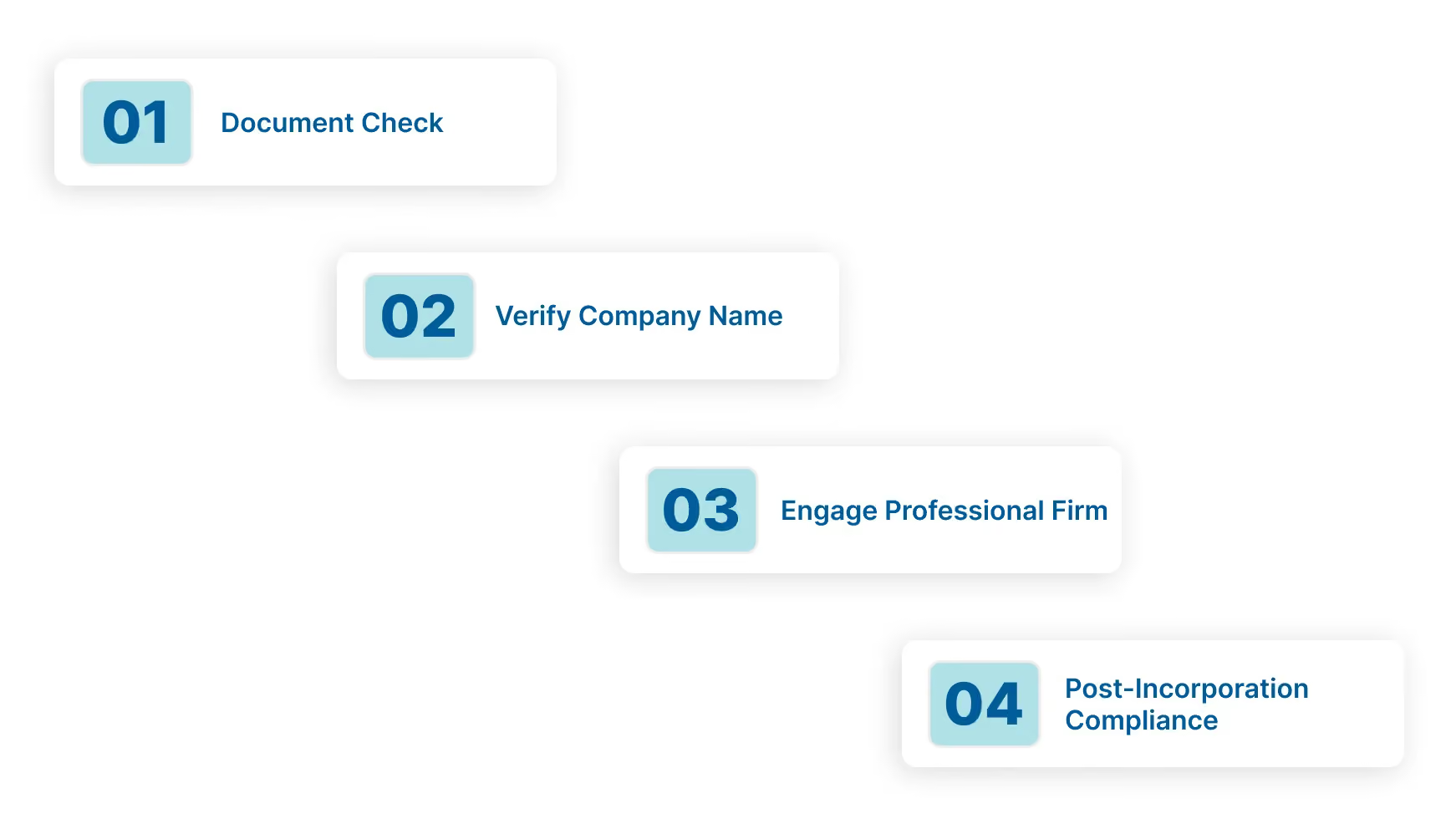
Adopting a strategic approach from the start can significantly improve your experience. These practices help you avoid common errors and procedural delays. They are particularly valuable for entrepreneurs managing the process from the US.
Careful planning makes the remote registration more manageable and predictable. The following recommendations will guide your preparation and execution:
Verify all your personal and business documents well in advance. Confirm that your passport and other identification are valid for the entire process. Ensure all documents meet the specific format and notarization requirements. This prevents last-minute rejections from the authorities.
Conduct a preliminary search on the MCA portal for name availability. Choose a name that reflects your business but is also unique. Avoid names that are too similar to existing trademarks or companies. A distinct name increases the likelihood of quick approval.
Partner with a firm like VJM Global that specializes in cross-border registrations. Their expertise in Indian corporate law provides crucial guidance through each step. They can manage document authentication and liaison with government bodies. This support minimizes your direct administrative burden.
Understand your ongoing statutory obligations immediately after receiving the incorporation certificate. This includes applying for a PAN, TAN, and opening a corporate bank account. Establish a system for maintaining statutory registers and meeting filing deadlines. Early compliance planning prevents future legal complications.
Implementing these practices is most effective with expert support. VJM Global is structured to provide this exact guidance for US clients.
Managing the OPC registration process from the US involves complex hurdles. You must handle document authentication, remote procedures, and unfamiliar regulations. Navigating the MCA portal and meeting all legal criteria can be difficult. These challenges often lead to application delays and compliance issues.
VJM Global provides a structured solution for OPC registration from the US to India. Our firm handles the entire process, from initial documentation to final incorporation. We help you establish your corporate presence in India with precision. Our service is designed to save you time and prevent costly errors.
Our approach includes several key features:
We specialize in helping US businesses and entrepreneurs expand into India. Our team understands both US business practices and Indian regulatory standards. This dual expertise allows for a more efficient and informed registration process. We bridge the gap between the two business environments.
We manage the complete registration workflow on your behalf. Our services include document preparation, application filing, and liaison with authorities. We also assist with securing a registered office address in India. This end-to-end support simplifies the entire experience for you.
Our service extends beyond the initial company registration. We provide ongoing guidance for your statutory and tax compliance obligations. This includes assistance with annual filings and regulatory changes. Our goal is to ensure your company remains in good legal standing.
Partnering with VJM Global provides a clear and managed pathway for your business entry into India.
Establishing a One-Person Company in India from the US is a structured process. It requires careful attention to eligibility, documentation, and specific procedures. Understanding the compliance requirements and potential challenges is also crucial.
This guide provides a foundational roadmap for your business expansion journey. VJM Global specializes in simplifying this cross-border incorporation for you. Our expertise in Indian corporate law and experience with US clients is a key advantage.
We manage the complex administrative and regulatory tasks on your behalf. This allows you to focus on your core business planning and strategy.
Contact VJM Global today to discuss your specific OPC registration requirements.
An Indian citizen is eligible to start an OPC, regardless of their residential status. This now includes Non-Resident Indians (NRIs). Foreign nationals and other corporate entities cannot form an OPC.
The primary advantage is limited liability protection. In an OPC, your personal assets are separate from the company's debts. A sole proprietorship offers no such legal distinction.
Yes, an OPC can receive foreign direct investment if it meets certain conditions. The investment must comply with the Foreign Exchange Management Act (FEMA) regulations. The company must also be classified as an "eligible startup" by the DPIIT.
Conversion is mandatory if your average annual turnover exceeds two crore rupees for three consecutive years. Your paid-up capital exceeding fifty lakh rupees will also trigger a requirement for conversion.
The nominee's role is to take over the management of the OPC if the sole member becomes incapacitated or passes away. Their written consent is a mandatory part of the incorporation process.
The entire process typically takes two to three weeks after document submission. This timeline depends on the speed of government approvals and the completeness of your application. Professional assistance can help streamline the timeline.




