


When you manage a family-owned firm, the financial picture is shaped by decisions that rarely follow standard corporate patterns. Capital moves between households, reimbursements happen without formal logs, and long-term customer relationships influence cash timing in ways that traditional systems do not capture. These factors make family business accounting a technical discipline, not an administrative task, because the quality of the records affects profit clarity, tax exposure, and the stability of owner balances.
Owners who rely on the books for planning need accounting that reflects actual behavior inside the firm rather than assumptions built for conventional companies. This is where accurate family business accounting becomes a strategic anchor for daily operations and long-term continuity.
In this guide, you will see five key impacts that directly shape how owners interpret financial data and manage control across generations.
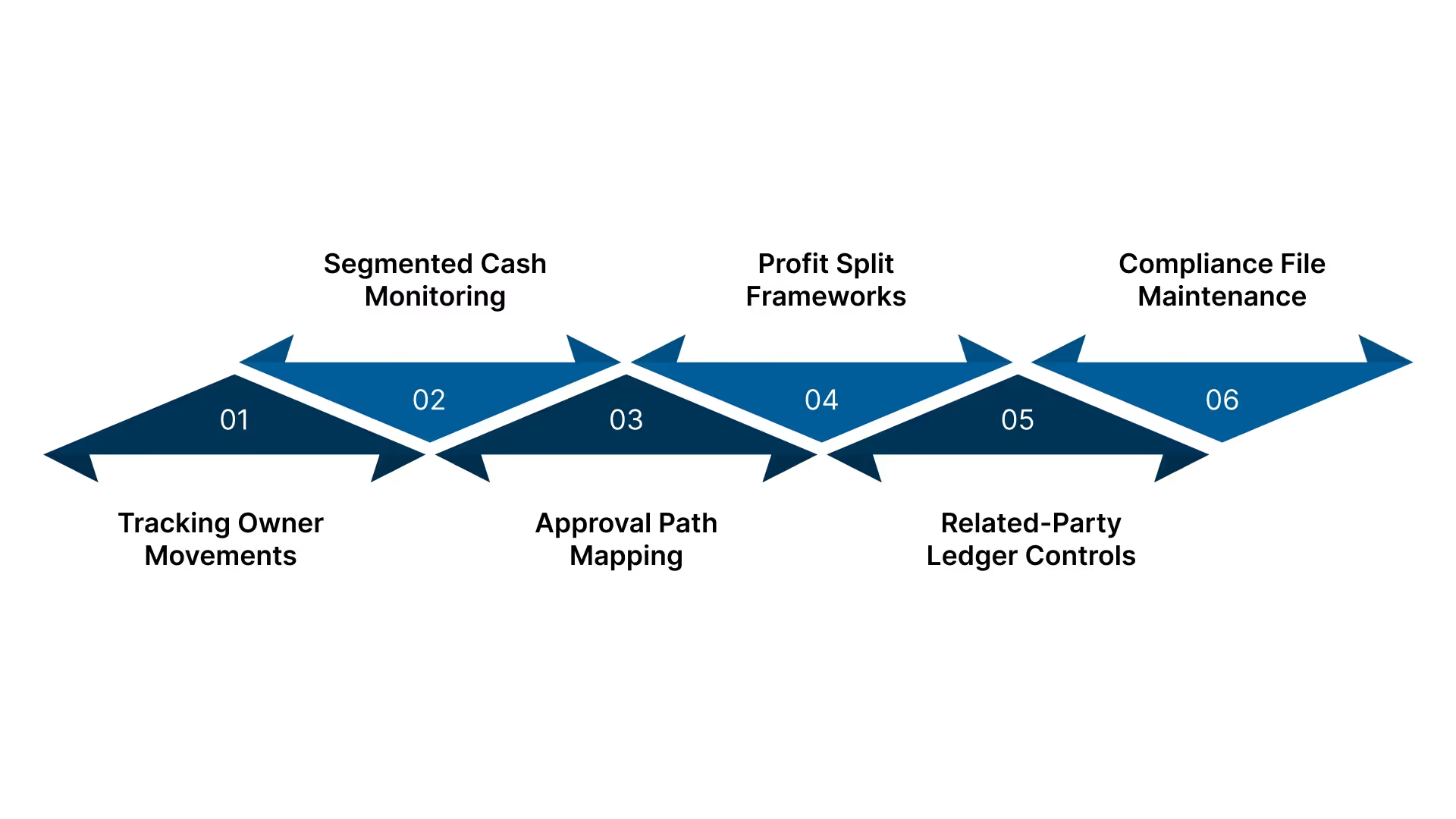
Family business accounting must account for intertwined ownership interests, informal authority structures, and irregular financial habits that develop when relatives manage both cash and control. The work centers on documenting money flows that mix personal priorities with business requirements, while keeping records strong enough for lenders, auditors, and future successors.
Once these accounting responsibilities are in place, the gaps created by informal cash habits and overlapping family roles become easier to identify, which leads directly to the pressures most family-run firms face.
For a connected reference on handling payables with outside support, refer to Understanding the Advantages of Outsourcing Accounts Payable
Family-run firms often operate with habits carried over from personal money management, which creates pressure points that do not appear in standard corporate accounting. These patterns affect how cash moves, how approvals occur, and how past records can be verified during audits or lender reviews.
These pressure points reveal where financial blind spots form inside family-run firms, which makes the measurable impacts of strong family business accounting even more visible in day-to-day control.
If you need a connected resource covering record-keeping duties under various Acts, visit Books of Accounts under different Acts| Company Law| Income Tax Act| GST law
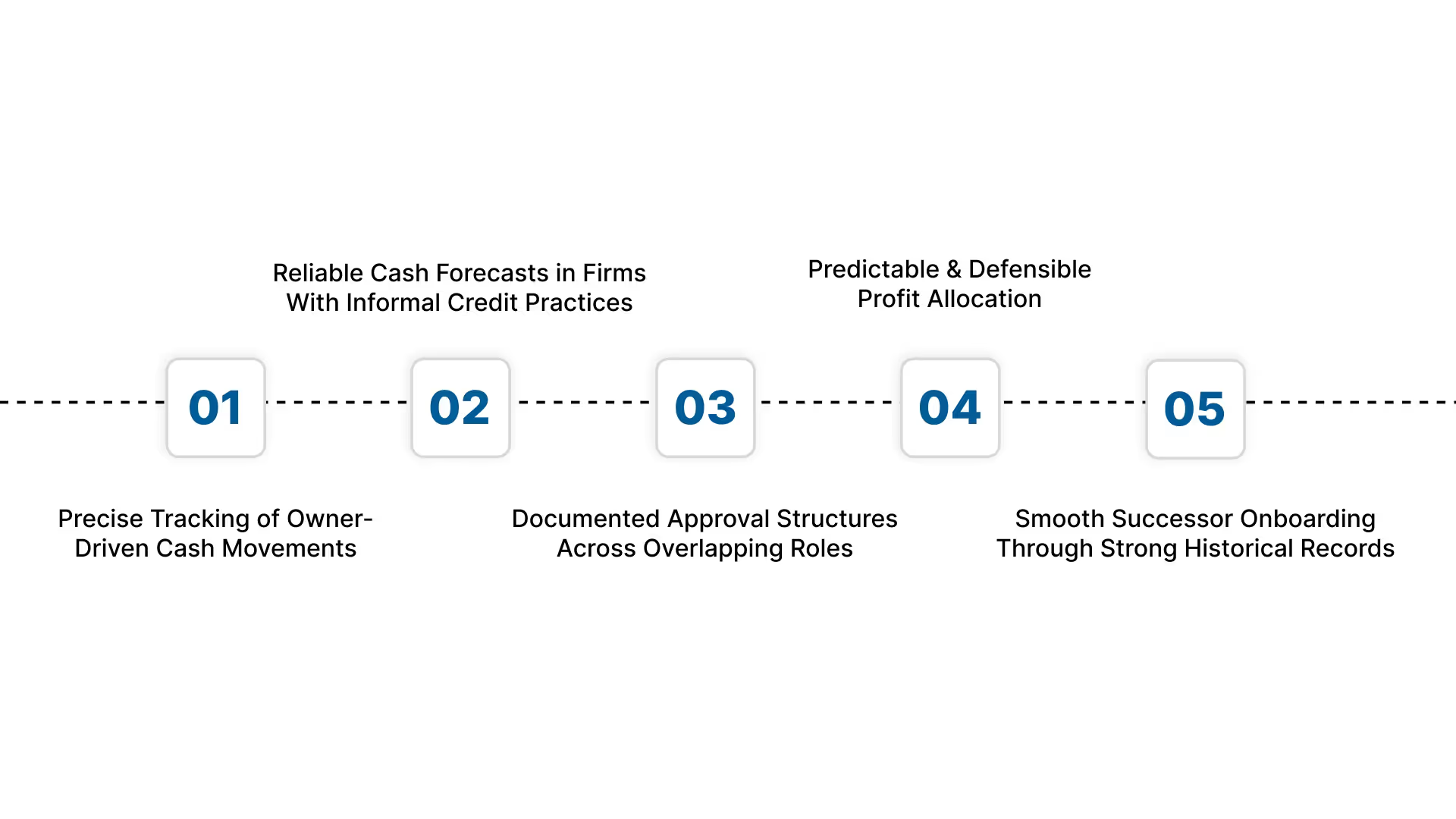
When family relationships influence spending, withdrawals, approvals, and related-party activity, strong accounting creates a stable data structure that supports lender reviews, tax assessments, and internal governance. Its impact is most visible when informal routines start producing financial blind spots.
Strong family business accounting creates documented trails for transactions driven by relatives whose personal and business finances often overlap.
Many family-run firms extend informal credit to long-term buyers. Strong records convert these habits into measurable patterns.
家族経営では、非公式な権限が大きな影響力を持つことがよくあります。会計業務を通じて文書化された管理体制を導入することで曖昧さを排除します。これはVJM Globalが米国のクライアントに対して頻繁に行っている支援の一つです。
強固な記録は、特に複数の世帯が同一事業に依存している場合、収益分配をめぐる紛争を軽減します。
後継者は、不完全な情報や口頭で伝えられた情報のみを引き継ぐことがよくあります。強固な会計体制は、失われがちな組織の知見を維持します。
こうしたインパクトが帳簿上に現れると、単なる日常的なサービスプロバイダーと、オーナー特有のパターンを扱えるパートナーとの違いが明確になります。これが、パートナー選びの際に注目すべき点につながります。
クリーンな帳簿、安定した管理体制、そして米国からインドまでをカバーするクロスボーダーサポートを提供するVJM Globalと共に、家族経営の企業を強化しましょう。
家族経営の会計には、オーナー主導の活動を解釈し、不完全な履歴を修復し、関連当事者間の資金の流れを明確に管理できるパートナーが必要です。VJM Globalは、多くの米国家族経営企業に対してこうしたニーズに応えるサポートを提供しています。
これらの選定基準がベンチマークとなります。VJM Globalは、オーナー関連の活動や関連当事者の記録を正確に扱う必要がある家族経営企業との日々の業務を通じて、これらの基準を満たしています。
中小企業における売掛金管理の詳細については、中小企業向け売掛金管理成功ガイド
.avif)
家族経営企業は、オーナー関連の支出、不完全な過去の記録、不規則なキャッシュサイクル、事業体間の関連当事者活動を抱えることがよくあります。VJM Globalは、こうしたパターンを日常的に扱い、多世代にわたる管理体制や非公式な財務習慣という現実に即した構造的な会計プロセスを適用しています。
VJM Global classifies personal transactions inside business books, maintains detailed capital positions for each household, and records withdrawals in a format lenders and auditors can evaluate without clarification.
Many family firms carry partial ledgers. VJM Global reconstructs missing entries from bank traces, archived vouchers, and undocumented adjustments, restoring files so successors and auditors receive complete schedules.
Family influence often outweighs job titles. VJM Global converts verbal approval habits into traceable workflows, storing evidence for vendor setups, reimbursements, and transfers across all involved parties.
VJM Global maintains loan registers, cross-entity balances, and settlement trails for each unit under family control, tying every figure to identifiable cash movement instead of informal agreements.
Cash behavior in family firms depends on family buyers and seasonal outlets. VJM Global segments inflows, identifies recurring repayment timing, and prepares forecasts tied to real collection habits.
With these capabilities, VJM Global gives family-run firms accounting support that reflects real operational behavior and strengthens financial clarity across every branch of the business.
Strong control over owner-linked spending, multi-household capital movements, and related-party activity gives family-run companies a financial base they can depend on. With accurate family business accounting, owners gain visibility into cash behavior, profit distribution patterns, and the true position of each branch of the family. This level of clarity becomes even more important when lenders, auditors, or successors rely on the books to evaluate risk and continuity.
VJM Global supports US family-run firms that need structured family business accounting capable of handling irregular cash cycles, fragmented historical records, and overlapping authority across relatives. Our team prepares audit-ready files, documents approval paths, and organizes related-party schedules so owners have clean, dependable data for both daily operations and long-term planning.
If your firm needs accounting support that reflects how family-driven decisions shape the books, VJM Global is ready to help you strengthen financial control and create reliable records for future growth.
Family business accounting tags each personal expense to the correct owner’s ledger, adjusts capital accounts when needed, and documents the entry so tax exposure is not distorted.
Yes. It maintains individual capital schedules for each household, recording contributions, withdrawals, reallocations, and settlement entries that clarify ownership without merging balances.
They are reconstructed using bank traces, communication records, and timing patterns. Once verified, they are logged with clear schedules showing opening balance, adjustments, and settlement status.
同族経営向け会計では、こうした非公式な慣習を文書化された承認プロセスへと移行させます。各アクションの証跡を記録することで、監査人や貸し手がすべての取引を追跡できるようにします。
店舗や顧客グループごとに収益を分類し、関係性に基づいた信用供与に伴う返済パターンの特定を行い、こうした反復的な行動を反映した予測を構築します。

.avif)


