


Companies and organizations receiving federal funding face increasing scrutiny to ensure proper management and compliance. For U.S. nonprofits, tribal entities, and government contractors, meeting Single Audit requirements is crucial to show accountability and maintain eligibility for future federal awards.
The Single Audit, overseen by the Office of Management and Budget’s Uniform Guidance, offers a standardized way to audit financial statements alongside federal award compliance. Starting in fiscal year 2025, the audit threshold rises from $750,000 to $1,000,000, affecting which organizations must undergo this thorough review.
This blog guides you through what a Single Audit involves, explains the updated requirements, highlights common compliance challenges, and provides practical advice to help you prepare for a successful audit.
A Single Audit, sometimes called a Uniform Guidance audit, is a comprehensive examination of an organization's financial statements and compliance with federal award requirements. It applies to non-federal entities receiving and expending federal funds and ensures accountability for how those funds are used.
Governed by the Office of Management and Budget (OMB) through the Uniform Guidance (2 CFR Part 200 Subpart F), the Single Audit combines a financial statement audit with a detailed review of compliance for major federal programs. This includes testing internal controls, verifying expenditures, and assessing adherence to regulations.
Understanding Single Audit requirements is essential for organizations to maintain federal funding eligibility and comply with U.S. government standards.
Now that you know what a Single Audit is, let's explore the single audit process.
.avif)
The Single Audit follows a structured process that ensures organizations meet federal financial and compliance requirements thoroughly. Understanding these steps can help organizations prepare effectively.
This involves gathering all federal grant documentation, preparing financial statements, and creating the Schedule of Expenditures of Federal Awards (SEFA). Auditors also assess organizational controls and set audit scope and timelines.
Auditors review financial records, evaluate internal controls over federal funds, and test compliance with program-specific requirements such as allowable costs, procurement rules, and reporting. Sampling techniques and interviews help assess risk and compliance.
A Single Audit Report is prepared, including financial statements, SEFA, auditor opinions on compliance, and any findings or questioned costs. This report must be submitted to the Federal Audit Clearinghouse within regulatory deadlines.
If audit findings arise, the organization must develop and implement a Corrective Action Plan (CAP). Ongoing monitoring ensures issues are resolved to maintain federal funding eligibility.
Now that you know how the Single Audit process works, let’s look at some common problems organizations face during their audits.
Also Read: Understanding Company Audits: Key Processes and Types
シングルオーディット(単一監査)では、組織がコンプライアンスを維持し、コストのかかる問題を回避するために認識しておくべき課題が頻繁に発生します。
多くの組織が、州政府の補助金やその他の資金源から発生する連邦政府の助成金を見落とし、連邦支出明細書(SEFA)から除外してしまっています。これは報告の不備につながり、監査指摘事項において重大な欠陥とみなされる可能性があります。
実績報告やコンプライアンス報告の提出期限を守らなかったり、誤った内容で報告したりすると、重大な監査指摘事項につながり、連邦政府からの継続的な資金提供が危うくなる恐れがあります。
財務報告、適格性の確認、コンプライアンス監視に関する統制の設計や運用において、不備が見られることがよくあります。こうした弱点は、組織を誤記載やコンプライアンスリスクにさらす可能性があります。
組織によっては、許容されないコスト、裏付けのないコスト、または不適切に配分されたコスト(特に給与や間接費)を計上することがあり、これがコストの妥当性への疑義や監査指摘事項につながります。
サブレシピエントの適切な監視やリスク評価の欠如、固有事業体識別子(UEI)の確認漏れ、タイムリーなリスク評価の未実施などは、コンプライアンスに影響を及ぼす一般的な問題です。
監査では、単独調達の正当化理由の欠如、ベンダーの資格停止確認の不備、書面による方針の欠如、調達決定を裏付ける文書の不備など、調達基準への不適合がしばしば指摘されます。
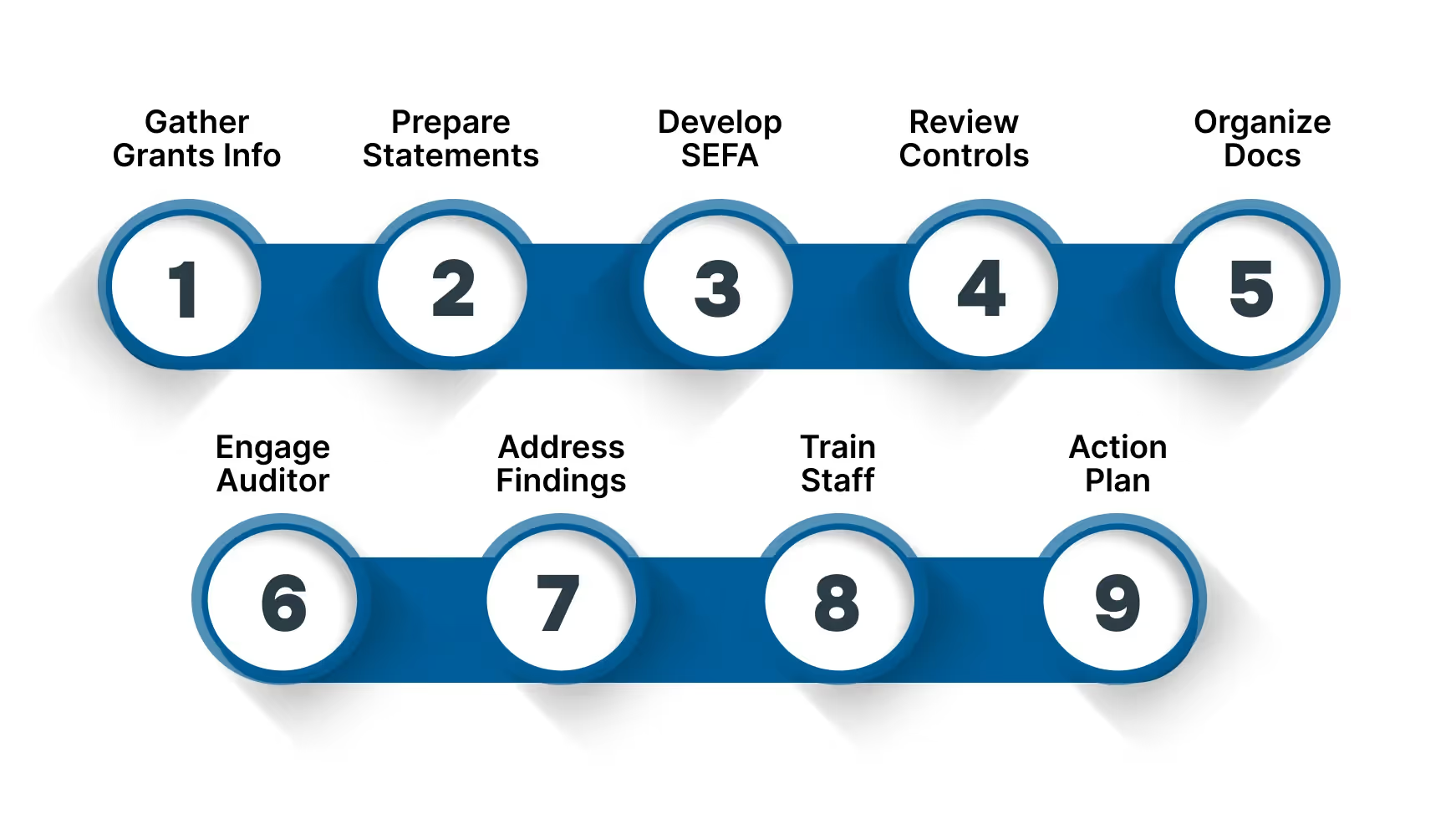
シングルオーディットへの準備は大変に思えるかもしれませんが、綿密な計画と整理がすべてを左右します。ベストプラクティスに従い、先を見越して行動することで、組織はプロセスを円滑に進め、監査指摘事項のリスクを軽減できます。
直接的な助成金やパススルー資金を含め、会計年度中に組織が受け取ったすべての連邦政府助成金の詳細を収集してください。正確な記録を保持することで、連邦支出明細書(SEFA)の完全性が確保されます。
財務諸表が最新かつ正確であり、一般に公正妥当と認められる会計原則(GAAP)に従って作成されていることを確認してください。透明性を確保するため、必要な注記や開示事項をすべて含めるようにしましょう。
Create a precise SEFA that aligns with your financial records and clearly lists all federal grants, with award numbers and expenditure amounts.
Assess your organization's internal controls related to federal award management, including segregation of duties, authorization processes, and recordkeeping. Update policies where gaps exist.
Gather supporting documents such as grant agreements, invoices, timesheets, procurement records, and reports. Maintain organized, accessible files to provide auditors with clear evidence.
Clarify audit scope, deadlines, and expectations in advance. Discuss any new awards or changes in processes to help auditors plan effectively.
Review previous Single Audit reports and ensure corrective actions have been implemented. Prepare documentation demonstrating progress on past recommendations.
Educate personnel involved with federal awards on compliance policies and audit processes. Encourage open communication to resolve questions before the audit begins.
If findings arise during the audit, have a process ready to address and document corrective actions promptly to maintain compliance and funder confidence.
あわせて読みたい:米国会計基準(US GAAP)における収益認識基準の理解
VJM Global provides expert Single Audit support that helps U.S. businesses and CPA firms meet federal compliance efficiently. With knowledge of Indian regulations and U.S. standards, they prepare your financial records for audit and minimize risks.
By handling these critical tasks, VJM Global helps you meet Single Audit requirements smoothly and efficiently. Request a call back now to get started with expert Single Audit assistance tailored for your needs.
A Single Audit is a comprehensive financial and compliance review required for organizations that spend $750,000 or more in federal funds annually. It evaluates your financial statements, internal controls, and compliance with federal program requirements.
Any non-federal entity or organization receiving and spending federal awards over the specified threshold must undergo a Single Audit according to federal regulations.
VJM Global prepares your financial records, reviews internal controls, and provides offshore audit support to help ensure your audit is well-organized, accurate, and timely.
Key documents include your financial statements, Schedule of Expenditures of Federal Awards (SEFA), grant agreements, payroll records, and procurement files. VJM Global guides you on collecting and organizing these efficiently.
The timeline varies based on complexity, but with VJM Global’s support, preparation time is optimized to meet federal deadlines without last-minute pressure.

.avif)


